Anatomy of a Trendy Gold Necklace: 2026 Expert Guide
Discover the metallurgy, structural engineering, and alloy compositions behind a trendy gold necklace. An expert deep dive for 2026 buyers.

The Metallurgy of Modern Gold Alloys
When evaluating a trendy gold necklace in 2026, aesthetic appeal is only half the equation. The structural integrity of the piece is dictated by its metallurgical composition. Pure 24-karat gold possesses a Vickers hardness (HV) of roughly 25, making it entirely unsuitable for the ultra-delicate, 1.2mm chain links currently dominating the market. To achieve the necessary tensile strength, jewelers rely on precise alloy mixtures.
According to the Gemological Institute of America (GIA), 14k gold (58.3% pure gold) remains the industry standard for durable, everyday chains. By alloying the gold with copper, silver, and trace amounts of zinc, the Vickers hardness jumps to approximately 135 HV. This metallurgical manipulation is what allows a trendy 14k gold paperclip chain to withstand the rigors of daily layering without permanently deforming under minor stress.
Structural Engineering of Trendy Chain Links
The architecture of the chain link dictates its failure points. Let us examine the three most prevalent link styles in the current market and their mechanical vulnerabilities.
Paperclip Chains: The Tension Vulnerability
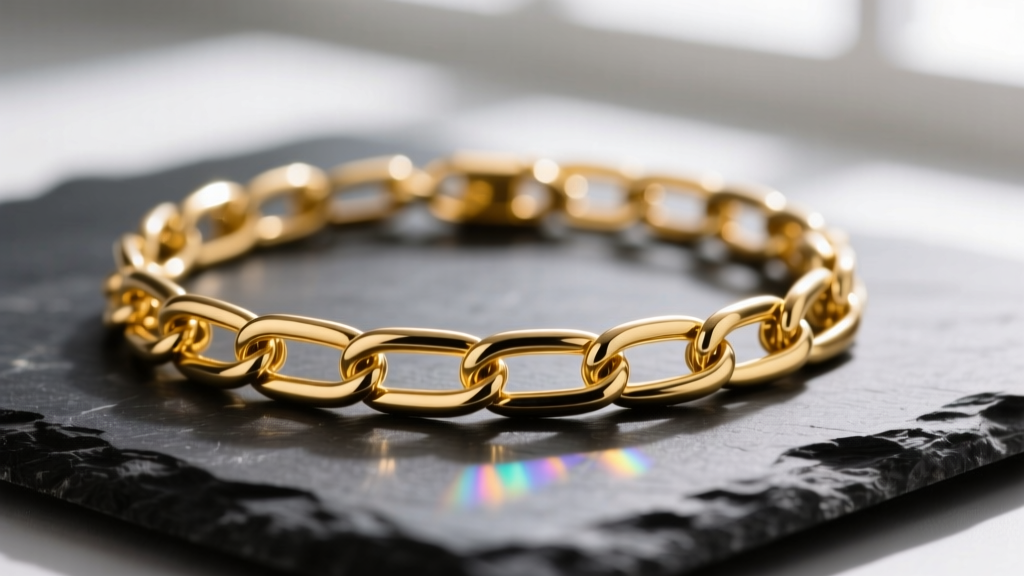
The elongated rectangular links of the paperclip chain offer a modern, minimalist aesthetic. However, the high aspect ratio of the links creates inherent structural weakness at the apex of the curve. If the links are merely bent and not laser-soldered, a mere 3 to 4 pounds of tensile force can pull the link open. Always verify that a trendy gold necklace in this style features fully soldered links, which increases the break threshold by over 400%.
Cuban Links: Torsion and Shear Strength
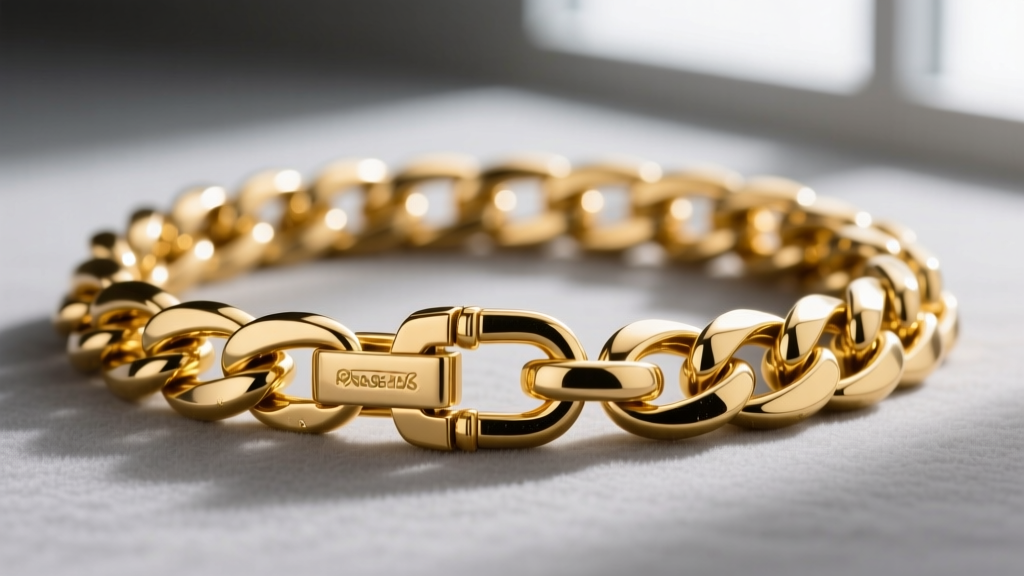
Cuban chains feature interlocking, flat-surfaced oval links. The flat milled surface distributes weight evenly, while the tight interlocking pattern provides exceptional resistance to torsion (twisting) stress. A properly milled 5mm Cuban link can withstand upward of 45 pounds of lateral pull before link deformation occurs, making it one of the most robust options available.
Serpentine and Snake Chains: The Kink Factor
Constructed from tightly interlocking slightly curved rings, snake chains provide a fluid, liquid-like drape. Their critical flaw is susceptibility to kinking. Once the structural alignment of the micro-links is disrupted by bending, the chain loses its flexibility and eventually snaps. Experts recommend storing snake chains coiled in a circular radius no smaller than 2 inches to prevent permanent micro-fractures in the alloy.
Alloy Composition and Mechanical Properties
Understanding the exact breakdown of a trendy gold necklace allows buyers to predict its wear resistance and color stability over a decade of use. Below is a technical comparison of standard jewelry alloys.
| Alloy Type | Gold Content | Primary Alloying Metals | Vickers Hardness (HV) | Tensile Strength (MPa) | Best Use Case |
|---|---|---|---|---|---|
| 24k Yellow | 99.9% | None | 25 - 30 | 120 | Investment pieces, non-structural pendants |
| 22k Yellow | 91.6% | Copper, Silver | 60 - 70 | 250 | Thick, heavy chains (e.g., traditional rope) |
| 18k Yellow | 75.0% | Copper, Silver, Zinc | 110 - 125 | 450 | Premium everyday chains, intricate link work |
| 14k Yellow | 58.3% | Copper, Silver, Zinc | 130 - 145 | 550 | Ultra-thin trendy chains, high-stress clasps |
| 14k White | 58.3% | Nickel or Palladium, Copper, Zinc | 140 - 160 | 600+ | High-durability settings, diamond-cut chains |
As noted by the World Gold Council, the shift toward 14k and 18k alloys in the contemporary market is driven not just by price, but by the mechanical necessity of supporting modern, lightweight, and highly detailed chain geometries.
Clasp Mechanics and Galvanic Corrosion
The clasp is the most frequent point of mechanical failure on any necklace. When inspecting a trendy gold necklace, the clasp type reveals much about the manufacturer's commitment to longevity.
- Spring Ring Clasps: These utilize a microscopic internal steel spring to operate the retraction mechanism. Because the spring is ferrous, prolonged exposure to sweat and humidity can trigger galvanic corrosion inside the gold housing, eventually causing the clasp to seize or snap.
- Lobster Clasps: Cast entirely from solid gold alloy, lobster clasps rely on the tension of the gold arm itself. They lack internal steel springs, making them vastly superior for long-term wear and water resistance.
- Box Clasps with Safety Figures: Essential for heavy chains (over 20 grams). The internal friction wedge holds the primary load, while the external wire safety figures act as a redundant failsafe in the event of wedge degradation.
Surface Finishes: Diamond-Cut vs. High Polish
The surface finish of a gold chain drastically alters both its visual footprint and its maintenance requirements. A high-polish finish is achieved through mechanical buffing with rouge compounds, compressing the surface molecules and creating a smooth, reflective mirror effect. While beautiful, high-polish surfaces act as magnets for micro-scratches, which over time create a patina that dulls the chain's brilliance.
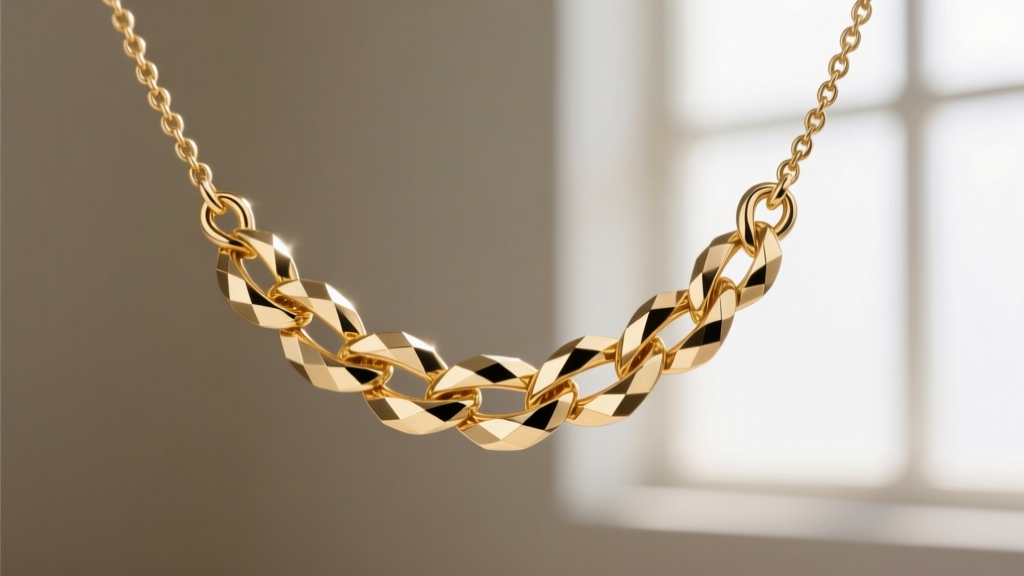
Conversely, diamond-cut chains utilize computerized CNC lathe tools to shave microscopic, angled facets into the gold links. This technique creates a multi-dimensional light refraction that mimics the brilliance of gemstones. From a maintenance perspective, diamond-cut finishes are highly forgiving; the intentional geometric variations camouflage the inevitable micro-abrasions acquired during daily wear, keeping the trendy gold necklace looking pristine for years without requiring professional re-polishing.
Chain Gauge, Weight Metrics, and Drape Physics
The physical drape of a trendy gold necklace is governed by its linear density—measured in grams per inch—and the specific gauge of the wire used to form the links. A 1.5mm cable chain might weigh a mere 1.2 grams per inch, resulting in a stiff, collar-like drape that sits high on the clavicle. In contrast, a 3.0mm rope chain of the same karatage can weigh upwards of 4.5 grams per inch, creating a fluid, heavy drape that conforms perfectly to the hollow of the neck.
Jewelry engineers calculate the flexibility index by measuring the degrees of articulation between interlocking links. A high flexibility index (found in snake and foxtail chains) requires precise annealing during the manufacturing process. If the gold is not properly annealed to relieve internal stresses after being drawn through wire dies, the chain will suffer from work-hardening, leading to brittle links that snap under their own weight within months of wear.
Expert Verdict: Balancing Trend and Longevity
Selecting the right piece requires looking past the immediate silhouette and evaluating the underlying engineering. For ultra-thin, minimalist layering trends, a 14k yellow gold soldered paperclip chain with a solid lobster clasp offers the optimal ratio of delicate aesthetics and structural resilience. For bold, standalone statements, an 18k diamond-cut Cuban link provides unmatched torsion resistance and enduring brilliance. By prioritizing metallurgical hardness, link soldering, and spring-free clasp mechanics, you ensure that your investment survives the fleeting nature of seasonal trends.


