Jade Necklace Plant Pendants: Troubleshooting Authenticity
Troubleshoot botanical jade carvings. Learn to identify genuine jade necklace plant pendants, detect Type B/C treatments, and care for succulent motifs.

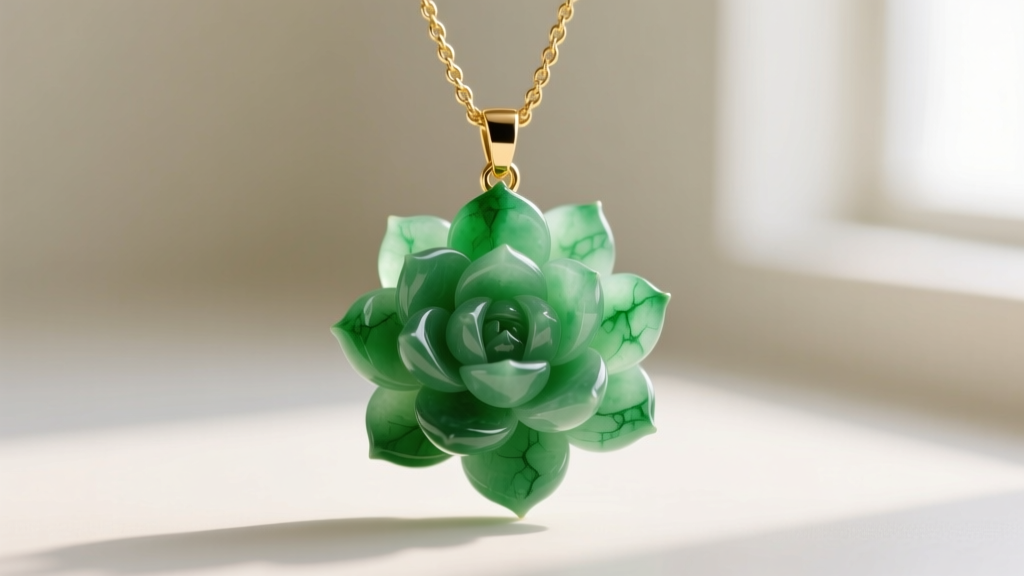
The intersection of botanical jewelry and traditional lapidary arts has reached new heights in 2026, with collectors and enthusiasts increasingly seeking out organic, nature-inspired motifs. Among the most highly requested and intricately carved pieces is the jade necklace plant pendant. Inspired by the stacked, triangular leaves of the Crassula rupestris (commonly known as the Baby's Necklace or Jade Necklace plant), these pendants require master-level carving techniques to execute properly. However, the surge in demand has flooded the market with glass molds, dyed quartz, and polymer-impregnated fakes. If you are troubleshooting the authenticity, structural integrity, or care of a botanical jade pendant, this guide provides the gemological frameworks and actionable insights you need.
The Lapidary Challenge of the Jade Necklace Plant Motif
Carving a succulent motif is fundamentally different from carving traditional jade cabochons or smooth bangles. The jade necklace plant features dense, overlapping geometric leaves that spiral around a central stem. To replicate this in stone, a lapidary artist must utilize deep undercuts and negative space. According to the Gemological Institute of America (GIA), jade is prized for its exceptional toughness, which stems from its interlocking crystalline structure. This toughness (specifically in nephrite) allows for the fragile-looking, razor-thin leaf edges required for a realistic succulent carving without the stone shattering during the diamond-tipped rotary tool process.
When troubleshooting a potential purchase, the first step is examining the geometry of the leaves. Genuine hand-carved jade will feature sharp, crisp inner corners where the leaves meet the stem. Molded glass or resin fakes cannot achieve these sharp undercuts due to the physics of mold extraction; they will exhibit rounded, sloped inner corners (draft angles) to allow the material to release from the mold.
Troubleshooting Authenticity: Nephrite vs. Jadeite vs. Imitations
The term 'jade' encompasses two distinct minerals: nephrite and jadeite. Both are used for botanical carvings, but they behave differently and command different price points. Furthermore, the market is saturated with 'new jade' (serpentine), aventurine, and dyed chalcedony.
The Specific Gravity and Refractive Index Tests
If you are evaluating a jade necklace plant pendant in a gemological lab or with a knowledgeable jeweler, specific gravity (SG) and refractive index (RI) are your primary troubleshooting metrics:
- Jadeite (Feicui): SG of 3.30 - 3.38; RI of ~1.66. Jadeite carvings will exhibit a glassy luster and, in high-quality 'Type A' pieces, a translucent, glowing green.
- Nephrite: SG of 2.90 - 3.03; RI of ~1.62. Nephrite has a more greasy or matte luster and is heavily favored for intricate botanical carvings due to its superior tensile strength.
- Aventurine (Common Fake): SG of 2.65. Often sold as 'Indian Jade', it lacks the fibrous structure of true jade and will chip rather than carve cleanly into sharp succulent leaves.
Identifying Type B and Type C Treatments
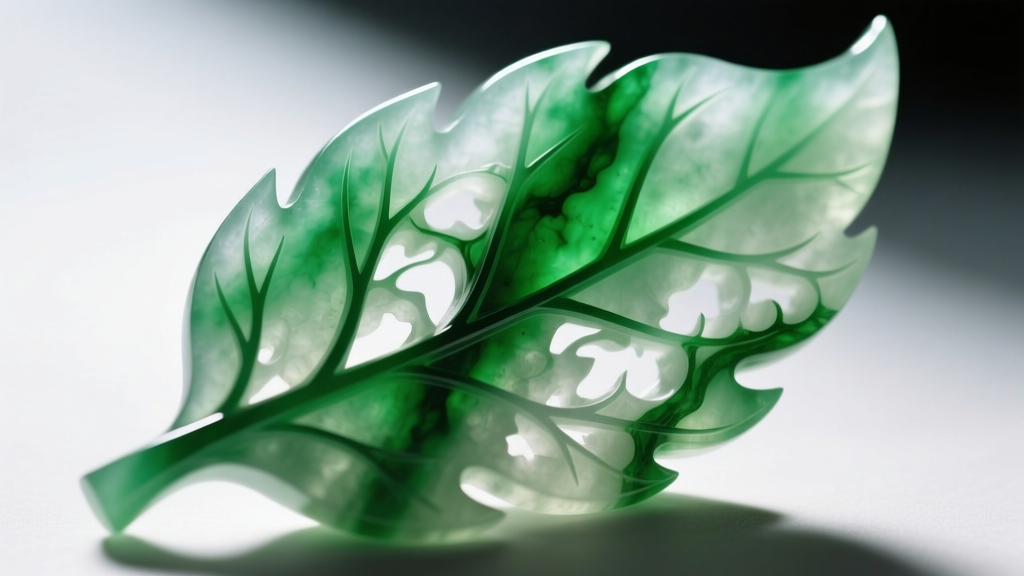
Botanical carvings require extensive grinding, which often exposes natural micro-fractures in the rough stone. Unscrupulous vendors will treat these stones to improve clarity and color. The GIA classifies jade treatments into three main categories, and understanding them is critical for troubleshooting value:
- Type A (Untreated): Only polished with traditional plum wax. This is the only grade that holds long-term investment value.
- Type B (Bleached and Polymer-Impregnated): Acid is used to remove brown inclusions, leaving the stone porous. It is then injected with epoxy resin. Over time, the resin yellows, ruining the vibrant green of your succulent pendant.
- Type C (Dyed): Color is artificially introduced. Dyed jade often pools in the micro-cracks of the carving, creating dark green 'spiderweb' veins in the crevices between the carved leaves.
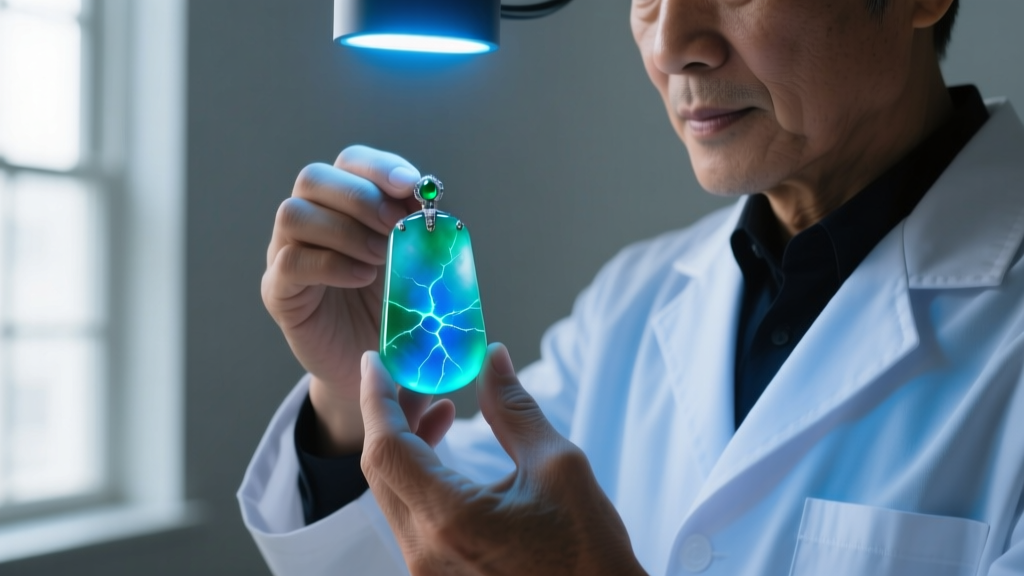
Troubleshooting Tip: Use a long-wave UV light (365nm). Type B polymer resins will typically fluoresce a bright, chalky blue-white, particularly in the deep undercuts of the plant carving where the acid bath was most aggressive. Type A jade is generally inert or shows very weak, localized fluorescence.
Structural Vulnerabilities and Chain Pairing
A major problem with the jade necklace plant pendant is its structural vulnerability. The 'stem' of the carving acts as a natural bail or drill-point, making it a prime failure point for snapping. Below is a troubleshooting matrix for setting and hanging these specific botanical pendants.
| Setting Method | Risk Level | Troubleshooting & Best Practices |
|---|---|---|
| Top-Drilled Hole | High | Drilling through the narrow 'stem' of the Crassula motif creates a stress fracture point. Use a flexible silk cord or a very fine, supple 18k gold omega chain to prevent torque snapping. |
| Pinch Bail (Metal) | Medium | Pronged pinch bails can crack the top leaf if squeezed too tightly. Ensure the bail has a rubber or resin gasket to cushion the jade. |
| Custom Bezel Frame | Low | The safest method. A master jeweler builds a custom gold or platinum gallery that supports the back of the carving, distributing tension away from the delicate leaf tips. |
Cleaning and Maintenance for Porous Botanical Carvings
The intricate, stacked leaves of the jade necklace plant motif create dozens of microscopic crevices that trap skin oils, lotions, and environmental dust. Improper cleaning is the leading cause of damage to these specific pendants.
What to Avoid
- Ultrasonic Cleaners: Never use ultrasonic machines. The high-frequency vibrations will exploit natural cleavage planes or micro-fractures in the jade, potentially causing a leaf to sheer off entirely. Furthermore, ultrasonics will melt or cloud the polymer resin in Type B treated jade.
- Steam Cleaners: Thermal shock from sudden steam heat can cause internal fracturing, especially in nephrite.
- Harsh Chemicals: Bleach, ammonia, or acidic jewelry dips will strip the natural wax polish and degrade polymer fillers.
The Correct Cleaning Protocol
To safely clean your botanical jade pendant, prepare a lukewarm bath of distilled water and a few drops of pH-neutral, phosphate-free dish soap. Submerge the pendant for exactly 3 to 5 minutes to loosen debris. Use a soft-bristled baby toothbrush or a camel-hair detailing brush to gently sweep the crevices between the carved leaves. Do not apply downward pressure on the leaf tips. Rinse with distilled water and pat dry with a lint-free microfiber cloth. Once a year, apply a microscopic drop of pure, unfragranced mineral oil to a soft cloth and buff the surface to restore the stone's natural luster and protect it from dehydration.
Sourcing and Pricing Realities in 2026
When sourcing a genuine jade necklace plant carving, pricing is dictated by the translucency of the stone, the precision of the undercuts, and the provenance of the rough. As of 2026, you can expect the following market ranges:
- Commercial Nephrite (Mutton Fat or Celadon): $150 – $600. Excellent for everyday wear, highly durable, but generally opaque.
- Type A Jadeite (Icy or Apple Green): $1,200 – $8,500+. Translucent, highly sought after, and usually accompanied by a gemological certificate.
- Aventurine / Dyed Quartz Fakes: $25 – $80. Often found in tourist markets or unverified online storefronts. Easily identified by their lack of fibrous inclusions and overly uniform, artificial coloring.
Always demand a certificate of authenticity from a reputable, independent gemological laboratory (such as GIA, SSEF, or Gübelin) that explicitly states the material is 'Natural Jadeite' or 'Natural Nephrite' with no indications of treatment. By understanding the unique structural and gemological demands of the jade necklace plant motif, you can confidently troubleshoot fakes, protect your investment, and wear a true masterpiece of botanical lapidary art.


