Polymer Clay Necklace Value Guide 2026: Worth the Price?
Is a polymer clay necklace worth the price? Our 2026 value guide breaks down material costs, artisan tiers, and how to spot quality.

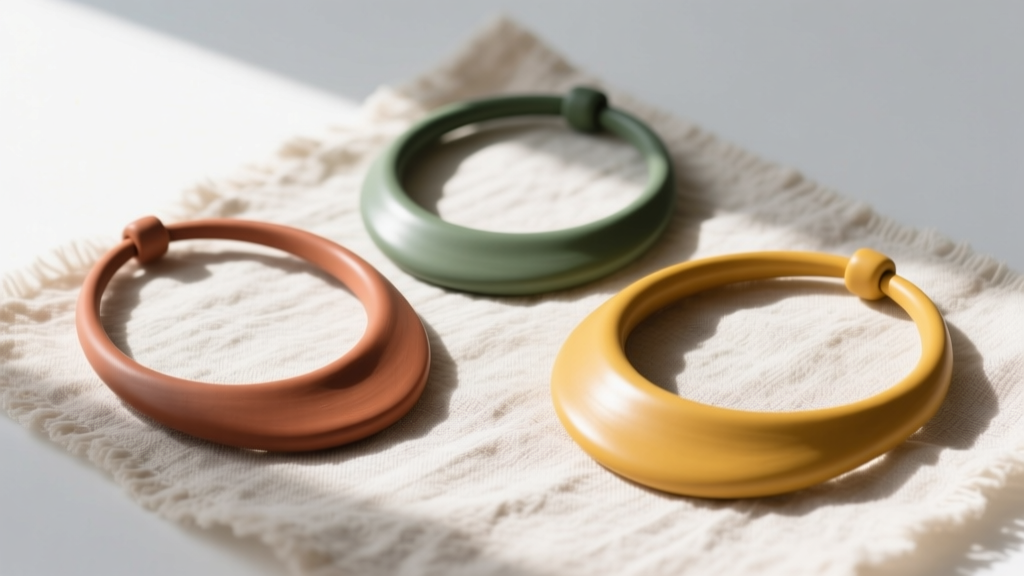
The True Cost of Polymer Clay Necklaces in 2026
When browsing independent jewelry boutiques or scrolling through curated social media feeds, the polymer clay necklace has cemented its status as a staple of contemporary artisan fashion. However, as we move through 2026, the market is heavily saturated. Prices for these seemingly lightweight, colorful pendants range anywhere from $12 on mass-market dropshipping sites to upwards of $140 from master ceramicists and clay artists. For the budget-conscious collector, this raises a critical question: what exactly are you paying for, and how do you assess the true value of a polymer clay piece?
Unlike precious metals where value is intrinsically tied to commodity spot prices, the value of a polymer clay necklace is almost entirely driven by labor, material science, and hardware integrity. A standard block of professional-grade polymer clay costs roughly $3.50 to $5.00. Therefore, when an artisan charges $85 for a statement pendant, you are not paying for the raw PVC and plasticizer; you are paying for the hours spent conditioning, color-blending, carving, curing, sanding, and sealing. Understanding this breakdown is the first step in separating genuine artisan value from overpriced hobbyist experiments.
Material Breakdown: What You Are Actually Paying For
Not all polymer clays are created equal. The chemical composition—specifically the ratio of PVC resin to plasticizers and fillers—dictates the clay's strength, flexibility, and archival quality. According to the polymer clay authority The Blue Bottle Tree, underbaked or low-grade clays will inevitably suffer from catastrophic brittle failure.
Clay Grades and Brands
- Fimo Professional & Cernit Number One: These are the gold standards for fine jewelry. They possess high structural integrity, allowing artisans to carve intricate, paper-thin motifs without snapping. They require precise temperature control but yield a durable, premium finish.
- Sculpey Premo & Soufflé: Excellent for color blending and mica shifts. Soufflé is prized for its lightweight, matte, suede-like finish, making it ideal for oversized, budget-friendly statement pieces that won't strain the neck.
- Sculpey III & Craft Store Generics: Often found in cheap, mass-produced necklaces. These clays are heavily filled and notoriously brittle once baked. If a pendant feels rigid but snaps under minor torsion, it was likely made with a lower-tier clay.
The Hidden Costs of Sealing and Hardware
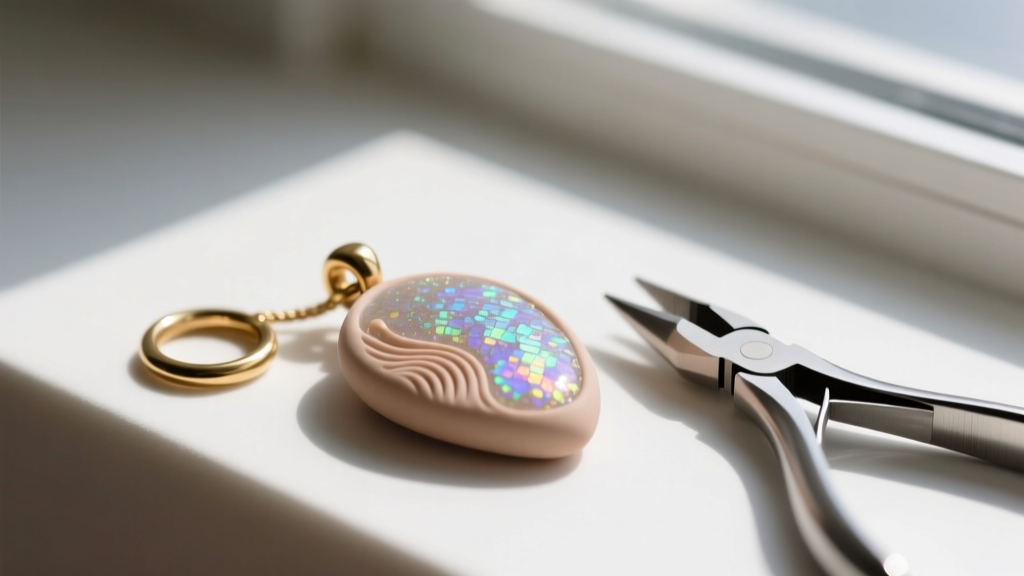
A raw, unsealed polymer clay necklace is porous and can absorb skin oils, leading to discoloration over time. Premium artisans use specialized sealants like Varathane Water-Based Polyurethane or UV-cured jewelry resin. UV resin adds significant labor and material cost (roughly $3 to $5 per piece in resin alone) but provides a glass-like, waterproof shell that protects embedded gold leaf or delicate mica powders. Furthermore, value assessment must include the hardware. A $60 necklace utilizing cheap zinc-alloy jump rings that turn green within a week is a poor investment compared to a $75 piece utilizing solid brass, niobium, or sterling silver components.
Pricing Tiers: Budget vs. Artisan Value Matrix
To accurately assess a polymer clay necklace in 2026, compare the listing against this market matrix. This framework helps you identify whether a price tag reflects genuine craftsmanship or inflated hobbyist pricing.
| Tier | Price Range | Materials & Hardware | Labor & Finish | Expected Lifespan |
|---|---|---|---|---|
| Fast Fashion / Dropship | $12 - $25 | Sculpey III, Plated Alloy | Machine stamped, unsealed, rough edges | 3 - 6 Months |
| Beginner Hobbyist | $30 - $55 | Premo, Basic Brass | Hand-cut, spray sealed (often tacky), minimal sanding | 1 - 2 Years |
| Master Artisan | $65 - $140+ | Cernit/Fimo, Sterling/Niobium | Hand-carved, wet-sanded to 2000 grit, UV resin or matte poly | 10+ Years |
The Labor of Color: Mica Shifts and Cane Building
One of the primary drivers of cost in the artisan tier is the complexity of the colorwork. A simple, single-color cutout takes an artisan perhaps ten minutes to prepare and bake. However, advanced techniques require hours of conditioning and precision.
Mica Shift Pendants
Mica shift relies on the directional alignment of metallic particles within the clay. The artisan must condition the clay, roll it through a pasta machine multiple times to align the mica flakes, stamp a design, and then carefully shave off the raised surface layer with a flexible blade. The result is a pendant that appears to have deep, 3D relief, despite being completely flat to the touch. This technique demands a high level of skill and generates significant material waste, justifying a 30% to 50% price premium over standard marbled pieces.
Millefiori and Cane Work
Borrowed from traditional Venetian glassmaking, millefiori involves building a "cane" of clay with a specific cross-sectional design (like a flower or geometric pattern) and then reducing it down to a fraction of its size. A master artisan might spend four hours building a complex floral cane, only to slice off a few millimeters for a single pendant. When evaluating a piece featuring intricate, repeating micro-patterns, recognize that you are paying for the architectural engineering of the cane, not just the final slice.
Common Failure Modes & How to Spot Poor Value
Before purchasing, scrutinize the product photos and descriptions for these red flags that indicate poor structural engineering.
1. The Drill Hole Stress Fracture
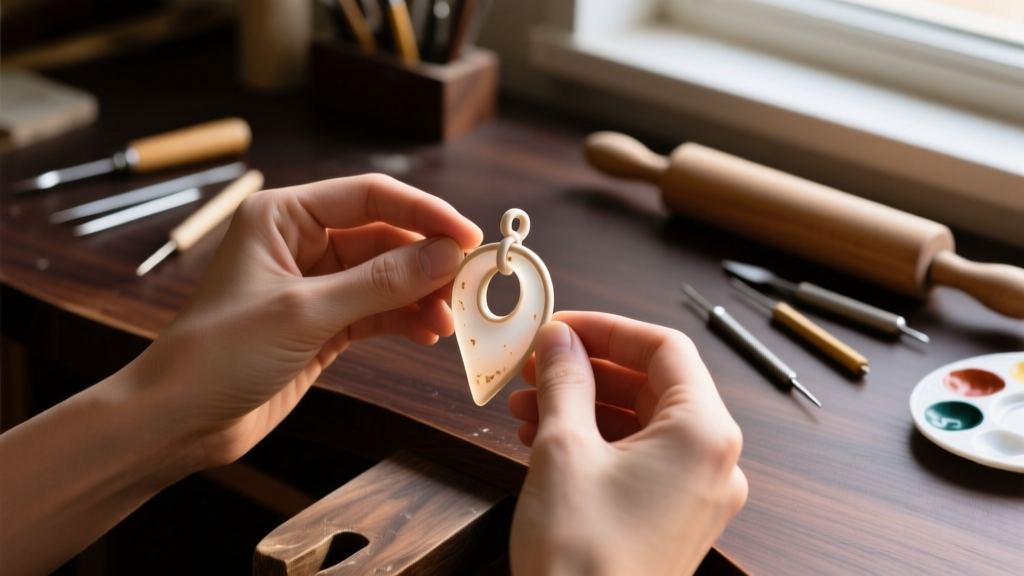
Polymer clay is essentially a flexible plastic, but it can develop micro-fractures if drilled improperly. High-value artisans pierce the clay before baking or use specialized slow-speed micro-drills. If you see jagged edges around the stringing hole, or if the pendant is suspended by a jump ring pinched directly through a thin sheet of clay without a metal eyelet, the piece will eventually snap under the dynamic weight of daily wear.
2. Incompatible Sealant Melting
Many budget sellers use aerosol clear coats (like standard Krylon or Rust-Oleum) to save time. The solvents in these sprays react chemically with the plasticizers in the PVC, resulting in a perpetually sticky, tacky surface that attracts lint and never fully cures. According to Sculpey's official guidelines, only specific water-based polyurethanes or dedicated jewelry resins should be used. If a product review mentions the pendant feels "sticky" or "tacky," avoid the purchase entirely.
3. The Thick "Pancake" Effect
Because lower-grade clays are brittle, hobbyists often compensate by rolling the clay too thick (3mm to 5mm). This results in a heavy, blocky, "pancake-like" pendant that looks clumsy and feels uncomfortable against the collarbone. Master artisans condition their clay to withstand paper-thin cuts (1mm to 1.5mm), creating elegant, lightweight silhouettes that drape beautifully.
The Verdict: Maximizing Your Investment
Is a polymer clay necklace a good budget investment? Absolutely, provided you buy from the artisan tier. When you purchase a properly cured, sealed, and assembled piece, you are acquiring a lightweight, hypoallergenic, and highly durable work of wearable art that outperforms traditional plated metals in both longevity and color retention.
"The true value of polymer clay lies not in the raw material, but in the artist's mastery over temperature, torsion, and time. A well-cured piece of Cernit will outlast a cheap gold-plated chain every single time." — Independent Jewelry Material Science Review, 2025.
To protect your investment, store your necklaces flat or hung in a climate-controlled environment. Avoid leaving them on the dashboard of a car in direct sunlight, as prolonged UV exposure and extreme heat (above 150°F) can warp the PVC matrix and degrade certain organic pigments. By understanding the material science and labor metrics behind the price tag, you can confidently build a curated, high-value collection that transcends seasonal trends.


