How to Clean and Care for Your Mens Aquamarine Necklace
Learn expert techniques to clean, store, and maintain your mens aquamarine necklace. Protect the beryl gemstone and metal chain from damage today.

Understanding Aquamarine Vulnerabilities in Men's Jewelry
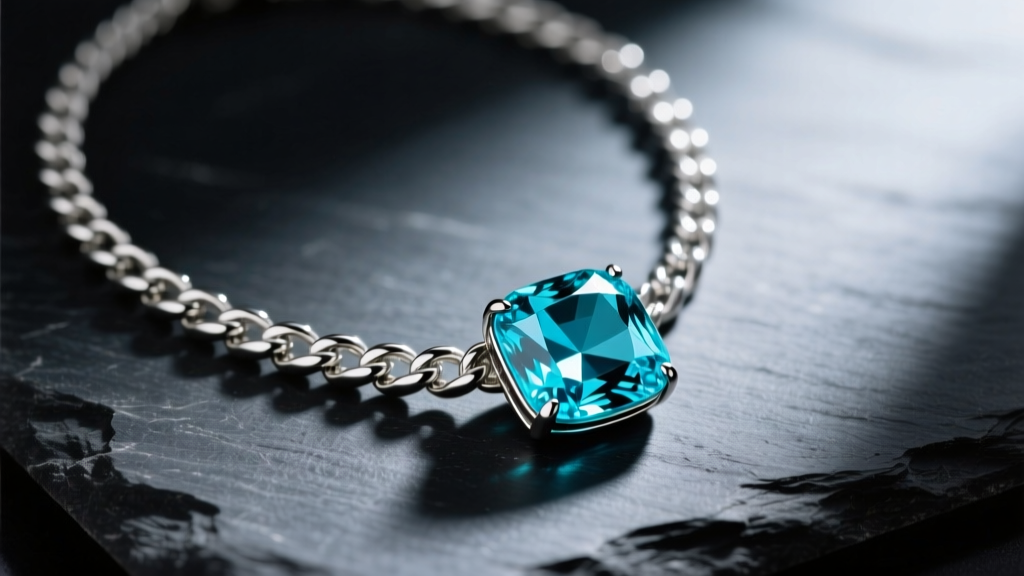
Aquamarine, the striking blue to blue-green variety of the mineral beryl, has become a cornerstone of modern men's fine jewelry. Its icy, masculine hue pairs exceptionally well with heavy silver, white gold, and platinum chains. However, owning a mens aquamarine necklace requires a nuanced understanding of the gemstone's physical properties. On the Mohs scale of hardness, aquamarine ranks between 7.5 and 8. While this makes it relatively durable for daily wear, it is not impervious to damage. Unlike diamonds, aquamarine possesses an indistinct cleavage and a brittle tenacity, meaning a sharp impact against a hard surface—such as dropping the pendant on a tile floor or striking it against gym equipment—can cause internal fracturing or chipping at the girdle.
Furthermore, the gemological treatment history of your stone dictates its cleaning limits. According to the Gemological Institute of America (GIA), while routine heat treatment is standard and permanent for aquamarine, lower-grade stones are sometimes fracture-filled with resins or oils to improve clarity. If your necklace features a fracture-filled stone, exposure to warm water, ultrasonic vibrations, or harsh chemicals will melt or dissolve the filler, leaving the stone looking cloudy and heavily included. Always assume your stone requires gentle, non-thermal care unless you possess a lab report confirming it is untreated or solely heat-treated.
The Men's Lifestyle Factor: Sweat, Sebum, and Cologne
Men's necklaces are subjected to a unique matrix of environmental and biological stressors. The modern man's grooming routine often involves colognes, aftershaves, and hair products laden with alcohols and volatile organic compounds. When these aerosolized chemicals settle on the pavilion facets of an aquamarine pendant, they create a microscopic film that drastically reduces the stone's refractive index, robbing it of its signature brilliance.
Add to this the biological reality of wearing a necklace against the chest. The décolletage area is dense with sebaceous glands. Over time, a mixture of sebum, dead skin cells, and sweat (which contains urea and chlorides) accumulates in the crevices of the pendant's setting and the links of the chain. For sterling silver chains, the sulfur compounds in human sweat accelerate the oxidation process, leading to rapid tarnishing. For 316L stainless steel or titanium chains, the sebum buildup simply creates a dull, unhygienic patina that traps odor-causing bacteria.
The Step-by-Step Cleaning Protocol
To restore the optical clarity of your aquamarine and the luster of your chain without risking thermal shock or chemical etching, follow this precise, expert-approved cleaning protocol. Perform this maintenance every two to three weeks if worn daily.
Phase 1: The Soak
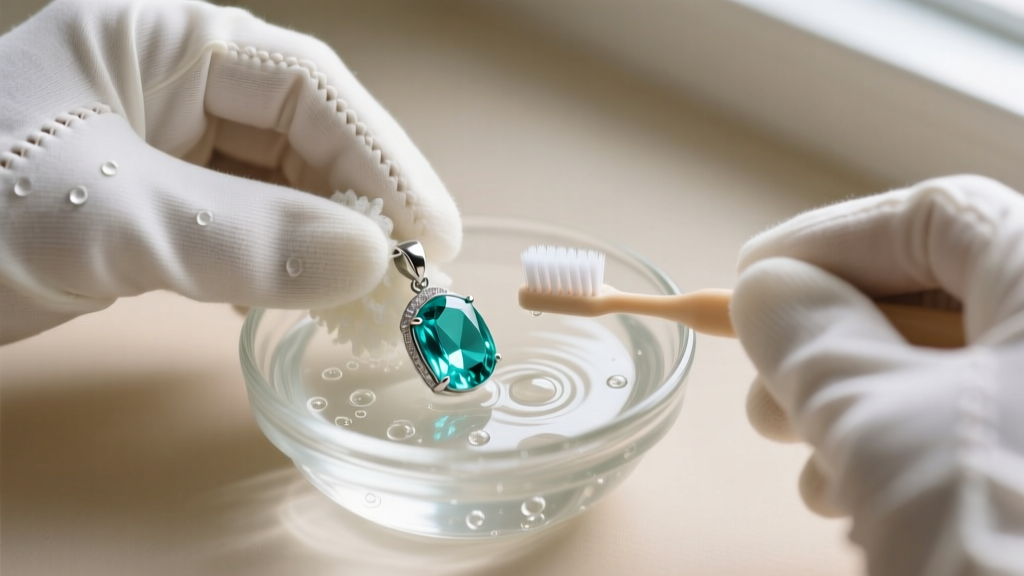
Fill a small glass bowl with lukewarm distilled water. Avoid tap water, as the chlorine and dissolved minerals can leave hard water spots on the metal and stone. Add exactly two drops of a pH-neutral, lotion-free dish soap (such as original Dawn). Submerge the necklace and let it soak for exactly 10 minutes. This allows the surfactants to break down the lipid bonds of the sebum without requiring aggressive mechanical force.
Phase 2: The Agitation
Using a brand-new, extra-soft baby toothbrush, gently agitate the soapy water around the pendant. Focus the bristles on the back of the stone (the pavilion), where light enters and exits. Do not scrub the metal prongs aggressively; instead, use a sweeping motion to dislodge debris from the gallery wire and the bail.
Phase 3: The Rinse and Dry
Rinse the necklace under a gentle stream of lukewarm distilled water. Ensure the drain is plugged. Pat the chain dry with a lint-free microfiber cloth. Allow the pendant to air-dry completely on a clean paper towel before storing or wearing it again to prevent water spots from forming in the tight crevices of the setting.
Cleaning Agents: Safe vs. Unsafe for Aquamarine & Metals
Not all jewelry cleaners are created equal. Many commercial dips contain thiourea or ammonia, which can be catastrophic for certain gemstones and metal alloys. Refer to the table below to understand how common cleaning agents interact with your mens aquamarine necklace.
| Cleaning Agent | Effect on Aquamarine | Effect on Sterling Silver / Steel |
|---|---|---|
| Ultrasonic Cleaners | UNSAFE: Vibrations can shake loose inclusions or shatter fracture-filled stones. | Safe for solid steel; can loosen solder joints on silver chains. |
| Steam Cleaners | UNSAFE: Sudden thermal shock can cause internal fracturing (crazing). | Safe, but risks burning the user if the chain retains heat. |
| Ammonia-based Dips | UNSAFE: Can strip resin fillers and dull the polish of the beryl. | Effective for silver tarnish, but highly toxic and corrosive over time. |
| pH-Neutral Dish Soap | SAFE: Gently lifts oils without chemical interaction. | Safe; removes surface oils but will not remove heavy silver sulfide tarnish. |
| Baking Soda Paste | UNSAFE: Mohs 2.5, but gritty texture can micro-scratch the stone's polish. | Abrasive; removes tarnish but creates micro-scratches on high-polish silver. |
Advanced Maintenance: Inspecting Bails and Jump Rings
Men's chains are inherently heavier and thicker than women's counterparts. A standard 5mm Figaro or Cuban link chain can easily weigh between 40 and 80 grams. This kinetic mass places immense shear stress on the pendant's bail and the connecting jump ring. Every time you put on or take off the necklace, or when the pendant swings during physical activity, the metal-on-metal friction slowly wears down the interior of the bail.
Once a month, perform a visual and tactile inspection of the hardware. Hold the pendant up to a bright LED light and use a jeweler's loupe (or your smartphone's macro camera lens) to inspect the thickness of the bail loop. If the metal has worn down by more than 20% of its original thickness, or if the jump ring shows any sign of gaping, take the necklace to a professional jeweler immediately. A simple $20 soldering or bail replacement will prevent the catastrophic loss of a multi-thousand-dollar aquamarine gemstone.
Proper Storage to Prevent Mohs Scale Scratching
When your mens aquamarine necklace is not being worn, its storage environment is critical. The most common mistake men make is tossing their jewelry into a communal drawer or a single-compartment valet tray. Because aquamarine is a 7.5 to 8 on the Mohs scale, it will easily be scratched by any diamond (10), sapphire (9), or topaz (8) jewelry it comes into contact with. Even dust particles, which often contain microscopic quartz (Mohs 7), can cause surface abrasions over time if the stone is rubbed against a hard surface.
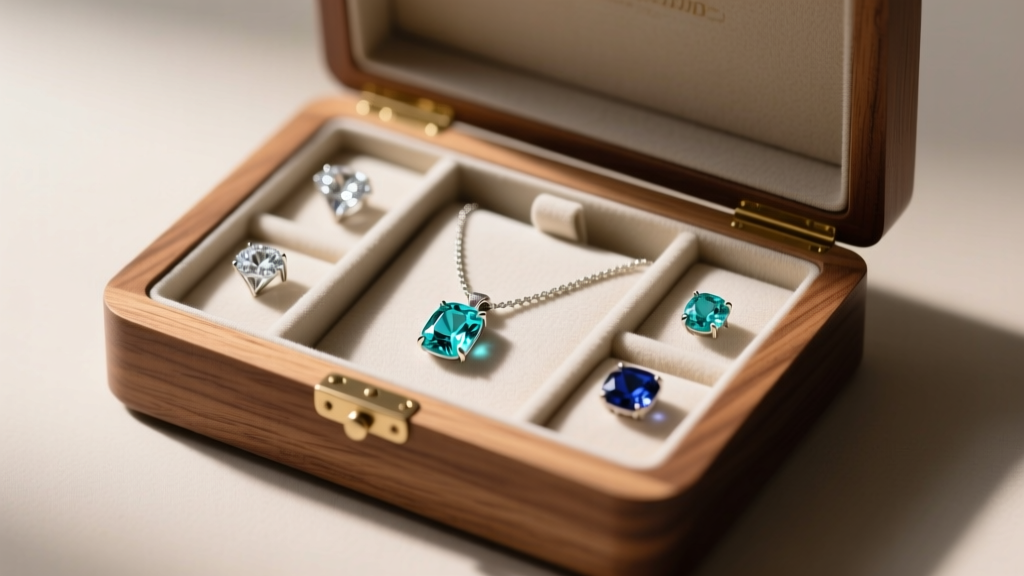
Store the necklace in a dedicated, fabric-lined jewelry box with individual compartments. Alternatively, slip the pendant into a soft flannel pouch or a sealed Ziploc bag (which also slows the oxidation of sterling silver chains by limiting exposure to ambient sulfur and humidity). Always lay the chain out flat or hang it; coiling a heavy chain tightly around the pendant can result in the metal links scratching the beryl's table facet.
When to Seek Professional Jeweler Intervention
While routine home cleaning is sufficient for maintaining brilliance, it cannot address structural degradation or deep-set tarnish. You should schedule a professional cleaning and inspection with a certified bench jeweler once every 12 to 18 months. As noted by the International Gem Society, professional jewelers have the expertise to identify early signs of prong fatigue and setting distortion that the untrained eye will miss.
If your sterling silver chain has developed heavy, blackened silver sulfide tarnish that dish soap cannot remove, a jeweler can use a controlled electrolytic cleaning process or a professional-grade polishing wheel with rouge compound to restore the metal's mirror finish without subjecting the aquamarine pendant to the harsh chemicals found in retail silver dip solutions. By combining mindful daily wear habits with this rigorous maintenance protocol, your aquamarine necklace will retain its icy brilliance and structural integrity for decades.


