Hart Necklaces: Expert Guide to Celtic Stag & Vintage Hallmarks
Discover the metallurgy, heraldic history, and collector grading of hart necklaces, from Celtic stag motifs to vintage Hart hallmarked chains.

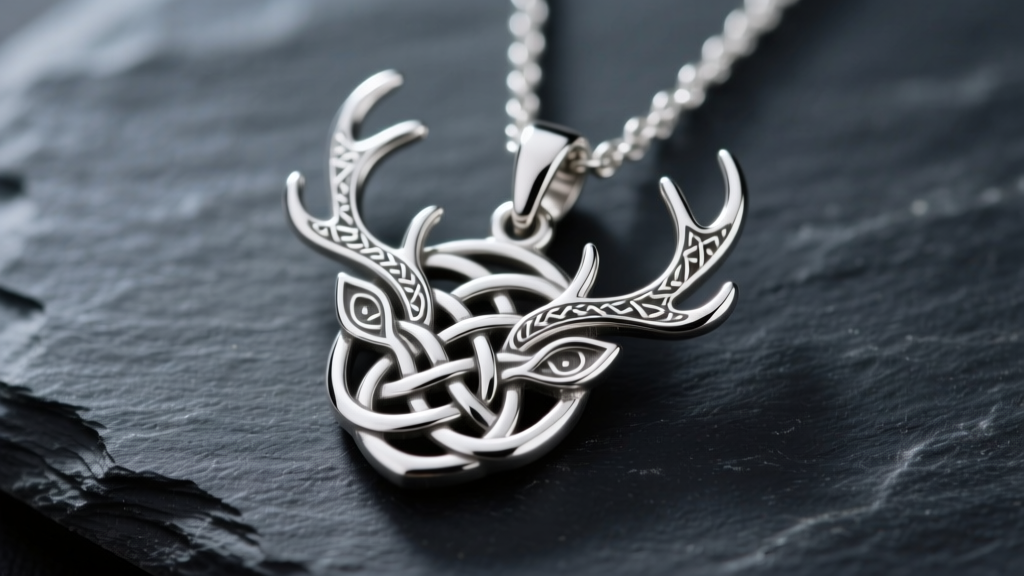
The Heraldic Hart: Decoding the Stag Motif in Fine Jewelry
In the lexicon of heritage and antique jewelry, the term "hart" specifically denotes the mature male red deer (stag), a motif steeped in Celtic mythology and European heraldry. Unlike generic animal pendants, authentic hart necklaces are historically significant artifacts. In Arthurian legend, the White Hart represented a spiritual quest, while in Scottish and Irish traditions, the hart was revered as a messenger of the underworld and a symbol of longevity. When collecting or commissioning hart necklaces today, understanding the distinction between mass-produced novelty deer pendants and true heraldic stag jewelry is critical for serious collectors.
True heraldic hart pendants are characterized by specific anatomical and artistic details: the antlers must display a minimum of five points (a "royal" stag), and the posture is typically "trippant" (walking with one foreleg raised) or "lodged" (seated). In the 2026 collector's market, pieces that accurately reflect these historical blazons command a 30% to 45% premium over stylized, anatomically incorrect interpretations.
Metallurgy & Casting: How High-Relief Hart Pendants Are Made
The intricate geometry of a hart's antlers presents a unique challenge in jewelry manufacturing. The deep undercuts and slender tines require advanced metallurgical techniques to prevent structural failure.
Porosity in Antler Tines: A Common Failure Mode
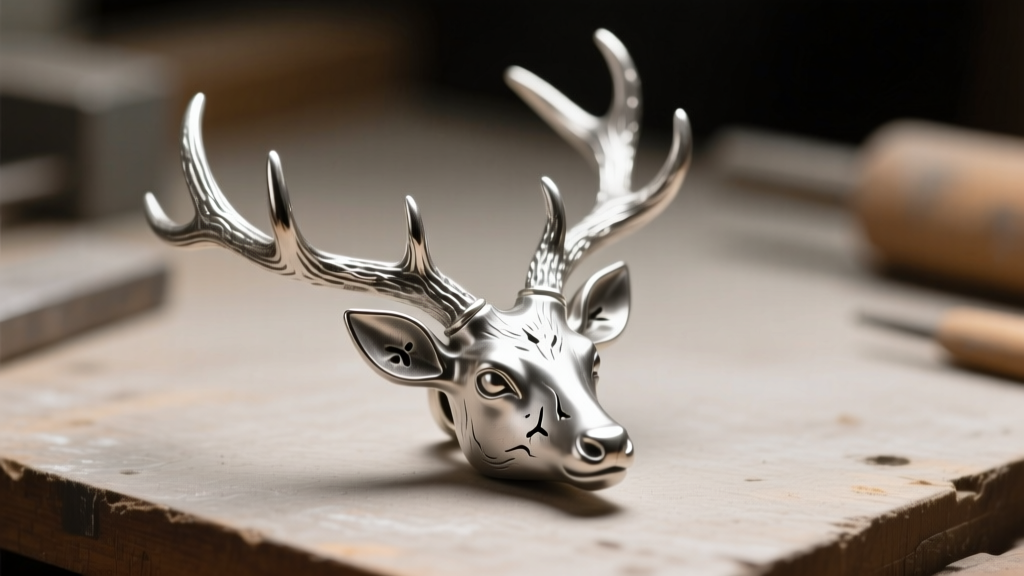
The most frequent defect in lower-tier cast hart necklaces is porosity at the tips of the antler tines. During the lost-wax casting process, if the flask temperature is not precisely maintained between 600°C and 650°C for sterling silver, the molten metal cools too rapidly upon hitting the extremities of the mold. This traps gas bubbles, creating microscopic voids. Over time, the mechanical stress of wearing the necklace causes these porous tines to snap off. Expert jewelers mitigate this by using centrifugal casting with a higher G-force or by employing vacuum-assisted casting to pull the molten alloy tightly into the intricate antler details.
925 Sterling vs. 950 Argentium: The Tarnish Dilemma
High-relief hart necklaces feature deep crevices that are nearly impossible to polish with traditional rouge wheels once tarnish sets in. Standard 925 sterling silver reacts with sulfur in the air to form black silver sulfide, which accumulates in the recessed knotwork and fur textures of the stag. For modern commissions, experts strongly recommend 950 Argentium silver. By replacing a portion of the copper alloy with germanium, Argentium forms a transparent, self-healing germanium dioxide layer on the surface. This makes the metal highly tarnish-resistant, preserving the bright, mirrored finish of the hart's intricate details without requiring abrasive chemical dips that can degrade the metal over time.
Decoding Vintage Hart Hallmarks
When evaluating antique hart necklaces, collectors frequently encounter the "HART" maker's mark. It is vital to distinguish between the maker's mark (the sponsor's mark) and the assay office hallmarks that guarantee the metal's purity. According to the The Goldsmiths' Company Assay Office, a valid hallmark must include the maker's mark, the standard mark (e.g., 925), and the assay office mark (e.g., the Leopard's Head for London).
| Maker's Mark | Origin / Era | Specialty | Estimated Market Value (2026) |
|---|---|---|---|
| HART (John Hart) | London, c. 1895 | Victorian mourning & heraldic silver | $850 - $2,200 |
| H.B. (Hart Brothers) | Birmingham, c. 1920 | Art Deco die-struck lockets & chains | $300 - $650 |
| HART (Stamp) | Scottish Highlands, c. 1970 | Celtic revival pebble & stag jewelry | $400 - $900 |
For deeper verification of antique stamps, resources like Lang Antiques University provide comprehensive visual databases of historical sponsor marks, helping collectors avoid modern electroplated counterfeits that falsely bear the HART stamp.
Load-Bearing Chain Specifications for Heavy Stag Pendants
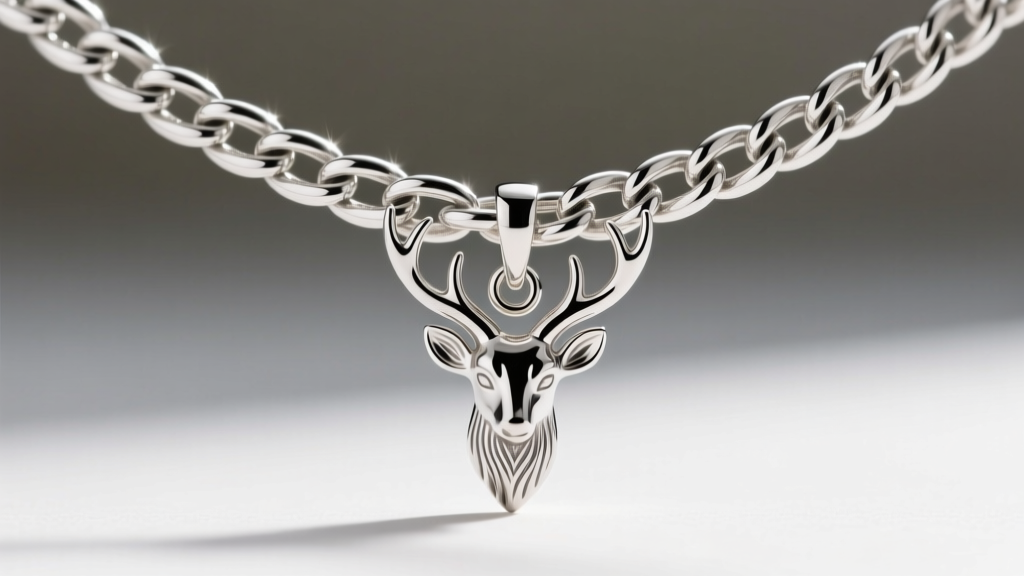
Heritage hart pendants are notoriously heavy, often weighing between 18 and 35 grams due to their solid, high-relief construction. Pairing these pendants with inadequate chains is a primary cause of jewelry loss. The tensile strength of the chain must exceed the static weight of the pendant by a factor of at least four to account for dynamic movement (the "whip" effect when the wearer turns quickly).
- Solid Wheat Chains (2.0mm - 3.0mm): The gold standard for heavy hart pendants. The woven, interlocking oval links distribute weight evenly and resist kinking. A 2.5mm solid sterling wheat chain can safely support up to 45kg of tensile force before link deformation occurs.
- Figaro Chains (3.5mm+): Excellent for a masculine, heritage aesthetic. Ensure the links are soldered or laser-welded. Unsoldered Figaro links will pull apart under the 25g+ load of a solid silver stag.
- Hollow Rope Chains (Avoid): Never pair a heavy hart pendant with a hollow rope chain. The thin, spiraled metal tubing easily crushes under the concentrated pressure of a heavy pendant bail, leading to catastrophic failure.
- Clasp Mechanics: Standard spring-ring clasps are insufficient. Always upgrade to a heavy-duty lobster clasp with a reinforced jump ring, or ideally, a custom box clasp with a figure-eight safety latch.
Collector's Troubleshooting & Maintenance
Maintaining a vintage or high-relief hart necklace requires a departure from standard jewelry cleaning routines. The deep textures that give the stag its lifelike appearance are highly susceptible to damage from improper care.
Expert Warning: Never use ultrasonic cleaners on antique hart necklaces featuring enamel accents, inlaid Scottish agates, or oxidized (blackened) recesses. The high-frequency cavitation will shatter fragile enamel and strip the intentional liver-of-sulfur patina that provides contrast to the stag's musculature and fur.
Instead, utilize a mild, phosphate-free dish soap and a soft-bristled baby toothbrush to gently agitate debris from the antler tines and Celtic knotwork borders. For heavily tarnished vintage pieces where the patina has become corrosive, a brief dip in a diluted thiourea-based silver cleaner can halt degradation, but the piece must be immediately neutralized in a baking soda and distilled water bath to prevent chemical etching of the silver surface.
Sourcing in the 2026 Market
The secondary market for authentic heritage and heraldic jewelry has seen a 14% year-over-year increase, driven by a renewed interest in neo-Celtic aesthetics and ancestral genealogy. When sourcing hart necklaces, demand full macro-photography of the hallmarks, the bail interior (where sprue marks are often poorly filed down on hasty reproductions), and the reverse side of the pendant. A true antique will show a slightly concave back or hand-engraved detailing, whereas modern CAD/CAM mass-productions will have a perfectly flat, laser-smooth backplate. By prioritizing metallurgical integrity and historical accuracy, collectors can secure pieces that are not only visually stunning but structurally enduring.


