Jade Necklace Red String: Value & Pricing Guide 2026
Discover how to assess the true value of a jade necklace red string. Learn pricing tiers, jade grading, and cord materials in our 2026 guide.

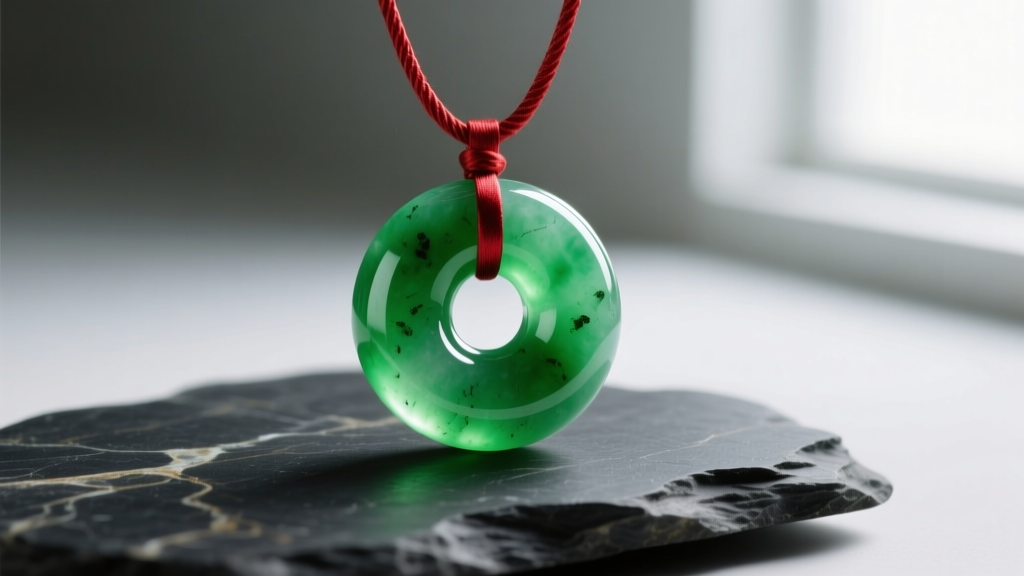
The Anatomy of a Jade Necklace Red String
The jade necklace red string is more than a simple piece of jewelry; it is a deeply rooted cultural amulet designed to ward off negative energy and attract prosperity. However, as the global market for Eastern-inspired jewelry has expanded, so too has the proliferation of counterfeit stones and mass-produced cords. Assessing the true budget and value of these necklaces in 2026 requires a granular understanding of gemology, textile durability, and artisan knotwork. Whether you are purchasing a protective talisman for your Zodiac Ben Ming Nian (birth year) or a sleek minimalist pendant for daily wear, understanding where your money is actually going is critical.
"The value of a jade amulet lies not just in the stone's translucency, but in the integrity of its treatments and the structural longevity of the cord that binds it."
Nephrite vs. Jadeite: The First Budget Fork
The term "jade" is an umbrella term covering two distinct metamorphic rocks: Nephrite and Jadeite. Your budget will immediately dictate which mineral you are purchasing.
Nephrite (The Traditional Standard)
Nephrite is a calcium and magnesium-rich silicate. It is historically significant (think ancient Chinese bi discs) and is prized for its smooth, buttery luster. The most valuable nephrite is "Mutton Fat" white Hetian jade from China, which can command prices rivaling fine jadeite. However, most commercial red string necklaces feature Canadian or Russian spinach-green nephrite, which is abundant and budget-friendly. Nephrite is tougher (less prone to shattering) but slightly softer (Mohs 6-6.5) than jadeite.
Jadeite (The Premium Market)
Jadeite is a sodium and aluminum-rich pyroxene. It offers a glassy luster, higher translucency, and a broader color spectrum, including Imperial Green, lavender, and icy white. Sourced primarily from Myanmar (Burma), fine jadeite is the investment-grade standard. If a vendor is selling a vibrant, highly translucent green jade pendant on a red string for under $100, you are almost certainly looking at treated jadeite or a nephrite imitation.
The A, B, and C Grading System: Why It Dictates Price
When evaluating a jade necklace red string, the gemological treatment grade is the single most important factor in value assessment. According to the Gemological Institute of America (GIA), the market categorizes jadeite into three distinct tiers based on human intervention.
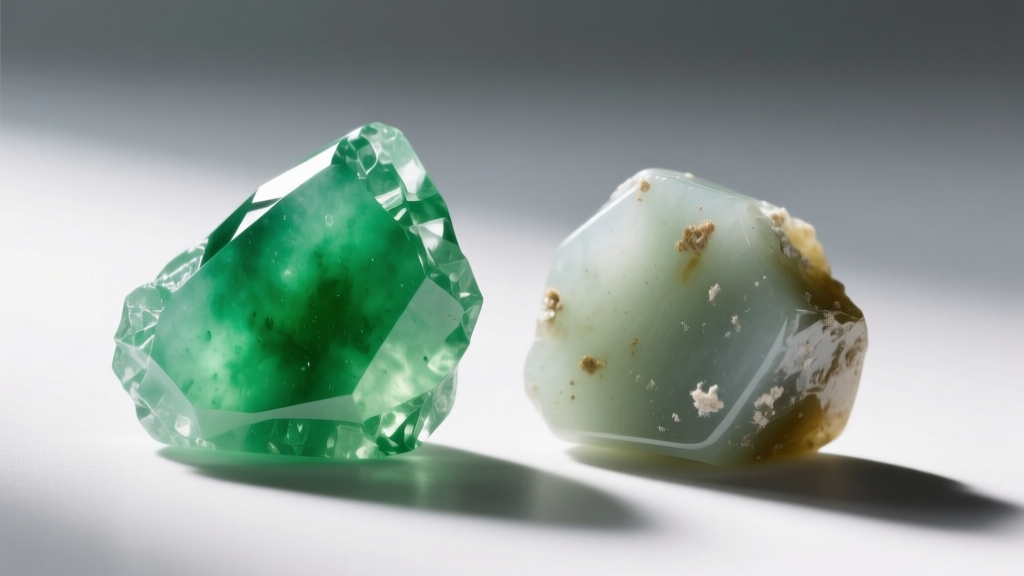
| Grade | Treatment Process | Durability & Failure Modes | Market Value Impact |
|---|---|---|---|
| Type A | 100% natural. Only traditional plum-wax polishing is applied. | Exceptional. Will last generations without structural degradation. | Premium. Retains and appreciates in value. |
| Type B | Bleached with acid to remove brown/yellow impurities, then impregnated with polymer resin. | Poor. The polymer yellows, becomes brittle, and cracks after 5-10 years of wear. | Low. Considered a treated stone; zero resale value. |
| Type C | Dyed to enhance or create green/lavender hues. Often combined with B-treatments (B+C). | Very Poor. Dye fades under UV light and can leach onto the red string via sweat. | Negligible. Essentially costume jewelry. |
When shopping, always request a certificate from a reputable lab like the GIA or NGTC (National Gemstone Testing Center of China) verifying the stone as "Type A" or "Natural Jadeite."
Assessing the Red String: Materials and Knotwork
The red string itself is a vital component of the necklace's value and lifespan. The color red (vermilion) represents fire, vitality, and protection in Feng Shui, but the physical material of the cord determines its functional value.
Cord Materials and Gauge Sizes
- Pure Silk (1.0mm - 1.5mm gauge): Traditional and luxurious, but highly susceptible to degradation. Human sweat is slightly acidic (pH 4.5 to 5.5), which breaks down silk proteins over time. A pure silk cord worn daily against the skin will typically fray and snap within 12 to 18 months, risking the loss of a valuable jade pendant.
- Waxed Nylon / Jade Cord (0.6mm - 0.8mm gauge): The modern standard for high-end jade jewelry. The wax coating repels moisture and sweat, while the nylon core provides immense tensile strength. It holds complex macrame knots securely without slipping.
- Cotton Blends: Often found in cheap, mass-produced tourist necklaces. They absorb oils, discolor quickly, and harbor bacteria.
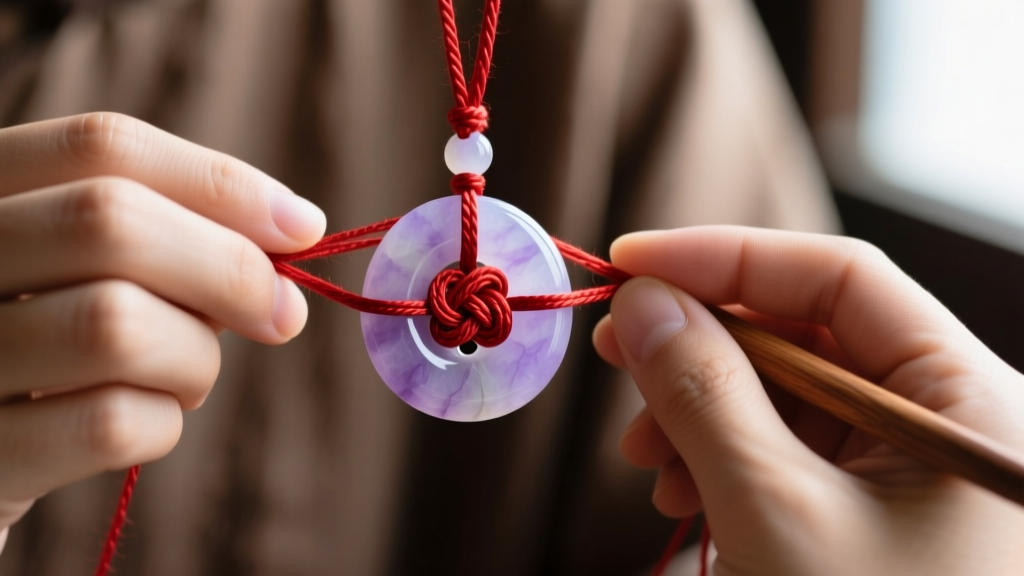
The Art of Chinese Knotting
Artisan knotwork adds tangible value to the piece. A hand-woven Pan Chang (mystic) knot or an adjustable sliding macrame closure requires hours of skilled labor. Conversely, machine-stitched loops or simple plastic clasps indicate a factory-made, low-value assembly.
2026 Pricing Tiers: What Should You Actually Pay?
To help you navigate the market, we have segmented the current pricing landscape for jade necklace red string combinations into three distinct budget tiers.
Tier 1: Souvenir & Commercial Grade ($15 – $60)
In this bracket, you are purchasing mass-produced nephrite (often Canadian or Korean jade) or Type B/C treated jadeite. The red strings are typically thin cotton or low-grade synthetic blends with machine-made slip knots. These are perfectly fine as casual, replaceable fashion accessories, but they hold zero investment value and the stones may degrade or fade over time.
Tier 2: Accessible Fine Jewelry ($80 – $350)
This is the sweet spot for most buyers seeking authentic, untreated stones. Here, you will find commercial-grade Type A jadeite (often with moderate inclusions or lighter, less saturated colors like pale apple green or icy white) and high-quality Russian nephrite. The red strings in this tier are usually durable, waxed nylon cords featuring hand-tied adjustable sliding knots and small complementary accent beads (like carnelian or gold-filled spacers).
Tier 3: Collector & Investment Grade ($500 – $5,000+)
At this level, you are paying for top-tier gemological quality. Expect highly translucent, vibrant Imperial Green or rare lavender Type A Burmese jadeite, or master-carved Hetian Mutton Fat nephrite. The cord work is bespoke, often integrating precious metal wire-wrapping, 18k gold accent beads, and complex, symmetrical artisan macrame that serves as a standalone piece of textile art.
Red Flags and Authentication Tips
When assessing a jade necklace red string in person or online, watch out for these critical failure indicators:
- The Temperature Test: Real jade (both nephrite and jadeite) has high thermal inertia. It should feel distinctly cold to the touch and take several seconds to warm up in your hand. Glass or plastic imitations will feel room-temperature immediately.
- The Dye Transfer Check: Inspect the red string where it loops through the jade pendant's drill hole. If you see green or lavender discoloration bleeding onto the red cord, the stone is Type C (dyed) and the dye is leaching.
- The Drill Hole Inspection: Use a jeweler's loupe to look inside the hole drilled through the jade. In Type B (polymer-impregnated) jade, you will often see a web-like network of surface fractures filled with resin, whereas Type A jade will show sharp, clean, natural drill marks.
- Vague Terminology: Beware of sellers using terms like "New Jade," "Korean Jade," or "Transvaal Jade." As noted in the GIA Jade Quality Factors guide, these are misleading trade names for entirely different minerals like serpentine or grossular garnet, which possess a fraction of the value of true jade.
Final Assessment
Evaluating a jade necklace red string requires looking past the vibrant color and cultural mystique. By demanding Type A certification, prioritizing waxed nylon cords over traditional silk for daily wear, and understanding the stark price differences between nephrite and jadeite, you can confidently allocate your budget toward a piece that offers both spiritual resonance and genuine material value.


