Jadeite Bead Necklace Troubleshooting: Repair & Care
Discover expert troubleshooting for your jadeite bead necklace. Learn to fix broken strings, identify treatments, and prevent bead damage.

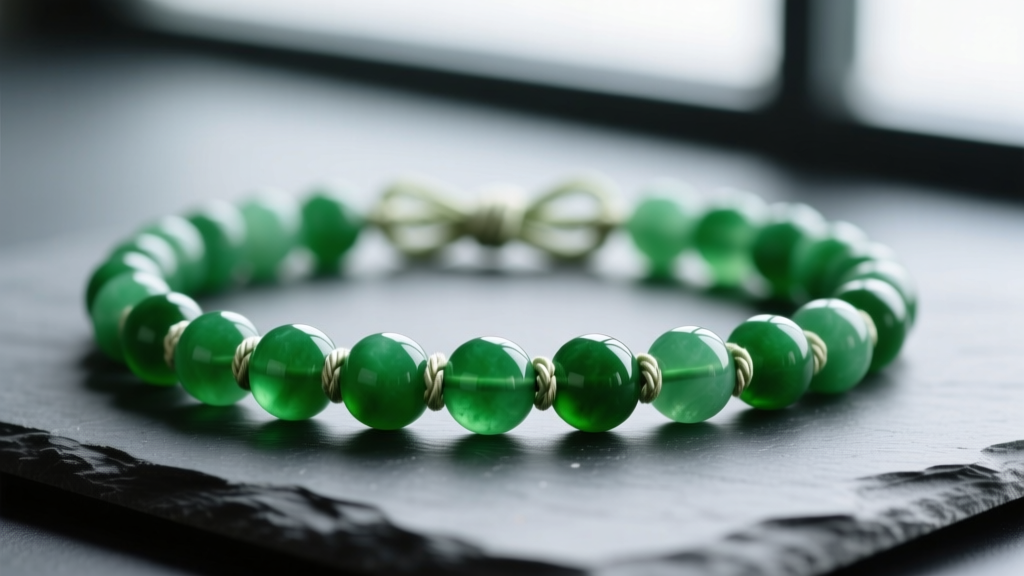
A genuine jadeite bead necklace is more than just an accessory; it is a generational heirloom and a significant financial investment. However, despite jadeite’s renowned toughness, the structural components holding these necklaces together are highly susceptible to environmental and mechanical degradation. Whether you are dealing with a snapped strand, dulling beads, or a failing clasp, understanding the specific failure modes of jadeite jewelry is critical for preservation.
This comprehensive troubleshooting guide addresses the most common structural and chemical issues plaguing jadeite bead necklaces, providing actionable, expert-level solutions for repair, restringing, and long-term maintenance.
The Anatomy of a Jadeite Bead Necklace Failure
Jadeite (a pyroxene mineral) ranks between 6.5 and 7 on the Mohs hardness scale and possesses exceptional toughness due to its interlocking crystalline structure. Consequently, when a jadeite bead necklace fails, the stones are rarely the culprit. The failure almost always originates in the stringing medium, the knotting technique, or the metal findings.
The most catastrophic failure mode is a strand break resulting in scattered beads. This is typically caused by the degradation of organic silk cords from prolonged exposure to sebum (skin oils), sweat (which has an acidic pH of 4 to 6), and cosmetic chemicals. Over time, these substances break down the protein structure of silk, causing it to rot from the inside out, often without visible exterior warning signs.
Diagnosing String and Knot Degradation
Traditional high-end jadeite necklaces are strung on 100% natural silk and knotted between every bead. While aesthetically pleasing and historically accurate, silk requires rigorous maintenance.
The "Tug Test" and Hole Abrasion
To diagnose string degradation, perform the "Tug Test." Gently pull the cord between two beads. If the cord feels stiff, brittle, or shows visible fraying near the bead hole, immediate restringing is required. Furthermore, inspect the drill holes. Poorly drilled jadeite beads—especially those single-drilled from one side—often feature sharp, jagged "blowouts" at the exit point. These sharp edges act like a cheese wire, slowly sawing through the silk cord with every movement of the wearer's neck.
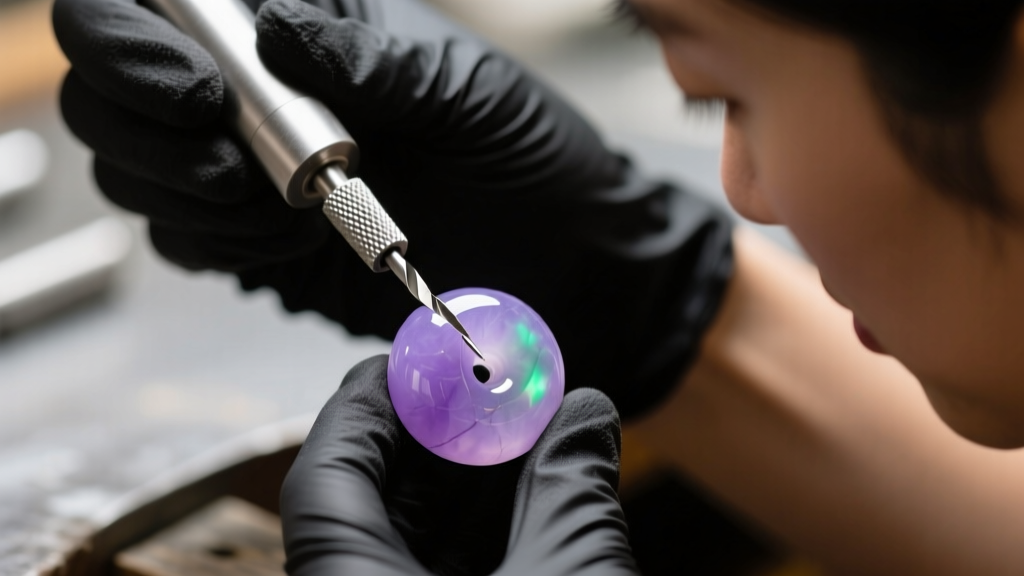
Expert Fix: If you discover sharp drill holes during a restringing project, a professional jeweler must use a diamond-coated bead reamer to gently smooth the interior channel. Never force a reamer; use light pressure and water lubrication to prevent micro-fractures in the jadeite.
Treatment Troubleshooting: Type A, B, and C Jadeite
Not all jadeite is created equal. The Gemological Institute of America (GIA) categorizes jadeite into three primary treatment types, each with distinct troubleshooting profiles and vulnerabilities. Understanding your necklace's treatment grade is essential before attempting any cleaning or repair.
| Treatment Grade | Description | Primary Vulnerability | Troubleshooting & Care |
|---|---|---|---|
| Type A | 100% natural, untreated (may have light plum juice waxing). | Accumulation of skin oils and environmental grime in the drill holes. | Safe for mild ultrasonic cleaning. Clean with warm water and a soft brush. |
| Type B | Acid-bleached to remove impurities, then polymer resin-impregnated. | Polymer resin yellows and degrades under UV light and heat, causing "crazing" (surface cracking). | Never use heat or ultrasonics. Store in a dark, climate-controlled environment. |
| Type C | Chemically dyed to enhance color (often green or lavender). | Organic dyes fade rapidly when exposed to direct sunlight and harsh chemicals. | Avoid all chemical cleaners. Keep strictly out of direct sunlight to prevent color loss. |
Diagnostic Tip: If you suspect your necklace is Type B, examine it under a long-wave (365nm) ultraviolet light. The polymer resins used in the 1990s and 2000s often exhibit a chalky, blue-green fluorescence, whereas natural Type A jadeite is generally inert or shows very weak fluorescence. For definitive verification, consult a GIA-certified gemologist.
Restringing Protocols: Materials and Techniques
When your jadeite bead necklace requires restringing, the choice of material dictates its longevity. While synthetic cords offer superior tensile strength, they lack the traditional drape of silk.
- Griffin Natural Silk: The industry standard for luxury necklaces. For 8mm to 10mm beads, use Size 2 (0.45mm) or Size 3 (0.50mm). Silk must be pre-stretched before knotting to prevent future sagging.
- Micro-Fused Polyethylene (e.g., WildFire): Offers incredible tensile strength and is impervious to sweat and cosmetics. However, it is difficult to knot securely and requires specialized adhesives at the terminus.
- Nylon (e.g., Beadalon Nymo): A strong compromise between silk and synthetics, though it can stretch over time under the heavy weight of large jadeite beads.
The Importance of French Wire (Bullion)
The highest point of friction on any beaded necklace is where the cord meets the metal clasp. Always insist that your jeweler uses French wire (also known as bullion or gimp)—a fine, coiled metal wire—over the silk at the clasp attachment points. This prevents the metal clasp from sawing through the cord and significantly extends the life of the stringing job.
Clasp Upgrades and Tension Fixes
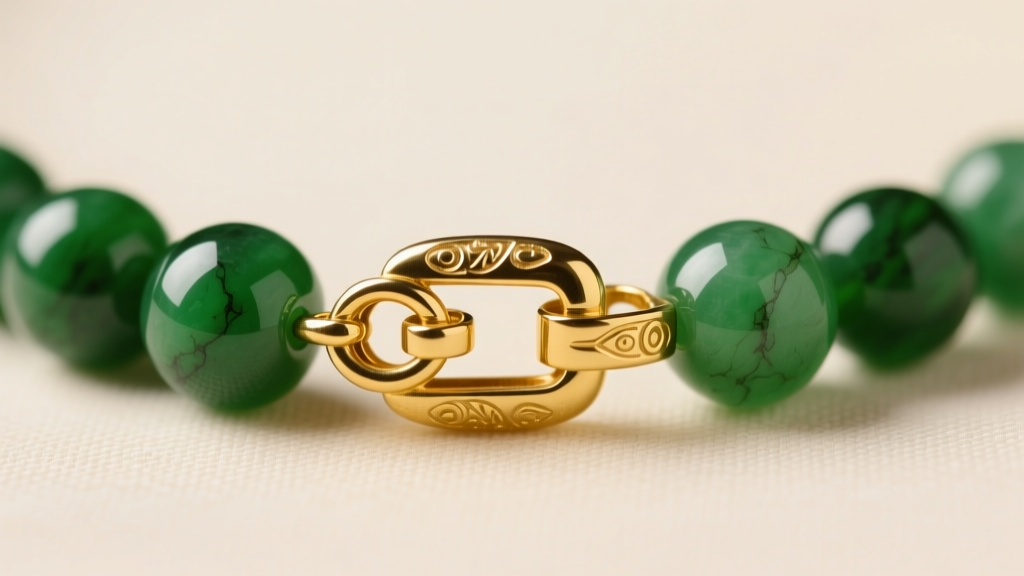
Many vintage jadeite bead necklaces feature traditional barrel clasps (either screw-thread or push-pin). These are notorious failure points. Screw threads strip easily when crossed, and push-pins lose their friction tension over time, causing the necklace to unexpectedly detach.
The Upgrade Solution: Replace failing barrel clasps with an 18k gold fold-over safety clasp equipped with a figure-8 safety catch. The fold-over mechanism provides a secure, positive lock, while the figure-8 wire acts as a secondary failsafe. According to the American Gem Society, upgrading to a modern safety clasp is one of the most effective ways to secure heavy, high-value beaded jewelry without compromising its aesthetic integrity.
Professional Maintenance and Storage
Preventative maintenance is always less costly than emergency repairs. Implement the following protocol to ensure your jadeite bead necklace remains in pristine condition for decades.
"Jadeite is remarkably tough, but the organic materials used to string and adorn it are not. Annual inspections of the cord and clasp are non-negotiable for heavy bead necklaces." — Master Jeweler & Gemologist
The 12-Month Inspection Checklist
- Cord Integrity: Check for stretching, discoloration, or fraying near the clasp and the center-front beads (which endure the most friction).
- Knot Tightness: Ensure knots are seated flush against the beads. Gaps indicate cord stretching and imminent failure.
- Clasp Function: Test the spring mechanism and safety catch for tension and secure closure.
- Surface Inspection: Look for micro-scratches or dulling on the jadeite, which may indicate chemical damage from cosmetics or improper cleaning agents.
Proper Storage Techniques
Never store a jadeite bead necklace hanging on a jewelry tree or hook. The constant gravitational pull will permanently stretch the silk cord, causing the knots to pull away from the beads. Always store the necklace flat in a lined jewelry box, loosely coiled to prevent kinking. Keep it in a breathable fabric pouch to maintain ambient humidity; excessively dry environments can cause older silk to become brittle and snap.
By understanding the specific vulnerabilities of the stringing materials, recognizing the signs of chemical treatments, and upgrading outdated findings, you can effectively troubleshoot and preserve your jadeite bead necklace, ensuring it remains a flawless, wearable treasure for generations to come.


