How to Turn a Wedding Ring Into a Necklace: Trends & Techniques
Learn how to safely turn a wedding ring into a necklace. Explore pendant trends, chain pairings, and secure ring holder options for everyday wear.

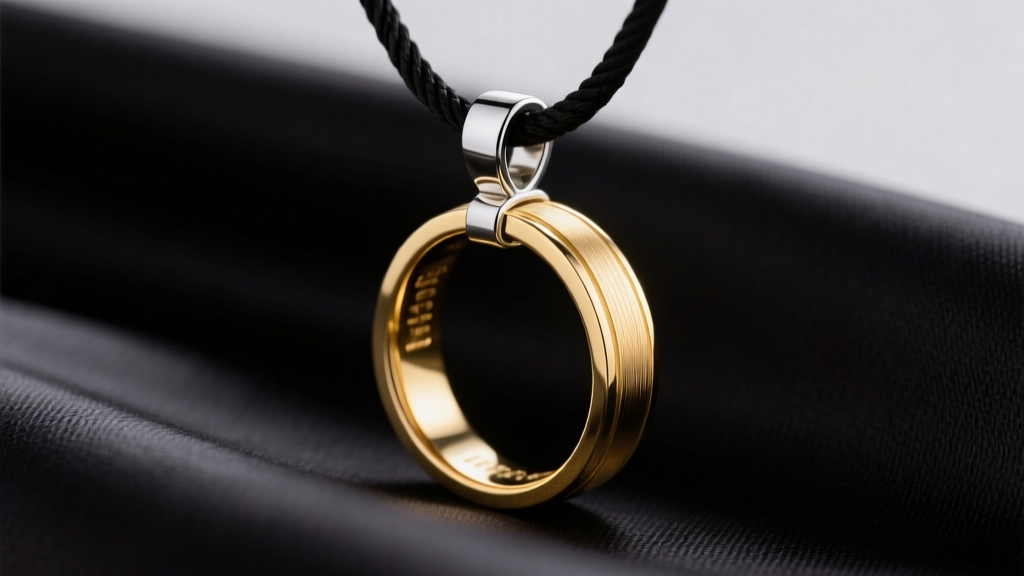
The Shift: Why We Are Wearing Rings as Pendants
The decision to turn a wedding ring into a necklace is rarely just a fleeting stylistic choice; it is often born from practical necessity or profound emotional shifts. Medical professionals, gym-goers, and individuals experiencing finger swelling due to pregnancy or arthritis frequently seek ways to keep their bands close without compromising safety or comfort. Furthermore, the modern jewelry landscape has embraced the ring-to-pendant conversion as a legitimate design category, moving away from the makeshift 'string-through-the-band' look of the past toward engineered, high-end suspension systems.
According to the Jewelers of America, occupational hazards and active lifestyles are the leading drivers for ring removal, making secure pendant alternatives a vital market segment. Whether you are looking to memorialize a loved one, protect a high-carat eternity band from impact damage, or simply experiment with mixed-metal layering, understanding the mechanics of ring suspension is critical to preserving both the jewelry and your peace of mind.
Method 1: The Secure Ring Holder (Non-Destructive)
For those who refuse to alter the structural integrity of their wedding band, non-destructive ring holders are the gold standard. These devices cradle or thread the ring, allowing for easy removal and cleaning while providing a secure connection to a chain.
Screw-Top Bails and Viton O-Rings
The most elegant non-destructive option is the screw-top bail. Typically machined from 925 sterling silver or 14k gold, these bails feature a threaded cap that unscrews to allow the ring to slide onto a central post. The critical component here is the O-ring seal. While cheap variants use standard rubber that degrades rapidly when exposed to lotions, perfumes, and skin oils, premium holders utilize Viton fluoroelastomer O-rings. Viton is highly resistant to chemical degradation and heat, ensuring the bail remains tightly sealed against the post even during rigorous daily wear.
- Best for: Flat bands, comfort-fit rings, and signet rings up to 8mm in width.
- Limitations: Cannot accommodate heavily domed bands or rings with protruding center stones that block the bail closure.
- Price Range: $45 – $120 for precious metal bails with Viton seals.
Silicone Tension Mounts
For active individuals, medical-grade silicone tension holders offer a sporty, ultra-secure alternative. These pendants feature an internal silicone sleeve that grips the band via friction. The durometer (hardness) of the silicone is calibrated to hold a 14k gold band securely without scratching the metal. However, they do introduce a casual, utilitarian aesthetic that may not suit formal attire.
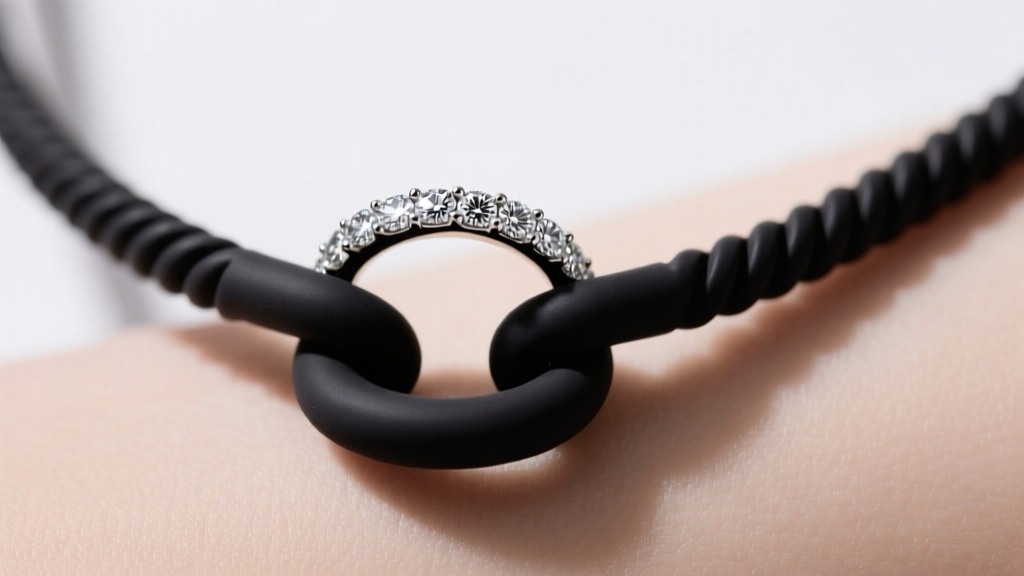
Method 2: Soldering & Bail Conversion (Permanent)
If you intend to permanently convert the ring into a dedicated pendant, having a master jeweler solder a bail directly to the shank is the most seamless approach. This method eliminates the bulk of a ring holder and allows the band to lay perfectly flat against the sternum. However, this requires careful metallurgical consideration.
Metallurgical Realities: Laser vs. Torch Soldering
Traditional torch soldering requires heating a significant portion of the ring's shank to flow the solder alloy. If your wedding band features channel-set diamonds, pave, or tension settings, torch heat can fracture the stones or melt the microscopic prongs holding them. The Gemological Institute of America (GIA) strongly advises caution when applying heat to diamond-set jewelry, as thermal shock is a primary cause of stone breakage.
Instead, insist on laser welding. Laser welders use concentrated pulses of light to fuse metal in a localized area measuring less than a millimeter. This allows a jeweler to attach a gold or platinum bail directly next to a pave diamond without raising the ambient temperature of the surrounding metal, completely eliminating the risk of heat damage.
Bail Sizing Geometry
When selecting a soldered bail, the inner diameter (ID) must be calculated based on your chosen chain. A standard 6mm wedding band requires a bail with an ID of at least 7mm x 4mm. If the bail is too tight, the chain will bind at the apex of the bail during movement, causing severe friction wear on both the chain links and the bail itself.
Chain Pairing Matrix: Matching Band Weight to Chain Gauge
The most common failure point in a ring-to-necklace conversion is chain breakage. Wedding bands, particularly those made from dense metals like tungsten carbide or platinum, exert significant tensile stress on delicate chain links. Use the matrix below to pair your ring's material and weight with an appropriate chain.
| Ring Material | Avg. Weight (8mm Band) | Recommended Chain Style | Minimum Gauge / Thickness | Clasp Requirement |
|---|---|---|---|---|
| 14k Yellow/White Gold | 6.5 - 8.0 grams | Box Chain or Wheat Chain | 1.5mm - 2.0mm | Standard Lobster Clasp |
| Platinum (950 Pt) | 12.0 - 15.0 grams | Rope Chain or Curb Chain | 2.0mm - 2.5mm | Heavy-Duty Lobster |
| Tungsten Carbide | 14.0 - 18.0 grams | Solid Curb or Figaro | 3.0mm+ | Box Clasp with Safety |
| Titanium (Grade 5) | 4.0 - 5.5 grams | Cable or Mariner Chain | 1.2mm - 1.5mm | Spring Ring or Lobster |
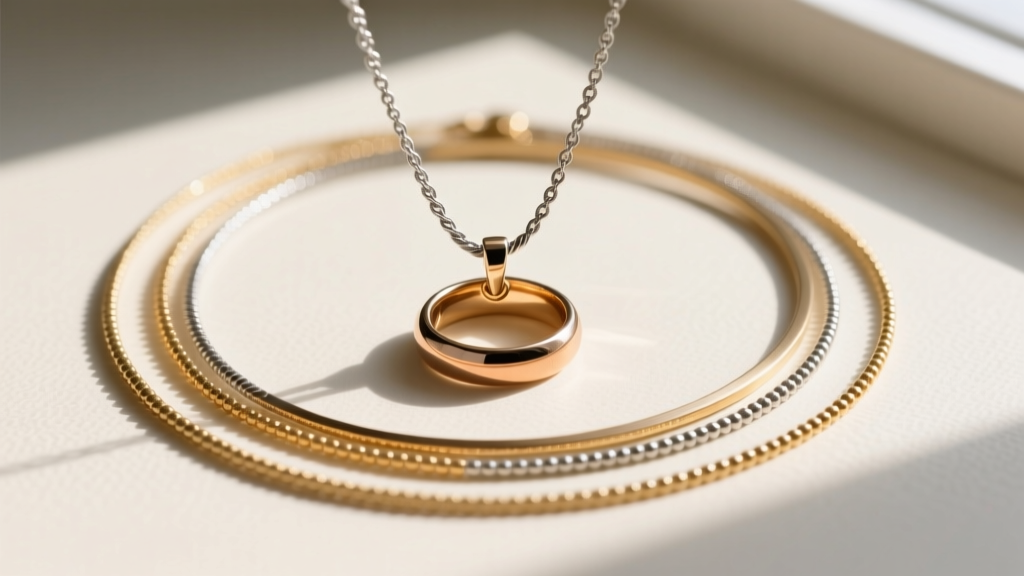
Styling the Ring Pendant: Current Trend Analysis
The aesthetic of the ring pendant has evolved significantly. The outdated paradigm of hiding the ring beneath a shirt has been replaced by intentional, high-visibility styling techniques.
- The Mixed-Metal Stack: Pairing a yellow gold wedding band pendant with a white gold or platinum chain creates a deliberate, modern contrast. This is especially popular for individuals who have inherited a ring that doesn't match their everyday metal preference.
- Asymmetrical Layering: Wearing the ring pendant on a 24-inch chain, layered with a 16-inch choker and an 18-inch coin pendant. The ring acts as the 'anchor' piece at the bottom of the stack, drawing the eye downward and elongating the neckline.
- The 'Raw' Conversion: A growing trend in bespoke jewelry involves soldering the bail to the ring in an off-center or asymmetrical position, allowing the ring to hang at a dynamic angle rather than perfectly upright. This gives the piece an organic, avant-garde feel.
Maintenance & Wear-and-Tear Realities
Converting a ring into a pendant changes its wear pattern entirely. Rings experience lateral friction against the fingers; pendants experience vertical tension and rotational friction against the bail.
"When a heavy band hangs from a chain, the inner curve of the ring acts as a fulcrum. Over a period of 12 to 18 months, the chain will slowly saw into the inner shank of the ring if the metal is softer than the chain alloy. Always ensure your chain is at least one karat lower, or made of a softer alloy, than the ring itself to sacrifice the chain rather than the band."
— Master Bench Jeweler, Jewelers of America Symposium Notes
To mitigate this, inspect the inner shank of your ring every six months for grooving. If you are using a non-destructive screw-top bail, apply a microscopic drop of jeweler's wax to the threads every few months to prevent the bail from vibrating loose during daily movement. By respecting the physics of suspension and choosing the correct metallurgical pairings, you can safely transform a meaningful ring into a stunning, everyday pendant that honors its original purpose while adapting to your current lifestyle.


