Wearing a Pearl Necklace for Sex: Intimate Care Guide
Discover how to safely select, wear, and clean a pearl necklace for sex. Expert troubleshooting on thread types, nacre thickness, and sweat damage.

The Material Science of Intimate Pearl Wear
Incorporating fine jewelry into boudoir styling and intimate moments is a growing trend in sensory fashion, but it presents unique challenges for organic gemstones. Choosing the right pearl necklace for sex requires balancing aesthetic desires with the harsh realities of material science. Unlike diamonds or sapphires, pearls are organic structures composed primarily of calcium carbonate and conchiolin (an organic protein). This composition makes them exceptionally vulnerable to the exact conditions present during physical intimacy: elevated body heat, friction, and acidic perspiration.
Human sweat typically registers a pH between 4.5 and 7.0. When slightly acidic sweat comes into prolonged contact with calcium carbonate, a microscopic chemical reaction occurs that etches the nacre, permanently dulling the pearl's signature luster. Furthermore, the physical friction of bedding, skin, and movement can cause micro-abrasions on softer gemstones. Pearls rank a mere 2.5 to 4.5 on the Mohs hardness scale, meaning they can be easily scratched by dust, zippers, or even aggressive fabric textures. To safely wear pearls in the bedroom, you must completely rethink how the necklace is constructed, strung, and maintained.
Troubleshooting the String: Silk vs. Modern Synthetics
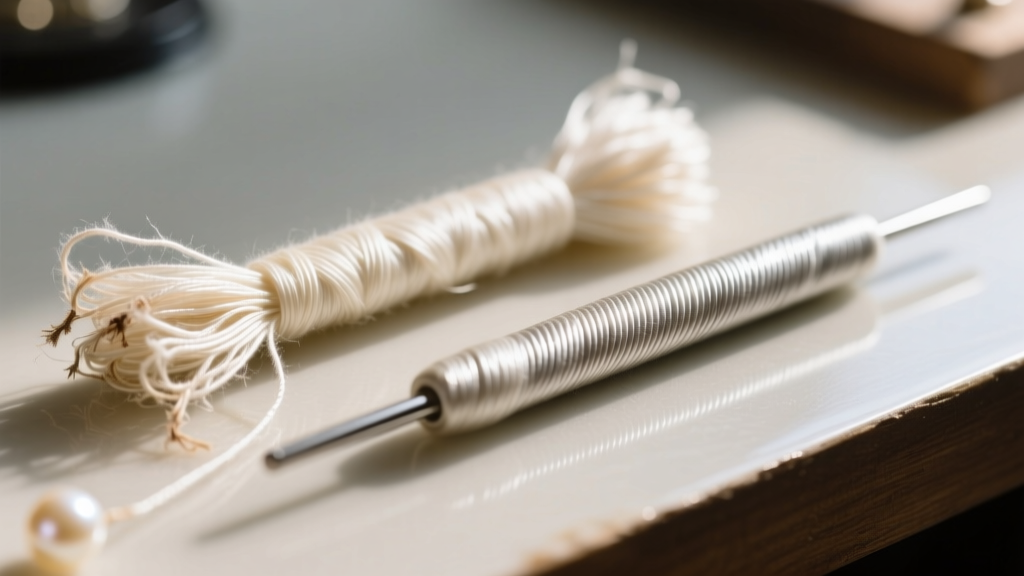
When selecting a pearl necklace for sex, the stringing material is actually more critical than the pearls themselves. The traditional standard for pearl stringing is natural silk thread (such as Griffin silk). While silk drapes beautifully and is the hallmark of high-end traditional jewelry, it is an absolute liability in high-moisture, high-tension environments.
The Failure Modes of Silk
Silk is highly absorbent. When exposed to sweat or ambient humidity, the fibers swell, stretch, and eventually begin to degrade. If a silk-strung pearl necklace is subjected to sudden tension—such as being pulled or caught on bedding during intimacy—the wet, weakened silk is prone to catastrophic snapping. According to master stringers, silk threads exposed to frequent moisture and body oils require restringing every six months to prevent sudden failure.
The Synthetic Solution
For intimate wear, you must upgrade to modern synthetic alternatives. Gel-spun polyethylene threads (like PowerPro) or thermally fused coated wires (like Beadalon WildFire) offer massive advantages. These materials are entirely waterproof, impervious to acidic sweat, and possess a tensile strength up to ten times greater than silk of the same diameter. A necklace strung on 0.008-inch WildFire will not stretch when wet and will easily withstand the sudden kinetic pulls associated with active movement, keeping your pearls secure against your skin.
Nacre Thickness: Selecting Pearls That Survive Friction
Not all pearls are created equal, and nacre thickness is the primary determinant of a pearl's survivability in high-friction environments. The nacre is the iridescent outer layer secreted by the mollusk. If the nacre is too thin, the friction of skin and sheets can literally wear it away, exposing the dull shell bead underneath—a phenomenon known as 'peeling'.
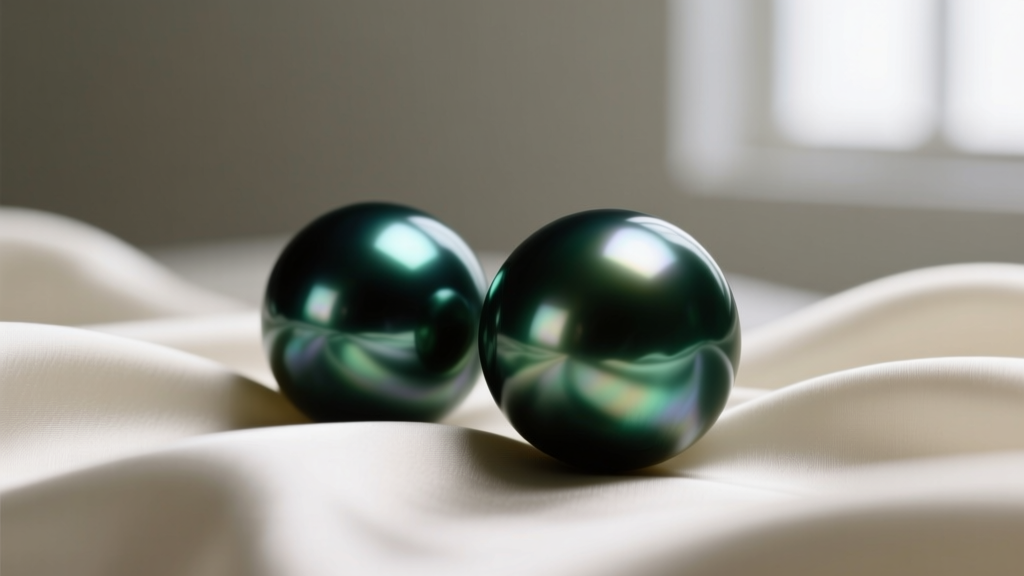
Standard commercial Akoya pearls often feature nacre thicknesses between 0.3mm and 0.5mm. While stunning, they are too delicate for frequent intimate wear. To troubleshoot this, you must seek out specific pearl varieties that guarantee thicker nacre layers. Tahitian pearls, for example, are legally required by the French Polynesian government to have a minimum nacre thickness of 0.8mm to be exported. This extra density provides a robust buffer against micro-abrasions and sweat etching. High-grade Hanadama Akoya pearls also offer superior nacre density and are a safer choice if you prefer the classic white aesthetic.
| Pearl Type | Avg. Nacre Thickness | Friction Resistance | Sweat Resistance | Intimate Wear Verdict |
|---|---|---|---|---|
| Commercial Akoya | 0.3mm - 0.5mm | Low | Moderate | Avoid (High peeling risk) |
| Hanadama Akoya | 0.6mm - 0.8mm | Moderate | Moderate | Proceed with caution |
| Tahitian | 0.8mm - 2.0mm+ | High | High | Excellent choice |
| South Sea | 2.0mm - 4.0mm+ | Very High | High | Excellent (but heavy) |
| Freshwater (Tissue Nucleated) | Solid Nacre | High | Moderate | Good (but lower luster) |
Clasp Failures and the 'Endless Loop' Solution
The clasp is the weakest mechanical point on any necklace. During intimacy, traditional lobster claws can dig into the skin, catch on hair, or snag on high-thread-count sheets. Magnetic clasps, while easy to use, are notorious for pulling apart under sudden lateral tension, sending a cascade of pearls across the bedroom floor.
The Troubleshooting Fix: The safest configuration for a pearl necklace for sex is the 'Endless Loop.' By choosing an opera-length (28 to 34 inches) or rope-length (over 45 inches) necklace that slips easily over the head, you completely eliminate the metal clasp from the equation. This removes the risk of clasp-induced skin scratching and eliminates the primary mechanical failure point. If you must have a shorter, 16-to-18-inch princess length, insist on a secure bayonet clasp or a screw-lock barrel clasp, which require deliberate, multi-step actions to open and will not yield to accidental pulling.
Post-Intimacy Triage: Neutralizing Acid and Oils
If you wear pearls in the bedroom, your post-wear care protocol must be immediate and precise. You cannot simply take the necklace off and toss it into a jewelry box; the residual sweat and body oils will begin etching the calcium carbonate within hours.
Step-by-Step Neutralization Protocol
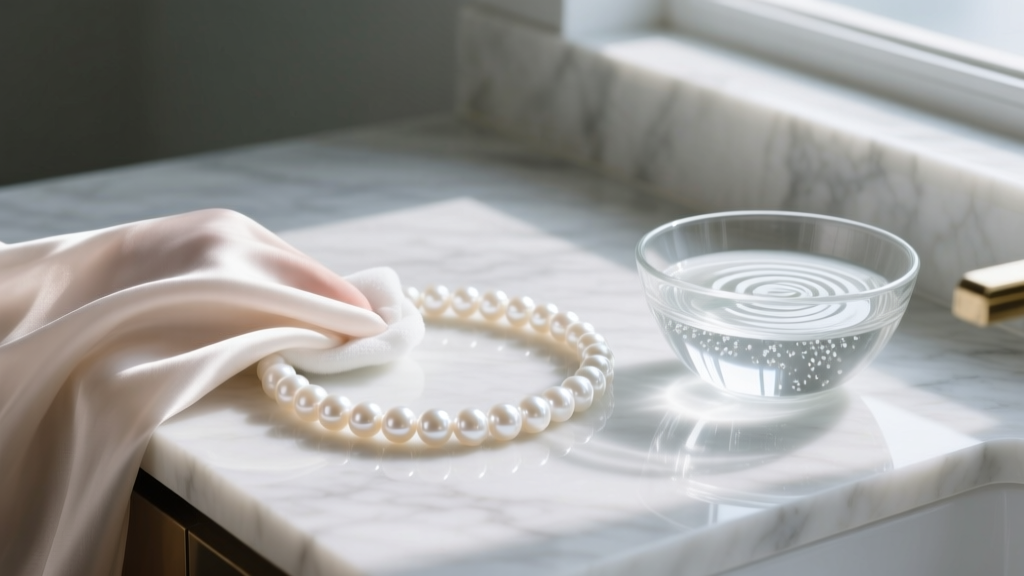
- Step 1: The Damp Wipe. Never use tap water, which contains chlorine and minerals that can spot the nacre. Dampen a clean, lint-free microfiber cloth with distilled water. Gently wipe down every individual pearl to remove acidic sweat and sebum.
- Step 2: The Drying Phase. Lay the necklace flat on a dry towel. Never hang a wet pearl necklace, as the weight of the water can stretch the stringing material (even synthetics can experience temporary tension warping when wet).
- Step 3: The Conchiolin Feed. Once a month, apply a microscopic drop of pure, unscented jojoba oil to a cloth and buff the pearls. This mimics the natural oils of the mollusk and prevents the conchiolin protein from drying out and cracking.
Expert Insight: According to the Gemological Institute of America (GIA), pearls should always be the 'last on, first off' when it comes to jewelry. In intimate settings, this means putting them on after all lotions, massage oils, and perfumes have fully absorbed into the skin, and removing them the moment physical exertion ceases.
Sensory Alternatives for Boudoir Styling
If the rigorous maintenance and high risk of damage associated with organic pearls feel like too much of a liability, you can achieve a similar sensory experience with alternative materials. The appeal of pearls in intimate settings often lies in their cool initial temperature against the skin and their smooth, heavy drape.
To replicate this without the vulnerability, consider a heavy-gauge platinum or 18k yellow gold chain necklace. Platinum is entirely impervious to sweat, hypoallergenic, and possesses a satisfying, cool weight that mimics the sensory profile of a strand of South Sea pearls. A seamless, soldered-link platinum collar offers the elegant, skin-flushing aesthetic of a pearl choker but can be worn through any level of physical activity without fear of chemical etching or string failure. For more insights on selecting durable precious metals for daily and active wear, the American Gem Society (AGS) provides excellent comparative guides on metal hardness and gemstone durability.
Conclusion
Wearing a pearl necklace for sex is a thrilling intersection of luxury and intimacy, but it is not for the faint of heart—or the careless owner. By prioritizing synthetic stringing materials, selecting thick-nacre varieties like Tahitian or South Sea pearls, opting for clasp-free endless loops, and committing to a strict distilled-water cleaning regimen, you can protect your investment. Fine jewelry is meant to be experienced, not just locked in a vault, provided you respect the delicate chemistry of the gems you wear against your skin.


