Jasper Necklace Value Guide: Pricing, Fakes & Quality Tiers
Discover the true value of a jasper necklace. Learn how to price Red, Ocean, and Imperial varieties, spot dyed fakes, and assess hardware quality.

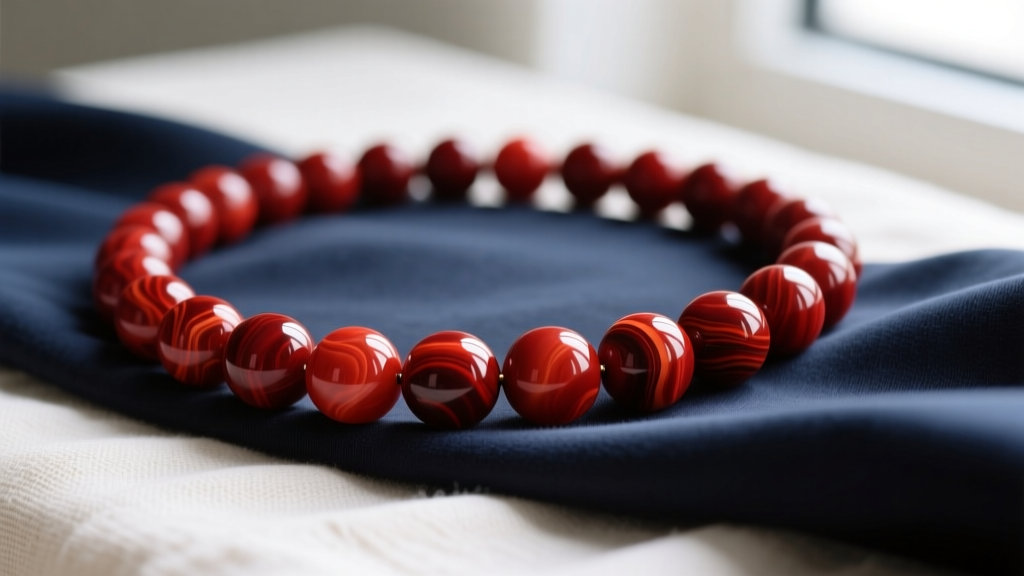
Evaluating the true market value of a jasper necklace requires looking far beyond the surface. As an opaque, microcrystalline variety of quartz (chalcedony), jasper boasts a Mohs hardness of 6.5 to 7, making it highly durable for everyday wear. However, the 2026 gemstone market is flooded with mass-produced, dyed agates and glass imitations masquerading as premium jasper. Whether you are eyeing a simple Red Jasper strand or a high-end Imperial Jasper statement piece, understanding the mineralogical nuances, stringing mechanics, and hardware grades is essential to ensure you are paying a fair price. This comprehensive value assessment breaks down exactly what you should expect to pay, how to spot deceptive treatments, and where budget brands inevitably cut corners.
The True Market Value: Pricing Tiers and What to Expect
The price of a jasper necklace is rarely dictated by the raw material cost alone; it is driven by the rarity of the specific variety, the precision of the lapidary cutting, and the quality of the assembly. Commercial-grade jasper beads are often tumbled in massive barrels, resulting in uneven shapes and heavy wax coatings. In contrast, artisan and collector-grade necklaces feature hand-matched, precision-drilled beads with minimal surface enhancement.
| Quality Tier | Jasper Variety | Bead Cut & Finish | Estimated Price Range | Primary Value Drivers |
|---|---|---|---|---|
| Commercial | Red, Dalmatian, Yellow | Tumbled, heavily waxed, uneven sizing | $15 - $40 | Mass availability, low labor cost |
| Mid-Tier Artisan | Mookaite, Ocean Jasper (lower grade) | Smooth cabochon, matched patterns, light polish | $60 - $140 | Pattern uniqueness, durable stringing |
| Collector / High-End | Imperial, Premium Ocean, Bruneau | Precision faceted or high-domed cabs, flawless polish | $180 - $600+ | Rare mine origins, landscape scenes, 925 silver hardware |
When shopping, be highly skeptical of any 'Ocean Jasper' necklace priced under $45. Authentic Ocean Jasper, sourced exclusively from the Marovato mine in Madagascar, requires careful extraction and lapidary work to preserve its delicate orbicular patterns. If the price seems too good to be true, you are likely looking at dyed agate or printed glass.
Decoding Jasper Varieties: Which Commands a Premium?
Not all jasper is created equal. The mineral inclusions—primarily iron oxide, manganese, and clay—dictate the color and pattern, which in turn dictate the value. According to the Mindat.org mineral database, the specific gravity of jasper typically ranges between 2.58 and 2.91, but the visual landscape is what collectors pay for.
Red Jasper: The Baseline Standard
Red Jasper is the most abundant variety, colored by high concentrations of iron oxide (hematite). Because it is mined globally in massive quantities, it holds very little intrinsic collector value. A standard 18-inch strand of 8mm Red Jasper beads should cost no more than $25 to $35. Its primary value lies in its durability and deep, uniform color, making it a staple for everyday beaded jewelry.
Ocean Jasper: The Orbicular Premium
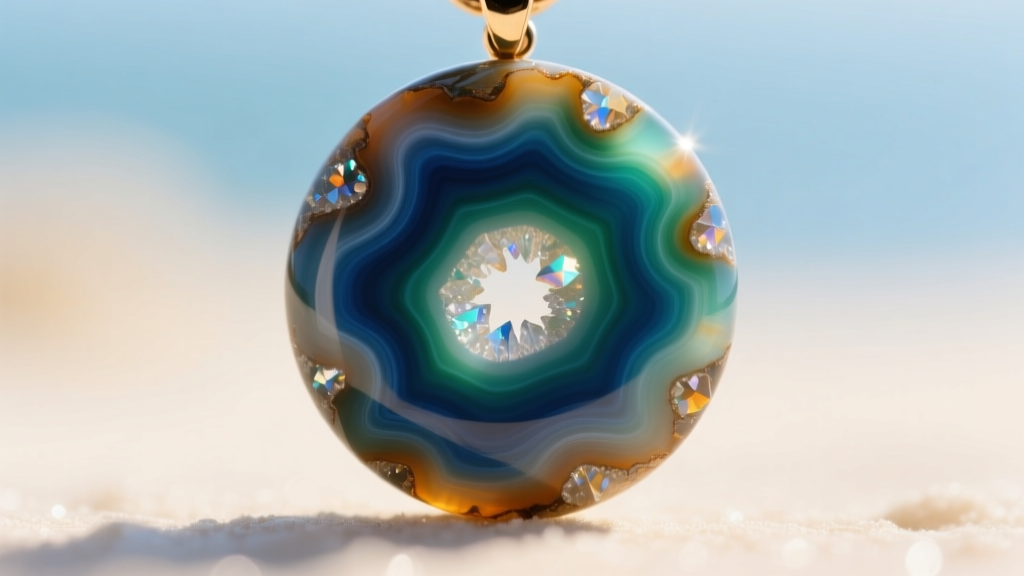
Ocean Jasper is highly prized for its 'orbicular' (circular) patterns and vibrant botanical hues. High-grade Ocean Jasper features distinct, multi-colored 'eyes' and natural druzy (crystal) pockets. Lapidaries must carefully orient the rough stone to center these patterns within each bead or pendant. Expect to pay $80 to $150 for a well-matched beaded necklace, and upwards of $250 for a large, high-domed cabochon pendant set in sterling silver.
Imperial and Bruneau Jasper: The Collector's Grail
Imperial Jasper (from Mexico) and Bruneau Jasper (from Idaho) are the heavyweights of the jasper family. They exhibit vivid, picture-like landscapes with deep greens, reds, and creams. These varieties are often cut into large, single pendants rather than beads to preserve the 'scene.' A high-quality Imperial Jasper pendant on a sterling silver chain will easily command $200 to $500, depending on the artistic merit of the natural pattern.
The Imitation Game: Spotting Fakes and Treatments
The most common deception in the jasper market is selling dyed agate or howlite as 'Red Jasper' or 'Green Jasper.' Because agate is translucent and jasper is opaque, dyeing translucent agate with red or green pigment is a cheap way to mimic jasper's appearance. The Gemological Institute of America (GIA) frequently documents these pervasive dye treatments in commercial bead markets.
The Acetone Swab Test
If you suspect your red or green jasper necklace is dyed, perform an acetone swab test. Dip a cotton swab in pure acetone (nail polish remover) and rub it vigorously against an inconspicuous area of the bead, preferably near the drill hole. If the cotton turns red or green, the stone is dyed. Authentic Red Jasper gets its color from internal iron oxide and will not bleed color onto a swab.
Glass and Plastic Imposters
Some commercial 'Ocean Jasper' is actually molded glass with painted orbicular patterns. Glass imitations can be identified by their thermal conductivity; glass feels warm to the touch almost immediately, whereas authentic quartz-based jasper remains cool for several seconds. Additionally, examine the beads under a 10x jeweler's loupe. Glass will often reveal tiny, perfectly spherical air bubbles, while authentic jasper will show natural mineral fracturing and grain structures.
Hardware and Stringing: Where Budget Brands Cut Corners
A $150 jasper necklace is a poor investment if it breaks in three months due to substandard stringing. Jasper is a dense, heavy stone. A standard 20-inch strand of 10mm jasper beads can weigh over 60 grams. Budget manufacturers often string these heavy beads on cheap elastic cord or low-strand-count nylon, leading to catastrophic failure.
- Elastic Cord: The worst choice for heavy jasper. Skin oils, lotions, and UV exposure degrade elastic rapidly. Expect a stretch-knot jasper bracelet or necklace on elastic to snap within 6 to 12 months.
- Silk Thread: Traditional and beautiful, but silk stretches over time and rots when exposed to moisture. Heavy jasper beads will saw through silk thread at the drill holes within two years, requiring frequent professional restringing.
- 49-Strand Micro-Fused Steel Wire: The industry gold standard for heavy stone beads. Brands like Soft Flex use 49 strands of stainless steel coated in nylon. A 0.024-inch thickness provides the necessary drape and tensile strength to support heavy jasper indefinitely without kinking.
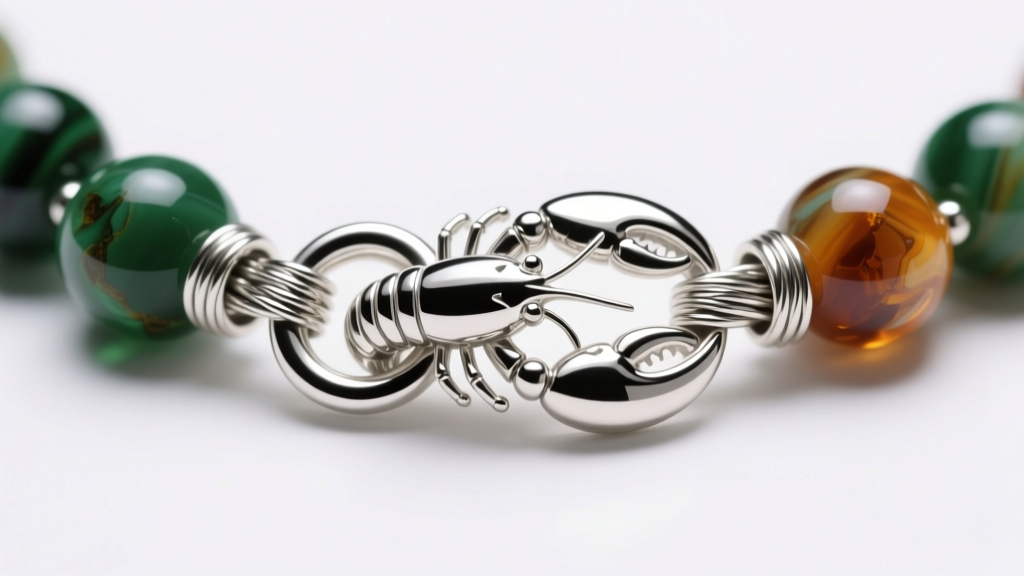
Furthermore, inspect the clasp and crimps. High-end jasper necklaces utilize solid 925 sterling silver or 14k gold-filled lobster clasps and seamless sterling crimp beads. Budget necklaces use hollow base-metal clasms that will tarnish, turn your skin green, and eventually snap under the weight of the stone.
Final Value Assessment Checklist
Before purchasing any jasper necklace, run it through this quick E-E-A-T (Expertise, Experience, Authoritativeness, and Trustworthiness) buyer's checklist to ensure you are getting genuine value:
- Verify the Variety: Does the price align with the rarity? (e.g., Red Jasper should be cheap; Imperial should be expensive).
- Check the Drill Holes: Look closely at the bead holes. Dyed stones often show dark, concentrated rings of pigment around the drill site where the dye pooled during processing.
- Assess the Weight: Authentic jasper is dense quartz. If the necklace feels suspiciously light or 'plastic' in the hand, it may be a resin composite or glass.
- Inspect the Stringing: Gently pull the beads apart. If you see elastic, negotiate the price down or factor in the $25-$40 cost of having a jeweler restring it on 49-strand wire.
- Demand Hardware Transparency: Ensure the seller explicitly states the clasp is 925 sterling silver or gold-filled, not 'silver-toned' or 'alloy.'
By applying these rigorous assessment criteria, you can confidently navigate the market, avoid overpriced fakes, and invest in a jasper necklace that offers both enduring geological beauty and genuine structural longevity.


