Jay King Turquoise Necklace: Stone & Metal Properties Guide
Explore the gemological and metallurgical properties of a Jay King turquoise necklace, from stabilized matrix stones to mixed-metal alloys and care.

Introduction to Material Science in Southwestern Jewelry
When evaluating a jay king turquoise necklace, collectors and daily wearers alike must look beyond the striking aesthetic to understand the complex material science at play. Known for his bold, Southwestern-inspired designs and frequent appearances on home shopping networks, Jay King has popularized a distinct mixed-metal and matrix turquoise aesthetic. However, the longevity, wearability, and ultimate value of these pieces depend entirely on their gemological and metallurgical properties. In 2026, as jewelry consumers become increasingly educated about stone treatments and alloy compositions, understanding the raw materials of your necklace is no longer optional—it is essential for proper care and investment protection.
Gemological Profile: Natural vs. Stabilized Turquoise
Turquoise is a hydrous phosphate of copper and aluminum, scoring between 5 and 6 on the Mohs hardness scale. This relative softness and its naturally porous structure dictate how the stone must be treated before it can be set into a heavy, multi-strand jay king turquoise necklace.
Stabilization and Enhancement
According to the Gemological Institute of America (GIA), the vast majority of commercial turquoise is stabilized. This involves subjecting the porous stone to pressure, forcing a polymer resin or epoxy into its microscopic voids. This process permanently hardens the stone, prevents it from absorbing skin oils or cosmetics, and locks in the vibrant blue or green color.
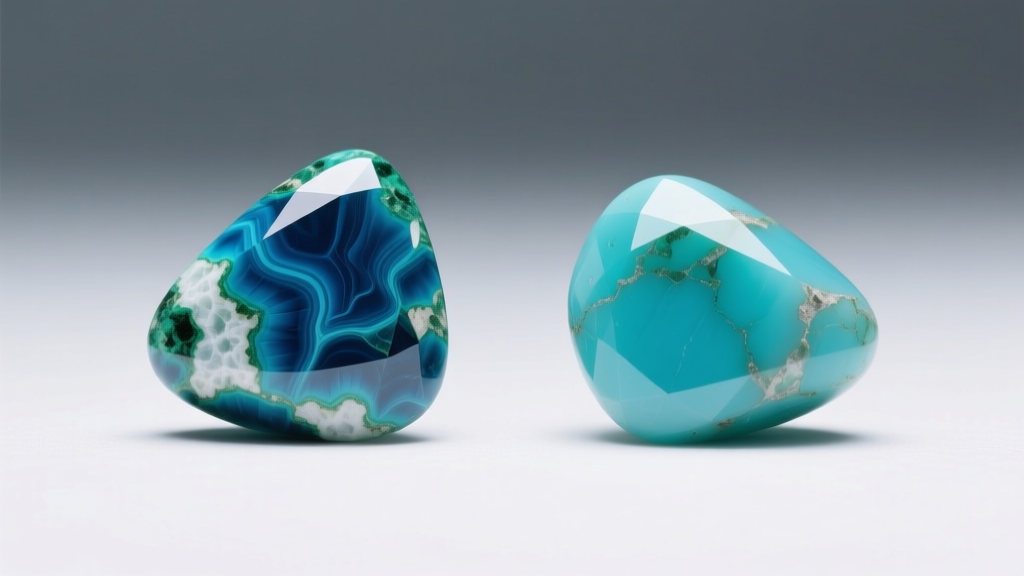
While purists may seek out completely natural, untreated turquoise, stabilization is actually a mark of durability for everyday necklaces. Untreated high-grade turquoise (like premium Sleeping Beauty or Lander Blue) is exceptionally rare and commands gemstone-level pricing. Conversely, reconstituted turquoise—where turquoise dust is mixed with resin and dyed—is a lower-tier material that lacks the unique matrix veining King's designs are famous for.
Matrix Inclusions and Structural Impact
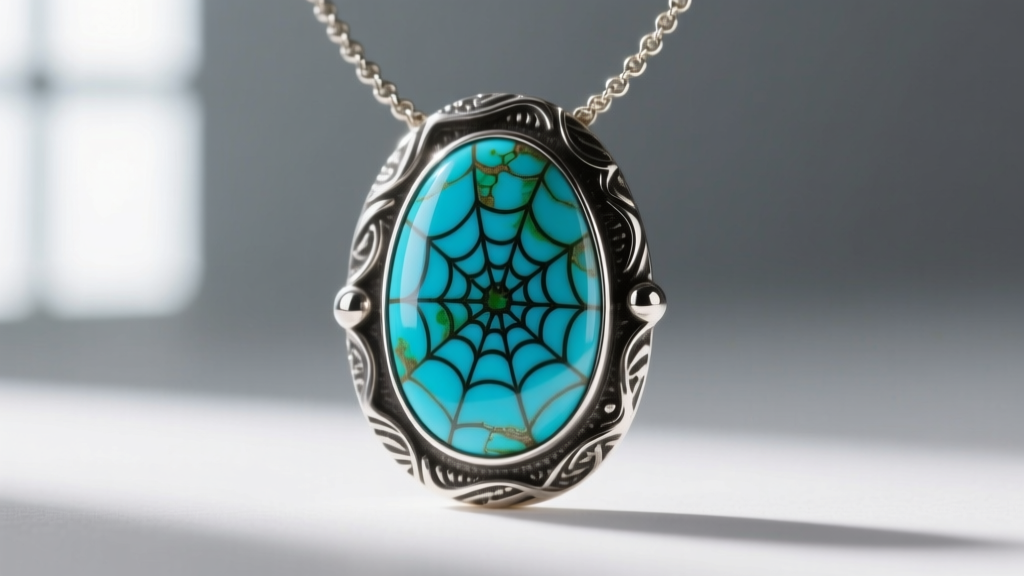
The "matrix" refers to the host rock or mineral inclusions trapped within the turquoise during its formation. In many King designs, this spiderweb matrix is highly prized for its visual contrast. However, from a lapidary perspective, matrix lines represent structural fault lines. If the matrix is composed of soft limonite, it can wear away faster than the surrounding turquoise, creating microscopic divots. Conversely, pyrite inclusions (often seen in Nevada-sourced turquoise) are harder than the turquoise itself (Mohs 6-6.5) and can cause uneven polishing. When examining a jay king turquoise necklace, run your fingernail gently across the cabochon; a perfectly smooth surface indicates high-quality stabilization and expert lapidary work, while a gritty texture suggests under-processed natural stone or lower-grade reconstituted material.
Metallurgical Breakdown: The Mixed-Metal Signature
A defining characteristic of a jay king turquoise necklace is the juxtaposition of bright silver tones with warm, earthy coppers and bronzes. Understanding how these distinct metals behave on the skin is critical.
Sterling Silver (925)
Sterling silver is an alloy comprising 92.5% pure silver and 7.5% copper. The copper is added for tensile strength, but it is also the culprit behind tarnishing. When exposed to sulfur in the air or sweat, the copper reacts to form silver sulfide, creating a dark patina. In many King designs, this oxidation is intentionally applied to the recesses of the bezel to create an antique, high-contrast look against the turquoise matrix.
Copper and Bronze Alloys
Copper is highly reactive. When worn against the skin, the acids in human sweat react with copper to form copper chloride, which often leaves a harmless but unsightly green or black stain on the neck. Bronze (an alloy of copper and tin) is slightly more stable but will still develop a natural patina over time.
| Metal Material | Composition | Tarnish Rate | Skin Reaction Risk | Maintenance Level |
|---|---|---|---|---|
| Sterling Silver (925) | 92.5% Ag, 7.5% Cu | Moderate | Low | Medium (Polishing) |
| Pure Copper | 99.9% Cu | High (Oxidizes fast) | High (Greening) | High (Frequent cleaning) |
| Bronze | ~88% Cu, 12% Sn | Moderate | Medium | Medium |
| Gold Vermeil | Sterling base, 2.5μm+ Au | Low (Until worn) | Very Low | Low (Gentle wiping) |
Gold Vermeil and Plating Thickness
Some designs incorporate gold vermeil accents to warm up the cool tones of the turquoise. By FTC guidelines, true vermeil requires a sterling silver base plated with at least 10k gold that is a minimum of 2.5 microns thick. In heavy-wear items like necklaces, friction against the collarbone can wear down thin plating within a year. High-quality vermeil will last significantly longer, but eventually, the underlying sterling silver will show through at high-contact points, requiring professional re-plating.
Structural Integrity: Stringing and Hardware
The physical weight of large turquoise cabochons and heavy mixed-metal beads requires robust structural engineering. A standard silk thread will snap under the dynamic load of a heavy, multi-strand necklace.
Beading Wire vs. Cord
High-end designer necklaces typically utilize 49-strand stainless steel beading wire coated in nylon (often branded as Soft Flex). This material offers the drape of silk with the tensile strength of steel, resisting kinking and snapping. The failure point in these necklaces is rarely the wire itself, but rather the crimp beads. If a crimp bead is not properly compressed using a specialized crimping plier, the metal wire can slowly saw through the soft copper or silver crimp tube over years of friction.
Clasp Mechanisms
Magnetic clasps and heavy-duty lobster claws are standard. However, magnetic clasps can fail if the internal neodymium magnet degrades or if the solder joint connecting the clasp to the jump ring fractures under sudden tension.
Care, Maintenance, and Material Degradation
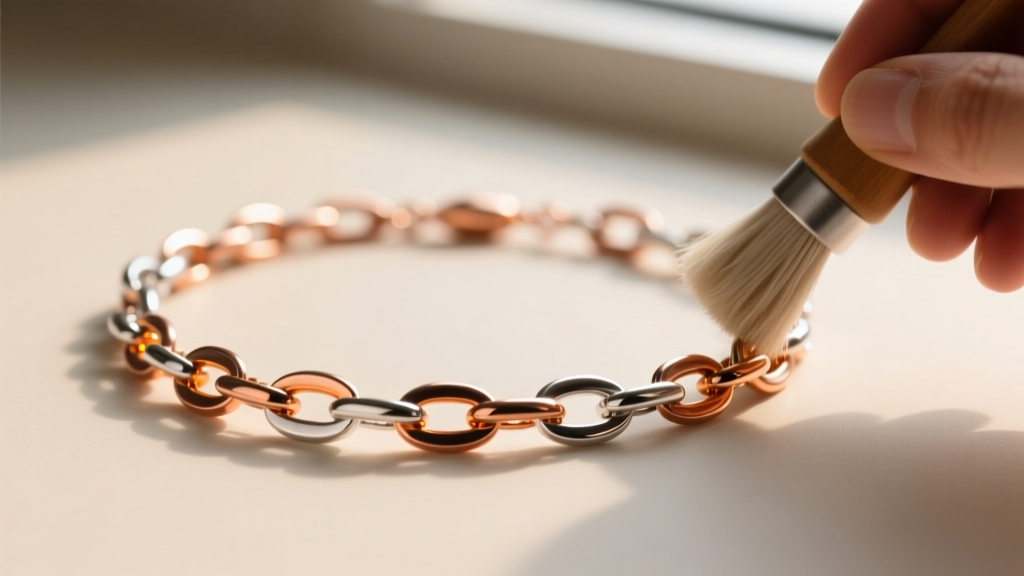
Caring for a mixed-material piece requires navigating the conflicting needs of the stone and the metals.
- Avoid Ultrasonic Cleaners: The high-frequency vibrations can fracture turquoise, especially if it has natural micro-fissures or a heavy matrix webbing. Furthermore, ultrasonic heat and chemicals can strip the intentional antique oxidation from the silver bezels.
- Chemical Sensitivities: Turquoise is highly sensitive to acids and harsh chemicals. Perfumes, hairsprays, and lotions can degrade the polish of the cabochon over time, leaving a dull, chalky film.
- Polishing Mixed Metals: When polishing the silver and copper components, use a dry, untreated microfiber cloth. Liquid silver dips will permanently discolor the porous turquoise stone by seeping into the microscopic edges where the bezel meets the gem.
The Safe Cleaning Protocol
To safely clean your necklace without damaging the turquoise or stripping the metal patinas, follow this specific protocol:
- Mix a few drops of pH-neutral dish soap (free of citrus extracts or harsh degreasers) into a bowl of lukewarm distilled water.
- Dip a soft-bristled baby toothbrush into the solution and gently agitate the metal links and bezel settings. Avoid scrubbing the turquoise directly.
- Rinse the metal components quickly under a low stream of cool water, ensuring the turquoise is not submerged for more than a few seconds to prevent water from seeping into any micro-cracks.
- Pat dry immediately with a lint-free cotton cloth and allow the piece to air-dry completely flat before storing.
"The beauty of a mixed-metal turquoise piece lies in its evolution. The copper will warm, the silver will deepen in its recesses, and the turquoise will subtly adapt to its wearer. Forcing the metals to look brand-new often destroys the intended Southwestern character of the design."
Conclusion
Ultimately, a jay king turquoise necklace is more than a fashion accessory; it is an assembly of distinct geological and metallurgical elements. By understanding the stabilization of the matrix cabochons, the reactive nature of the copper and bronze alloys, and the tensile requirements of the stringing materials, you can ensure your piece remains structurally sound and visually captivating for decades.


