Jesus on My Necklace: Budget & Material Value Guide
Discover the true value of the Jesus on my necklace pendant. We break down material grades, pricing tiers, and how to avoid overpaying for faith jewelry.

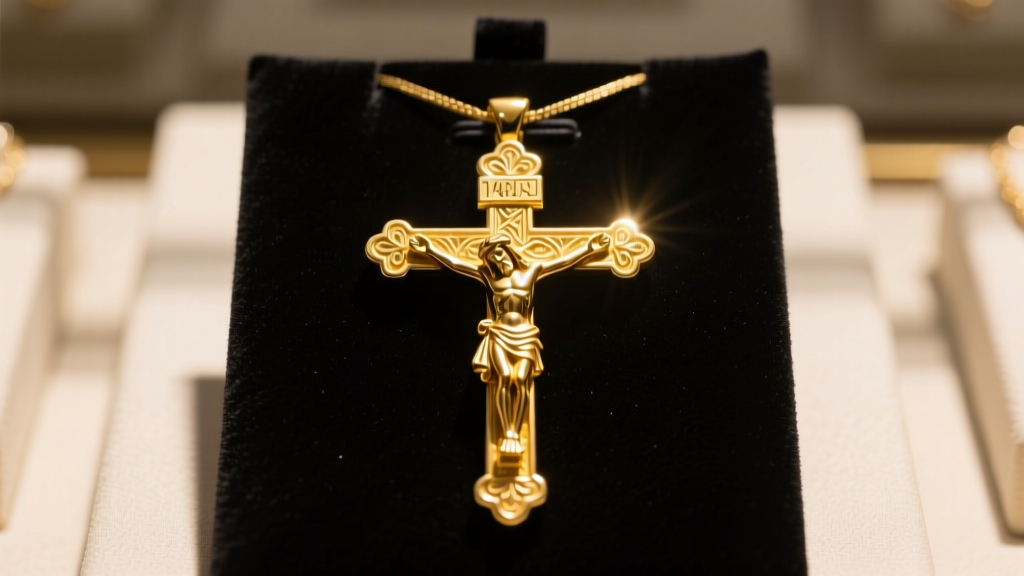
The True Cost of Faith Jewelry: Assessing Your Pendant
When a client brings in a cherished piece and asks, 'What is the actual market value of the Jesus on my necklace pendant I wear every day?', the answer requires looking past the emotional and spiritual weight of the item. Religious jewelry, specifically pendants featuring the corpus of Jesus or the Sacred Heart, holds immense sentimental value. However, from a strict budget and value assessment perspective, the retail price of these pieces is often heavily inflated by brand markups, 'faith taxes,' and complex manufacturing costs that buyers rarely understand.
In 2026, with precious metal markets experiencing significant volatility, understanding the intrinsic melt value versus the retail craftsmanship premium is essential. Whether you are looking to purchase a new heirloom piece, appraise an inherited vintage pendant, or simply determine if you overpaid for a mall-brand crucifix, this guide provides a forensic breakdown of the materials, manufacturing realities, and true market value of your religious necklaces.
Material Breakdown: What is Your Pendant Actually Made Of?
The phrase 'Jesus on my necklace' encompasses a vast spectrum of manufacturing qualities. The base material dictates not only the upfront cost but the longevity, skin-safety, and eventual resale value of the piece. Here is how the materials grade out in the current market:
Solid 14k Gold (585)
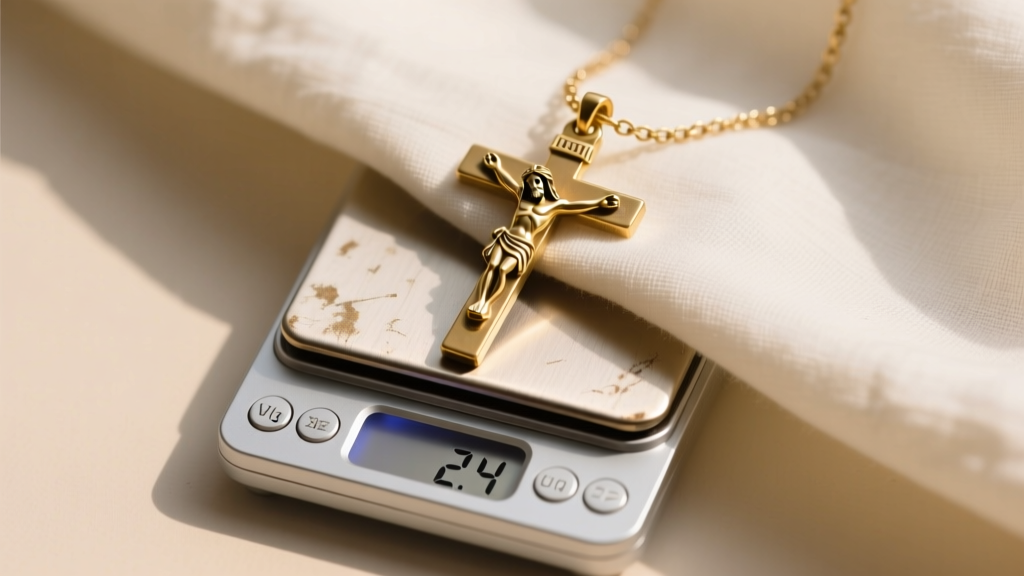
This is the undisputed standard for everyday religious jewelry in the United States. Composed of 58.3% pure gold alloyed with metals like copper and zinc for strength, a standard 1-inch solid 14k Jesus crucifix typically weighs between 1.8 and 3.2 grams. It offers the perfect balance of intrinsic value and structural integrity, ensuring the delicate arms of the corpus do not bend during daily wear.
Solid 18k Gold (750)
While 18k gold offers a richer, deeper yellow hue and is highly prized in European and South American markets, it is noticeably softer. For a detailed 3D pendant, the bail (the loop that connects to the chain) is prone to warping under the friction of a heavy chain. Unless you are purchasing a very thick, heavy-cast piece, 18k is often a poor value proposition for daily-wear religious pendants.
Sterling Silver (925) & Vermeil
Sterling silver provides an accessible entry point, usually retailing between $35 and $85 for a well-cast piece. However, silver oxidizes and requires regular polishing. Gold vermeil (a sterling silver base plated with at least 2.5 microns of gold) offers the look of gold for around $70 to $130, but the plating will eventually wear thin on the high-relief areas of the pendant, such as the knees and shoulders of the figure.
The Manufacturing Premium: Why 3D Casting Costs More
Many buyers wonder why a detailed Jesus pendant costs significantly more than a plain, flat cross of the exact same weight. The answer lies in the manufacturing process. A flat cross can be cheaply die-stamped from a rolled sheet of gold or silver in seconds.
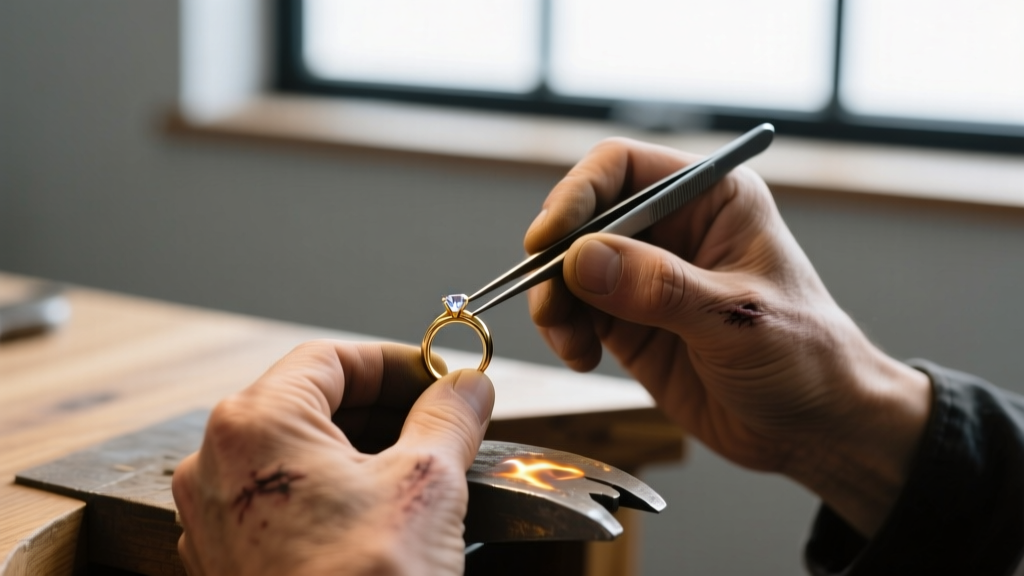
Conversely, a realistic corpus requires lost-wax casting. A master model must be meticulously carved or 3D printed, a vulcanized rubber mold is created, and wax replicas are injected, assembled onto a 'tree,' encased in investment plaster, and burned out in a kiln before molten metal is centrifugally forced into the cavity. According to industry manufacturing standards, this 3D casting process adds a minimum of $30 to $60 in overhead and labor per piece before the cost of the precious metal is even calculated. When you buy a high-quality Jesus on my necklace pendant, you are paying for this sculptural labor.
Pricing Tiers & Value Assessment Matrix
To accurately assess your budget, refer to the matrix below. These 2026 estimates are based on a standard 1-inch to 1.25-inch pendant weighing approximately 2.5 grams, excluding the chain.
| Material Grade | Standard Hallmark | Avg. Weight | 2026 Retail Price Range | Intrinsic Melt Value | Longevity & Wear |
|---|---|---|---|---|---|
| Solid 14k Gold | 14K, 585 | 2.5g | $280 - $450 | ~$105 | Lifetime, highly durable |
| Solid 18k Gold | 18K, 750 | 2.8g | $400 - $650 | ~$160 | Lifetime, bail may warp |
| Sterling Silver | 925 | 2.2g | $45 - $90 | ~$2 | Decades, requires polishing |
| Gold Vermeil | 925 (Plated) | 2.2g | $75 - $140 | ~$3 | 2-5 years before wear |
| Brass / Base Plated | None or HGE | 3.0g | $15 - $35 | $0 | 6-12 months, turns skin green |
Appraiser's Note: The 'Intrinsic Melt Value' is what a scrap buyer will pay you for the raw metal. Retail prices include the casting labor, finishing, stone-setting (if any), and retail markup. Never expect to resell a cast religious pendant for its retail price; you are paying for the art, not just the metal.
Chain Pairing & Bail Wear: A Hidden Cost Factor
A critical, often overlooked aspect of value assessment is how the pendant interacts with its chain. The 'bail' is the structural weak point of any necklace. Detailed Jesus pendants are often top-heavy. If you pair a 3-gram solid gold pendant with a thick, textured rope chain, the chain will act like a microscopic saw against the inside of the bail.
- The Rope Chain Mistake: Rope chains have high surface friction. They will grind through a standard 14k cast bail in 3 to 5 years, leading to a lost pendant.
- The Box Chain Solution: Box chains and smooth cable chains have low friction profiles, preserving the bail and extending the life of your jewelry.
- The Soldered Ring Upgrade: If you are investing over $400 in a premium piece, ask your jeweler to replace the cast bail with a soldered, heavy-gauge jump ring. This $20 modification prevents catastrophic failure and protects your investment.
How to Test and Authenticate Your Necklace at Home
If you have inherited a piece or bought it from an unverified estate sale, you must verify the hallmarks. The Federal Trade Commission Jewelry Guides strictly regulate how precious metals are stamped in the US, but counterfeit stamps are common in unregulated markets.
- Inspect the Hallmark with a Loupe: Use a 10x jeweler's loupe to examine the back of the pendant and the inside of the bail. Look for '14K', '585', or '925'. If you see '14K HGE' or '14K GP', the piece is heavily electroplated or gold-plated over base metal and holds virtually no intrinsic melt value.
- The Neodymium Magnet Test: Gold and silver are diamagnetic. If your pendant snaps to a strong neodymium magnet, it contains a ferrous base metal (like steel or iron) and is a counterfeit.
- The Ceramic Streak Test (Caution): Dragging the piece gently across an unglazed ceramic tile will leave a black streak if it is pyrite or base metal, and a golden streak if it is real gold. Note: This is mildly destructive and can scratch polished surfaces.
- Professional XRF Analysis: For absolute certainty without damaging the piece, take the necklace to a local jeweler who uses an X-ray Fluorescence (XRF) spectrometer. This machine reads the exact elemental composition of the alloy in seconds, a standard practice recommended by the Gemological Institute of America (GIA) for non-destructive testing.
The 'Religious Tax': Are You Overpaying for the Motif?
It is a well-known industry secret that religious motifs often carry a 'faith tax'—a retail markup applied simply because the buyer is emotionally motivated. Mass-market mall jewelers frequently price a 2-gram 10k gold Jesus pendant at $350, while a plain 2-gram 10k gold heart pendant sells for $180. The metal content is identical; the markup is entirely based on the perceived emotional value of the religious iconography.
To bypass this markup, avoid purchasing from brands that heavily market the spiritual significance of their jewelry. Instead, seek out specialized religious jewelry manufacturers or independent casters who price their work based on the daily spot price of gold plus a transparent labor fee. By monitoring Kitco Gold Charts and understanding the daily melt value of 10k, 14k, and 18k gold, you can negotiate fairly and ensure your budget is allocated toward superior craftsmanship rather than marketing premiums.
Final Verdict: Budgeting for a Lifetime Piece
Ultimately, the value of the Jesus on my necklace pendant you choose to wear is a synthesis of metallurgical integrity and personal meaning. If your budget is under $50, opt for a solid sterling silver piece rather than a gold-plated brass trinket that will degrade and cause contact dermatitis. If your budget allows for $300 to $500, invest in a solid 14k gold pendant with a reinforced bail, ensuring that the piece survives decades of daily wear and can eventually be passed down as a genuine family heirloom. By prioritizing material transparency and understanding the true costs of 3D casting, you can acquire a beautiful, enduring symbol of faith without falling victim to retail inflation.


