Is Your Jet Necklace Vintage? A Material Comparison
Discover how to authenticate a vintage jet necklace. Compare Whitby jet, French glass, and Bakelite properties with our expert material guide.

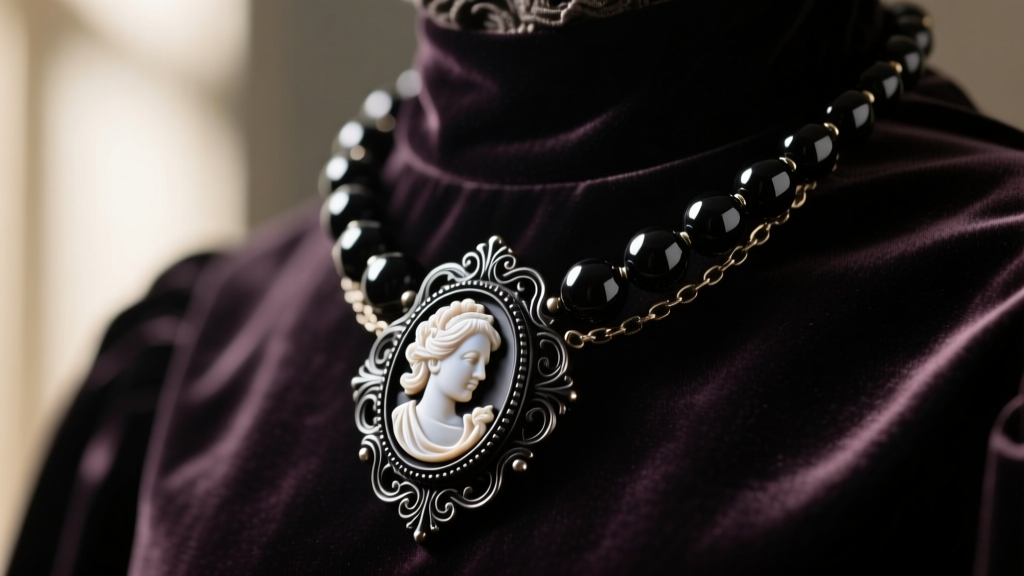
The mid-to-late 19th century saw an unprecedented boom in mourning jewelry, largely catalyzed by Queen Victoria’s prolonged grief following the death of Prince Albert in 1861. At the center of this cultural phenomenon was jet, a deeply black, organic gemstone that became the standard for Victorian bereavement attire. Today, the secondary market is saturated with pieces labeled as antique, but authenticating a jet necklace vintage collectors covet requires a rigorous understanding of material science. The term 'jet' has been historically misapplied to a variety of black materials, from glass to early synthetics. To accurately evaluate estate jewelry, one must look beyond the superficial luster and examine the specific gravity, thermal conductivity, and geological origins of the beads and pendants in question.
The Benchmark: Genuine Whitby Jet Properties
True jet is not a stone, but a fossilized wood. Specifically, it is the compressed remains of the Araucaria (monkey puzzle) tree, which thrived during the Early Jurassic period, approximately 180 million years ago. The highest quality jet in the world was mined in Whitby, North Yorkshire, England. According to the Gemological Institute of America (GIA), genuine Whitby jet possesses a unique set of gemological properties that separate it from its imitators.
- Hardness: 2.5 to 4 on the Mohs scale, making it relatively soft and easily carved into intricate cameos or faceted beads.
- Specific Gravity (SG): 1.30 to 1.40. It is remarkably lightweight, feeling almost like plastic to the uninitiated hand.
- Thermal Conductivity: Jet is an excellent thermal insulator. It feels warm to the touch immediately upon contact with human skin, unlike glass or stone.
- Fracture: It exhibits a conchoidal fracture and a distinct, deep velvety luster when polished, rather than a glassy or mirror-like reflection.
The Imposters: Comparing Vintage Jet Alternatives
As the demand for mourning jewelry outpaced the supply of Whitby jet in the 1870s and 1880s, manufacturers turned to alternative materials. Identifying these substitutes is the core challenge for modern collectors.
French Jet (Black Glass)
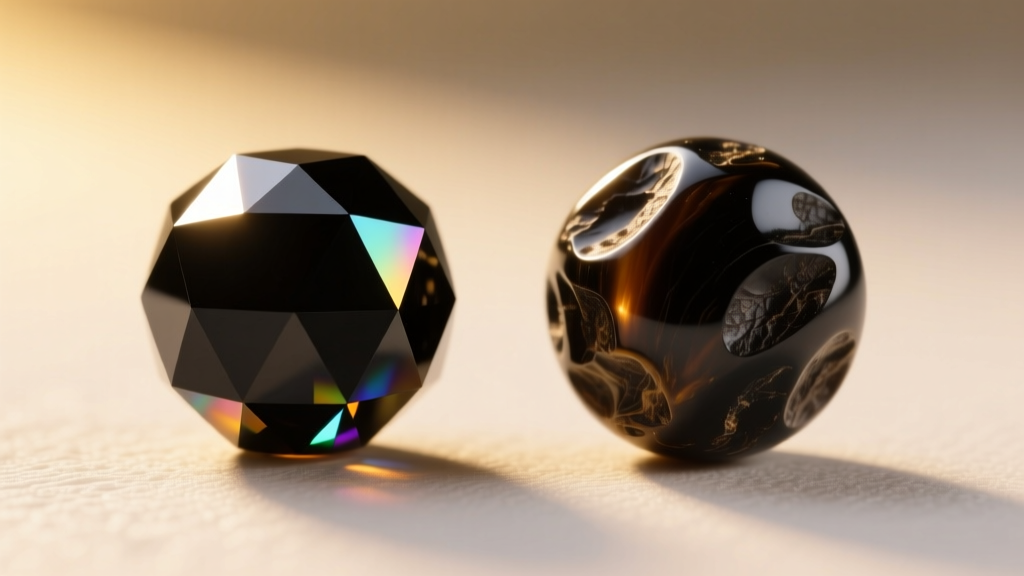
Despite the name, 'French Jet' contains zero organic jet. It is actually black glass, often molded in France or Bohemia. Glass is significantly heavier than genuine jet, with a specific gravity of around 2.5. It also feels cold to the touch and produces a high-pitched 'clink' when beads are tapped together, whereas real jet produces a dull, soft 'thud'.
Bakelite and Early Phenolic Resins
Invented in 1907, Bakelite was heavily used in the 1920s and 1930s for Art Deco mourning and fashion jewelry. While its specific gravity (1.25-1.35) is close to real jet, Bakelite is a synthetic polymer. When rubbed vigorously with a thumb until warm, or subjected to a hot pin test in an inconspicuous area, Bakelite emits a distinct chemical odor reminiscent of formaldehyde or camphor.
Vulcanite and Ebonite
Vulcanite is hardened rubber, created by treating India rubber with sulfur. It was a very common, inexpensive substitute for jet in the late Victorian era. Over time, vulcanite degrades and oxidizes, often turning a rusty brown color, especially in the crevices of carvings. When heated slightly, it smells distinctly of burning rubber.
Cannel Coal and Bog Oak
Cannel coal is a type of terrestrial coal that can be carved and polished, but it is highly brittle and leaves a messy black dust. Bog oak, another organic material, is fossilized wood preserved in peat bogs, but it typically exhibits a visible wood grain under magnification, which jet entirely lacks.
Material Comparison Matrix
The following table synthesizes the diagnostic properties of the most common materials passed off as antique jet. Use this matrix as a quick-reference decision framework when evaluating estate pieces.
| Material | Specific Gravity | Mohs Hardness | Thermal Feel | Streak Test Result |
|---|---|---|---|---|
| Genuine Whitby Jet | 1.30 - 1.40 | 2.5 - 4.0 | Warm | Chocolate Brown |
| French Jet (Glass) | 2.40 - 2.60 | 5.5 - 6.5 | Cold | No Streak / Scratches Tile |
| Bakelite | 1.25 - 1.35 | 2.0 - 3.0 | Warm | No Streak |
| Vulcanite | 1.10 - 1.20 | 2.0 - 3.0 | Warm | No Streak |
| Cannel Coal | 1.20 - 1.40 | 2.0 - 2.5 | Warm | Black / Smudgy |
Non-Destructive Testing Methods for Collectors
When appraising estate jewelry, preserving the integrity of the piece is paramount. The Victoria and Albert Museum (V&A) advises against destructive testing on historical artifacts. Fortunately, several non-destructive or micro-destructive tests can conclusively identify a material.
The Unglazed Porcelain Streak Test
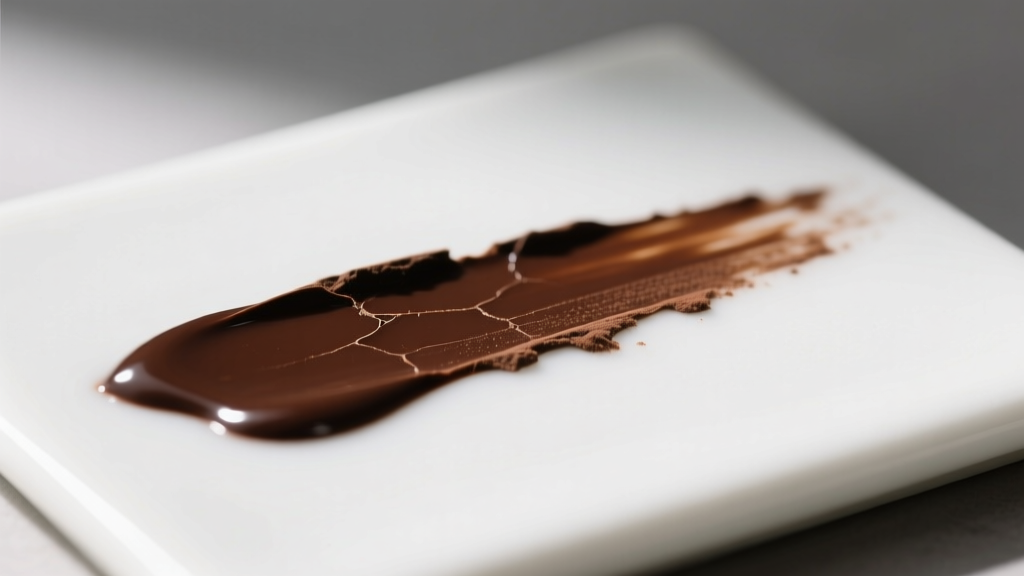
Gently rub an inconspicuous edge of a bead against the unglazed bottom of a ceramic tile. Genuine jet is softer than the ceramic and will leave a distinct, chocolate-brown streak that can be easily wiped away with a damp cloth. Glass (French Jet) is harder than the ceramic; it will not leave a brown streak and may instead scratch the tile or leave a faint, colorless mark. Coal will leave a harsh, messy black streak.
The Thermal Conductivity (Pin) Test
While technically micro-destructive, heating a fine needle to a dull red glow and touching it to a hidden area (like the inside of a bead hole) is a definitive test. If it is genuine jet, it will not melt, but may emit a faint smell of burning coal or wood. If it is Bakelite or plastic, the needle will melt into the material and release a sharp chemical odor. If it is glass, the needle will simply slide off without leaving a mark.
Ultraviolet (UV) Light Fluorescence
Under long-wave UV light (365nm), some early plastics and resins will fluoresce in distinct colors (e.g., Bakelite often glows a milky yellow or orange). Genuine jet is generally inert under UV light, showing no fluorescence, which helps quickly rule out 20th-century synthetic polymers.
Sourcing, Valuation, and Care in the Modern Market
Understanding material properties directly impacts valuation. A genuine Victorian Whitby jet necklace featuring intricate hand-carved cameos or complex faceting typically commands between $400 and $1,500 on the modern antique market, with documented pieces by master carvers like Thomas Andrews fetching significantly more at auction. Conversely, a visually similar 'French Jet' glass necklace usually retails between $60 and $150, while Bakelite pieces are valued based on their Art Deco design merit rather than their mourning origins.
Expert Care Note: Never clean genuine jet in an ultrasonic cleaner or use harsh chemical solvents. The material is porous and can fracture under high-frequency vibrations or dry out and crack when exposed to alcohol. Clean it only with a soft, damp cloth and occasionally condition it with a microscopic drop of mineral oil to maintain its structural hydration and deep luster.
Ultimately, the allure of a vintage jet necklace lies in its organic history—a piece of prehistoric forest transformed by time and pressure into a canvas for Victorian artistry. By mastering the material comparisons outlined above, collectors can confidently separate genuine geological marvels from historical imitations, ensuring their investments are as authentic as they are beautiful.


