The Jeweled Cross Necklace: 2026 Trend & Style Guide
Explore 2026 trends for the jeweled cross necklace. Expert guide on metal grades, gemstone settings, layering techniques, and pricing.

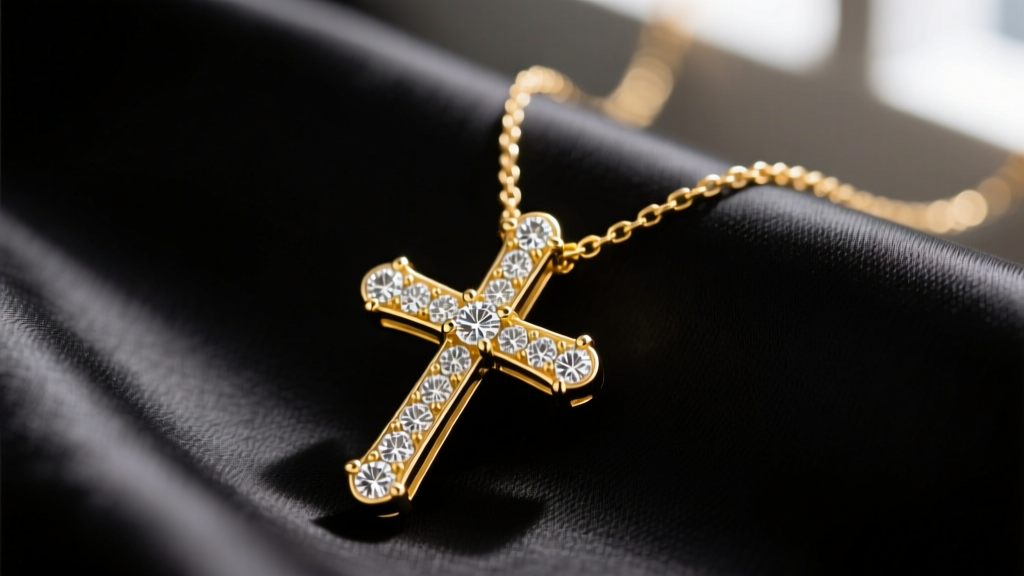
The jeweled cross necklace has transcended its traditional boundaries. Once strictly categorized as a symbol of faith or a staple of early-2000s pop-punk rebellion, this iconic silhouette has been reclaimed by high fashion and streetwear alike. As we navigate the style landscape of 2026, the cross pendant is no longer just an accessory; it is a masterclass in personal branding, bridging the gap between heritage motifs and contemporary 'quiet luxury' aesthetics.
Whether you are investing in a vintage-inspired piece with old European cut diamonds or opting for a sleek, micro-pavé modern design, understanding the anatomy, material grades, and styling frameworks of these necklaces is essential. This guide breaks down the technical specifications and trend trajectories you need to know before making your next acquisition.
The 2026 Resurgence: From Sacred Symbol to Sartorial Staple
According to industry analysts tracking fine jewelry movements, the demand for symbolic pendants has surged, driven by a consumer desire for talismanic jewelry that feels both deeply personal and visually striking. The modern jeweled cross necklace often plays with proportion and mixed metals, stepping away from the heavy, solid-gold styles of the previous decade into more intricate, light-catching designs.
Designers are currently experimenting with asymmetrical cross bars, elongated vertical axes, and the integration of unexpected gemstones like salt-and-pepper diamonds or vivid lab-grown sapphires. The influence of archival fashion houses has also brought back the 'Maltese cross' and 'Cross pattée' shapes, heavily encrusted with melee stones, offering a gothic yet refined edge to everyday wardrobes.
Anatomy of a High-Quality Jeweled Cross
Not all pendants are created equal. The longevity and brilliance of a jeweled cross necklace depend heavily on its metallurgical foundation and the precision of its stone setting. When evaluating a piece, look beyond the initial sparkle and examine the structural integrity.
Metal Grades and Tarnish Resistance
The base metal dictates the lifespan of your necklace. In 2026, the market is clearly segmented into three tiers:
- Solid 14k Gold (58.5% Purity): The gold standard for everyday wear. It offers the perfect balance of rich color and tensile strength, resisting the bending and warping that plagues softer metals. Ideal for prong settings.
- Solid 18k Gold (75% Purity): Prized for its deep, buttery yellow hue and hypoallergenic properties. However, its softness makes it less suitable for high-impact rings, though perfectly acceptable for a pendant that rests against the chest.
- Vermeil (Gold over Sterling Silver): For vermeil to meet US trade standards, it must feature at least 2.5 microns of gold over a 925 silver base. However, premium 2026 releases often push this to 3.0 microns to prevent premature wear at the bail loop where chain friction is highest.
Gemstone Settings: Pavé vs. Bezel vs. Channel
The way gemstones are secured into the cross dramatically affects both the piece's aesthetics and its maintenance requirements. According to the Gemological Institute of America (GIA), the precision of melee diamond setting is a primary indicator of fine craftsmanship.
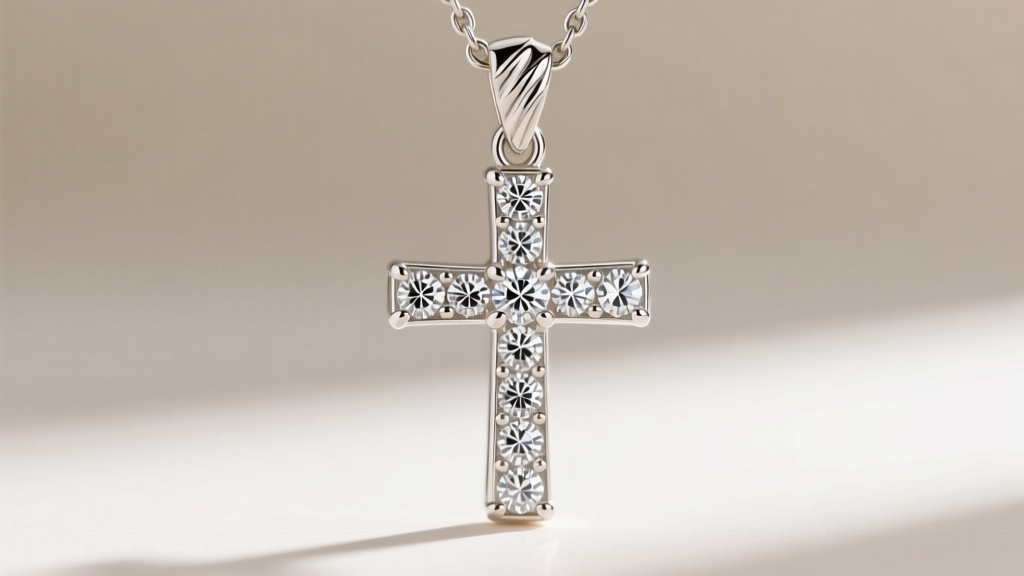
Micro-Pavé (Bead Set): This technique uses tiny beads of metal raised from the base to hold 0.01 to 0.02-carat melee diamonds. It maximizes light return and creates a 'liquid diamond' effect. Failure Mode: If the beads are too small or poorly burnished, stones will easily dislodge when snagged on knitwear.
Channel Setting: Stones are set into a continuous groove with metal walls on either side. This is highly secure and snag-free, making it excellent for active lifestyles, though it slightly reduces the gemstone's brilliance by limiting light entry from the sides.
Bezel Setting: A thin rim of metal encircles each stone. Modern bezel-set crosses offer a sleek, architectural look that aligns perfectly with minimalist 2026 trends while offering maximum stone protection.
Proportion and Chain Pairing Matrix
A common styling error is mismatching the visual weight of the cross pendant with an incompatible chain. A heavy, 40mm diamond cross will snap a delicate 14-inch cable chain, while a dainty 10mm micro-cross will be visually swallowed by a thick Cuban link. Use the matrix below to engineer the perfect pairing.
| Pendant Scale | Dimensions (L x W) | Ideal Chain Type | Chain Width & Length | Best Occasion |
|---|---|---|---|---|
| Micro / Dainty | 8mm - 15mm | Cable, Box, or Herringbone | 0.9mm - 1.2mm / 16" - 18" | Everyday layering, office wear |
| Medium / Standard | 20mm - 30mm | Figaro, Rope, or Curb | 1.5mm - 2.5mm / 18" - 20" | Standalone statement, casual outings |
| Statement / Oversized | 40mm - 60mm+ | Miami Cuban, Franco, or Wheat | 3.0mm - 5.0mm / 22" - 24" | Streetwear, evening events, editorial |
Layering Frameworks for the Modern Wardrobe
The single-pendant look is classic, but 2026 styling is dominated by intentional, multi-textural stacking. The goal of a modern necklace stack is to create an asymmetrical, curated vignette rather than a uniform, matched set.
The Asymmetrical Stack
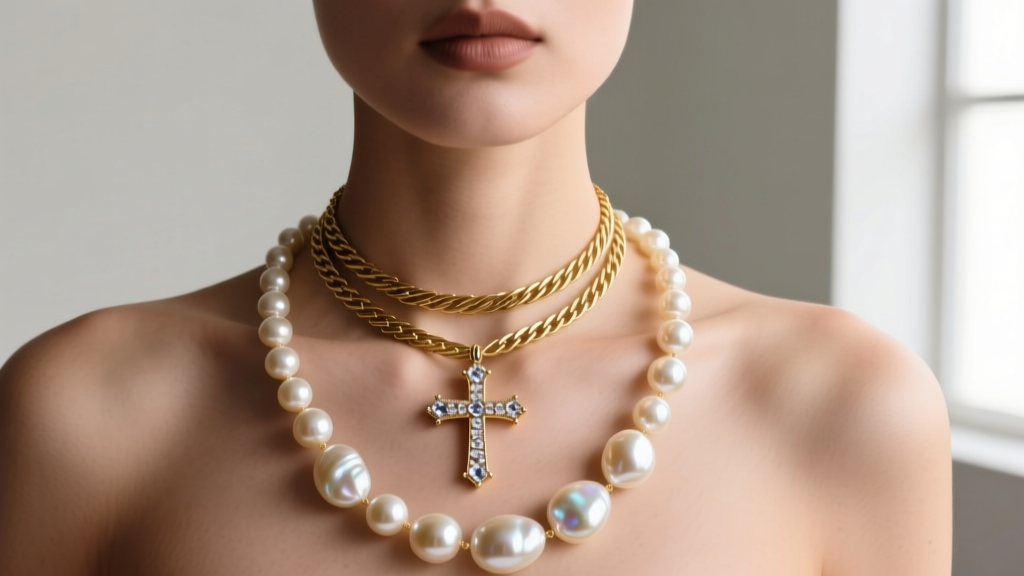
Anchor your stack with a medium-sized jeweled cross necklace on an 18-inch rope chain. Next, introduce a 22-inch matinee-length strand of irregular baroque freshwater pearls. The contrast between the precise, geometric brilliance of the diamond cross and the organic, matte luster of the pearls creates a sophisticated tension that reads as highly fashionable rather than purely traditional.
The Mixed-Metal Collage
Abandon the outdated rule of matching your metals. Layer a 14k yellow gold diamond cross pendant with a 16-inch white gold snake chain and a 20-inch oxidized sterling silver link chain. This tri-metal approach adds depth and highlights the specific color of the gemstones set within the cross. If your cross features white diamonds, the white gold chain will reflect that brilliance upward, while the yellow gold bail adds a warm, vintage accent.
"The secret to a successful layered cross necklace is varying the bail sizes and chain textures. If every chain is a standard cable link, the eye glazes over. Introduce a herringbone or a twisted rope to catch the light differently at each tier of the décolletage." — Master Bench Jeweler & Appraiser
Investment vs. Fast Fashion: What to Buy
When shopping for a jeweled cross necklace, understanding the pricing architecture will protect you from overpaying for inferior craftsmanship. Here is a realistic breakdown of what to expect in the current market:
- The Entry Tier ($80 - $250): Expect sterling silver with rhodium plating and simulated stones (CZ or moissanite). Alternatively, you may find 10k gold vermeil with single accent diamonds (under 0.05 ctw). These are trend-driven pieces with a lifespan of 1-3 years before plating wears off.
- The Fine Jewelry Tier ($600 - $1,800): Solid 14k gold featuring lab-grown diamonds or natural melee diamonds (SI1-SI2 clarity, G-H color). The total carat weight usually ranges from 0.25 to 0.75 ctw. This is the sweet spot for heirloom-quality pieces that withstand daily wear.
- The High Jewelry Tier ($3,000+): Solid 18k gold or platinum, featuring natural, ethically sourced diamonds with VS clarity and excellent cut grades. Often includes custom die-struck backs for superior light reflection and brand prestige.
Care and Maintenance Protocols
A jeweled cross necklace accumulates skin oils, lotions, and environmental dust, which quickly dulls the pavé diamonds. To maintain maximum scintillation, implement a strict maintenance routine.
Weekly Cleaning: Use a soft-bristled baby toothbrush and a solution of warm water with a single drop of mild, phosphate-free dish soap. Gently agitate the bristles behind the cross pendant where the gallery (the underside of the setting) traps debris. Rinse with distilled water to prevent hard water spots and pat dry with a lint-free microfiber cloth.
Red Flags & Warnings: Never use ultrasonic cleaners on jeweled crosses that feature fracture-filled diamonds, emeralds, or opals, as the high-frequency vibrations can shatter treated or porous stones. Furthermore, avoid steam cleaning if your cross incorporates enamel accents, as the sudden thermal shock can cause the glass-based enamel to crack or craze.
By prioritizing structural integrity, precise proportions, and intentional styling, your jeweled cross necklace will serve as a versatile, enduring anchor in your jewelry collection for decades to come.


