Best Jewelry Box With Necklace Holder: 2026 Buyer's Guide
Discover the best jewelry box with necklace holder options for 2026. Learn how to prevent chain tangling, tarnish, and damage with our expert guide.

Few things frustrate a jewelry collector more than untangling a delicate chain that has spent a week balled up in a drawer. As layering trends continue to dominate in 2026, the volume of necklaces in the average collection has surged, making proper storage a necessity rather than a luxury. Finding the right jewelry box with necklace holder requires looking past superficial aesthetics and evaluating the structural engineering, material science, and spatial geometry of the storage system. This comprehensive buyer's guide breaks down exactly what to look for to protect your investment pieces from mechanical damage and chemical tarnishing.
The Physics of Chain Tangling and Mechanical Stress
To understand why a specialized necklace holder is critical, you must first understand the physics of chain tangling. Tangling is driven by entropy and friction. When chains are stored loose, kinetic movement (opening and closing drawers) forces the links to interlock. Certain weaves are inherently more prone to this. For instance, rope chains and herringbone chains have high surface friction and flexible link structures that easily hook onto one another. Conversely, box chains and snake chains have smoother, more rigid profiles that resist interlocking but are highly susceptible to permanent kinking if bent at sharp angles.
A high-quality necklace holder mitigates these risks through suspension. By hanging a chain from a single point of gravity, the links align vertically, eliminating the lateral friction that causes knots. Furthermore, suspension prevents the sharp folding that permanently damages the structural integrity of herringbone and snake chains, preserving their fluid drape.
Critical Features to Evaluate in a Necklace Holder
Hook Spacing and Drop Length
The most common failure in mass-market jewelry boxes is inadequate spatial planning. When evaluating a jewelry box with necklace holder, measure the distance between the hooks. Hooks must be spaced a minimum of 2.5 to 3 inches apart. Anything less will allow adjacent pendant necklaces to sway and tangle when the box is moved.
Equally important is the drop length—the vertical distance from the hook to the floor of the compartment. A standard princess-length necklace (18 inches) folds to 9 inches. Therefore, the compartment must offer at least 10 to 12 inches of vertical clearance to ensure that heavy gemstone pendants do not rest on the bottom of the box, which can cause localized stress on the lowest chain links and scratch the pendant's setting.
Anti-Tarnish Lining Materials
Silver and copper alloys react with hydrogen sulfide and moisture in the air to form silver sulfide, the black compound we recognize as tarnish. According to the Gemological Institute of America (GIA), proper storage is the first line of defense against this chemical reaction. Avoid jewelry boxes lined with standard polyurethane foams or untreated acidic papers, as these materials can off-gas volatile organic compounds (VOCs) that actually accelerate tarnishing.
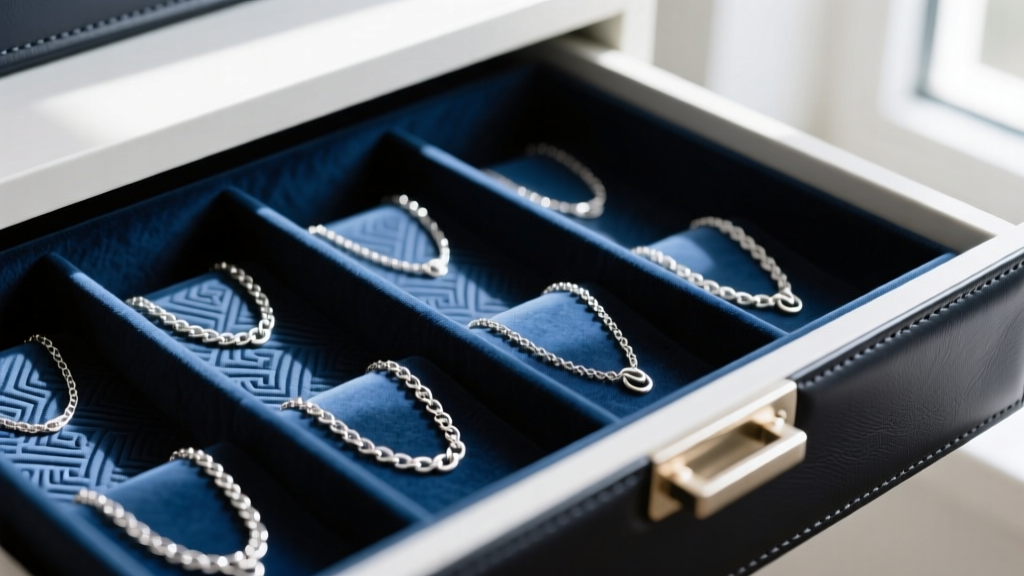
Instead, look for boxes lined with Pacific Silvercloth or specially treated anti-tarnish flannel. These fabrics are embedded with microscopic silver or zinc particles that act as sacrificial anodes, absorbing corrosive gases before they reach your jewelry. For enclosed boxes, ensure the design includes a discreet slot for replaceable 3M anti-tarnish strips, which should be swapped out every 6 to 12 months depending on your local humidity levels.
Types of Necklace Storage Systems Compared
Not all necklace holders are created equal. The ideal configuration depends heavily on the types of chains you own and how frequently you wear them. Below is a comparative analysis of the four primary storage mechanisms available in 2026.
| Storage Type | Best Chain Types | Max Length Accommodated | Tangling Risk |
|---|---|---|---|
| Vertical Hooks | Pendant chains, Rope, Box | 24 inches (Princess/Matinee) | Very Low (if spaced correctly) |
| Slotted Trays | Chokers, Collars, Herringbone | 16 inches | Moderate (requires careful laying) |
| Necklace Rolls | Delicate chains, Travel pieces | 20 inches | Low (uses snap enclosures) |
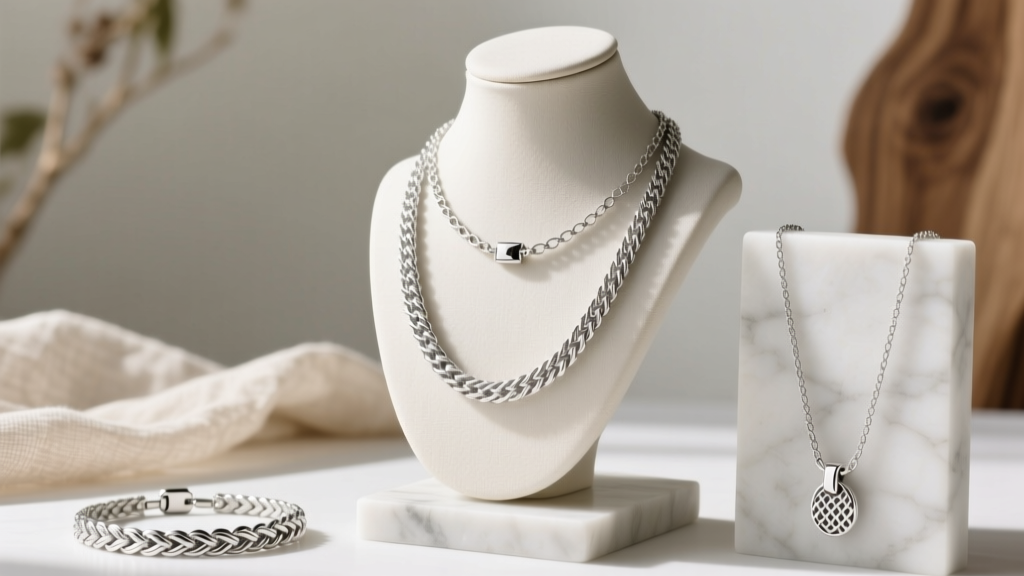
| Display Busts | Statement pieces, Opera lengths | 36+ inches | Zero (fully draped) |
For everyday collectors, a hybrid approach is best: a primary box with vertical hooks for standard chains, supplemented by slotted trays for rigid chokers that cannot be safely hung without stressing the clasp.
Material Durability: Box Exteriors and Hardware
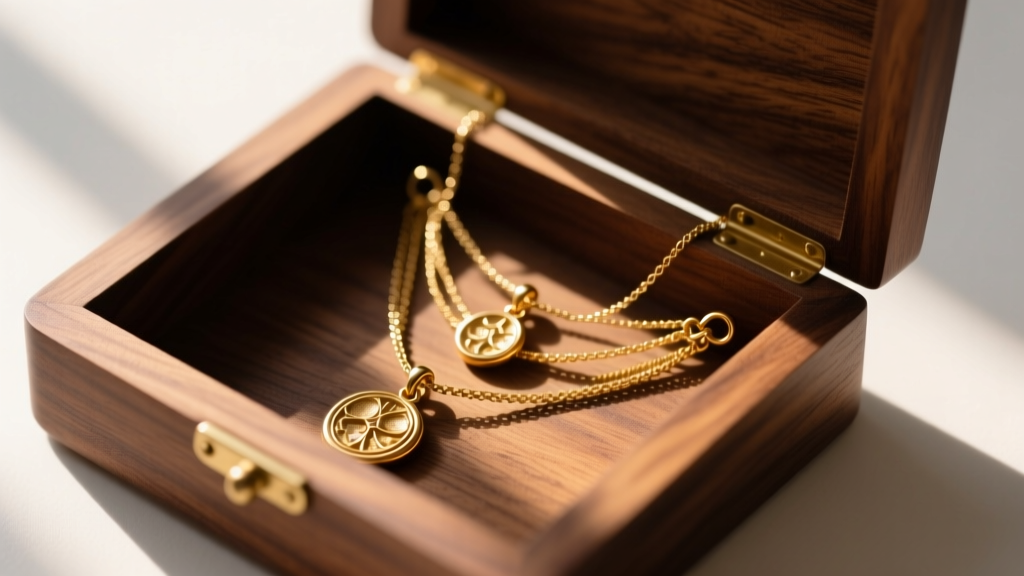
The exterior construction of your jewelry box dictates its lifespan. In the mid-tier market, you will frequently encounter MDF (Medium-Density Fiberboard) wrapped in PU (polyurethane) leather. While MDF is stable and resistant to warping compared to some solid woods, it is heavy and vulnerable to moisture swelling if the PU veneer is scratched. For heirloom-quality storage, look for solid hardwoods like walnut or mahogany, finished with a low-VOC natural oil rather than a high-gloss lacquer that can trap humidity inside the box.
Do not overlook the hardware. The hinges and clasps of the box itself are critical failure points. Many budget boxes use cast zinc alloy (Zamak) for hinges, which is prone to pitting, corrosion, and snapping under repeated stress. Always inspect the hinge material; solid brass or stainless steel piano hinges are the hallmark of a well-constructed jewelry armoire. Furthermore, ensure the interior lid stays are reinforced with steel cables rather than simple ribbon fabric, which will inevitably fray and snap, potentially dropping the heavy lid onto your hands or your necklaces.
Pricing Tiers: What to Expect in 2026
Understanding the market landscape will help you allocate your budget effectively. Here is a breakdown of what to expect across different price points this year:
- Entry-Level ($30 - $60): Typically constructed from MDF with faux suede lining. Hooks are often plastic or thin, bent wire. Adequate for small, lightweight chains, but lacks proper anti-tarnish treatments and robust hardware. Expect a lifespan of 2-3 years.
- Mid-Range ($80 - $180): The sweet spot for most collectors. Features engineered wood or sustainable bamboo exteriors, genuine brass hardware, and treated anti-tarnish flannel linings. These boxes often include modular dividers and slide-out panels with adequate 3-inch hook spacing.
- Luxury & Heirloom ($250 - $800+): Solid hardwood construction, hand-stitched full-grain leather or high-grade vegan leather exteriors, and premium Pacific Silvercloth interiors. Brands in this tier utilize dovetail joinery and soft-close hydraulic hinges. These are designed to last generations and protect high-value estate jewelry.
Expert Troubleshooting and Maintenance
Even the best jewelry box with necklace holder requires basic maintenance to function optimally. The Smithsonian Institution recommends keeping silver in low-humidity environments. If you live in a coastal or highly humid climate, place a small, rechargeable silica gel desiccant canister in the main compartment of your jewelry box to keep ambient moisture below 40%.
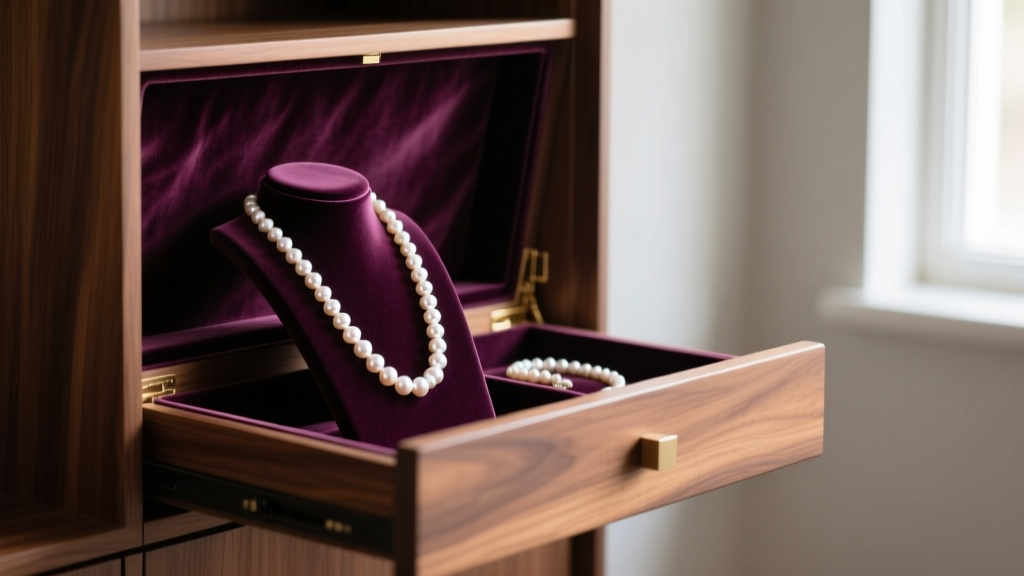
Additionally, never store pearls or opals in fully enclosed, airtight jewelry boxes for extended periods. These organic and water-bearing gemstones require trace amounts of ambient moisture to prevent cracking and crazing. If your necklace collection includes long pearl strands, utilize the open-air display busts or ensure your enclosed box is opened regularly to allow for air exchange. By matching the storage environment to the specific material needs of your collection, you ensure that every piece remains pristine, untangled, and ready to wear at a moment's notice.