Troubleshooting Your Necklace With Eye Pendants: Enamel & Chain Care
Is your necklace with eye pendants tarnished or chipped? Learn expert troubleshooting for enamel repair, chain tangling, and metal discoloration.

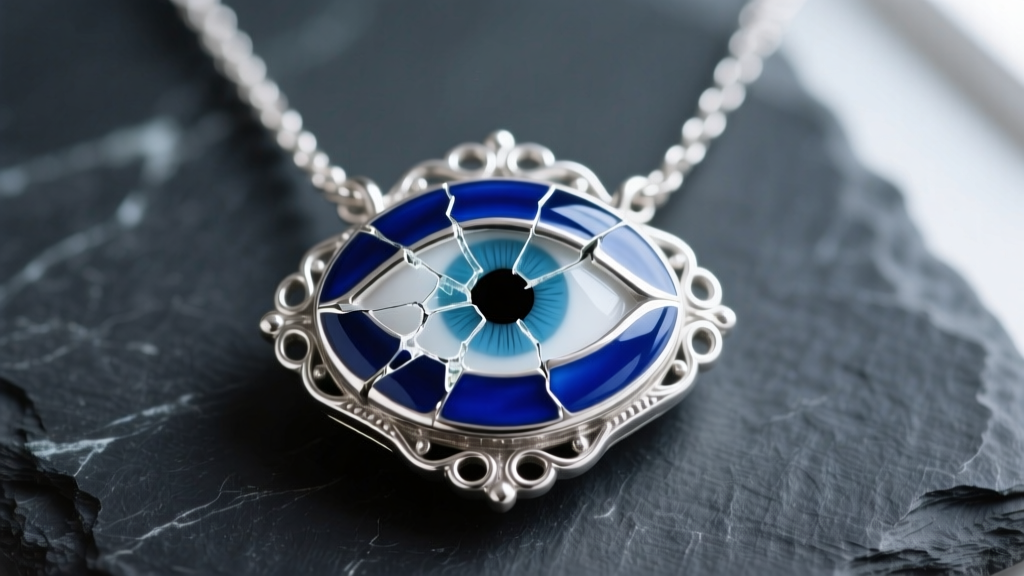
Whether it is a traditional Nazar amulet, an Egyptian Eye of Horus, or a modern surrealist anatomical design, a necklace with eye motifs carries deep personal and cultural significance. However, the intricate construction of these pendants makes them uniquely prone to specific types of wear and tear. From the delicate enamel work on the iris to the friction points where the bail meets the chain, eye pendants require specialized maintenance. In this comprehensive troubleshooting guide, we will diagnose the most common failures associated with eye-themed jewelry and provide actionable, expert-level solutions to restore and protect your pieces.
The Anatomy of an Eye Pendant: Where Failures Happen
Before attempting any repairs, it is crucial to understand the structural vulnerabilities of an eye pendant. Unlike simple geometric charms, an eye pendant is a composite piece typically consisting of four distinct elements:
- The Base Metal Setting: Usually cast in 925 sterling silver, brass, or gold-plated alloys, forming the outer 'almond' shape of the eye.
- The Iris (Enamel or Resin): The colored ring, often created using vitreous enamel or cold epoxy resin.
- The Pupil (Glass or Gemstone): A central cabochon, glass bead, or cubic zirconia stone set into the iris.
- The Bail and Chain: The loop connecting the pendant to the necklace, which bears the brunt of kinetic friction.
- Rhodium Plating: A jeweler can electroplate the back of the eye pendant with rhodium, a noble metal that is entirely non-reactive and highly tarnish-resistant. This creates an invisible barrier between the copper alloy and your skin.
- Upgrade to Argentium Silver: If you are commissioning a custom eye pendant, request Argentium Silver (935 or 960 grade). Argentium replaces the copper content with germanium, which forms a transparent, self-healing oxide layer that completely prevents tarnish and skin discoloration.
Failures rarely occur uniformly. By isolating the specific component that is degrading, you can apply the correct repair methodology without damaging the surrounding materials.
Troubleshooting Enamel and Glass Damage
The most visually striking part of a necklace with eye details is the vibrant iris, but it is also the most fragile. The repair strategy depends entirely on the manufacturing technique used.
Vitreous Enamel vs. Cold Enamel
Vitreous enamel is essentially powdered glass fused to metal in a kiln at temperatures exceeding 1,400°F (760°C). It is highly durable and sits at a 5.5 to 6.5 on the Mohs hardness scale. Cold enamel, conversely, is a two-part epoxy resin poured into a recess and cured at room temperature. It is much softer (around 2.5 on the Mohs scale) and prone to scratching.
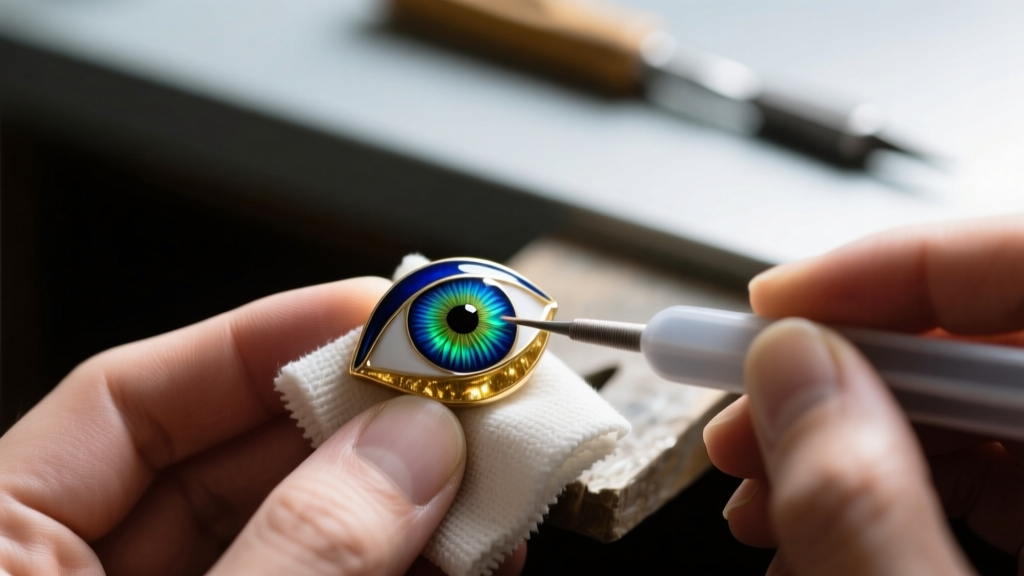
Symptom: The colored iris looks cloudy, scratched, or yellowed.
If your pendant uses cold enamel (common in fashion jewelry and mass-produced pieces), UV exposure and contact with cosmetics will cause the resin to yellow and cloud. You can often restore clarity by gently polishing the resin with a specialized plastic cleaner like Novus 2 Fine Scratch Remover. Do not use silver polishing cloths on cold enamel, as the mild abrasives will permanently scuff the resin.
Symptom: The glass pupil has popped out or is loose.
Eye pendants frequently lose their central glass or gemstone pupil due to weakened adhesive. Never use cyanoacrylate (Super Glue) to re-set the stone; as it cures, it releases fumes that will permanently fog the inside of the glass cabochon. Instead, clean the recess with isopropyl alcohol, apply a microscopic dot of G-S Hypo Cement (for stones under 4mm) or Devcon 5-Minute Clear Epoxy (for larger stones), and let it cure flat for 24 hours.
Chain and Bail Friction: Solving the Tangle Issue
A frequent complaint from collectors of eye jewelry is that the pendant constantly flips upside down or tangles with the chain. This is rarely a defect in the chain itself, but rather a mismatch between the bail's inner diameter (ID) and the chain's profile.
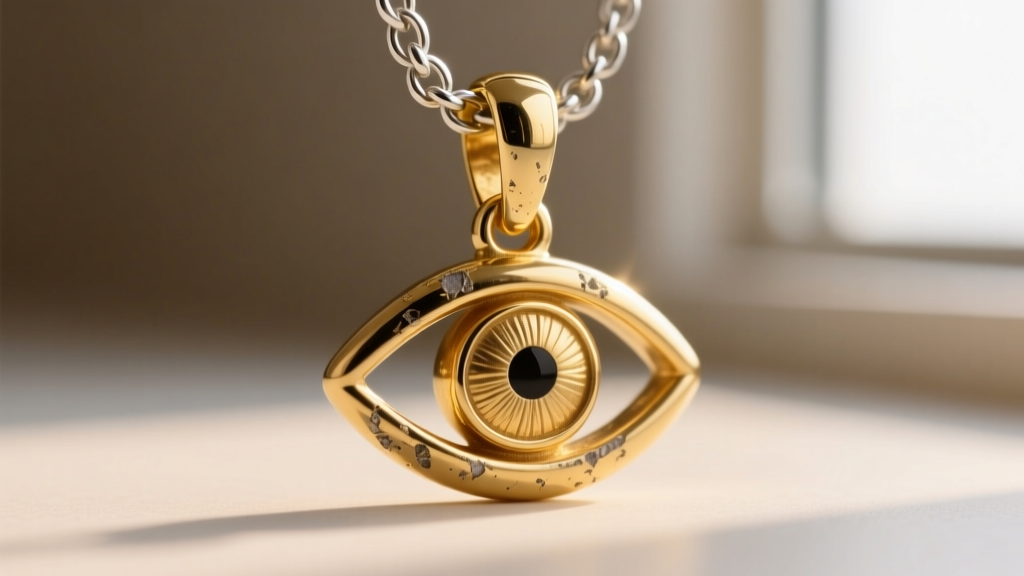
The Box Chain Problem
Box chains are incredibly popular for pendant necklaces due to their strength. However, the sharp, 90-degree corners of the box links act like a microscopic file against the inside of the pendant's bail. If your eye pendant features a soft brass or silver bail with an ID of 3mm, and you pair it with a 2.5mm box chain, the friction will eventually wear a groove into the bail, leading to a catastrophic snap.
The Solution: If you prefer the look of a box chain, ensure the bail ID is at least 1.5 times larger than the chain width. Alternatively, swap the chain for a cable chain or rope chain. The rounded links of a cable chain distribute kinetic friction evenly, preserving the integrity of the bail and allowing the heavy eye pendant to hang naturally without flipping.
Metal Reactions and Skin Discoloration
If your necklace with eye charms is leaving a green or black smudge on your chest, you are experiencing a galvanic reaction, not an allergic one. According to The Silver Institute, standard 925 sterling silver contains 7.5% copper to provide structural hardness. When this copper interacts with the chlorides in human sweat or the sulfur in the air, it creates copper chloride or silver sulfide—resulting in green skin or black tarnish.
Long-Term Preventative Measures
While wiping the pendant with a polishing cloth removes surface tarnish, it does not stop the chemical reaction against your skin. To permanently solve this issue without sacrificing the look of silver, consider the following professional treatments:
The 'Broken Amulet' Dilemma: Physical vs. Superstitious Repair
When dealing specifically with the Evil Eye (Nazar) or Hamsa eye pendants, a break carries cultural weight. In many Mediterranean and Middle Eastern traditions, if an Evil Eye necklace shatters or the chain snaps unexpectedly, it is believed that the amulet has successfully absorbed a heavy dose of negative energy or 'mal de ojo' and has sacrificed itself to protect the wearer.
Cultural Note: According to folklore, a shattered Evil Eye bead should not be repaired or worn again, as its protective matrix is considered 'full' or broken. The traditional remedy is to bury the shattered pieces in the earth or cast them into flowing water, and purchase a new amulet.
However, if your eye necklace is purely aesthetic (such as an anatomical eye or an Eye of Providence), or if you do not subscribe to the superstition, physical repair is entirely viable. A shattered glass Nazar bead can be replaced by sourcing a matching lampwork glass bead from specialized suppliers, and a snapped sterling silver chain can be seamlessly laser-welded by a bench jeweler for a fraction of the cost of a replacement.
Maintenance Schedule and Cleaning Framework
To ensure your necklace with eye motifs remains vibrant and structurally sound, implement a material-specific cleaning routine. The GIA Gem Encyclopedia emphasizes that composite jewelry requires segmented cleaning approaches to avoid destroying delicate inlays while trying to clean the metal.
| Material Component | Cleaning Agent | Tool | Frequency |
|---|---|---|---|
| Sterling Silver Base | Mild dish soap & warm water | Soft baby toothbrush | Monthly |
| Vitreous Enamel Iris | Glass cleaner (ammonia-free) | Microfiber cloth | As needed |
| Cold Enamel (Resin) | Damp water only | Cotton swab | As needed |
| Glass/CZ Pupil | Isopropyl alcohol (90%+) | Lint-free wipe | Weekly |
| Chain & Bail | Silver dip (only if no enamel) | Polishing cloth | Bi-annually |
Crucial Warning: Never use ultrasonic cleaners on any necklace with eye pendants that feature enamel or glued gemstones. The high-frequency vibrations will shatter vitreous enamel, detach the central pupil, and cause cold enamel to peel away from the metal backing. Stick to gentle, manual cleaning methods to preserve the intricate artistry of your eye jewelry for years to come.


