How to Choose and Wear a Rosary as Necklace: A Buying Guide
Discover how to choose, style, and wear a rosary as necklace. Our buying guide covers materials, bead sizes, chain durability, and respectful styling.

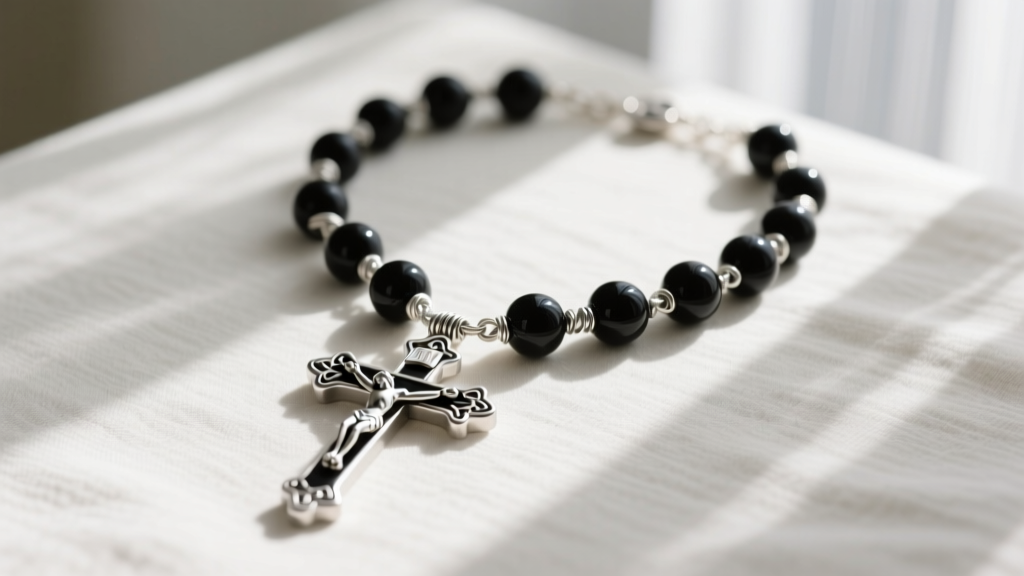
The Intersection of Faith and Fashion
Wearing a rosary as necklace has evolved from a strictly devotional practice into a profound expression of personal faith, heritage, and subtle fashion. However, transitioning a traditional prayer tool into a piece of daily-wear jewelry requires a careful eye for construction, material durability, and proportion. Many mass-produced rosaries are assembled with fragile wire and lightweight glass beads that simply cannot withstand the friction and tension of being worn as a necklace. This comprehensive buying guide will teach you exactly what to look for when purchasing a rosary meant for the neck, ensuring you invest in a piece that is both spiritually meaningful and structurally sound.
Material Matters: Beads and Hardware for Daily Wear
When selecting a rosary to wear as a necklace, the bead material dictates not only the aesthetic but the longevity of the piece. Beads on a worn rosary will constantly rub against clothing, skin, and each other. According to the GIA Gem Encyclopedia, understanding the Mohs hardness scale is critical for gemstone beads.
Top Bead Materials for Rosary Necklaces
- Black Onyx and Agate (Mohs 6.5-7): Exceptionally durable, scratch-resistant, and offers a sleek, modern aesthetic that pairs well with both casual and formal wear.
- Olive Wood: A traditional favorite. Olive wood is relatively soft but highly resilient to shattering. It absorbs natural skin oils over time, darkening and developing a rich, personalized patina.
- Lapis Lazuli and Turquoise (Mohs 5-6): Beautiful but porous. If you choose these, ensure the beads are sealed or stabilized to prevent discoloration from sweat and cosmetics.
- Avoid Uncoated Glass or Crystal: While visually striking, glass beads can chip or shatter if the necklace is dropped or caught on a heavy sweater.
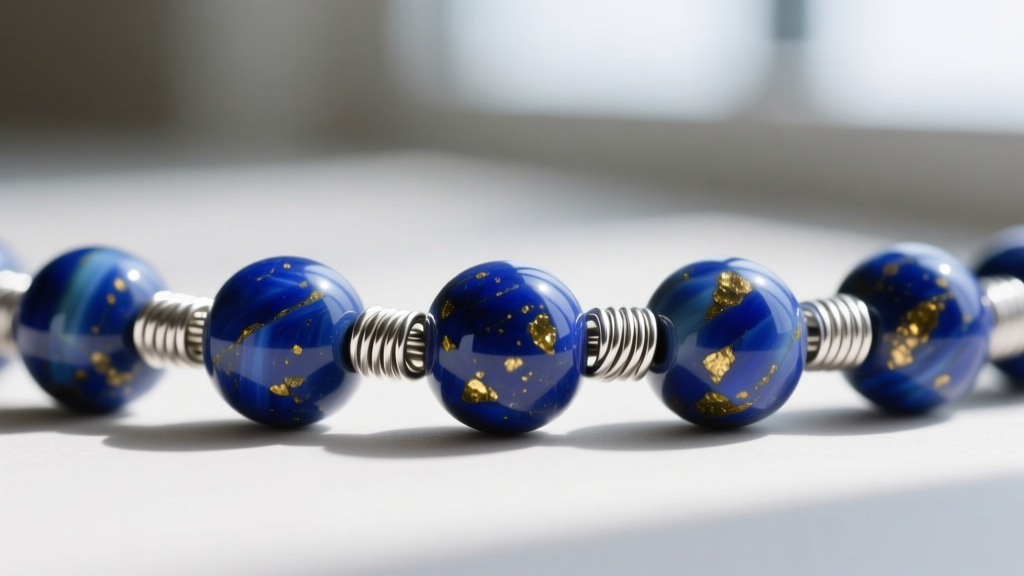
The Wire-Wrapping Standard
The most common failure point in a rosary necklace is the wire linking the beads. Many commercial rosaries use 24-gauge or 26-gauge wire, which is far too thin and will easily bend, unravel, or snap under the weight of a metal crucifix. When buying, look for artisans who use 20-gauge or 22-gauge half-hard wire. As noted by Rio Grande Jewelry Supply, half-hard wire offers the perfect balance of malleability for looping and tensile strength for holding heavy beads. Ensure the loops are tightly wrapped (wire-wrapped) rather than simple eye-pins, which can pull open over time.
Sizing and Proportions: A Structural Guide
A rosary worn as a necklace must sit correctly on the chest. Unlike standard necklaces that often feature a clasp, traditional rosaries are designed as continuous loops meant to slip over the head. This necessitates specific chain lengths and bead diameters.
| Bead Diameter | Visual Weight | Best Neckline Pairing | Ideal Total Length |
|---|---|---|---|
| 4mm - 5mm | Delicate, lightweight | Crew necks, button-downs | 24 - 26 inches |
| 6mm - 7mm | Medium, classic | V-necks, scoop necks | 26 - 28 inches |
| 8mm - 10mm | Heavy, statement | Open collars, over sweaters | 28 - 32 inches |
Pro-Tip: If you prefer a shorter necklace (18 to 22 inches) that sits near the collarbone, you must purchase a rosary that has been adapted with a high-quality jewelry clasp (like a lobster or spring ring) and a jump ring. Never try to force a standard 28-inch continuous loop over your head if it is constructed with rigid, large beads, as this will stress the wire and cause breakage.
Hardware and Construction: Inspecting Quality
The centerpiece (the medal or center where the five decades meet) and the crucifix are the heaviest components of the rosary. Their attachment points are critical.
What to Inspect Before Buying
- Soldered Jump Rings: The jump rings connecting the crucifix and the centerpiece to the main chain must be soldered shut. If you can see a gap in the ring, the heavy metal crucifix will eventually work its way out and be lost.
- Die-Cast vs. Hollow Metal: Opt for solid cast or die-cast metal crucifixes (sterling silver, bronze, or stainless steel). Hollow-plated plastic or thin sheet metal will dent easily and feel cheap against the skin.
- The Centerpiece Angle: When worn, the centerpiece should lay flat against the chest. Look for centerpieces with a top loop that is oriented perpendicularly to the medal, allowing the chain to drape naturally without twisting.
Respectful Styling: How to Wear a Rosary as Necklace
Styling a rosary requires a balance of reverence and personal aesthetics. While the The Catholic Company emphasizes the primary devotional purpose of the rosary, wearing it as a necklace is widely accepted as a public witness of faith when done respectfully. It should never be worn as a mere provocative accessory or layered with secular, novelty pendants that detract from its sacred nature.

Layering Techniques
Because a rosary is inherently textured and visually complex, it should be the anchor of your layered necklace stack. If you choose to layer it with other chains, stick to minimalist, unadorned cable or box chains in complementary metals. For example, a sterling silver and black onyx rosary pairs beautifully with a simple 22-inch silver rope chain. Avoid layering a rosary with other heavy pendants, as this creates visual clutter and increases the risk of the chains tangling and pulling on the delicate wire wraps of the rosary beads.
Price Guide and Sourcing
Understanding the pricing tiers will help you identify genuine craftsmanship versus overpriced mass production.
- Budget Tier ($15 - $40): Usually features wood or glass beads strung on nylon cord or thin, unsoldered wire. Acceptable for occasional wear, but not recommended for daily use as a necklace.
- Mid-Tier Artisan ($45 - $120): The sweet spot for daily wear. Expect 20-gauge wire-wrapped semi-precious stone beads, solid bronze or sterling silver hardware, and soldered jump rings.
- Heirloom / Fine Jewelry ($150 - $500+): Features precious metals (14k gold, platinum), high-grade gemstones, and custom-cast crucifixes. These are built to last generations and often come with lifetime repair warranties.
Final Thoughts on Your Purchase
Choosing to wear a rosary as necklace is a deeply personal decision that bridges the gap between internal devotion and external expression. By prioritizing structural integrity—specifically wire gauge, soldered hardware, and appropriate bead hardness—you ensure that your piece remains a durable, beautiful companion for years to come. Always inspect the connection points, choose materials that suit your lifestyle, and wear your faith with confidence and care.


