Jewish Necklace Symbols: A Technical Guide to Metals & Sizing
Explore the technical details of Jewish necklace symbols. Learn about authentic metals, pendant dimensions, chain pairings, and historical craftsmanship.

The Intersection of Faith and Metallurgy
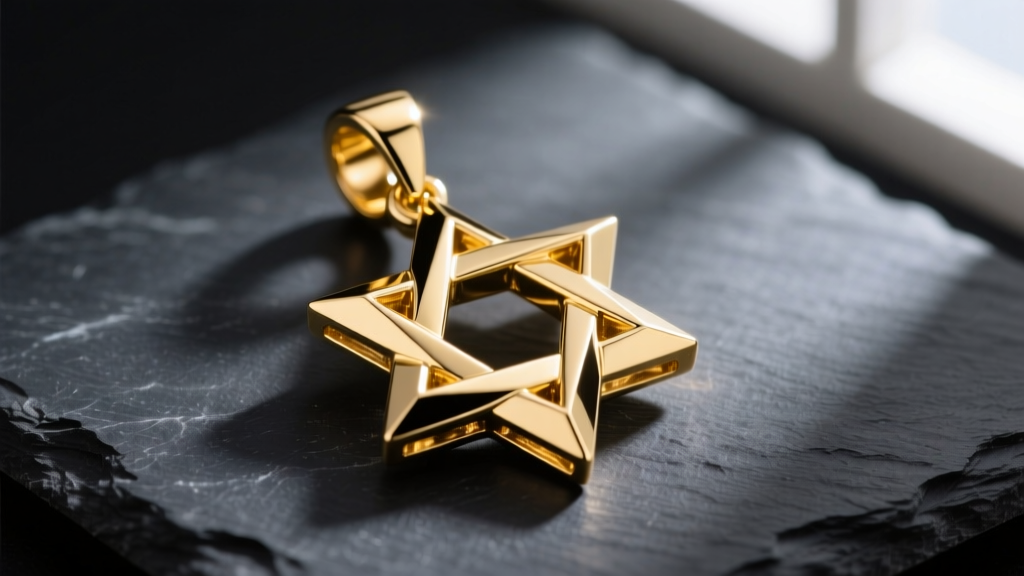
When evaluating jewish necklace symbols, most buyers focus solely on the spiritual or historical significance of the motif. However, from a master jeweler's perspective, these pendants present unique structural and metallurgical challenges. The intricate geometry of a Magen David (Star of David), the asymmetrical weight distribution of a Chai (חי), and the delicate gemstone settings of a Hamsa hand require precise engineering to ensure longevity. In 2026, with the rise of high-resolution CAD (Computer-Aided Design) casting and advanced laser welding, the technical standards for crafting these heritage pieces have never been higher. This guide bypasses generic styling advice to deliver a deep dive into the alloys, dimensional tolerances, and chain mechanics required for authentic, heirloom-quality Jewish jewelry.
Alloy Selection: Hardness, Tarnish, and Skin Chemistry
The longevity of any pendant relies heavily on its base alloy. Jewish symbols are frequently worn daily as expressions of faith, meaning the metal must withstand constant friction, exposure to sebum, and environmental oxidizers.
14k vs. 18k Gold: The Vickers Hardness Factor
While 18k gold (75% pure gold) offers a richer, deeper yellow hue, it possesses a Vickers hardness (HV) of roughly 110-125 HV. This makes it highly susceptible to micro-scratches and deformation, particularly in the thin, intersecting lines of a Star of David. Conversely, 14k gold (58.3% pure gold) is alloyed with higher concentrations of copper, silver, and zinc, pushing its hardness to 135-150 HV. For intricate Jewish symbols with sharp geometric points or delicate filigree, 14k gold is the superior technical choice for daily wear. According to the Gemological Institute of America (GIA), the specific copper-to-silver ratio in 14k gold also dictates its color warmth and resistance to stress-corrosion cracking.
Sterling Silver and the Rhodium Imperative
Standard 925 sterling silver contains 7.5% copper, which inevitably reacts with sulfur in the air and human sweat, causing tarnish. For symbols like the Hamsa or the Mezuzah pendant, which feature deep recesses and crevices that trap oxidizing agents, un-plated silver requires constant polishing. Expert jewelers recommend a 0.5 to 1.0-micron rhodium plating over a nickel-free barrier layer. This not only provides a brilliant, white-metal finish but creates an inert shield that prevents the copper alloy from reacting with skin chemistry.
Dimensional Standards and Weight Tolerances
A common failure point in mass-produced Jewish jewelry is improper scaling. A pendant that is too thin will warp; one that is too heavy will destroy the necklace chain. Below is the technical specification chart for standard, high-quality heritage pendants.
| Symbol | Optimal Dimensions (L x W) | Average Weight (14k Solid) | Minimum Metal Thickness |
|---|---|---|---|
| Star of David | 18mm x 18mm | 2.8g - 3.5g | 1.2mm (at intersecting nodes) |
| Chai (חי) | 22mm x 12mm | 3.2g - 4.1g | 1.5mm (base plate) |
| Hamsa Hand | 20mm x 15mm | 4.5g - 6.0g | 1.8mm (palm center) |
| Mezuzah Case | 25mm x 8mm | 5.0g - 7.5g | 1.0mm (hollow tube wall) |
Chain Pairing Mechanics and Bail Engineering
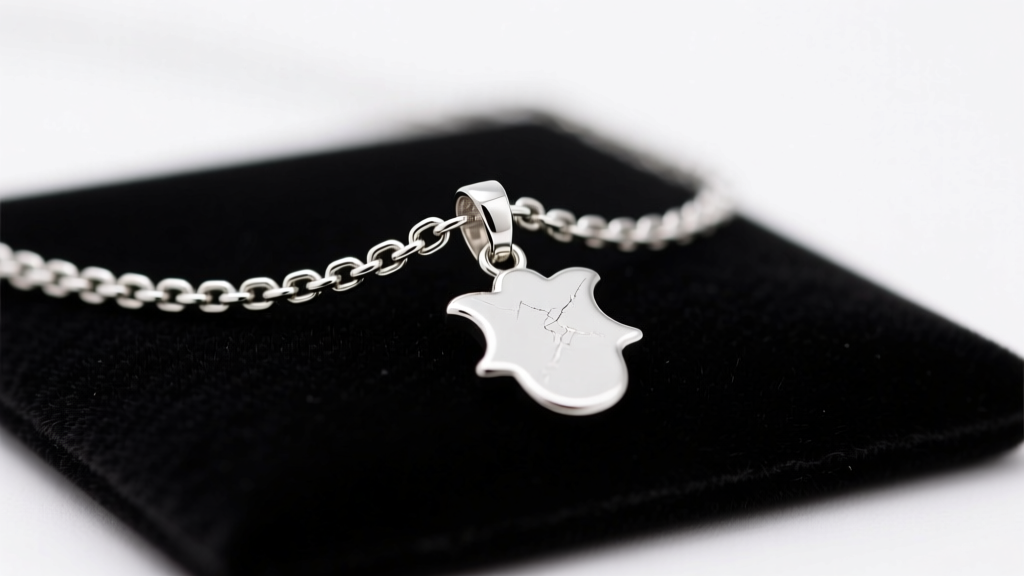
The relationship between the pendant bail and the chain is a study in physics and friction. A heavy solid gold Hamsa pendant (approx. 5.5g) suspended on a delicate 1.0mm cable chain will act as a pendulum, causing severe friction wear at the bail hole. Over 12 to 18 months, this friction can literally saw through the chain link or the bail itself.
The 3:1 Weight-to-Weave Ratio
As a general engineering rule, the chain's tensile strength and weave density must scale with the pendant's mass. For pendants under 3 grams (like a minimalist Chai), a 1.2mm to 1.5mm solid Box chain or Wheat chain is ideal. The box chain's square links distribute the pendant's weight evenly across four interior contact points, reducing localized wear. For pendants exceeding 4 grams, a 2.0mm to 2.5mm Rope chain is required. The twisted, helical structure of a rope chain provides superior lateral flexibility and tensile strength, preventing the chain from kinking under the heavy, swinging load of a solid gold Mezuzah pendant.
Bail Inner Diameter (ID) Specifications
The bail—the loop connecting the pendant to the chain—must be laser-welded or soldered shut. Open-jump-ring bails will inevitably pry open under the dynamic load of daily movement. Furthermore, the inner diameter (ID) of the bail must exceed the outer width of the chain by a minimum of 0.8mm to allow for fluid articulation without binding.
Symbol-Specific Structural Engineering
Each Jewish symbol possesses unique geometric properties that dictate how it must be cast, polished, and reinforced.
The Star of David (Magen David): Managing Stress Points
The hexagram consists of two interlocking equilateral triangles. In traditional lost-wax casting, the six outer points and the inner hexagonal cutouts create severe stress concentration zones. If the wire thickness at the vertices drops below 1.0mm, the points will easily snag on clothing and bend. Modern CAD software allows jewelers to implement micro-fillets (slight rounding) at the inner intersecting angles, which disperses mechanical stress and prevents micro-fractures during the gold cooling phase. For a comprehensive history on the geometric evolution of this symbol, refer to My Jewish Learning.
The Chai (חי): Asymmetrical Weight Distribution
The Chai, composed of the Hebrew letters Het (ח) and Yud (י), is inherently top-heavy and asymmetrical. If cast as a flat, uniform 2D silhouette, the pendant will constantly flip upside down on the chest. To counteract this, expert jewelers engineer a counter-weighted backplate or utilize a tapered thickness—making the bottom of the Het slightly thicker (e.g., 2.2mm) than the top of the Yud (e.g., 1.5mm). This shifts the center of gravity downward, ensuring the pendant hangs perfectly plumb. For deeper theological context on the numerical value (gematria) of 18 associated with this design, consult Chabad.org.
The Hamsa: Gemstone Setting Integrity
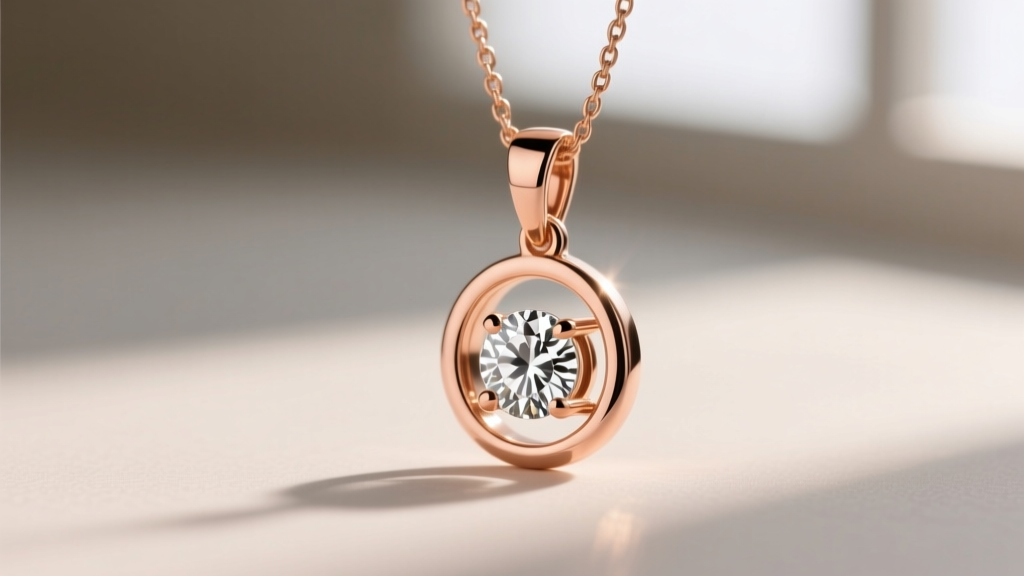
The Hamsa often features a central 'eye' motif, frequently set with a turquoise, sapphire, or diamond to ward off the evil eye. Because the Hamsa is worn flat against the sternum, a traditional 4-prong setting is highly vulnerable to impact and snagging. The technical standard for Hamsa center-stones is a flush (gypsy) setting or a heavy bezel setting. A bezel setting requires the jeweler to burnish a continuous rim of gold over the gemstone's girdle, providing a smooth, snag-proof surface that protects the stone's edges from chipping during daily wear.
Hallmark Verification and Authenticity Sourcing
When investing in fine Jewish jewelry, verifying the metal purity and origin is paramount. Authentic pieces will bear laser-engraved or stamped hallmarks. Look for '585' (14k gold), '750' (18k gold), or '925' (sterling silver). However, a purity stamp alone does not guarantee ethical sourcing or structural integrity. High-end manufacturers will also include a registered Maker's Mark—a unique two- or three-letter stamp identifying the specific casting house or artisan. When purchasing online or from boutique jewelers, always request a macro-photograph of the bail and the backplate to verify the presence of these dual hallmarks and to inspect the quality of the final polish. A well-finished pendant will show no visible porosity (tiny pits in the metal caused by trapped gas during casting) and will feature crisp, hand-filed edges that honor the ancient geometry of the symbol.


