Jewish Symbol Necklace Value Guide: Pricing & Metals (2026)
Evaluate the true cost of a Jewish symbol necklace in 2026. Compare Star of David, Hamsa, and Chai pendants across silver, 14k gold, and platinum.

The Economics of Cultural Jewelry: Beyond the Display Case
When allocating a budget for a jewish symbol necklace, consumers are often caught between emotional resonance and retail markups. Whether you are purchasing a Magen David (Star of David), a Hamsa, or a Chai pendant, the price discrepancy between seemingly identical pieces can range from $40 to over $2,500. In 2026, with precious metal markets experiencing sustained volatility, understanding the intrinsic value versus the retail premium of religious and cultural jewelry is essential.
This guide strips away the marketing fluff to provide a rigorous budget and value assessment. We will analyze material grades, manufacturing techniques, and hidden cost traps to ensure your investment aligns with the actual craftsmanship and metal weight of the piece.
Decoding the Metal Matrix: Intrinsic Value vs. Retail Price
The foundation of any necklace's value lies in its metallurgical composition. Many retailers obscure the actual gold weight, pricing items based on 'design' rather than material reality. Below is a breakdown of standard metals used for Jewish pendants, evaluated against 2026 market realities.
| Metal Type | Purity / Stamp | Avg. Pendant Weight | 2026 Retail Price Range | Durability & Value Notes |
|---|---|---|---|---|
| Sterling Silver | 925 | 2.5g - 5.0g | $45 - $120 | High value. Prone to sulfur tarnish; requires rhodium plating for low maintenance. |
| 14k Solid Gold | 585 / 14k | 1.5g - 4.0g | $180 - $450 | Optimal balance. 58.5% gold provides necessary hardness for delicate Star of David points. |
| 18k Solid Gold | 750 / 18k | 2.0g - 5.0g | $350 - $850+ | Rich color but softer. Intricate openwork Chai symbols may bend if caught on clothing. |
| Gold Vermeil | 925 base + 2.5μm 14k | 3.0g - 6.0g | $80 - $160 | Mid-tier value. Plating will wear off in 1-3 years with daily friction. |
The 14k vs. 18k Gold Debate for Intricate Symbols
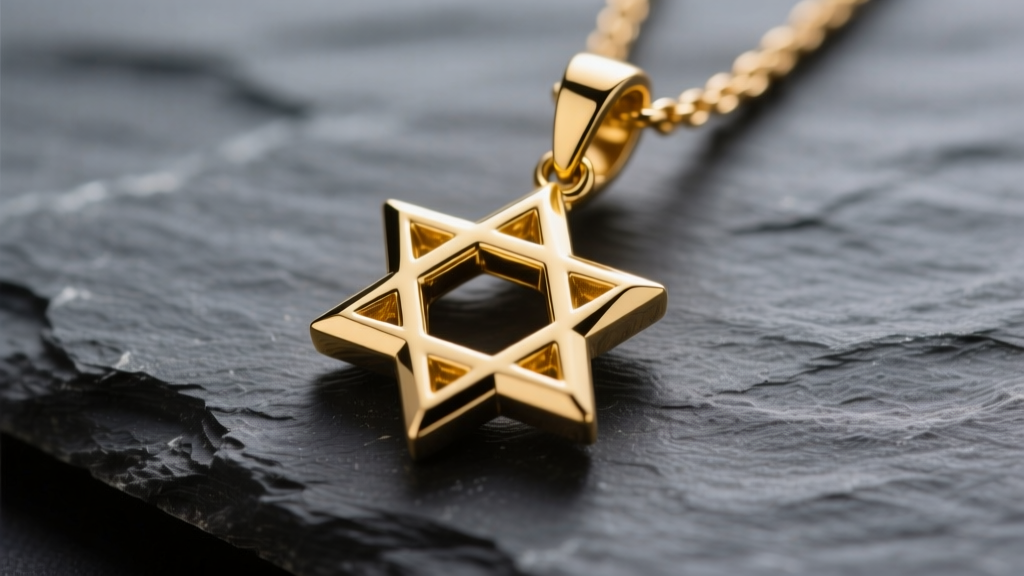
While 18k gold commands a higher price and offers a deeper yellow hue, it is not always the superior choice for a jewish symbol necklace. According to metallurgical standards referenced by the Gemological Institute of America (GIA), 18k gold (75% pure) is significantly softer than 14k gold (58.5% pure). For a Star of David pendant featuring six delicate points, or a Hamsa with slender fingers, 14k gold provides the structural integrity required to prevent bending and denting during daily wear. Paying the premium for 18k gold on a large, thin-cast pendant often results in a higher failure rate.
Symbol Complexity and Manufacturing Costs
The method used to create the pendant drastically impacts both its durability and its price tag. Retailers rarely disclose whether a piece is cast or die-struck, yet this distinction is vital for value assessment.
Die-Struck vs. Cast Pendants
- Die-Striking: This process uses immense pressure to compress metal into a mold. The resulting pendant is denser, heavier, and far more resistant to denting. A die-struck 1.5-gram Star of David will outlast a 2.5-gram cast version. However, the tooling costs are high, meaning these are usually found in simpler, classic designs from established manufacturers.
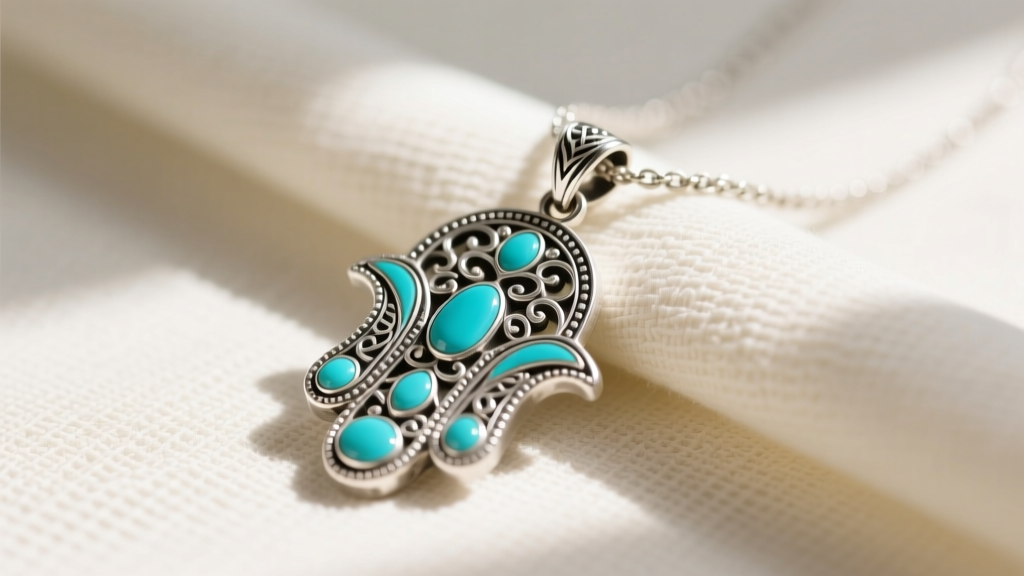
- Lost-Wax Casting: Most modern, highly detailed pendants (like a Hamsa wrapped in intricate filigree or an Evil Eye integration) are cast. Casting can introduce 'porosity'—tiny microscopic air pockets that weaken the metal. When evaluating a cast Chai symbol, inspect the inner edges of the openwork under a loupe. Pitted or rough inner edges indicate poor casting quality and justify a lower price point.
Gemstone Accents and Enamel Work
Many Hamsa and Mezuzah pendants incorporate enamel or gemstones. Genuine vitreous enamel (fired glass) is highly durable and adds legitimate artisan value. Conversely, cold enamel (epoxy resin) is essentially painted plastic that will yellow and chip within a few years. If a piece is priced over $250 and features resin enamel rather than genuine gemstones or fired glass, the value proposition is severely compromised.
The Chain: Where Retailers Hide Their Margins
A pendant is only as secure as its chain, yet the chain is where the most aggressive retail markups occur. A standard 18-inch 14k gold cable chain weighing 1.2 grams should cost roughly $90 to $130 based on 2026 spot prices. However, boutique jewelry stores frequently bundle lightweight, hollow-core chains with solid pendants, charging a 400% markup for the 'set'.
Clasp Mechanics and Failure Modes
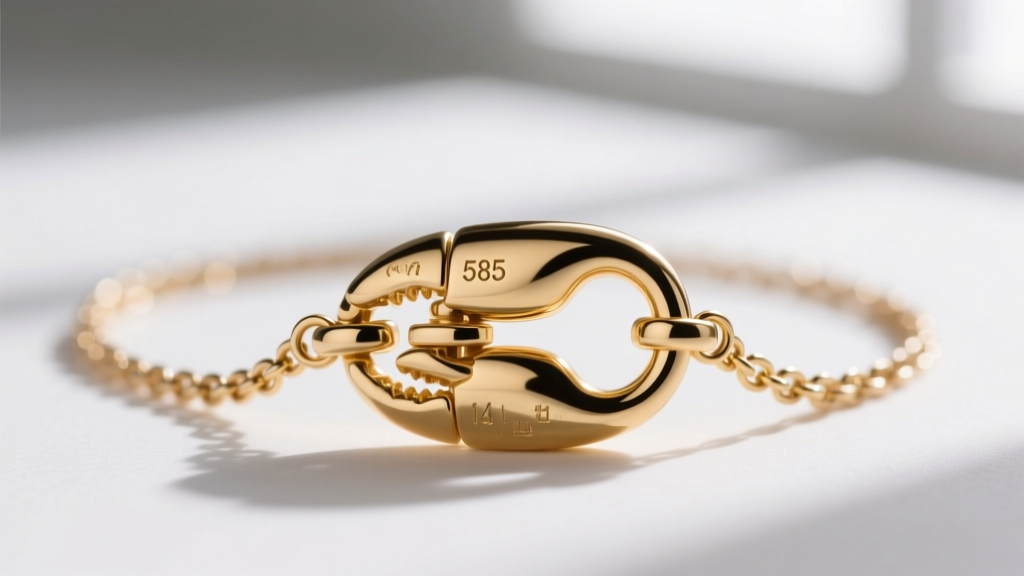
When assessing the chain's value, examine the clasp and the jump ring (the small loop connecting the clasp to the chain). Spring-ring clasps are notoriously weak and frequently fail when paired with heavier solid gold Chai or Mezuzah pendants. Always insist on a lobster clasp for any pendant exceeding 3 grams. Furthermore, the jump ring must be soldered or laser-welded shut. If you can see a gap in the jump ring with the naked eye, the chain is a liability waiting to snap.
Your 2026 Value Assessment Checklist
Before finalizing your purchase of a jewish symbol necklace, run the piece through this rigorous, four-point inspection framework to ensure you are paying for genuine quality rather than brand inflation.
The Weight-to-Price Ratio Test: Weigh the pendant on a digital jeweler's scale. Multiply the gram weight by the current daily scrap price of the specific karat gold (readily available via the World Gold Council). A fair retail price should be 2.5x to 3.5x the scrap value to account for labor, design, and overhead. Anything exceeding 5x the scrap value is a luxury brand tax.
- Hallmark Verification: Look for the '925', '585', or '750' stamp. In 2026, laser-engraved hallmarks on the bail (the loop the chain passes through) are standard. Avoid pieces with glued-on tags or no stamps entirely.
- The 'Hollow' Trap: Tap the pendant lightly against a glass surface. A solid piece produces a dense, high-pitched 'clink'. A hollow-cast piece (often used to make large pendants appear heavier than they are) will produce a dull, muted thud. Hollow jewelry dents easily and cannot be resized or repaired by a jeweler.
- Cultural Accuracy: For traditional buyers, ensure the symbol is rendered correctly. For example, a genuine Chai pendant must feature the Hebrew letters Chet (ח) and Yod (י) in the correct proportion and orientation. Mass-produced, unverified imports occasionally mirror or distort these characters, rendering them culturally invalid.
- Edge Finishing: Run your fingernail along the outer edges of the Star of David or Hamsa. High-value pieces undergo 'tumbling' and hand-polishing, resulting in edges that are smooth but distinctly defined. Rough, sharp, or overly rounded edges indicate rushed, low-tier manufacturing.
Final Thoughts on Investment vs. Ornament
A jewish symbol necklace is deeply personal, often serving as a daily reminder of faith, heritage, and identity. However, emotional significance should not blind you to poor manufacturing and inflated pricing. By prioritizing 14k solid gold for durability, demanding soldered chain components, and calculating the weight-to-price ratio, you can acquire a piece that holds both profound cultural meaning and legitimate material value for decades to come.


