Kaitlan Collins Necklace Guide: Broadcast-Ready Jewelry
Discover how to choose the perfect Kaitlan Collins necklace for a professional, broadcast-ready look with our expert buyer's guide on metals and gauges.


The Anatomy of a Broadcast-Ready Necklace
When viewers tune into prime-time news, the jewelry worn by top-tier journalists is rarely an afterthought. The highly searched 'Kaitlan Collins necklace' aesthetic represents a masterclass in broadcast-ready styling: it is authoritative, elegant, and entirely non-distracting. As of 2026, with newsrooms fully transitioned to 4K and 8K ultra-high-definition cameras, the margin for error in studio jewelry has vanished. Intricate filigree can cause digital moiré patterns on screen, while high-polish prong settings can create blinding lens flares under intense studio rigs.
Achieving this signature look requires understanding the intersection of horology-grade metallurgy, studio lighting temperatures, and audio engineering. Whether you are a media professional, a corporate executive, or simply an admirer of minimalist, camera-ready elegance, this buying guide will break down the exact specifications required to replicate this sophisticated aesthetic.
Key Materials and Specifications for Camera Wear
The foundation of any broadcast-appropriate necklace is the metal. Modern television studios typically utilize 5600K daylight-balanced LED panels. Under this specific color temperature, certain metals behave unpredictably.
Gold Karat and Color Temperature
While 22k or 24k gold offers a rich, buttery yellow hue in natural sunlight, it often reads as overly brassy or artificial under 5600K studio lights. The sweet spot for the Kaitlan Collins look is 14k or 18k solid yellow gold. These alloys contain enough copper and silver to anchor the color, ensuring it looks grounded and expensive on camera. According to the Gemological Institute of America (GIA), 14k gold (58.3% pure gold) also offers superior tensile strength, which is critical for chains that must withstand the friction of daily blazer and silk blouse wear without stretching.
Pro Tip: Avoid white gold unless it has been freshly rhodium-plated. The underlying yellow tint of worn white gold becomes glaringly obvious on HD cameras, making the piece look tarnished or cheap.
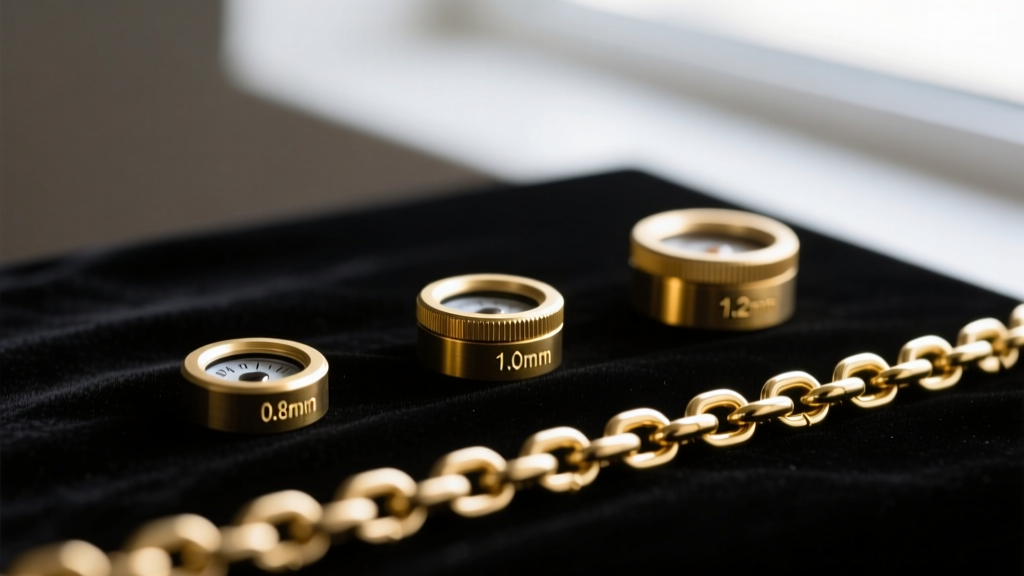
The Ideal Chain Gauges and Lengths
Thickness and length dictate how a necklace interacts with both the camera lens and the wardrobe. A chain that is too thick reads as casual streetwear, while one that is too thin simply disappears into the pixel density of a broadcast monitor.
| Specification | Optimal Range | Broadcast Rationale |
|---|---|---|
| Chain Gauge | 0.9mm to 1.2mm | Thick enough to catch light subtly, thin enough to remain elegant and professional. |
| Chain Length | 16 inches (Choker/Collarbone) | Sits securely above the lapel line; prevents interference with lavalier microphones. |
| Chain Style | Cable, Box, or Wheat | Uniform light reflection; avoids the erratic flashing of twisted or rope chains. |
| Clasp Type | Lobster Claw | Spring rings fail under the stress of daily studio wardrobe changes; lobsters secure the piece. |
Pendant Selection: Navigating Studio Glare and Audio
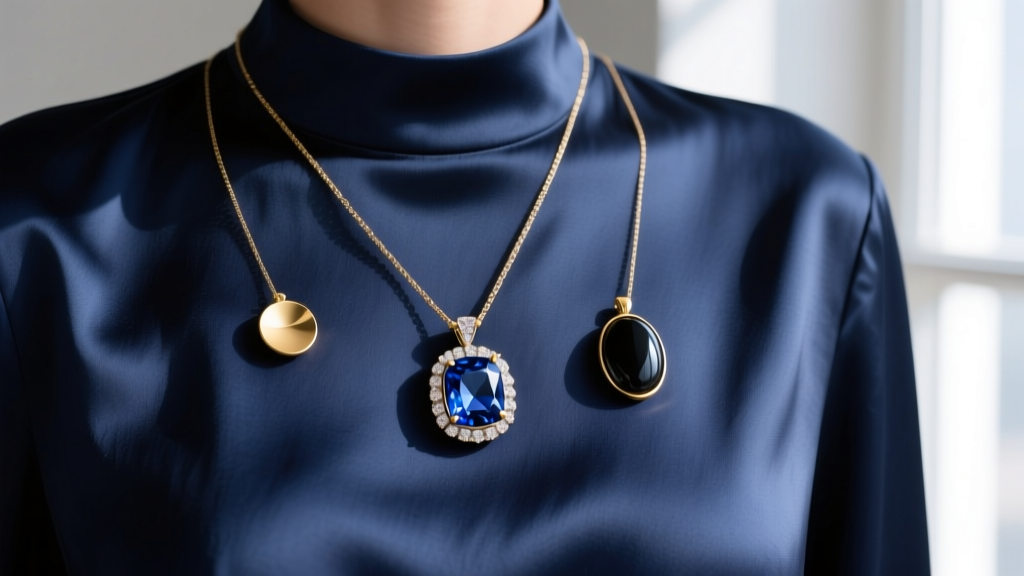
The pendant is where the Kaitlan Collins necklace truly shines, but it is also where most buyers make critical errors. In a hard-news environment, a pendant must convey refinement without demanding the viewer's attention away from the journalistic content.
Bezel Settings Over Prong Settings
Prong settings elevate the diamond or gemstone, allowing maximum light return. However, on camera, this creates a 'starburst' glare effect that can distract the viewer. Furthermore, prongs easily catch on the delicate threads of silk blouses and scarves. A bezel setting—where a thin rim of metal completely encircles the stone's girdle—provides a smooth, snag-free profile. The GIA's diamond quality guidelines note that while bezels slightly reduce brilliance, they offer superior protection and a sleeker, more modern silhouette that aligns perfectly with contemporary broadcast styling.
The Lavalier Microphone Hazard
Perhaps the most overlooked aspect of buying a television-ready necklace is audio interference. News anchors and field reporters are frequently mic'd with lavalier microphones clipped to their lapels or necklines. A pendant hanging at 18 or 20 inches will inevitably swing and strike the microphone housing during natural body movements, causing catastrophic audio clipping and low-frequency thuds. Sticking strictly to a 16-inch chain ensures the pendant rests safely on the sternum, well above the mic placement zone.
Where to Buy: Brands Matching the Aesthetic
To achieve this specific look without paying luxury markup for pieces that may not withstand daily studio friction, focus on brands that specialize in solid, demi-fine, or fine jewelry with minimalist design languages.
- Mejuri (Everyday Solid Gold Collection): Their 14k gold cable chains and bezel-set solitaire pendants are industry staples for media professionals. Price range: $350 - $800.
- Catbird (Threadbare & Ghost Chains): Based in Brooklyn, Catbird offers ultra-refined, lightweight chains that sit beautifully on the collarbone without overwhelming a silk camisole. Price range: $250 - $600.
- Gorjana (Fine Jewelry Line): Ensure you select from their solid 18k gold line, not the gold-plated fashion line, to prevent the dreaded 'green neck' effect caused by studio heat and makeup oxidation. Price range: $400 - $1,200.
- Blue Nile (Build-Your-Own Bezel): For those wanting a specific diamond carat weight (0.15ct to 0.25ct is the broadcast sweet spot), Blue Nile allows you to pair a loose diamond with a custom 14k bezel pendant setting.
Care and Maintenance for Daily Studio Wear
Studio environments are notoriously harsh on jewelry. The combination of professional HD makeup (which often contains light-reflecting silica powders), hairspray, and the ambient heat of lighting rigs creates a microscopic film on gold and gemstones. This film dulls the metal and causes the jewelry to look lifeless on camera.
'In broadcast styling, a dull necklace reads as a cheap necklace. You must clean camera-facing jewelry with an ultrasonic cleaner at least twice a week to remove the silica and sebum buildup that matte lighting rigs will instantly expose.' — Senior Wardrobe Stylist, National Cable News Network
The 2026 Studio Cleaning Protocol:
- Soak the necklace in a solution of warm water and a few drops of ammonia-free dish soap for 10 minutes.
- Use a baby-soft toothbrush to gently agitate the back of the pendant (the pavilion), where makeup accumulates.
- Rinse with distilled water to prevent hard water spots, which are highly visible under macro studio lenses.
- Dry completely with a lint-free microfiber cloth before storing in an anti-tarnish pouch.
By adhering to these precise material grades, gauge sizes, and maintenance routines, you can successfully curate a jewelry wardrobe that projects the same unshakeable authority and polished elegance seen on prime-time television.


