Kartush Necklace Troubleshooting: Fix Chains & Clasps
Is your kartush necklace broken? Learn expert troubleshooting for chain snapping, clasp failure, and bail wear with our 2026 repair and upgrade guide.

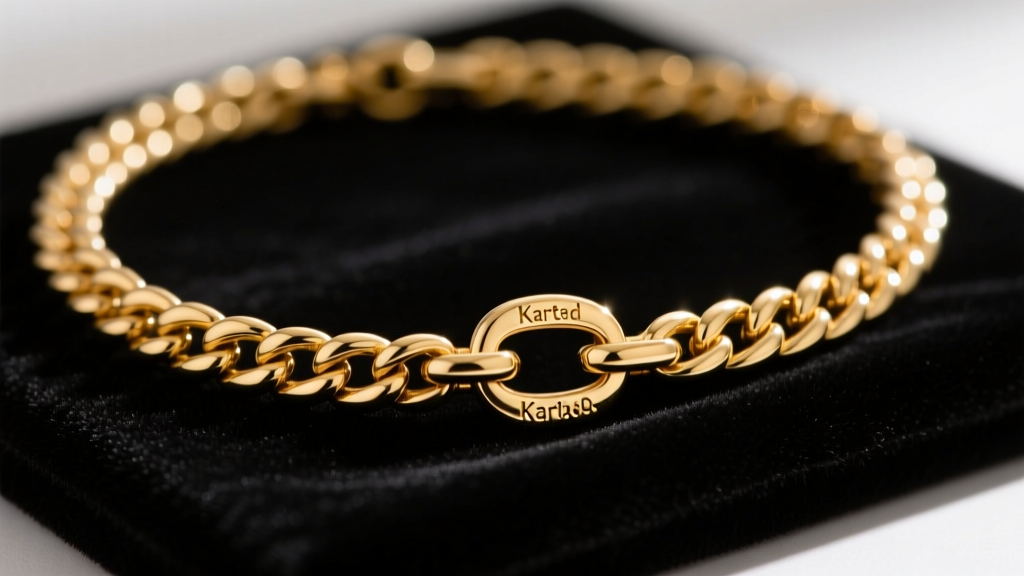
A heavy, custom-engraved, or statement pendant is a cornerstone of personal jewelry, but it often comes with structural vulnerabilities. When your favorite kartush necklace snaps or suffers hardware failure, it is rarely a random accident. In almost every case, the breakage is the result of a mismatch between the pendant's mass and the chain's tensile strength. As of 2026, advances in laser-welding and metallurgical alloys have given us better repair options than ever before, but understanding the physics of jewelry wear remains essential.
This comprehensive troubleshooting guide dives deep into the mechanical failure points of heavy pendants. We will explore the exact gauge requirements, the metallurgical differences between gold alloys, and the specific chain weaves that prevent catastrophic loss.
The Anatomy of a Kartush Necklace Failure
To effectively troubleshoot a broken kartush necklace, you must first understand the 'pendulum effect.' A heavy pendant—typically weighing between 15 and 35 grams—acts as a kinetic battering ram against the chain. Every time you walk, lean forward, or turn your head, the pendant swings. This kinetic energy concentrates entirely on three microscopic stress points:
- The Bail: The loop connecting the pendant to the chain.
- The Jump Ring: The small metal circle linking the chain to the clasp or bail.
- The Clasp Spring: The internal mechanism of a lobster or spring-ring clasp.
When a necklace fails, it is almost always at one of these junctions. The metal fatigue caused by repetitive swinging eventually exceeds the yield strength of the alloy, resulting in a sudden snap. According to the Gemological Institute of America (GIA), the hardness and durability of precious metals vary drastically based on their alloy composition, which directly impacts how long these stress points will survive under a heavy load.
Troubleshooting Chain Breakage Under Heavy Pendants
If your chain is snapping near the center or the links are pulling apart, you are likely dealing with a severe gauge and weave mismatch. Many mass-produced necklaces pair heavy pendants with hollow or lightweight chains to reduce manufacturing costs. This is a structural recipe for disaster.
Upgrading to the Right Chain Gauge and Weave
The thickness (gauge) of the chain dictates its tensile strength, but the weave dictates how it handles multi-directional stress. For a heavy kartush necklace, you must abandon fragile weaves like standard cable, figaro, or hollow-curb chains. Instead, look for interlocking weaves that distribute kinetic stress laterally across multiple links.
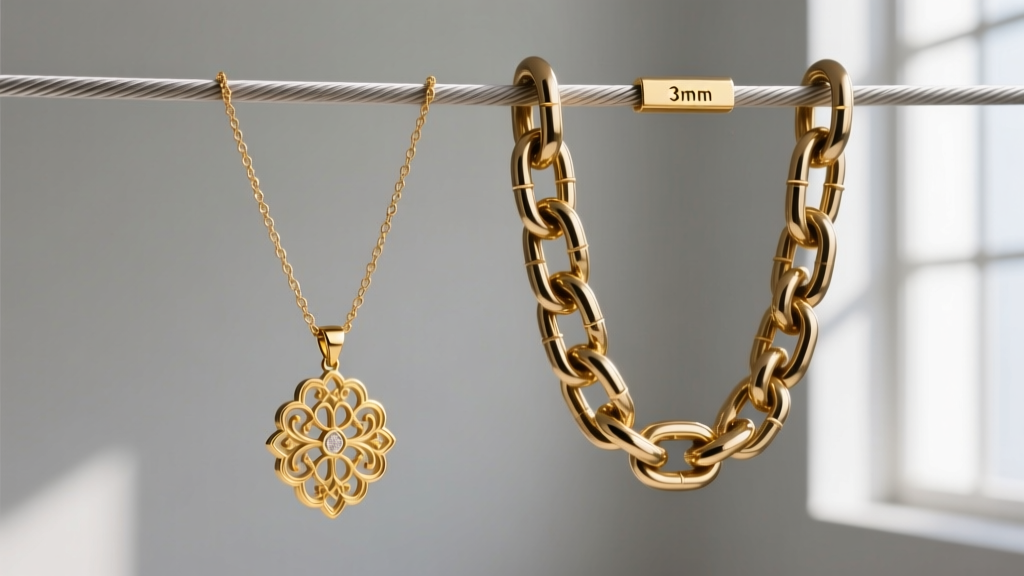
Recommended Chain Weaves for Heavy Pendants:
- Franco Chains: Featuring a four-sided, interlocking V-weave, Franco chains are incredibly resistant to kinking and pulling. A solid 2.5mm to 3.0mm Franco chain can easily support a 30-gram pendant without link distortion.
- Wheat (Spiga) Chains: Woven in a continuous, braided pattern, wheat chains offer excellent flexibility and high tensile strength. They distribute the weight of the pendant evenly across the collarbone.
- Rope Chains (Solid, not hollow): While beautiful, rope chains must be completely solid. Hollow rope chains will crush under the pressure of a heavy pendant bail.
The 14k vs. 18k Gold Dilemma
When replacing a chain for a heavy pendant, consider the karat weight of the gold. While 18k gold (75% pure gold) offers a richer, deeper yellow hue, it is a softer metal. 14k gold (58.3% pure gold) is alloyed with higher amounts of copper, silver, or zinc, making it significantly harder and more resistant to the abrasive friction caused by a swinging pendant. For maximum structural integrity, a 14k solid gold chain is the superior engineering choice for heavy daily wear.
Solving Clasp and Jump Ring Weak Points
The clasp assembly is the most frequent point of failure on any necklace. If your kartush necklace frequently unfastens itself or the jump ring pulls open, the hardware is insufficient for the pendant's mass.
The Soldered Jump Ring Mandate
A standard jump ring has a tiny slit where the wire was cut. Under the lateral pull of a heavy pendant, this slit will slowly pry open, allowing the chain to slip through and the necklace to fall off. The permanent solution is to have a bench jeweler solder the jump rings shut. As noted by jewelry manufacturing experts at Rio Grande, a laser-welded or traditionally soldered jump ring increases the structural integrity of the connection point by over 400%, effectively turning the weakest link into one of the strongest.
Upgrading the Clasp Mechanism
Standard lobster clasps rely on a tiny internal steel spring. Over time, the heavy pendulum swinging of a kartush pendant fatigues this spring, causing the clasp to stick open or fail to close completely. If your pendant exceeds 20 grams, upgrade to a Box Clasp with a Figure-8 Safety Catch. Box clasps use a friction-fit mechanical wedge rather than a spring, completely eliminating spring fatigue. The figure-8 safety wire acts as a secondary fail-safe, ensuring that even if the primary box mechanism is accidentally depressed, the necklace remains securely around your neck.
Pendant Weight vs. Minimum Chain Requirements
Use the following troubleshooting matrix to determine if your current chain setup is rated for your specific pendant weight.
| Pendant Weight | Minimum Chain Gauge | Recommended Weave | Required Clasp Type |
|---|---|---|---|
| 5g - 15g | 1.5mm - 2.0mm | Cable, Curb, or Rope | Standard Lobster |
| 15g - 25g | 2.0mm - 2.5mm | Wheat, Solid Rope | Heavy-Duty Lobster |
| 25g - 40g+ | 2.5mm - 4.0mm | Franco, Solid Wheat | Box Clasp w/ Safety |
Addressing Bail Wear and Custom Engraving Tarnish
Beyond catastrophic breakage, heavy pendants suffer from slow, abrasive wear and cosmetic degradation. Troubleshooting these issues requires a mix of preventative maintenance and specialized cleaning techniques.

The 'Bail Rub' Phenomenon
If the hole of your pendant is unlined, the hard metal of the pendant will act like a saw against the softer metal of the chain. Over a few years, this friction will literally saw through a 2mm gold chain. To troubleshoot this, have a jeweler install a Teflon or UHMWPE (Ultra-High-Molecular-Weight Polyethylene) bail liner. This microscopic tubing creates a low-friction barrier between the pendant and the chain, eliminating metal-on-metal abrasion and extending the life of the chain by decades.
Restoring Tarnished Custom Engravings
Many kartush-style necklaces feature deep, custom laser or hand engravings. These grooves trap skin oils, lotions, and environmental sulfur, leading to localized tarnish that is difficult to reach. Never use a commercial silver dip or harsh ultrasonic cleaner on a heavy pendant with soft gemstone inlays or oxidized enamel details. Instead, use a targeted cleaning approach:
Expert Cleaning Protocol: Mix a few drops of mild, phosphate-free dish soap (like Dawn) into warm distilled water. Soak the pendant for 10 minutes to loosen lipid bonds. Use a baby-soft toothbrush (extra-soft bristles only) to gently agitate the water into the engraved grooves. Rinse with distilled water and dry immediately with a microfiber cloth to prevent hard water spotting.
DIY vs. Professional Bench Jeweler Repairs
When troubleshooting a broken necklace, it is crucial to know when to stop DIY attempts and hand the piece to a professional. Attempting to fix a snapped chain with jewelry glue or basic wire-wrapping will inevitably lead to a secondary failure and the permanent loss of your pendant.
If a link has snapped in the middle of a Franco or Wheat chain, a professional bench jeweler will use a laser welder to fuse the link back together. Unlike traditional torch soldering, which requires heating a large section of the chain and potentially melting adjacent links or altering the temper of the gold, laser welding uses a highly focused beam of light to melt a microscopic dot of matching gold wire directly into the break. This preserves the structural integrity and the visual continuity of the complex weave.
Preventative Maintenance for Longevity
The ultimate troubleshooting strategy is prevention. To ensure your heavy pendant necklace survives daily wear, implement a strict monthly inspection routine. Run your fingernail along the jump rings to check for any snagging, which indicates the ring is pulling open. Inspect the bail hole for deep grooves or sharp edges. Finally, always unclasp the necklace using the jump ring, never by pulling the chain through the clasp mechanism, which can bend the delicate internal levers.
By respecting the physics of heavy jewelry and upgrading your hardware to match the mass of your pendant, you can transform a fragile accessory into a lifelong, indestructible heirloom. For further guidance on precious metal care and alloy durability, consult the educational resources provided by Stuller or your local certified bench jeweler.


