How to Style a Bumblebee Necklace: A Step-by-Step Guide
Learn how to style a bumblebee necklace with our step-by-step guide. Discover chain pairings, layering techniques, and enamel care tips for 2026 trends.

The Resurgence of the Bumblebee Motif
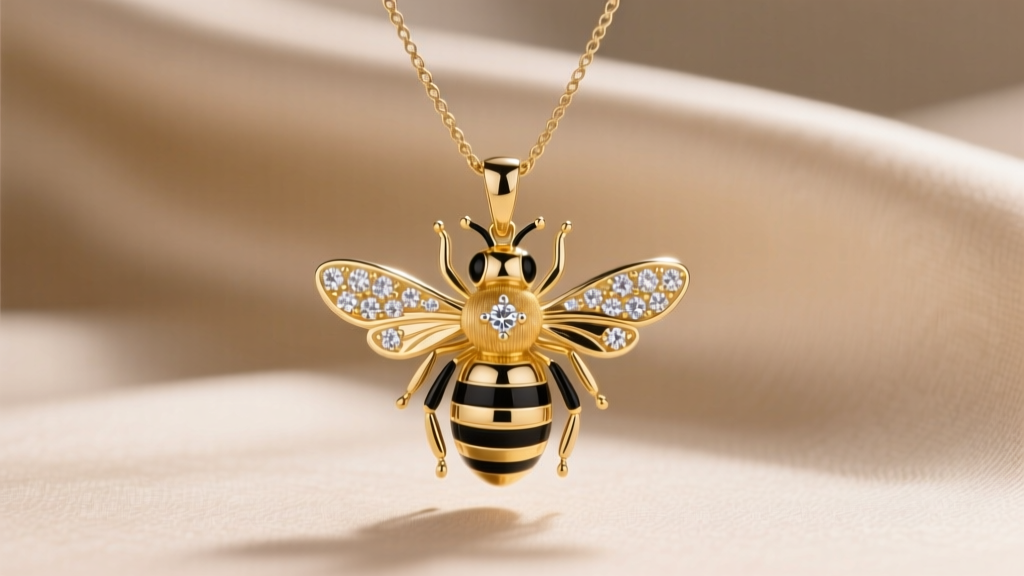
The bumblebee necklace has evolved from a quirky novelty item into a sophisticated staple of fine jewelry. Symbolizing community, brightness, and personal power, the bee motif offers a unique blend of whimsy and elegance. However, styling an intricate, multi-material pendant requires more than just throwing it on a chain. Whether your piece features pavé diamonds, vibrant vitreous enamel, or solid 18k gold detailing, mastering the art of styling a bumblebee necklace involves understanding chain mechanics, neckline geometry, and material care. This step-by-step guide will help you curate a flawless look that highlights your pendant’s craftsmanship.
Step 1: Selecting the Ideal Chain Weave
The chain you choose dictates both the safety and the visual balance of your bumblebee pendant. Bee pendants often feature protruding elements like delicate wings, antennae, or stingers, which can easily snag on certain weaves.
- Cable Chains (0.8mm - 1.2mm): The classic choice. The simple, uniform oval links provide a clean, unobtrusive backdrop that allows the intricate details of the bee to take center stage. Ideal for lightweight pendants (under 3 grams).
- Box Chains: Featuring square links that create a smooth, continuous surface, box chains are excellent for heavier solid gold bumblebee pendants. They offer superior structural support and resist kinking.
- Skip These - Snake and Herringbone Chains: While beautiful, the tightly interlocked plates of snake chains act like velcro to the tiny prongs and wings of a bee pendant. Avoid these weaves to prevent damaging both your chain and your jewelry.
Step 2: Matching Lengths to Necklines
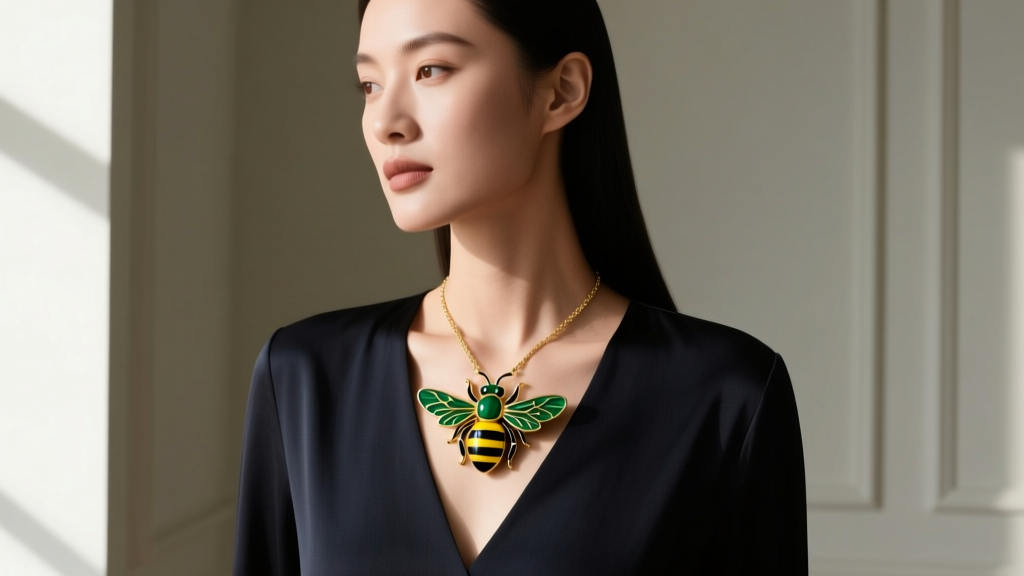
A bumblebee pendant is a focal point, and its placement should complement, rather than clash with, your wardrobe. The interplay between the necklace length and the garment's neckline is crucial for achieving a polished aesthetic.
| Neckline Type | Ideal Chain Length | Styling Effect |
|---|---|---|
| V-Neck | 18" (Princess) | The pendant rests perfectly in the negative space, mirroring the V-shape and elongating the neck. |
| Crew Neck | 20" - 22" (Matinee) | Drops below the collar line, breaking up the solid block of fabric and adding vertical interest. |
| Scoop Neck | 16" (Short Princess) | Sits just above the fabric line, framing the collarbone and drawing attention to the face. |
| Off-the-Shoulder | 14" (Choker) | Keeps the jewelry in the upper tier, preventing tangles with the garment's hemline. |
Step 3: Mastering the Layering Framework
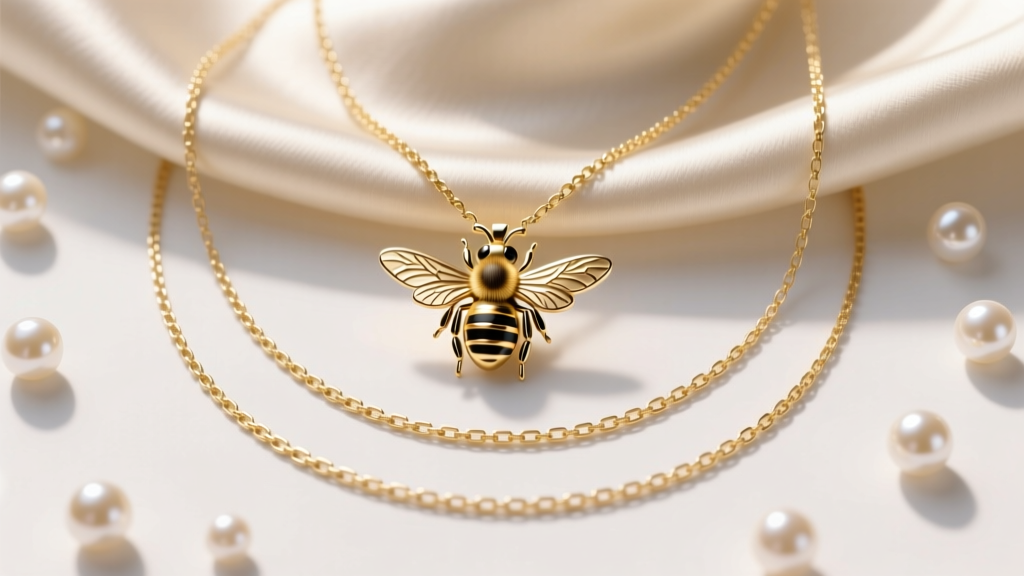
Layering remains a dominant trend in 2026, but stacking necklaces haphazardly leads to a cluttered look and severe tangling. To layer a bumblebee necklace effectively, utilize the 2-to-4 Inch Drop Rule. This ensures each piece occupies its own visual tier.
The 3-Piece Botanical Stack
- Tier 1 (14"): A 1.5mm solid gold herringbone or rope choker. This provides a continuous metallic base near the collarbone.
- Tier 2 (16"): A delicate 0.9mm cable chain featuring a small, minimalist botanical charm (like a single leaf or honeycomb link) to thematically support the bee without competing with it.
- Tier 3 (18" - 20"): Your bumblebee necklace. By placing the most intricate, visually heavy piece at the bottom of the stack, you create a cascading effect that draws the eye downward and prevents the charms from overlapping and scratching one another.
Step 4: Caring for Enamel and Gemstone Accents
The vibrant yellow and black stripes of a bumblebee pendant are typically achieved through enameling or gemstone inlays. Understanding the specific material grade of your piece is critical for its longevity.
Vitreous Enamel vs. Cold Enamel
High-end fine jewelry utilizes vitreous enamel, which is essentially powdered glass fired at extreme temperatures to fuse with the gold. While highly scratch-resistant, vitreous enamel can shatter if the pendant is dropped onto a hard surface like porcelain or tile. Conversely, fashion and mid-tier jewelry often use cold enamel (an epoxy resin). Resin is shatterproof but highly susceptible to heat and chemicals.
Cleaning Protocols
According to the Gemological Institute of America (GIA), porous materials and treated surfaces require specialized care. Never place a cold-enamel bumblebee necklace in an ultrasonic cleaner; the high-frequency vibrations and heat will cause the resin to cloud, warp, or detach from the gold settings. Furthermore, Jewelers of America recommends avoiding harsh chemical dips, which can strip the polish from both the enamel and any accent stones like opals or pearls. Instead, use a soft, lint-free microfiber cloth and a mild solution of warm water and phosphate-free dish soap, gently brushing the gold settings with a baby-soft toothbrush while avoiding direct scrubbing on the enamel stripes.
Conclusion
Styling a bumblebee necklace is an exercise in balancing intricate details with thoughtful presentation. By selecting a snag-free chain weave, matching the drop length to your neckline, employing mathematical layering frameworks, and respecting the material science of your enamels, you ensure your pendant remains a captivating and pristine focal point for years to come.


