Roman Glass Necklace Buying Guide: Spotting Fakes & Care
Discover how to buy an authentic Roman glass necklace. Learn to spot fakes, understand iridescent patina, and master essential care tips for ancient jewelry.

The Allure of Ancient Glass: What You Are Actually Buying
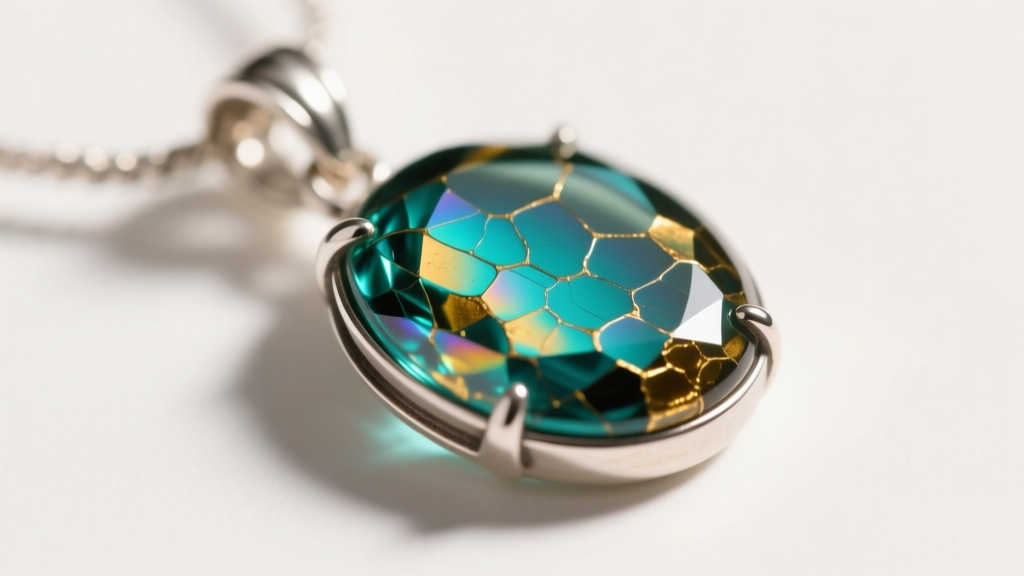
When you purchase a Roman glass necklace, you are not merely buying a piece of jewelry; you are acquiring a wearable artifact that has survived for nearly two millennia. Originating primarily from the 1st to the 4th centuries AD, these glass fragments were once everyday vessels—cups, bowls, and perfume flasks—crafted across the Roman Empire, with modern excavations heavily concentrated in Israel, Syria, and Egypt. The defining characteristic of these pendants is their breathtaking iridescence, a phenomenon that was not intentional but rather the result of 2,000 years of burial in alkaline soils.
Ancient Roman glass is primarily composed of soda-lime-silica. Over centuries, the alkaline components (soda and lime) leach out of the glass matrix due to groundwater exposure. This leaves behind microscopic, alternating layers of silica and air. When light hits these ultra-thin layers, it refracts and interferes, creating the shimmering, oil-slick-like patina in hues of teal, gold, magenta, and emerald. According to the Corning Museum of Glass, this weathering process is entirely unique to ancient glass and is virtually impossible to replicate perfectly in a modern laboratory, making it a prime target for sophisticated forgeries.
How to Authenticate Roman Glass (and Spot Modern Fakes)
As the popularity of historical jewelry has surged, the market has been flooded with counterfeit pieces. Modern manufacturers often use dichroic glass, acid-washed slag glass, or tumbled modern sea glass to mimic the ancient patina. Here is a practical framework for authentication when evaluating a potential purchase.
The Patina and Surface Test
Authentic Roman glass patina is micaceous, meaning it resembles the flaky, layered structure of mica. Under a jeweler's loupe (10x magnification), genuine iridescence will show microscopic peeling, uneven ridges, and a depth that seems to shift depending on the angle of light. Fakes created via acid-etching or modern kiln-firing will appear uniformly matte, overly glossy, or possess a painted-on sheen that lacks structural depth. If the iridescent layer looks perfectly smooth or identical across every millimeter of the surface, proceed with extreme caution.
Edge and Fracture Examination
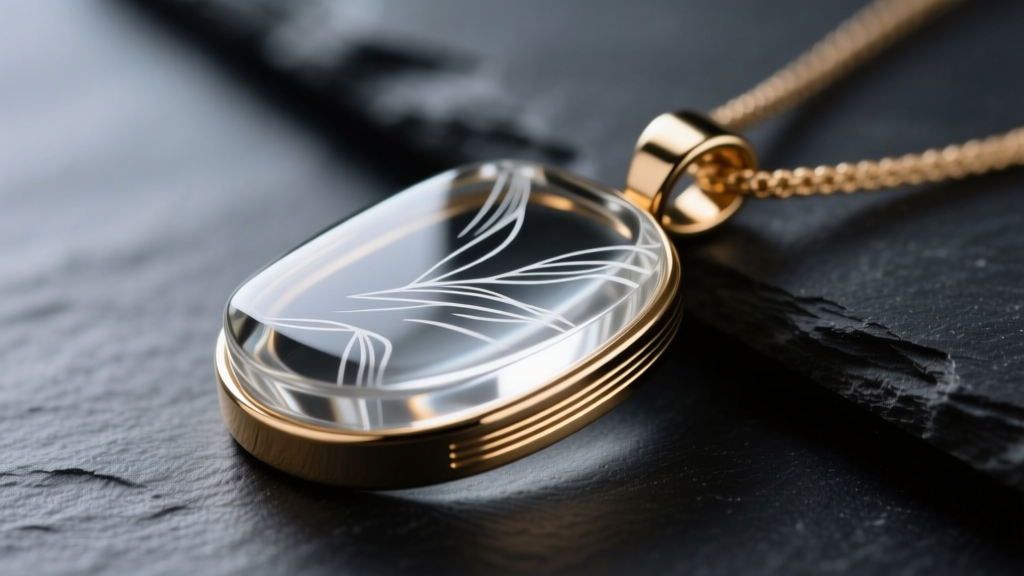
Because these pendants are crafted from broken archaeological shards, the edges should never be perfectly symmetrical or machine-polished. Authentic pieces feature natural conchoidal fractures (the curved, shell-like breakage patterns typical of glass and quartz). If the edges are perfectly smooth, heavily sanded, or uniformly beveled, the piece has likely been heavily modified or is a modern reproduction. Furthermore, genuine shards often retain tiny pitting marks or mineral inclusions from the soil that cannot be easily faked.
Color Rarity and Value
The Metropolitan Museum of Art notes that ancient glassmakers used specific metal oxides to achieve colors. The most common surviving fragments are pale aqua or light green, caused by natural iron impurities in the ancient sand. Colorless glass required the addition of antimony or manganese as decolorizers, making it slightly rarer. True cobalt blue and deep manganese purple are exceptionally rare and command massive premiums. If a seller offers a vivid, perfectly uniform cobalt blue shard at a budget price, it is almost certainly modern slag glass.
Setting Materials and Hardware: What Holds the History
The way the ancient glass is set is just as critical as the glass itself. Because the patina is essentially a fragile, ongoing chemical reaction, the metal setting must protect the shard without trapping moisture. The golden rule of Roman glass jewelry is that the bezel must be open-back. If a jeweler seals the back of the glass with cheap epoxy or a closed metal backing, any trapped ambient moisture will rehydrate the leached glass layers from the inside out, causing the patina to turn white, cloudy, and eventually crumble—a destructive process known as 'glass disease' or delamination.
| Metal Type | Durability & Tarnish Resistance | Price Range (2026 Market) | Verdict for Ancient Glass |
|---|---|---|---|
| 925 Sterling Silver | Moderate; requires occasional polishing (avoid glass) | $45 - $120 | Excellent; traditional, breathable, and widely available. |
| Gold Vermeil (Silver base) | High; thick gold layer resists tarnish and moisture | $85 - $180 | Superior; provides a moisture barrier while looking luxurious. |
| Plated Brass/Copper | Low; plating wears off, exposing reactive base metals | $20 - $40 | Avoid; base metals can oxidize and stain the porous glass edges. |
| Solid 14k/18k Gold | Exceptional; impervious to moisture and skin acids | $350 - $800+ | Best for heirloom investment pieces and rare glass colors. |
Pricing Tiers: What Should You Pay?
Understanding current market valuations prevents overpaying for mass-produced tourist traps or underpaying for suspicious fakes. In the current 2026 antiquities jewelry market, pricing is dictated by the shard's size, color rarity, and the quality of the metalwork.
- Entry-Level ($35 - $70): Small, pale green or aqua fragments set in basic 925 sterling silver bezels. Often sold with standard 18-inch rolo chains.
- Mid-Range ($75 - $150): Larger, highly iridescent shards with vibrant magenta or gold flashes, set in heavy-weight sterling silver or gold vermeil with decorative wire-wrapping or granulation details.
- Premium ($150 - $350): Rare colors (deep blues, purples), intact vessel rims or handles, or pieces accompanied by official export documentation from the Israel Antiquities Authority (IAA).
- Collector/Bespoke ($400+): Large, museum-quality fragments set in solid 14k or 18k gold by artisan jewelers, often featuring diamond accents or custom-forged chains.
Crucial Buying Tip: Always ask the dealer for provenance or export documentation. Legitimate dealers will provide a certificate of authenticity and proof that the piece was legally exported prior to recent cultural heritage protection laws.
Critical Care Rules: Preventing Delamination and Patina Loss
Roman glass is inherently fragile. The iridescent layers are literally flaking away on a microscopic level. Improper care will accelerate this delamination, permanently destroying the very feature that makes the necklace valuable. Treat your pendant with the same reverence you would a 2,000-year-old museum exhibit.
The Absolute 'Don'ts' of Roman Glass Care
- NEVER expose it to water: Do not shower, swim, or sweat heavily while wearing the necklace. Water rehydrates the leached silica layers, causing them to swell, turn opaque white, and shed.
- NO ultrasonic cleaners: The high-frequency vibrations will instantly shatter the microscopic patina layers, leaving you with a dull, cloudy piece of green glass.
- NO silver polish on the glass: When polishing the sterling silver setting, use a treated polishing cloth carefully around the bezel. If silver polish chemicals touch the glass, they can strip the iridescence.
- Avoid extreme temperature shifts: Glass is sensitive to thermal shock. Leaving the necklace on a cold windowsill in winter and then wearing it against warm skin can cause micro-fractures.
Proper Storage Techniques
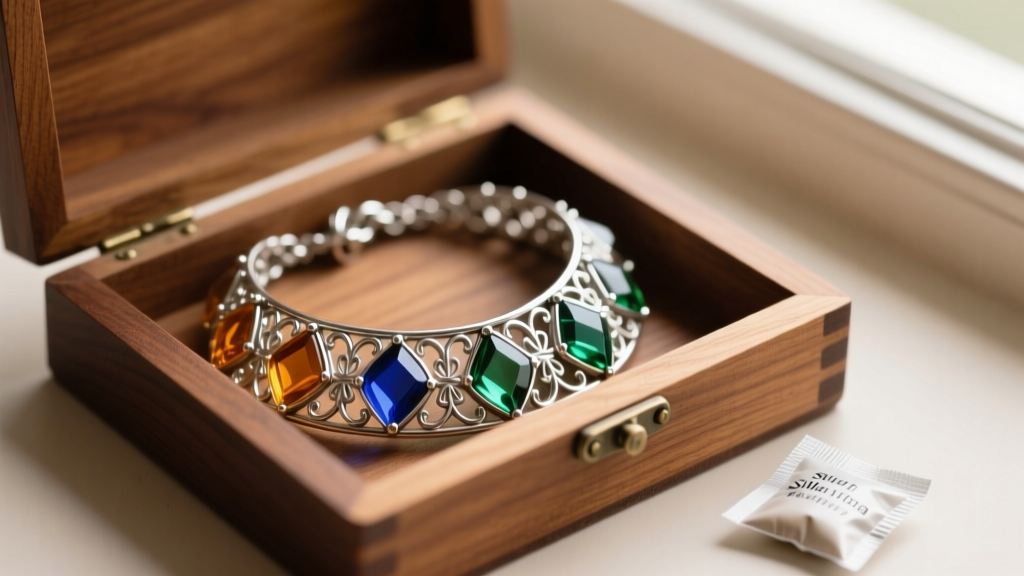
When not being worn, store your Roman glass necklace in a dry, temperature-controlled environment. A cedar-lined jewelry box is ideal, as cedar naturally absorbs excess ambient moisture. Always include a small silica gel desiccant packet in the storage compartment to ensure the humidity remains low. Store the pendant flat to prevent the chain from scratching the delicate surface of the glass, and keep it away from direct, prolonged sunlight, which can degrade certain metal settings over time.
Final Verdict: Choosing Your Piece of History
Buying a Roman glass necklace is a deeply rewarding experience that bridges the gap between ancient history and modern personal style. By prioritizing open-back settings, scrutinizing the micaceous nature of the patina, and strictly adhering to moisture-free care protocols, you ensure that your artifact remains vibrant for generations. Whether you opt for a humble aqua shard in sterling silver or a rare cobalt fragment in solid gold, you are wearing a survivor of the ancient world—a testament to the enduring beauty of Roman craftsmanship.


