Kate Spade Letter Necklace: Material Properties & Wear Guide
Analyze the materials in a Kate Spade letter necklace. We compare plating thickness, enamel durability, and exact care protocols for longevity.

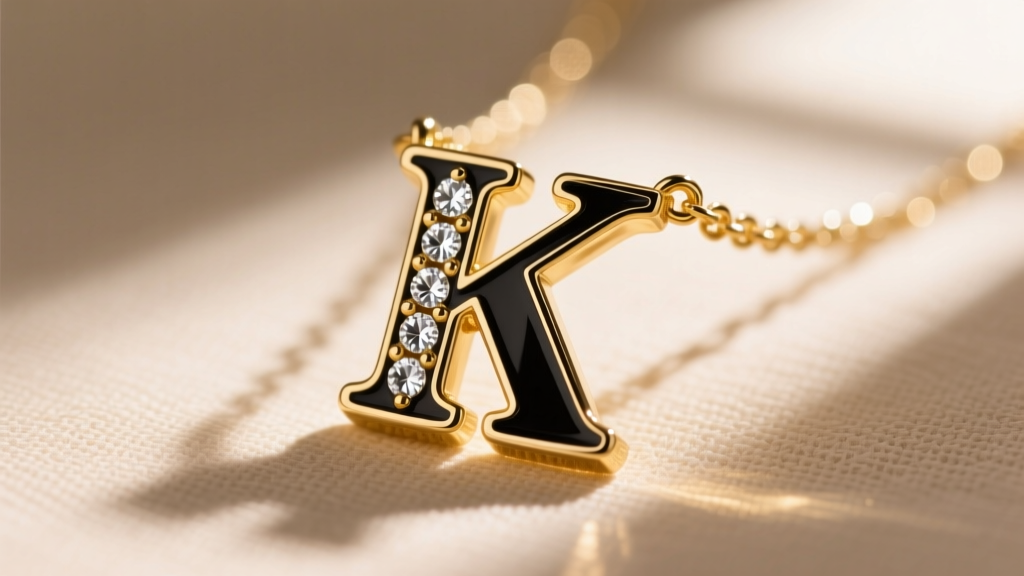
The Anatomy of a Kate Spade Letter Necklace
The appeal of a kate spade letter necklace lies in its playful typography, recognizable branding, and accessible price point. However, from a metallurgical and gemological perspective, these pieces belong to the fashion jewelry category. Understanding the exact material composition of these initial pendants is critical for managing expectations regarding tarnish, wear, and longevity. Unlike fine jewelry crafted from solid precious metals, fashion pendants rely on a complex layering of base alloys, micro-plating, and synthetic inlays. In this comprehensive guide, we break down the specific material properties, failure modes, and maintenance protocols required to keep your initial pendant looking pristine.
Base Metals and the Physics of Flash Plating
The core of most Kate Spade initial and letter pendants is cast brass or a zinc-alloy blend. Brass (an alloy of copper and zinc) is favored in fashion jewelry manufacturing because it offers excellent fluidity during the casting process, allowing for the sharp, crisp edges required for typographic letter designs. However, brass is highly reactive to oxygen, moisture, and the natural acids found in human skin.
To prevent oxidation and provide a precious metal appearance, the brass core is electroplated. According to the Federal Trade Commission's Jewelry Guides, terms like 'gold-tone' or 'silver-tone' indicate a surface finish rather than a solid precious metal composition. The gold-tone plating on these necklaces is typically a 'flash plating,' measuring between 0.1 and 0.5 microns in thickness. By comparison, heavy gold vermeil requires a minimum of 2.5 microns of gold over a sterling silver base.
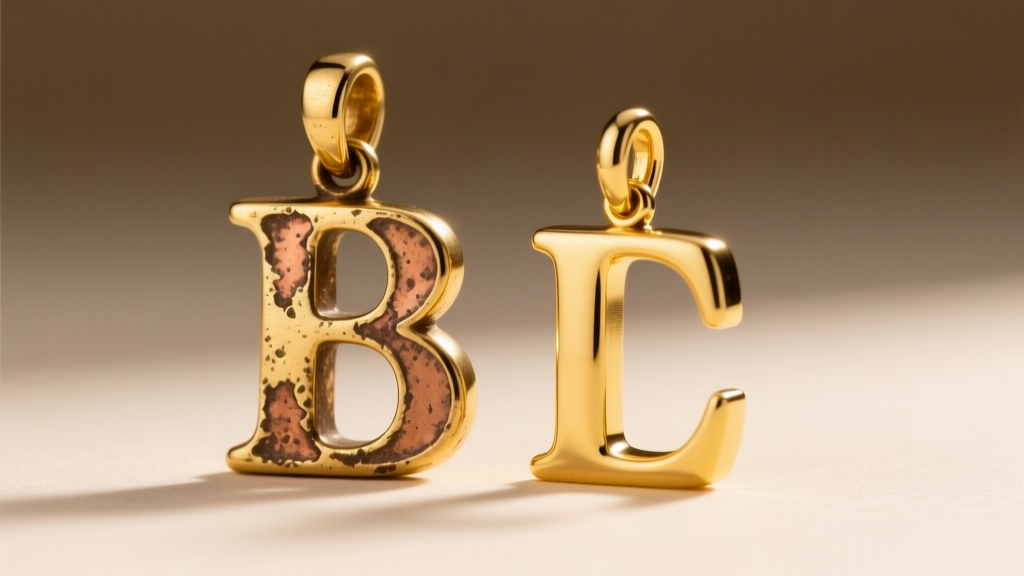
The Tarnish Mechanism: Copper Bleed-Through
Because the plating is exceptionally thin, everyday friction from clothing and skin contact gradually wears through the gold-tone or rhodium-tone layer. Once the microscopic barrier is breached, the underlying copper in the brass reacts with sulfur and moisture in the environment. This results in 'copper bleed-through,' characterized by a dull, darkened patina on the high points of the letter pendant, and occasionally leaves a harmless but unsightly greenish residue on the wearer's skin. The pH level of your skin (typically around 5.5) acts as a mild acid, accelerating this breakdown if the necklace is worn during exercise or in high-humidity environments.
Enamel Inlays: Cold Epoxy vs. Vitreous Glass
Many Kate Spade letter necklaces feature vibrant, opaque color fills within the typography. It is vital to understand that this is not kiln-fired vitreous enamel (which is essentially fused glass). Instead, fashion jewelry utilizes 'cold enamel,' which is a two-part epoxy resin dyed with synthetic pigments.
- Hardness: Cold epoxy resin sits at approximately a 3 on the Mohs scale of mineral hardness. This means it is highly susceptible to micro-scratches from everyday dust and quartz particles (which sit at a 7 on the Mohs scale).
- UV Degradation: Unlike vitreous glass, epoxy resins are photosensitive. Prolonged, direct exposure to ultraviolet sunlight can cause the polymers in the resin to break down, leading to a subtle yellowing or fading of lighter colors like white, blush, or pastel pink over a period of 2 to 3 years.
- Chemical Sensitivity: The cross-linked polymer chains in cold enamel are easily compromised by alcohol-based solvents. Spraying perfume or hairspray directly onto the pendant can cause the enamel to cloud, soften, or peel away from the brass recesses.
For a deeper understanding of how different enamel techniques impact jewelry durability, the GIA Gem Encyclopedia provides excellent historical and technical context on the evolution of enamel in decorative arts.
Pavé Crystals and Adhesive Failure Modes
Letter necklaces embellished with pavé cubic zirconia (CZ) or synthetic crystals rely on mechanical tension and chemical adhesives to keep the stones seated. In fine jewelry, stones are held by hand-burnished metal prongs or beads. In mass-produced fashion pendants, the stones are often drop-set into pre-formed resin or secured with cyanoacrylate-based jewelry glues.
Why Stones Fall Out
The primary failure mode for pavé crystals on initial necklaces is adhesive degradation. Lotions, sunscreen, and the natural sebum produced by your skin act as mild solvents that slowly dissolve the cyanoacrylate bonds. Furthermore, the thermal expansion and contraction of the brass base metal—which expands at a different rate than the glass-like CZ stones when exposed to temperature changes (like stepping from an air-conditioned room into summer heat)—can cause the adhesive to fracture. Once the bond is broken, the shallow setting offers little mechanical resistance, and the stone will easily dislodge.
Comparative Wear & Tarnish Matrix
To contextualize the durability of a Kate Spade letter necklace, we must compare its materials to standard fine jewelry alternatives. The table below outlines the expected lifespan and maintenance requirements across different material tiers.
| Material Component | Mohs Hardness | Tarnish / Wear Risk | Expected Daily Lifespan |
|---|---|---|---|
| Flash-Plated Brass (Kate Spade) | N/A (Surface) | High (Plating wears in 6-18 months) | 1-3 Years (with careful rotation) |
| Gold Vermeil (Sterling Base) | N/A (Surface) | Medium (Re-plating possible) | 3-5 Years |
| Solid 14k Gold | 3.5 - 4 | Very Low (Can be polished endlessly) | Lifetime / Heirloom |
| Cold Enamel (Epoxy Resin) | ~3 | High (Scratches, UV yellowing) | 2-4 Years |
| Vitreous Enamel (Kiln-Fired) | 5 - 6 | Low (Shatter risk, but colorfast) | Lifetime |
Longevity Protocols: Extending the Life of Plated Initials
While a kate spade letter necklace is not designed to be an indestructible heirloom, you can significantly extend the life of the plating and enamel by adopting specific, scientifically grounded care protocols. The goal is to minimize mechanical abrasion and chemical exposure.
The 'Last On, First Off' Rule
Always put your necklace on after applying cosmetics, perfumes, and lotions, and take it off before showering or exercising. The surfactants in body wash and the chlorine in tap water are highly aggressive to micro-thin gold plating and will accelerate the oxidation of the brass core.
Proper Cleaning Techniques
Never use ultrasonic cleaners, silver dip solutions, or commercial jewelry polishing liquids on fashion jewelry. The high-frequency vibrations of an ultrasonic cleaner will shatter the adhesive bonds holding the pavé crystals, while the harsh acids in silver dips will instantly strip the gold-tone plating and cloud the epoxy enamel.
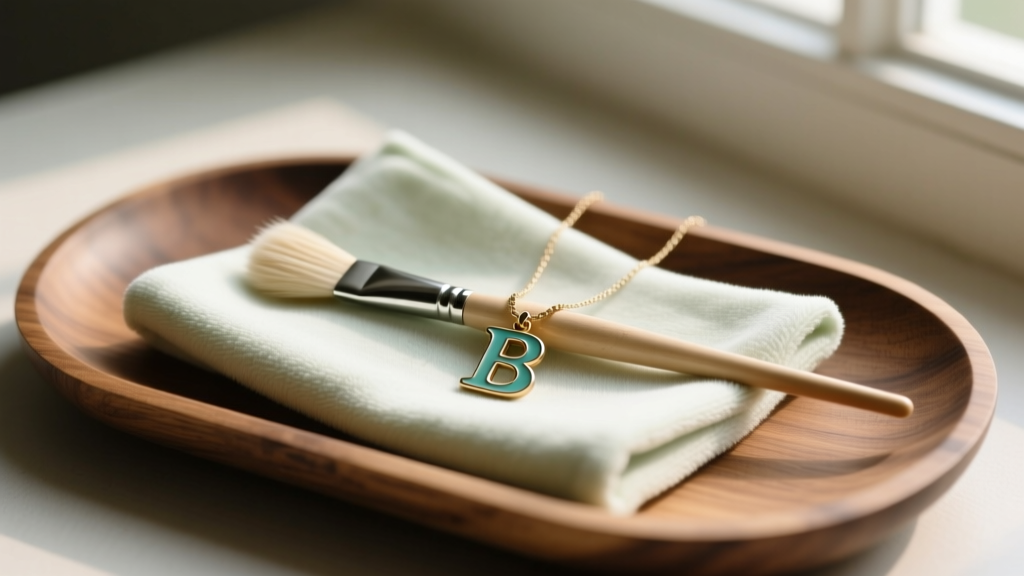
- Dry Dusting: Use a clean, dry, lint-free microfiber cloth to gently wipe away skin oils after every wear. This removes the acidic sebum before it can eat into the plating.
- Spot Cleaning: If debris is trapped in the crevices of the letter, use a brand-new, ultra-soft makeup brush (like a clean eyeshadow blending brush) to gently sweep the area. Do not use toothbrushes, as even 'soft' bristles are often stiff enough to micro-scratch cold enamel.
- Storage: Store the necklace in an airtight ziplock bag with a silica gel desiccant packet. Removing oxygen and ambient humidity from the storage environment drastically slows down the oxidation process of the underlying brass alloy.
When to Consider Fine Jewelry Alternatives
If you find yourself deeply attached to the concept of an initial necklace but are frustrated by the inevitable wear and tear of fashion materials, it may be time to invest in a solid 14k or 18k gold alternative. While the upfront cost is significantly higher, solid gold does not suffer from plating loss or copper bleed-through. A solid gold letter pendant can be aggressively polished, worn in the ocean, and subjected to daily friction without compromising its structural integrity or color. For those seeking a lifelong sentimental piece rather than a seasonal accessory, upgrading the material grade is the only permanent solution to the limitations of flash-plated brass.


