Kate Spade Mrs Necklace: Material Deep Dive & Care Guide
An expert technical review of the Kate Spade Mrs necklace, covering base metals, gold plating thickness, chain mechanics, and long-term care.

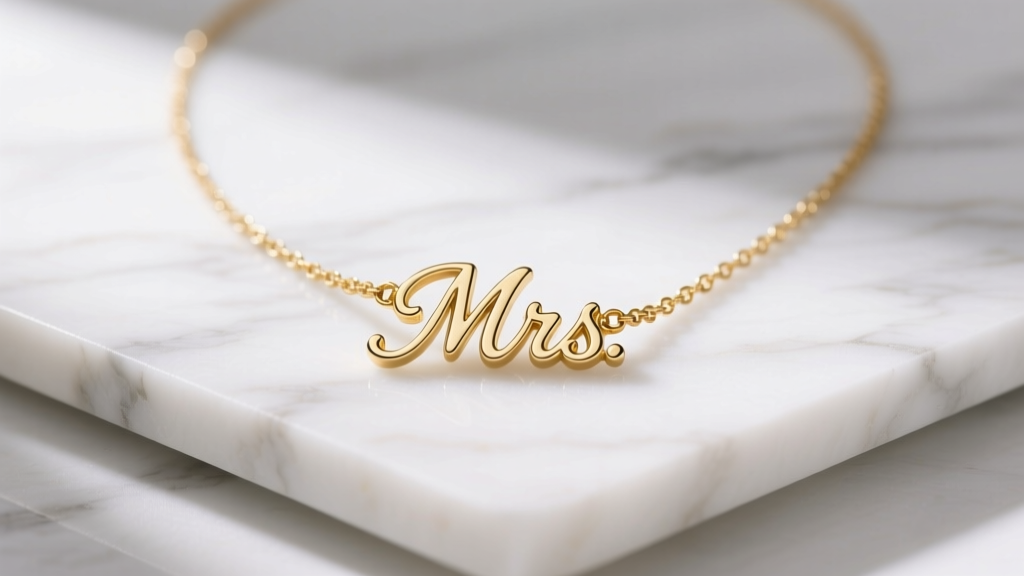
The Engineering Behind the Kate Spade Mrs Necklace
The Kate Spade Mrs necklace has cemented itself as a quintessential bridal and anniversary staple, celebrated for its elegant cursive typography and versatile aesthetic. However, beneath the romantic appeal of this personalized script pendant lies a specific set of metallurgical and mechanical realities. As of 2026, fashion jewelry manufacturing has evolved, but understanding the exact material composition, casting methods, and structural vulnerabilities of this piece is crucial for long-term wear. This expert deep dive bypasses the marketing fluff to examine the technical specifications, failure modes, and precise care protocols required to maintain the structural and visual integrity of your necklace.
Metallurgical Breakdown: Base Metals and Plating
To understand how the Kate Spade Mrs necklace will age, we must first look at its core alloy and surface treatment. The brand predominantly utilizes a brass base for its gold-tone fashion jewelry, occasionally offering sterling silver variants. Brass, an alloy of copper (typically 60-70%) and zinc (30-40%), is chosen for its excellent fluidity during the casting process, which is essential for capturing the intricate, intertwined loops of the 'Mrs' script font.
The Realities of Gold Plating Thickness
Unlike fine jewelry that uses solid 14k or 18k gold, this piece relies on electroplating. According to the Federal Trade Commission (FTC) Jewelry Guides, standard gold plating on fashion jewelry typically ranges from 0.175 microns (often labeled as 'gold flashed') up to 1.0 microns. The Kate Spade Mrs necklace generally falls into the 0.5 to 1.0-micron range. While this provides a rich, authentic 12k or 14k gold color initially, it is thin enough that high-friction areas—such as the back of the pendant resting against the collarbone or the clasp mechanism—will eventually wear through to the brass core.
It is vital to note that unless the piece is explicitly stamped '925' and marketed as 'vermeil' (which legally requires a minimum of 2.5 microns of gold over sterling silver), you are dealing with standard gold-plated brass. This distinction dictates your maintenance strategy.
Chain Mechanics and Clasp Engineering
The chain accompanying the Mrs pendant is typically a delicate cable chain, measuring 16 inches with a 2-inch extender. The individual links are usually die-striking or machine-woven, measuring approximately 1.2mm x 0.8mm. While visually dainty, these dimensions mean the chain has a low tensile strength and is highly susceptible to kinking if stored improperly.
| Component | Material / Type | Dimensions / Specs | Vulnerability Profile |
|---|---|---|---|
| Chain Links | Gold-plated brass | ~1.2mm x 0.8mm cable | High risk of kinking; low tensile snap point |
| Clasp | Cast lobster claw | ~10mm x 5mm | Internal spring fatigue; lever arm bending |
| Jump Rings | Brass | ~3mm diameter, 0.6mm wire | Gap separation if not laser-soldered |
| Extender | Plated brass | 2-inch standard cable | Friction wear from clasp rubbing against links |
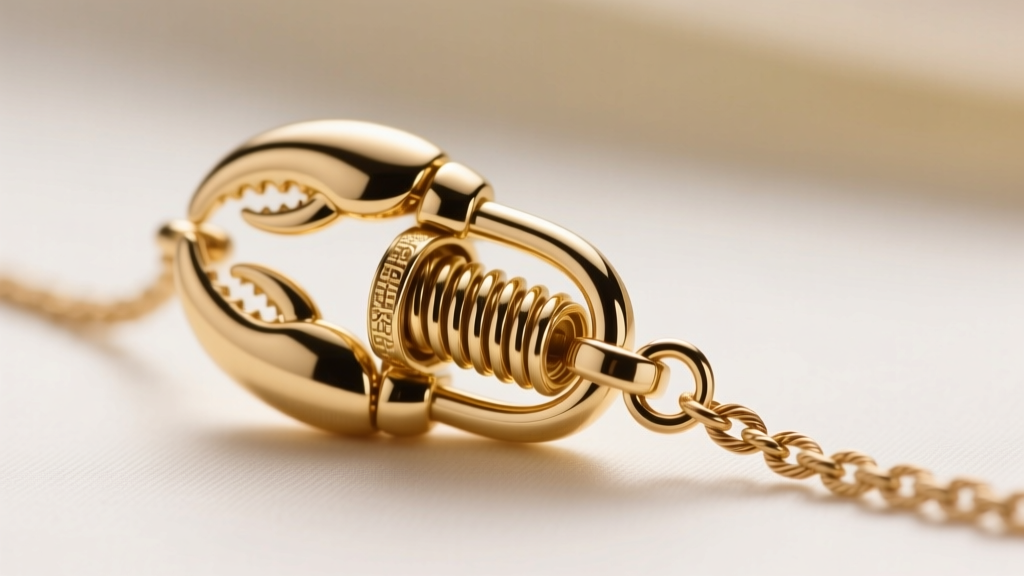
The lobster claw clasp used on this model relies on a tiny internal steel spring encased in a cast zinc-alloy or brass shell. A common mechanical failure occurs when the external lever arm is pulled back too aggressively, bending the cast metal or dislodging the internal spring. When operating the clasp, always press the lever flush against the body of the clasp rather than pulling it outward at an angle.
Gemstone Settings: Cubic Zirconia and Pavé Vulnerabilities
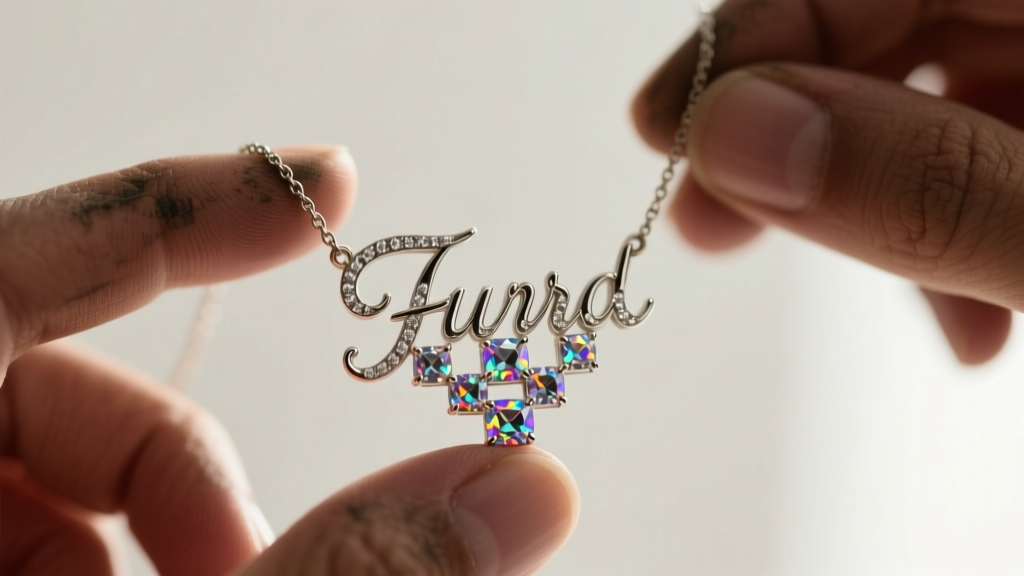
Many iterations of the Kate Spade Mrs necklace feature pavé-set cubic zirconia (CZ) stones tracing the cursive lettering. According to the Gemological Institute of America (GIA), cubic zirconia has a Mohs hardness of 8 to 8.5, making it highly resistant to surface scratching. However, the vulnerability lies not in the stones, but in the setting method.
'In cast pavé settings, the prongs are formed as part of the initial mold rather than being hand-cut and pushed over the stone. This results in shallow, less malleable prongs that are prone to micro-fractures and stone loss upon impact.' — Jewelry Manufacturing Standards Review
Because the script pendant is cast via the lost-wax method to achieve its complex curves, the prongs holding the CZ stones are cast-in-place. These cast prongs lack the structural density of drawn wire prongs. If the pendant is dropped on a hard surface or caught on heavy knitwear, the sheer force can snap a cast prong, leading to immediate stone loss. Furthermore, manufacturers often use a microscopic drop of cyanoacrylate adhesive to secure the stones during casting; exposure to harsh chemicals or ultrasonic cleaners will dissolve this adhesive, causing the stones to fall out.
Common Failure Modes and Troubleshooting
Based on long-term wear analysis, owners of the Kate Spade Mrs necklace typically encounter three primary failure modes. Understanding these allows for proactive mitigation.
1. Copper Oxidation (The 'Green Skin' Effect)
When the 0.5-micron gold plating wears thin on the back of the pendant, the underlying brass is exposed to skin oils, sweat, and lotions. The copper in the brass reacts with oxygen and moisture to form copper chloride (verdigris), which transfers to the skin as a green or black smudge. This is a harmless chemical reaction, not an allergy. Proactive Fix: Apply a micro-thin layer of clear polyurethane-based jewelry sealant or clear nail polish to the back of the pendant before the plating wears off to create a moisture barrier.
2. Jump Ring Separation
The jump ring connecting the 'Mrs' script to the cable chain is the primary stress point. If the ring is merely pinched closed during assembly rather than laser-soldered, lateral tension can pull the gap open. Inspect this connection monthly. If you see a gap, take it to a local jeweler to have it micro-soldered; attempting to squeeze it shut with standard pliers will work-harden the brass and cause it to snap.
3. Clasp Spring Seizure
Over time, lotion and dead skin cells accumulate inside the tiny crevices of the lobster clasp, causing the lever to become stiff or fail to snap shut. Troubleshooting: Use a soft-bristled toothbrush dipped in warm water and a single drop of mild dish soap to gently scrub the clasp mechanism. Rinse with distilled water and dry immediately with compressed air or a microfiber cloth. Never use chemical dips on the clasp, as they can corrode the internal steel spring.
Expert Care and Maintenance Protocol
To maximize the lifespan of the gold plating and secure the pavé settings, abandon generic jewelry cleaning habits. Follow this strict maintenance protocol:
- Avoid Ultrasonic Cleaners: The high-frequency vibrations will shatter the cyanoacrylate adhesive holding the CZ stones and accelerate the flaking of thin gold plating.
- Chemical Avoidance: Chlorine (in pools) and sulfur (in hot springs) will permanently pit the brass core if they penetrate the plating. Always remove the necklace before swimming or bathing.
- Friction Management: Do not wear the necklace during exercise or while sleeping. The friction of cotton sheets or gym apparel will act as a mild abrasive, stripping the 1.0-micron gold layer in a matter of weeks.
- Storage Environment: Store the necklace flat in an anti-tarnish cloth pouch. Hanging it can stretch the 16-inch cable chain, while tossing it in a jewelry box will cause the delicate cursive loops to tangle, requiring forceful detangling that risks bending the cast script.
By treating the Kate Spade Mrs necklace not as indestructible fine jewelry, but as a precision-crafted fashion accessory requiring specific metallurgical care, you can preserve its brilliant finish and structural integrity for years. For official brand warranties and material inquiries, always refer directly to the Kate Spade Customer Care portal, ensuring you have your specific SKU number ready for accurate technical support.


