Kay Cross Necklace Troubleshooting: Repairs, Care & Fixes
Learn how to troubleshoot, clean, and repair your Kay cross necklace. Expert fixes for tarnished chains, broken clasps, and warranty navigation.

The Reality of Retail Jewelry Maintenance
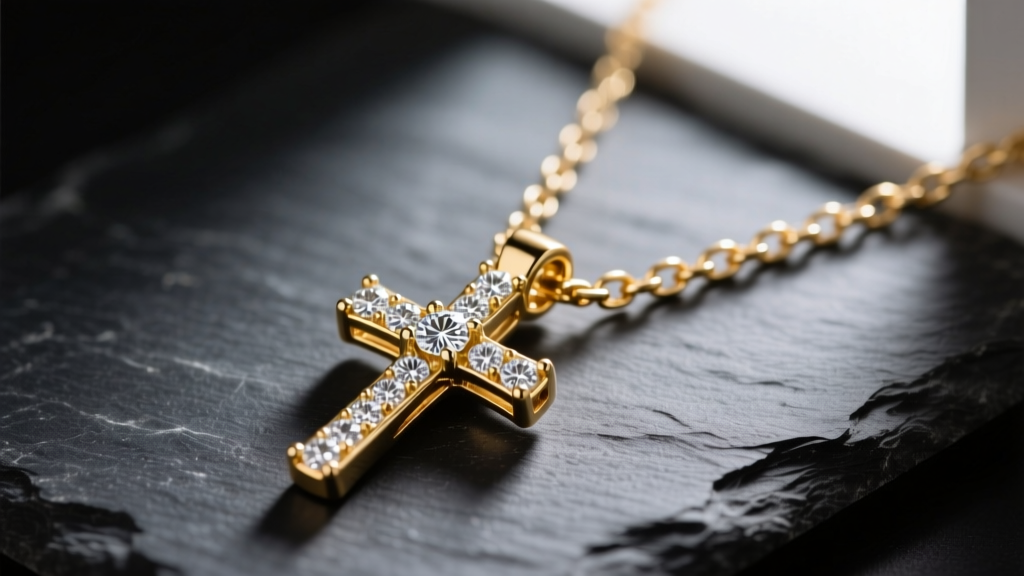
A Kay cross necklace is often more than just an accessory; it is a milestone marker. Whether received as a confirmation gift, a holiday present, or a personal statement of faith, these pieces carry significant sentimental weight. However, mass-market retail jewelry requires specific maintenance to withstand daily wear. Because Kay Jewelers moves high volumes of 10k gold, 14k gold, and sterling silver pieces, the manufacturing techniques—such as laser-welded box chains and cast sterling pendants—present unique troubleshooting challenges over time.
If your necklace is tarnishing, snagging, or suffering from a faulty clasp, you are not alone. In this comprehensive 2026 troubleshooting guide, we will break down the exact metallurgy of your piece, provide actionable DIY fixes for common hardware failures, and help you navigate the complexities of retail extended service plans versus independent bench jewelers.
Diagnosing Metallurgy: Why Your Cross Necklace Tarnishes
To troubleshoot discoloration, you must first understand the alloy composition of your necklace. Pure 24k gold is entirely resistant to tarnish, but it is too soft for daily wear. Therefore, Kay Jewelers typically offers cross necklaces in 10k, 14k, or sterling silver.
10k and 14k Gold Oxidation
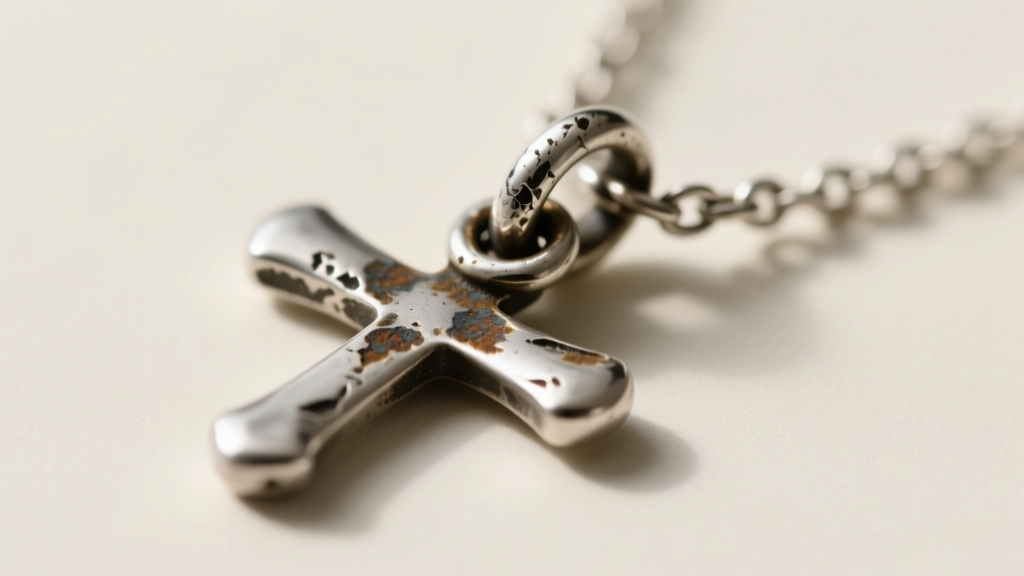
A 10k gold cross necklace contains only 41.7% pure gold. The remaining 58.3% consists of alloy metals like copper, silver, and zinc. Copper is highly reactive to sulfur, humidity, and the natural acids in your skin. If you notice a dark, coppery film building up in the crevices of your cross pendant, this is not a defect; it is a natural chemical reaction. According to the Federal Trade Commission (FTC) Jewelry Guides, retailers must accurately stamp these alloys, but they are not required to guarantee them against environmental oxidation. 14k gold (58.5% pure gold) is less prone to this, but can still develop a dull film from lotions and perfumes.
Sterling Silver Sulfide Tarnish
Sterling silver (92.5% silver, 7.5% copper) is notoriously susceptible to silver sulfide tarnish. If your silver Kay cross necklace has turned black or mustard-yellow, it is reacting to airborne sulfur. This is easily reversible and does not indicate structural damage.
Step-by-Step Hardware Troubleshooting
The most frequent points of failure on any pendant necklace are the chain links and the clasp mechanism. Here is how to address them without causing further damage.
Fixing a Loose or Stuck Lobster Clasp
The standard lobster clasp relies on a tiny internal stainless steel spring. Over time, the external lever can bend outward, causing the clasp to fail to close completely, or the spring can lose tension.
- The Plier Trick: If the lever feels loose and won't snap shut, take a pair of smooth-jawed chain-nose pliers. Gently squeeze the base of the lever (not the tip) toward the body of the clasp by less than a millimeter. This restores the mechanical tension.
- The Sticky Lever: If the clasp is stuck in the open position, debris or oxidized skin oils are likely jamming the pivot point. Apply a single drop of isopropyl alcohol to the hinge, work the lever back and forth with a toothpick, and let it dry.
Repairing a Snapped Box Chain
Many Kay cross necklaces are paired with box chains. While they look substantial, box chains are constructed from interlocking square links that are laser-welded at microscopic solder points. When a box chain snaps, it almost always breaks at the weld. Do not attempt to bend the links back together with pliers. This will warp the square geometry and weaken the adjacent links. A professional laser weld is required, which typically costs between $35 and $65 at an independent bench jeweler.
Navigating the Kay Jewelers Extended Service Plan
When a repair is needed, owners often turn to their Extended Service Plan (ESP). However, misunderstanding what the ESP covers leads to immense frustration at the retail counter. Based on standard retail jewelry warranty frameworks outlined by the Jewelers of America, here is how mall-jeweler warranties generally operate in 2026.
| Issue Type | Covered by Standard ESP? | Recommended Action |
|---|---|---|
| Rhodium Replating (White Gold) | Yes (Usually 1-2 times a year) | Take to Kay; requires 1-2 weeks turnaround. |
| Tightening Loose Pavé Diamonds | Yes | Take to Kay immediately before a stone is lost. |
| Chain Snapping / Breaking | No (Considered 'wear and tear' or accidental) | Use an independent bench jeweler for laser welding. |
| Replacing a Missing Diamond | No (ESP covers tightening, not lost stones) | File a claim with your homeowner's/renter's jewelry insurance. |
| Polishing out Scratches | Yes | Take to Kay, but limit to once a year to preserve metal weight. |
Expert Tip: Always inspect your cross necklace under a 10x jeweler's loupe before dropping it off for a standard ESP cleaning. If a prong over a diamond accent is worn thin, ensure the repair ticket specifically notes 'prong retipping' rather than just 'clean and polish' to ensure it is covered under the maintenance clause.
Safe At-Home Cleaning Protocols
Improper cleaning is the leading cause of irreversible damage to retail jewelry. Many owners mistakenly use harsh chemical dips or ultrasonic cleaners without understanding the risks to their specific piece.
The Dangers of Ultrasonic Cleaners
If your Kay cross necklace features fracture-filled diamonds, black diamonds, or any accent gemstones like emeralds, opals, or turquoise, never use an ultrasonic cleaner. The high-frequency sound waves create microscopic cavitation bubbles that can shatter treated stones or strip the oil treatments from emeralds, leaving them cloudy and fractured.
The Ideal DIY Cleaning Method
For standard 10k/14k gold and sterling silver cross necklaces with natural, untreated diamonds, the safest and most effective cleaning method requires only household items:
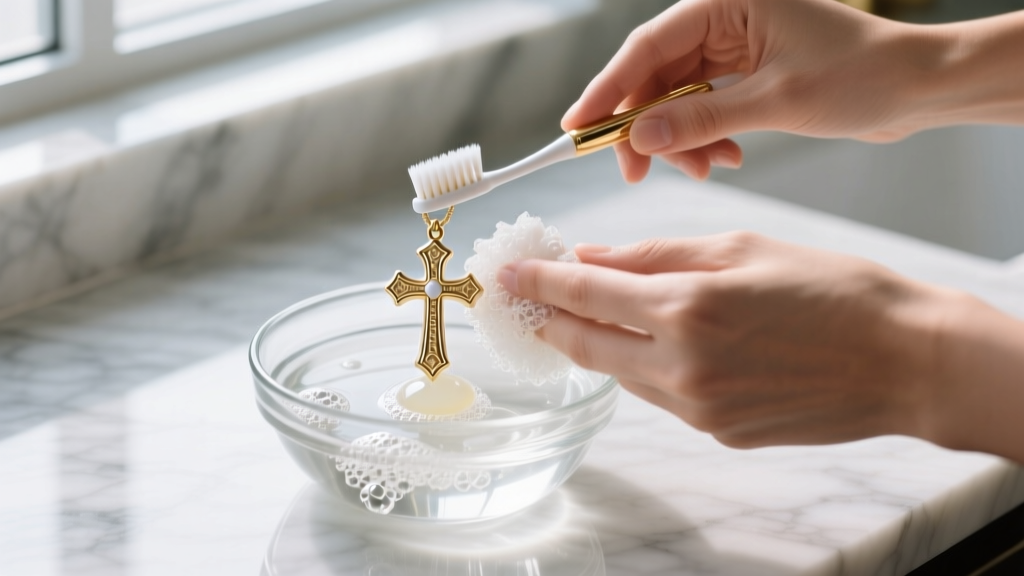
- Prepare the Solution: Mix a few drops of mild, phosphate-free dish soap (like Dawn) into a bowl of lukewarm—not hot—water.
- Soak: Let the necklace soak for 15 to 20 minutes. This will loosen sebum, dead skin cells, and lotion trapped behind the cross pendant and inside the chain links.
- Agitate: Use a brand-new, extra-soft baby toothbrush to gently brush the back of the cross pendant, where the gallery wires meet the metal. Avoid brushing directly over the prongs of diamond accents to prevent snagging.
- Rinse and Dry: Rinse thoroughly under lukewarm running water (ensure the drain is plugged!). Pat dry with a lint-free microfiber cloth. Do not use paper towels, as the wood pulp fibers will cause micro-scratches on high-polish gold and silver.
When to Seek an Independent Bench Jeweler
While Kay Jewelers is excellent for utilizing your ESP for routine polishing and rhodium plating, retail stores often send complex repairs to off-site commercial repair centers. This can result in turnaround times of 3 to 6 weeks. If your Kay cross necklace has suffered a complex break—such as a snapped bail (the loop connecting the pendant to the chain) or a severely kinked rope chain—an independent, on-site bench jeweler is often the superior choice. They can perform precision laser welding while you wait, preserving the original structural integrity of the piece without the risk of loss or damage during commercial shipping.
Final Thoughts on Longevity
A Kay cross necklace is designed to be a lasting symbol, but its longevity depends entirely on proactive care. By understanding the alloy composition of your metal, treating the mechanical parts of your clasp with respect, and knowing exactly when to leverage your warranty versus when to hire an independent artisan, you can ensure your necklace remains pristine for decades to come. Store your necklace flat in a sealed anti-tarnish bag when not in use, and perform the gentle soap-and-water cleaning once a month to keep your cross shining brilliantly.


