How to Style, Layer, and Care for a Lakshmi Necklace
Learn how to style, layer, and maintain your gold Lakshmi necklace. Discover blouse pairings, authenticity checks, and expert cleaning tips.

The Anatomy of a Traditional Lakshmi Necklace
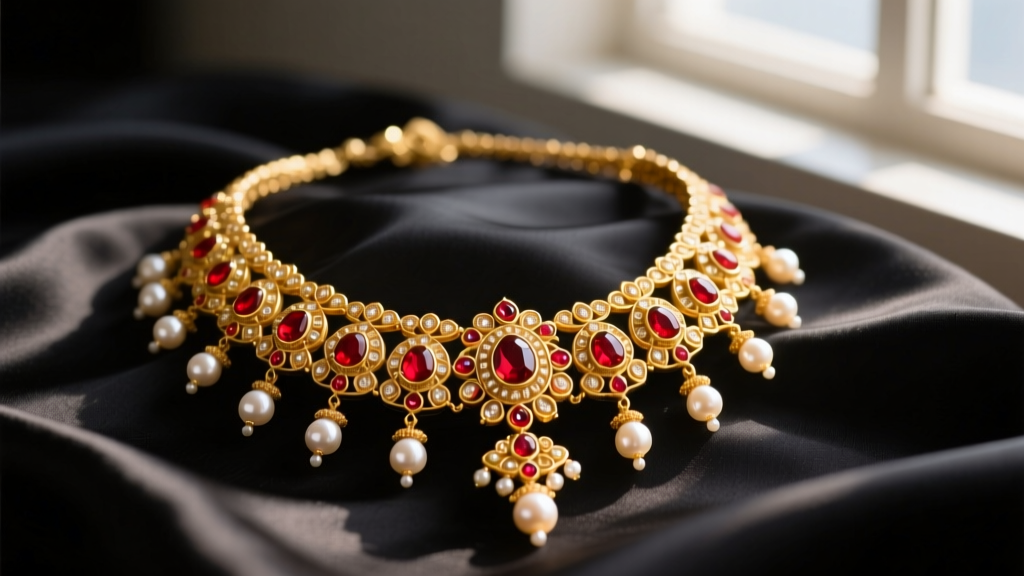
The Lakshmi necklace is a cornerstone of South Indian heritage jewelry, revered not just for its opulent gold weight but for its spiritual significance. Featuring the Goddess Lakshmi—often depicted in the Gaja Lakshmi motif, where she is flanked by two elephants pouring water—the pendant symbolizes wealth, prosperity, and divine grace. For collectors and brides alike, understanding the anatomy of this piece is the first step to mastering its wearability.
Authentic traditional pieces are crafted in 22-karat gold (916 hallmark purity) and typically weigh anywhere from 40 grams for a minimalist modern pendant to over 150 grams for elaborate antique bridal sets. The pendant is usually embellished with Kemp stones (red and green glass or synthetic rubies and emeralds set with foil backing), uncut Polki diamonds, and delicate natural pearl drops known as muttu.
Step-by-Step Guide to Styling Your Necklace
Because of its substantial weight and intricate detailing, a Lakshmi necklace requires deliberate styling to ensure it sits perfectly and doesn't overwhelm your silhouette. Follow these steps to achieve a balanced, regal look.
Step 1: Match the Blouse Neckline
The neckline of your blouse or dress dictates how the pendant will lay against your collarbone. The goal is to frame the Lakshmi motif without obscuring its details.
- Sweetheart Neckline: Ideal for pendants weighing 60g to 90g. The curved dip of the sweetheart cut cradles the bottom of the Lakshmi pendant perfectly, allowing the pearl drops to rest just above the fabric line.
- Deep V-Neck: Best for elongated, heavy bridal pieces (100g+). The V-shape elongates the neck, counteracting the visual heaviness of the thick gold chain and large pendant.
- Boat Neck or High Collar: Avoid these entirely. High necklines compete with the intricate upper crown (prabhavali) of the Lakshmi pendant, causing the jewelry to look cluttered and physically bunching against the fabric.
Step 2: Choose the Right Stringing Method
How you string the pendant drastically affects both comfort and security. For pendants under 30 grams, a 22k gold rope chain (2.0mm to 2.5mm thickness) provides adequate support. However, for traditional heavy pendants exceeding 50 grams, relying solely on a gold chain can cause metal fatigue and neck strain.
Instead, opt for a traditional pattu noolu (braided silk thread). A heavy-duty, multi-strand silk cord adjustable via a sliding knot distributes the weight more evenly across the nape of the neck. If you prefer the look of gold, use a thick 3.5mm box chain, but ensure the bail (the loop connecting the pendant to the chain) is reinforced with an extra layer of soldered gold to prevent tearing.
The Art of Layering: Building a Bridal Stack
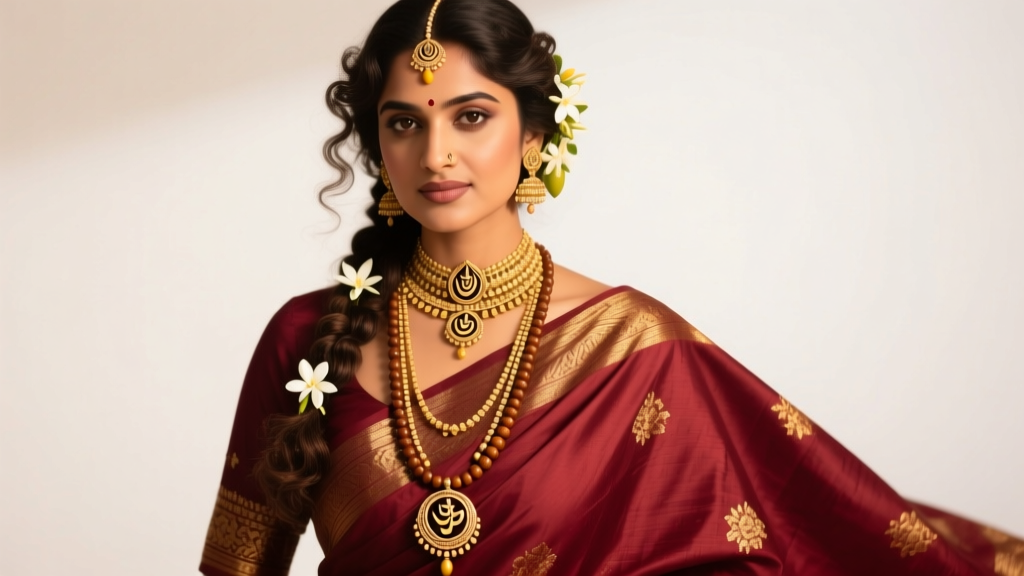
In South Indian bridal styling, the Lakshmi necklace is rarely worn alone. It serves as the anchor piece in a multi-tiered layering strategy. To build a cohesive stack without looking chaotic, follow the rule of descending visual weight.
- The Choker (Kemp Addigai): Start with a tight-fitting, 14-inch choker featuring smaller Kemp stones. This sits high on the neck and frames the face.
- The Lakshmi Necklace (16 to 18 inches): Your primary piece sits in the middle. Ensure the chain is adjusted so the Lakshmi pendant rests exactly on the sternum, leaving a 2-inch gap below the choker.
- The Mango Mala or Kasu Mala (22 to 24 inches): Finish with a long chain of gold coins (Kasu) or mango-shaped motifs. This draws the eye downward and elongates the torso.
Pro Tip: When layering, ensure all pieces share the same gold tone. Mixing the warm, deep yellow of 22k antique gold with the pale hue of 18k or rhodium-plated white gold will disrupt the visual harmony of the traditional ensemble.
How to Authenticate Antique vs. Modern Pieces
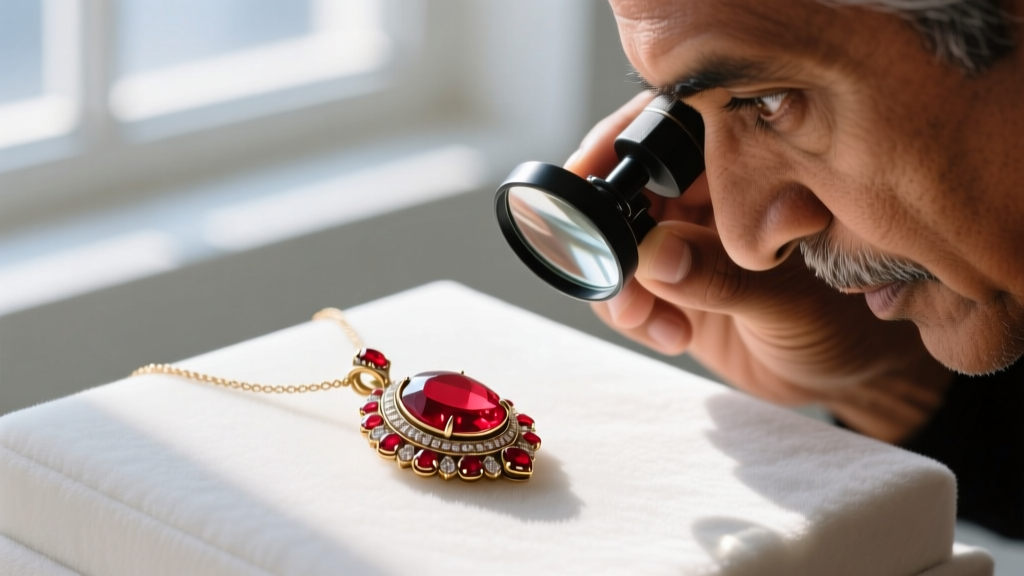
With the rising market value of heritage jewelry in 2026, distinguishing between genuine antique Lakshmi necklaces and modern cast reproductions is a critical skill. Modern manufacturing often uses CAD/CAM casting, which leaves specific microscopic markers that differ from traditional hand-repoussé techniques.
| Feature | Traditional Antique (Pre-1980s) | Modern Cast Reproduction |
|---|---|---|
| Construction | Repoussé (hollow, hand-beaten from a single gold sheet) | Solid cast or hollow electroformed |
| Stone Setting | Kundan or lac-set Kemp stones with silver foil backing | Prong-set or glue-set synthetic stones |
| Gold Purity | Often 20k to 22k, lacking modern laser hallmarks | Strict 916 (22k) BIS hallmark laser-engraved |
| Back Finish | Engraved or enameled (Meenakari) to hide hollow joints | Smooth, sometimes with visible casting porosity |
According to the Bureau of Indian Standards, any modern gold jewelry sold in India must bear the 916 hallmark. If a piece claimed to be 'modern 22k' lacks this laser marking, its purity is suspect. Conversely, genuine antiques will rarely have laser hallmarks, but will show natural wear patterns on the bail and clasp that cannot be easily faked.
Expert Maintenance and Cleaning Routine
The most common mistake owners make is treating a Lakshmi necklace like standard gold jewelry. The presence of Kemp stones, Polki, and pearls dictates a highly specialized cleaning protocol. The Gemological Institute of America strictly warns against using ultrasonic cleaners on foil-backed or fracture-filled stones, as the high-frequency vibrations will shatter the delicate foil backing and cloud the gems permanently.
Step-by-Step Cleaning Process
- Dry Dusting: Use a clean, ultra-soft makeup brush to gently sweep away dust from the crevices of the Lakshmi motif and around the pearl drops. Never use a toothbrush, as the bristles can scratch the high-polish gold and dull the pearls.
- Spot Cleaning Gold: Dip a cotton swab in a mild solution of lukewarm water and a single drop of pH-neutral dish soap. Carefully swab only the plain gold areas. Avoid touching the stone settings.
- Drying: Immediately pat the piece dry with a lint-free microfiber cloth. Allow it to air dry completely in a low-humidity room before storing to prevent moisture from tarnishing the silver foil behind the Kemp stones.
Proper Storage Techniques
Never store your Lakshmi necklace in a velvet-lined box. Velvet traps ambient moisture and can cause the pearl drops to yellow and the foil backing to oxidize. Instead, wrap the necklace loosely in acid-free, unbuffered tissue paper. Place it flat in a sealed plastic ziplock bag with a silica gel desiccant packet to control humidity. Store the bag in a dark, temperature-controlled drawer away from direct sunlight, which can fade the red and green Kemp stones over time.
By understanding the structural nuances, styling requirements, and strict maintenance protocols of the Lakshmi necklace, you ensure that this magnificent piece of heritage jewelry remains vibrant, secure, and breathtaking for generations to come.


