Kay Jewelers Mens Cross Necklace: Complete Buying Guide
Discover what to look for when buying a Kay Jewelers mens cross necklace. Expert tips on metals, chain gauges, diamond clarity, and pricing.

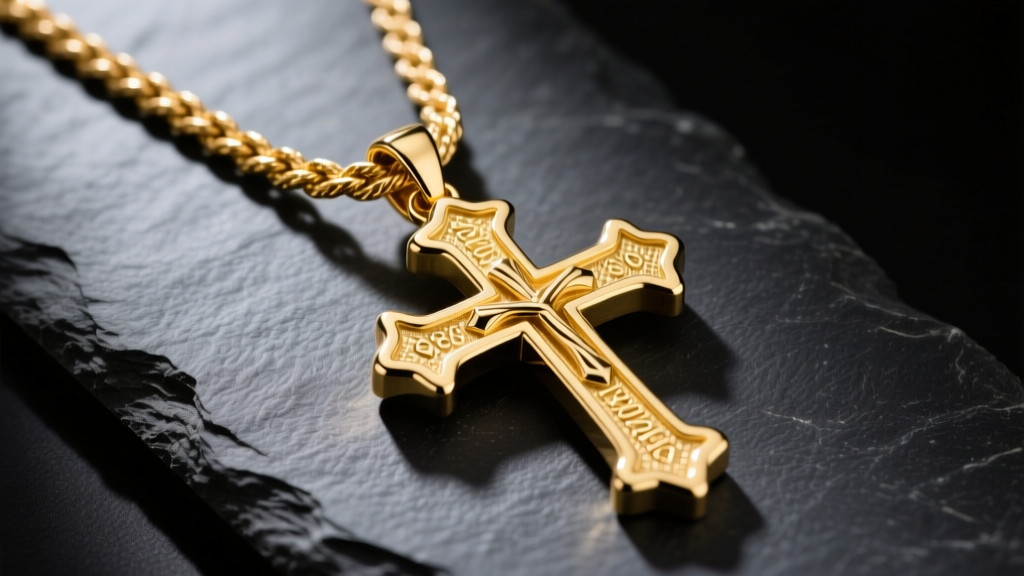
When it comes to symbolic and enduring jewelry, few pieces carry the weight and versatility of a cross pendant. For many shoppers, the search begins at the mall, making the Kay Jewelers mens cross necklace one of the most frequently researched items in men's religious and fashion jewelry. As a major national retailer, Kay offers a vast inventory ranging from accessible sterling silver to premium 14-karat gold and diamond-accented pieces.
However, buying from a large-scale commercial jeweler requires a discerning eye. You are not just buying a symbol; you are investing in metallurgy, chain engineering, and gemological quality. This comprehensive buying guide breaks down exactly what to look for when evaluating a Kay Jewelers mens cross necklace, ensuring you get the best value, durability, and style for your budget in 2026 and beyond.
Decoding Metals: 10K vs. 14K Gold and Sterling Silver
The foundation of any pendant is its metal. Kay Jewelers typically stocks men's crosses in three primary metals, each with distinct physical properties and price points. Understanding the purity and alloy composition is critical for long-term wear.
- Sterling Silver (925): Composed of 92.5% pure silver and 7.5% copper or zinc. It is highly affordable but prone to oxidation (tarnish) due to the copper content. Look for pieces with a rhodium plating, which delays tarnishing and gives the silver a brighter, white-gold-like finish.
- 10K Gold: Containing 41.7% pure gold, 10K is the most durable gold alloy commonly sold in the US. It is highly resistant to scratching and bending, making it ideal for heavy, everyday pendants. The trade-off is a slightly paler yellow hue compared to higher karats.
- 14K Gold: At 58.5% pure gold, 14K offers the ideal balance between rich color, hypoallergenic properties, and structural integrity. According to the Gemological Institute of America (GIA), 14K remains the standard for fine jewelry that requires both luxury and daily durability.
| Metal Type | Purity | Durability | Estimated Kay Price Range | Maintenance Level |
|---|---|---|---|---|
| Sterling Silver | 92.5% | Moderate | $50 - $250 | High (Requires polishing) |
| 10K Yellow/White Gold | 41.7% | Very High | $300 - $900 | Low |
| 14K Yellow/White Gold | 58.5% | High | $700 - $2,500+ | Low |
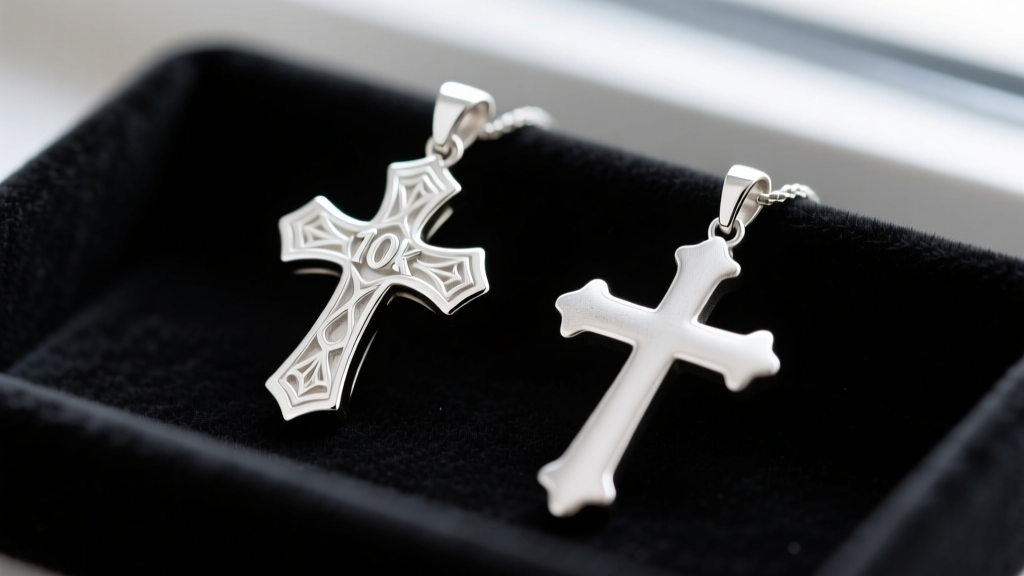
Chain Engineering: Gauge, Style, and Tensile Strength
A common mistake buyers make is purchasing a heavy solid gold cross and pairing it with a hollow, lightweight chain. The chain must support the pendant's weight without risking a snap. When browsing a Kay Jewelers mens cross necklace set or buying components separately, pay strict attention to the chain's gauge (thickness) and link construction.
Recommended Chain Styles for Men
- Figaro (3mm - 5mm): Featuring a pattern of flattened links, the Figaro is a classic masculine choice. It lays flat against the chest and offers excellent tensile strength when the links are soldered.
- Rope (2.5mm - 4mm): Twisted links create a spiral effect that catches the light brilliantly. Rope chains are incredibly strong, but if a link breaks, they are notoriously difficult for jewelers to repair seamlessly.
- Curb (4mm - 6mm): Interlocking, flat links that provide a heavy, substantial look. A solid 5mm curb chain can easily support a large, gemstone-heavy cross pendant.
- Box (2mm - 3mm): While modern and sleek, box chains are prone to kinking if bent sharply. Avoid box chains for heavy pendants, as the square links can warp under sustained downward pressure.
Pro Tip: Always check the inner diameter of the pendant's bail (the loop that holds the chain). A 5mm curb chain requires a bail with an inner clearance of at least 6mm to slide freely without causing friction wear on the metal.
Diamond Accents: Managing Expectations with Commercial Clarity
Kay Jewelers is well-known for its diamond-accented men's crosses. However, it is vital to understand the gemological reality of commercial mall jewelry. The Federal Trade Commission (FTC) mandates accurate grading disclosures, but marketing terms can sometimes obscure the actual visual quality of the stones.
Most diamond crosses in the $500 to $1,500 range at Kay feature promotional melee diamonds. These are typically graded in the I1 to I2 clarity range with I to J color.
- Clarity (I1-I2): Inclusions are visible to the naked eye. In small melee diamonds (under 0.10 carats each), this is less noticeable, but in a larger center stone, you may see dark carbon spots or internal fractures.
- Color (I-J): The diamonds will exhibit a faint yellow or brown tint, especially when set in white gold or sterling silver. If you prefer a colorless look, opt for a yellow gold setting, which masks the warm tint of lower-color diamonds.
If diamond brilliance is your top priority, consider a smaller, solid gold cross without stones, or ask the jeweler to show you pieces graded VS (Very Slightly Included) or higher, which will carry a significant premium.
Hardware and Failure Points: Clasps and Jump Rings
The most structurally sound chain is useless if the clasp fails. When inspecting a Kay Jewelers mens cross necklace in-store, physically test the hardware. According to standards upheld by Jewelers of America, secure hardware is non-negotiable for fine jewelry.
The Clasp Test
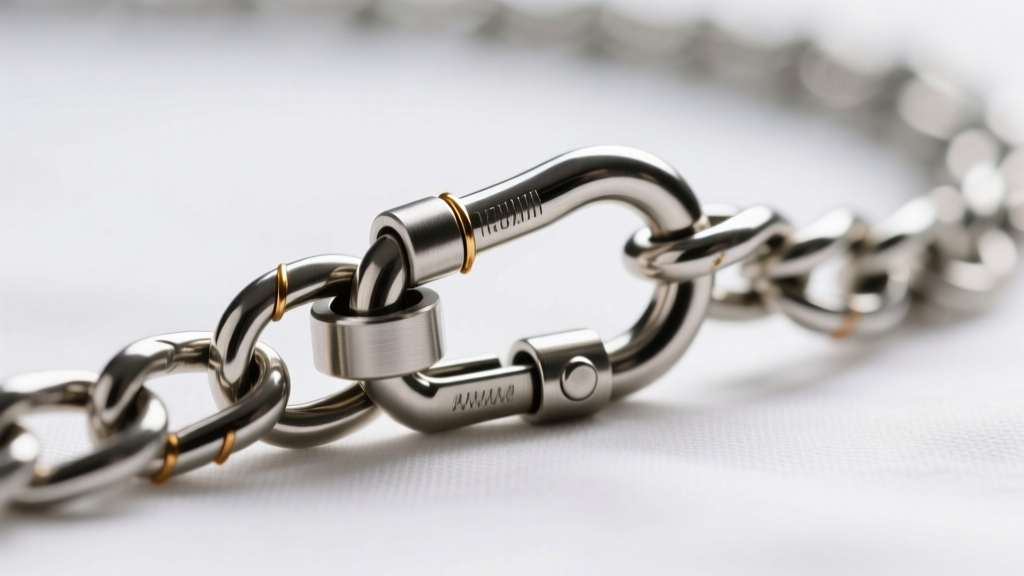
Avoid spring ring clasps on any chain thicker than 2.5mm or heavier than 15 grams. The internal spring mechanism in mass-produced spring rings is prone to fatigue and failure. Instead, insist on a lobster claw clasp. Lobster clasps feature a solid metal trigger and a thicker internal spring, providing a much higher threshold for tensile stress.
Inspecting the Jump Ring
The jump ring is the small circular link that connects the chain to the clasp. Look closely at the seam where the ring closes. If you see a visible gap, the ring is unsoldered and will eventually pull apart under the weight of a heavy cross. A high-quality men's necklace will feature soldered jump rings, where the seam has been fused shut with a laser or torch, creating a continuous, unbreakable loop.
Sizing and Proportions: The 20-Inch vs. 24-Inch Drop
The visual impact of a cross necklace depends entirely on where it rests on the chest. Kay typically offers men's chains in 20-inch, 22-inch, and 24-inch lengths.
- 20 Inches: Sits right at the collarbone. Best for smaller, minimalist crosses (under 1 inch in height) worn under an unbuttoned dress shirt.
- 22 Inches: The most versatile length for men. It rests a few inches below the collarbone, allowing the pendant to sit visibly over a crew-neck t-shirt while remaining easily tuckable.
- 24 Inches: Drops to the mid-chest. This length is reserved for larger, statement crosses (2 inches or taller) and is typically worn over streetwear or casual outerwear.
Ensure the proportions match. A massive 3-inch diamond cross on a delicate 20-inch 2mm chain will look unbalanced and cause severe neck strain and chain stretching over time.
Final Verdict: Maximizing Your Purchase
A Kay Jewelers mens cross necklace can be a meaningful and stylish acquisition if you approach the purchase with a critical eye. Prioritize 10K or 14K solid gold over plated alternatives for lifelong durability. Demand a lobster clasp and soldered jump rings for chains over 3mm, and maintain realistic expectations regarding the clarity of commercial melee diamonds. By focusing on structural integrity and proportional sizing, you will secure a piece that honors its symbolism while standing up to the rigors of daily wear.


