How to Keep Necklace Clasp in Back: Ultimate Buying Guide
Discover how to keep necklace clasp in back with our expert buying guide. Learn about chain friction, weight ratios, and anti-slide clasp mechanisms.

The Physics of Sliding: Why Your Clasp Migrates
If you have ever spent an entire evening discreetly reaching behind your neck to pull a sliding clasp back to the nape, you are not alone. The migrating clasp is one of the most universal frustrations in jewelry wear. To understand how to keep necklace clasp in back, we first have to look at the physics of jewelry design and human anatomy.
The human neck is essentially an inverted cone. When you wear a necklace, gravity naturally pulls the heaviest point of the chain downward toward the front. If the pendant or the front drape of the chain is not significantly heavier than the clasp assembly, the center of gravity shifts. Combined with the low friction coefficient between polished precious metals and smooth skin, even a slight tilt of your head or the movement of your clothing can cause the clasp to glide up the side of your neck and rest squarely under your chin.
Solving this issue does not always require aftermarket hacks; it starts with making informed purchasing decisions. By understanding chain geometry, metal weight ratios, and clasp mechanics, you can buy necklaces that are engineered to stay exactly where they belong.
Buying Guide: Chain Styles That Resist Sliding
Not all chains are created equal. The surface texture and link geometry of a chain dictate its friction against the skin. When shopping for a necklace where the clasp must remain hidden in the back, the chain style is your first line of defense.
| Chain Style | Surface Friction | Slide Risk | Best Use Case |
|---|---|---|---|
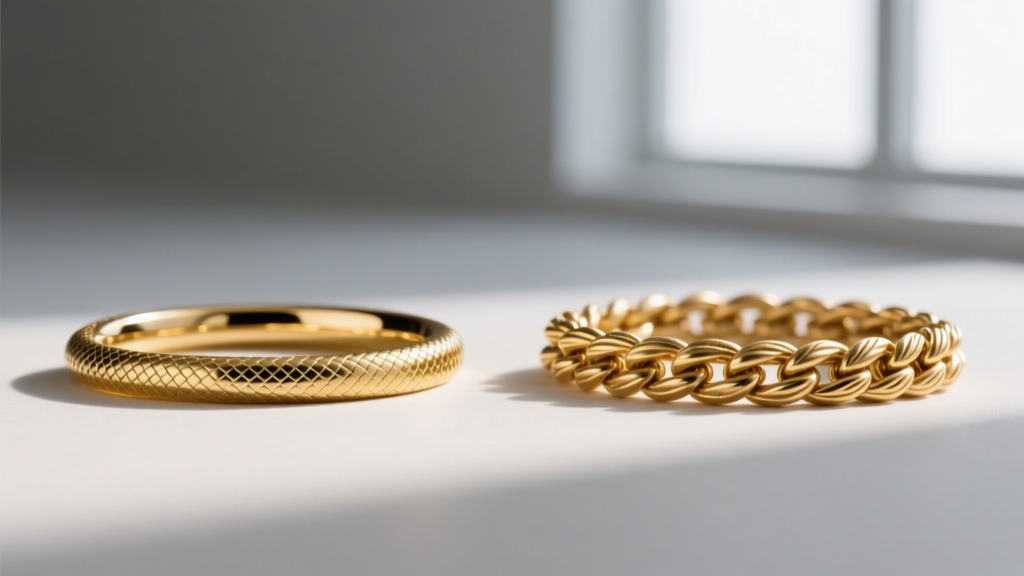
| Snake Chain | Very Low (Smooth tubular surface) | High | Heavy pendants only (requires a 10:1 weight ratio) |
| Herringbone | Low (Flat, interlocking links) | High | Statement collars; poor for delicate daily wear |
| Box Chain | Medium-High (Geometric edges) | Low | Everyday wear; grips skin and clothing slightly |
| Wheat Chain | High (Braided, textured loops) | Very Low | Lightweight pendants; excellent anti-slide properties |
| Rope Chain | High (Twisted, multi-faceted) | Very Low | Layering and standalone wear without pendants |
According to manufacturing specifications outlined by jewelry suppliers like Rio Grande, chains like the snake and herringbone act almost like solid tubes or ribbons of metal. While they offer a beautiful, liquid-like drape, they provide zero micro-friction. Conversely, wheat and rope chains feature complex, interlocking links that create microscopic drag against the skin, anchoring the necklace in place.
The Golden Ratio: Pendant vs. Clasp Weight
The most critical factor in preventing clasp migration is the weight distribution of the piece. Jewelry designers utilize a specific weight ratio to ensure the front of the necklace remains the anchor point. When evaluating a necklace for purchase, you must consider the gram weight of the clasp versus the gram weight of the pendant or front focal point.
The 5:1 Rule for Standard Chains
For a necklace to remain stable on the neck, the pendant or front assembly should weigh at least five times more than the clasp and the immediate jump rings.
- Standard 5mm Spring Ring (14k Gold): Weighs approximately 0.15g. Your pendant must be at least 0.75g.
- 12mm Lobster Claw (14k Gold): Weighs approximately 0.45g. Your pendant must be at least 2.25g.
- Magnetic Clasps: Often weigh 1.5g to 3.0g due to the internal neodymium magnets and steel housing. These require a massive front pendant (7.5g+) to prevent sliding, which is why magnetic clasps often fail on delicate chains.
When shopping online, always check the product specifications for total gram weight. If a brand does not list the weight, be highly skeptical of lightweight chains paired with bulky, oversized lobster clasps, as this is a primary recipe for a sliding clasp.
Clasp Mechanisms to Look For (and Avoid)
The physical design of the clasp itself plays a massive role in necklace stability. Here is what to look for when browsing jewelry collections:
1. The Toggle Clasp (The Embrace Strategy)
Instead of fighting the slide, many modern jewelers embrace it. Toggle clasps are heavy, visually striking, and designed to be worn at the front of the neck. If you are buying a piece with a toggle clasp, the designer has intentionally balanced the chain so the clasp acts as the pendant. This entirely eliminates the frustration of a hidden clasp migrating.
2. The Lightweight Spring Ring
While often maligned for being difficult to operate with one hand, the traditional spring ring is incredibly lightweight. For ultra-delicate chains (0.8mm to 1.0mm gauge) featuring small gemstone pendants, a 4mm or 5mm spring ring is often the best choice to maintain the necessary weight ratio.
3. Avoid: Oversized Lobster Claws on Delicate Chains
Many consumers equate a large lobster clasp with security and durability. However, placing a heavy, 15mm brass or gold-plated lobster clasp on a 1.2mm cable chain ruins the center of gravity. The clasp will inevitably pull the chain backward. Look for proportionate clasps that match the gauge of the chain.
Aftermarket Solutions: What to Buy if Your Chain Fails
If you already own a beloved necklace that refuses to stay anchored, or if you are buying a lightweight layering piece that lacks a heavy pendant, you can utilize specific aftermarket accessories to solve the problem.
Silicone O-Rings and Stoppers
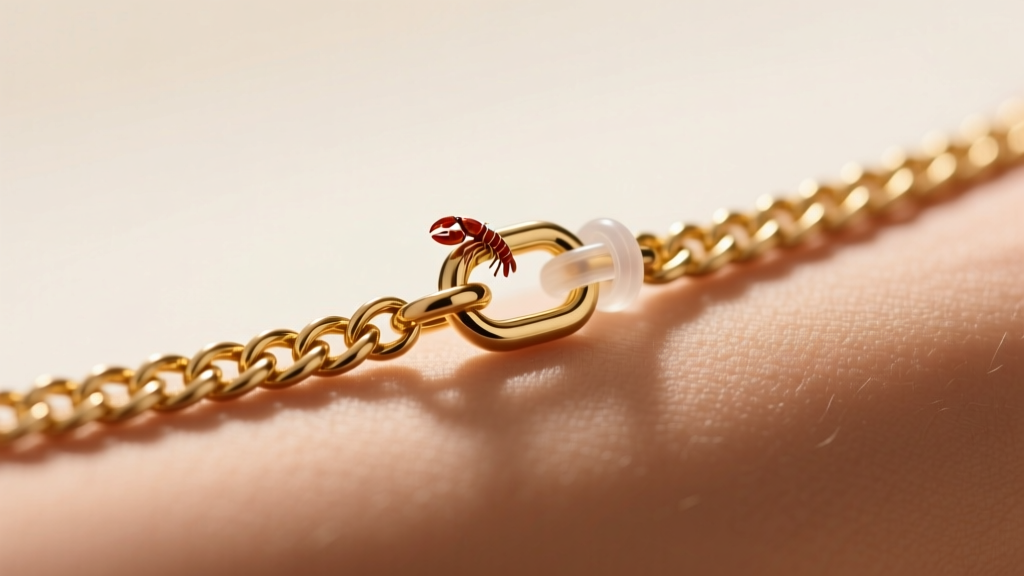
The most effective, invisible solution is the silicone clasp stopper. These are tiny, transparent O-rings that slide over the chain and sit flush against the clasp, creating a high-friction barrier against the skin. When purchasing these, look for silicone with a Shore A hardness of 40 to 50. This specific durometer is soft enough to grip the metal links without stretching out or tearing over time. Ensure you buy an inner diameter (ID) that matches your chain: a 2.0mm ID is perfect for delicate cable and box chains, while a 3.5mm ID is required for thicker rope chains.
Clasp Holders and Neck Spacers
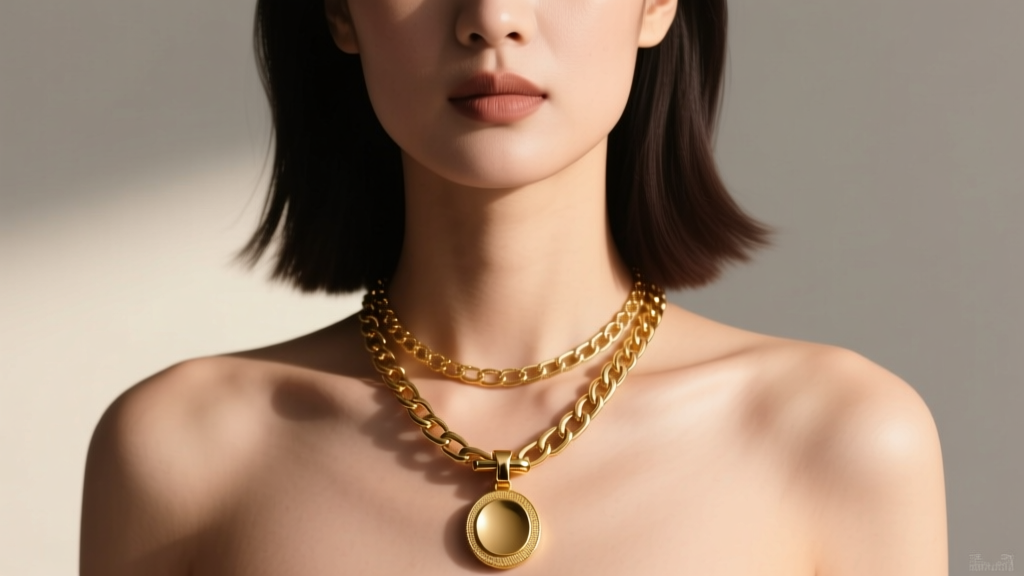
For those who layer multiple necklaces, sliding clasps become exponentially worse due to the chains tangling and pulling on one another. Buying a dedicated necklace spacer (a small clasp that holds 2 to 3 chains together at the nape of the neck) centralizes the weight at the back. Brands like Ponocare and various Etsy jewelers craft 14k gold clasp holders that feature a textured silicone interior lining, gripping the chains and acting as a unified counterweight.
Proper Care and Maintenance for Long-Term Stability
Friction is not just about metal on skin; it is also about the cleanliness of the chain. Over time, body oils, lotions, and dead skin cells coat the links of your necklace, creating a lubricated surface that drastically increases sliding. The Gemological Institute of America (GIA) recommends regular, gentle cleaning of precious metal chains using a soft brush and mild dish soap to remove this microscopic layer of grime. Restoring the natural, dry texture of the metal links will immediately improve the chain's grip on your skin.
Final Verdict: Building a Slide-Proof Wardrobe
Learning how to keep necklace clasp in back is ultimately an exercise in mindful purchasing. By prioritizing high-friction chain styles like wheat and rope, strictly adhering to the 5:1 pendant-to-clasp weight ratio, and utilizing proportionate hardware, you can curate a jewelry box full of pieces that stay put. For the delicate, minimalist chains that defy physics, a simple 2mm silicone O-ring remains the ultimate, invisible safeguard for effortless daily wear.


