Safety Pin Necklace Value Guide: Budget vs Luxury 2026
Is a designer safety pin necklace worth the premium? We analyze metal grades, hinge engineering, and pricing tiers to help you find true value.

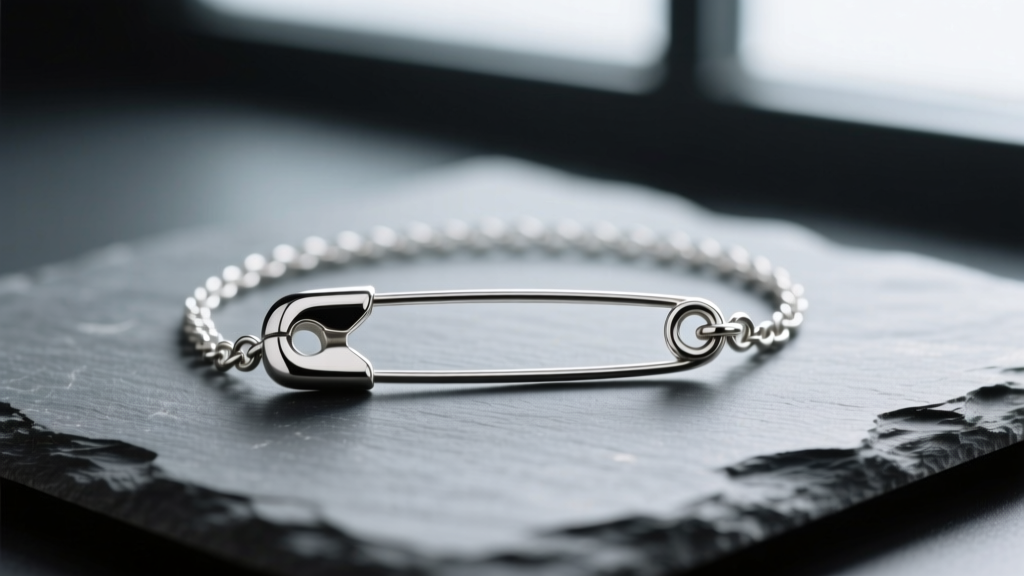
The safety pin necklace has transcended its 1970s punk origins to become a permanent fixture in both high-fashion runways and everyday minimalist jewelry stacks. But as the trend has matured, so has the market disparity. Today, you can find a safety pin pendant for $5 on a fast-fashion marketplace or upwards of $950 from luxury houses like Balenciaga. For the discerning buyer in 2026, the critical question is no longer just about aesthetics—it is about structural integrity, metallurgical safety, and true cost-per-wear value.
In this comprehensive budget and value assessment, we dismantle the safety pin necklace to evaluate gauge thickness, hinge engineering, and material grades, helping you determine exactly where your money is best spent.
The Metallurgy of Rebellion: What Are You Actually Paying For?
The foundation of any necklace's value lies in its base material. Because the safety pin design relies on a high-friction moving part (the spring hinge and clasp head), the choice of metal dictates both the lifespan of the piece and your skin's reaction to it.
Base Metals and the Nickel Threat
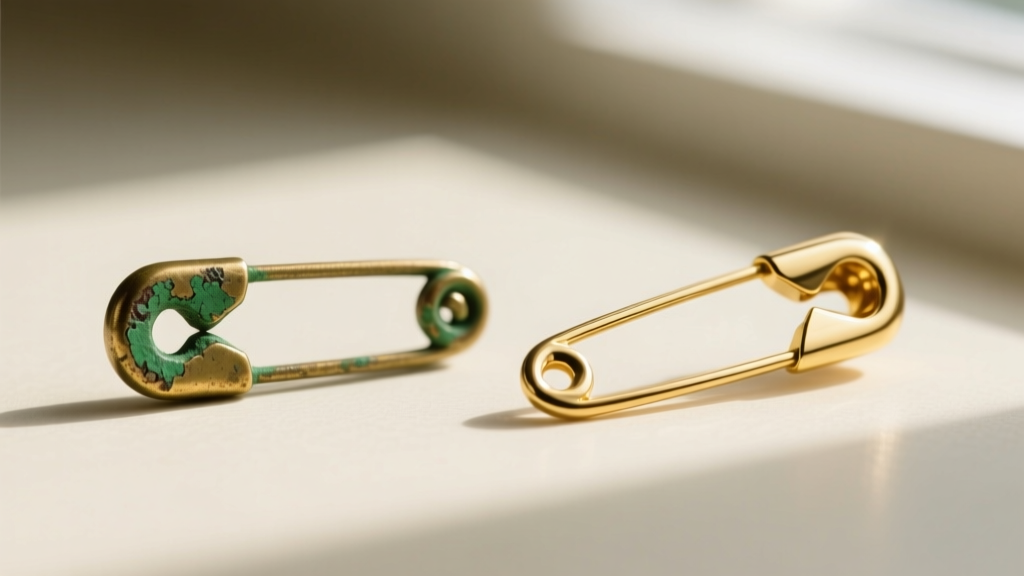
Budget safety pin necklaces (typically priced between $5 and $25) are almost universally cast from zinc alloys or brass, then flash-plated with a microscopic layer of silver or gold. The hidden danger here is nickel. Nickel is frequently used in cheap base alloys to add hardness and a bright white under-layer. According to the National Institute of Arthritis and Musculoskeletal and Skin Diseases, nickel allergy is one of the most common causes of allergic contact dermatitis. When the thin plating wears off at the friction point of the safety pin hinge, the raw nickel is exposed to your skin and sweat, leading to severe irritation and the dreaded green skin effect caused by copper oxidation in brass.
The Demi-Fine and Precious Metal Standard
True value begins in the $45 to $150 range with demi-fine and solid precious metals. 316L Surgical Steel offers incredible durability and is largely hypoallergenic, making it a fantastic budget-conscious choice for sensitive skin, though it lacks intrinsic resale value. 925 Sterling Silver provides the best balance of luxury and accessibility. However, because silver is soft, high-end artisans will often alloy it with a touch of copper or apply a heavy rhodium flash to the high-friction hinge areas to prevent premature wear. Solid 14k and 18k gold safety pin pendants ($400+) eliminate tarnish and skin reactions entirely, but you are paying a steep premium for the raw gold weight.
Engineering the Hinge: The Hidden Failure Point
Most consumers evaluate a necklace by its pendant's visual weight, completely ignoring the mechanical engineering required to keep it functional. The standard office safety pin is stamped from thin sheet wire, usually measuring around 0.9mm in thickness (approximately 19-gauge).
When worn as a pendant, the chain exerts continuous lateral torque against the closed hinge and the clasp head. A 19-gauge pin will quickly suffer from hinge spring fatigue, causing the pin to warp outward. More critically, the clasp head gap—the tiny slit where the pin point rests—will widen under the weight of the chain. Once this gap exceeds 1.5mm, your chain will slip out, and the pendant will be lost.
The 14-Gauge Rule and Soldered Bails
To ensure longevity, a high-value safety pin necklace must feature a minimum wire thickness of 1.2mm (16-gauge) to 1.6mm (14-gauge). Furthermore, expert jewelers avoid threading the chain directly through the spring coil, which grinds down the internal tension mechanism over time. Instead, premium artisan pieces feature a soldered jump-ring bail attached to the side or top of the pin body, completely isolating the moving parts from the friction of the chain.
Value Matrix: Price Tiers and Cost-Per-Wear
| Price Tier | Typical Cost | Materials & Gauge | Value Verdict |
|---|---|---|---|
| Fast Fashion | $5 - $25 | Brass/Zinc, 19-20g, Flash Plated | Poor. High failure rate, skin irritation risk. |
| Indie Artisan | $45 - $120 | 925 Silver / 316L Steel, 14-16g, Soldered Bail | Excellent. The ultimate sweet spot for durability and style. |
| Luxury Designer | $400 - $1,200+ | 18k Gold / Heavy Silver, 12-14g | Moderate. You pay for brand heritage, not just metallurgy. |
The Heritage Premium: Are Luxury Designers Worth It?
The modern high-fashion safety pin necklace owes much of its cultural cachet to Gianni Versace's iconic 1994 collection and the subsequent punk-revival movements documented by institutions like the Victoria and Albert Museum. Today, houses like Balenciaga and Alexander McQueen charge upwards of $800 for safety pin pendants.
When you purchase a luxury designer safety pin necklace, you are not paying for superior mechanical engineering; you are paying for the cultural signifier and the brand's runway heritage. From a pure metallurgical standpoint, a $90 solid 14k gold piece from a skilled indie goldsmith will often outlast a $900 designer piece made of rhodium-plated brass.
If your goal is investment and brand recognition, the luxury tier holds its resale value on the secondary market. However, if your goal is daily wear, structural integrity, and material safety, the luxury tier offers diminishing returns.

How to Spot a High-Value Safety Pin Pendant
Before adding a safety pin necklace to your collection in 2026, run it through this quick structural checklist to ensure you are getting true value for your budget:
- The Gauge Test: Check the product specifications for wire thickness. Reject anything under 1.2mm (16-gauge) for daily wear.
- The Bail Check: Look for a fixed, soldered ring (bail) for the chain. Avoid designs where the chain threads directly through the spring coil or the sharp point of the pin.
- The Clasp Head Tension: If buying in person, gently pull the pin point away from the clasp head. It should snap back with aggressive, tight tension. If there is any lateral wiggle in the clasp head cap, the chain will eventually slip out.
- Metal Stamps: Ensure the piece is stamped with 925, 316L, 14k, or 18k. Avoid pieces marked only with SP (Silver Plated) or those with no markings at all.
Final Verdict
The safety pin necklace remains a powerful, edgy staple in modern jewelry styling. However, the illusion of a bargain quickly fades when a $12 fast-fashion pin snaps at the hinge or triggers a nickel allergy. By redirecting your budget toward the $50 to $120 indie artisan tier, you secure a piece crafted with proper 14-gauge structural integrity, safe hypoallergenic metals, and intelligent bail mechanics. True value in jewelry is not just about the initial price tag; it is about the engineering that allows a piece to survive the beautiful friction of daily life.


