How Does a Mood Necklace Work? The Science of Color-Changing Pendants
Discover how a mood necklace works. Learn the science behind thermochromic liquid crystals, color meanings, and care tips for pendants.

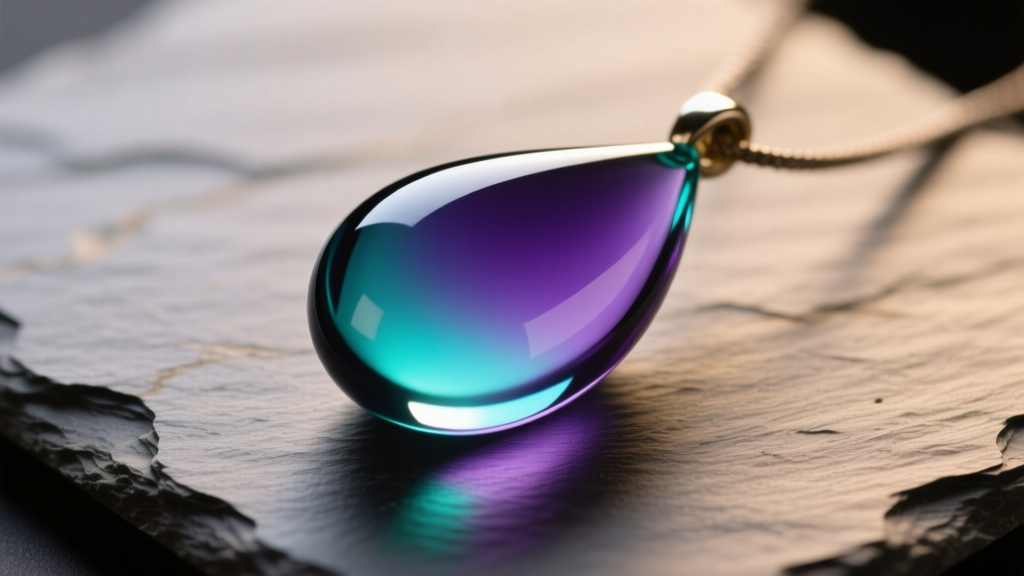
Whether you are revisiting a beloved childhood trend or discovering color-changing jewelry for the first time, the allure of a pendant that shifts hues against your skin is undeniable. But if you have ever looked down at your chest and wondered, how does mood necklace work, the answer goes far beyond simple magic or emotion. It is rooted in a fascinating branch of materials science known as thermochromism.
In this comprehensive guide, we will break down the exact chemistry behind color-changing pendants, debunk the 'mood-reading' myth, and provide expert advice on how to choose and care for thermochromic jewelry in 2026.
The Core Mechanism: Thermochromism Explained
At the most fundamental level, a mood necklace works through thermochromism—the ability of a substance to change color due to a change in temperature. The pendant itself does not possess a microchip, a battery, or a biometric sensor. Instead, it relies entirely on the ambient heat radiating from your skin and the environmental temperature of the room you are in.
When you wear the necklace, the metal backing of the pendant absorbs your body heat. This heat is transferred to a specialized chemical layer sealed inside the glass or epoxy cabochon. As the temperature of this chemical layer fluctuates by even a single degree, its molecular structure shifts, altering the way it absorbs and reflects visible light. According to Wikipedia's detailed breakdown of thermochromism, this reversible physical reaction is what creates the seamless gradient of colors you see throughout the day.
Liquid Crystals vs. Leuco Dyes: Know Your Materials
Not all color-changing necklaces are created equal. To truly understand how your specific pendant operates, you need to know which of the two primary thermochromic technologies it uses.
1. Cholesteric Liquid Crystals (The Classic Standard)
High-quality and vintage mood necklaces utilize cholesteric liquid crystals (CLCs). These molecules are arranged in microscopic, helical layers. When the temperature changes, the pitch (the distance between the layers) expands or contracts. This physical shift changes the specific wavelength of light that is reflected back to your eye. CLCs provide a continuous, smooth spectrum of color shifts—from deep blacks and browns up through greens, blues, and violets. They are highly sensitive, reacting to temperature changes of less than one degree Celsius.
2. Micro-Encapsulated Leuco Dyes (The Modern Alternative)
Many mass-produced, fast-fashion pendants released in recent years use leuco dyes instead. These are chemicals encapsulated in microscopic spheres that change from one distinct color to another (or from clear to a solid color) at a specific threshold temperature. While cheaper to manufacture, leuco dyes lack the nuanced, multi-color gradient of liquid crystals. If your necklace simply switches from 'clear' to 'pink' without passing through green or blue, it is utilizing a leuco dye, not a liquid crystal.

Decoding the Colors: Myth vs. Biological Reality
The marketing behind mood jewelry claims that the colors map directly to your emotional state. While the necklace cannot read your mind, it is reacting to physiological changes in your body that are often triggered by emotions. When you are stressed or anxious, your sympathetic nervous system triggers peripheral vasoconstriction—blood vessels in your extremities and skin surface narrow to redirect blood to vital organs. This drops your skin's surface temperature. Conversely, when you are relaxed or excited, vasodilation occurs, bringing warm blood to the skin's surface.
Here is a data-driven breakdown of what the colors actually indicate regarding your skin's surface temperature, based on standard liquid crystal calibrations:
| Pendant Color | Surface Temperature | Physiological State | Marketed 'Mood' |
|---|---|---|---|
| Black / Gray | Below 22°C (72°F) | Cold environment or poor circulation | Stressed, Anxious |
| Amber / Brown | 22°C - 26°C (72°F - 79°F) | Slightly below baseline skin temp | Nervous, Restless |
| Green | 27°C - 29°C (80°F - 84°F) | Normal resting skin temperature | Calm, Average |
| Blue-Green | 30°C - 31°C (86°F - 88°F) | Slightly elevated surface heat | Relaxed, Content |
| Dark Blue | 32°C - 33°C (89°F - 91°F) | Increased peripheral blood flow | Happy, Romantic |
| Violet / Purple | Above 34°C (93°F) | High surface heat (or hot room) | Passionate, Excited |
Note: Ambient room temperature plays a massive role. A 'black' pendant in a cold winter room does not mean you are depressed; it simply means the room is cold!
Failure Modes: Why Mood Necklaces Stop Working
A common complaint in jewelry forums is the 'dead' mood pendant—one that remains permanently black or brown regardless of body heat. Understanding how these necklaces fail is crucial for longevity.
- Water Ingress (The #1 Killer): Liquid crystals are highly sensitive to moisture. If the glass cabochon seal is compromised, or if you wear the necklace in the shower, water seeps into the crystal matrix. This disrupts the helical structure of the molecules, permanently 'freezing' the pendant in a dark, unreflective state.
- UV Degradation (Photobleaching): Prolonged exposure to direct sunlight breaks down the chemical bonds in both liquid crystals and leuco dyes. Over time, the pendant will lose its ability to reflect vibrant blues and violets, eventually fading to a permanent, cloudy yellow.
- Extreme Heat Shock: Leaving your necklace on the dashboard of a hot car can exceed the thermal tolerance of the crystals, causing the micro-capsules to rupture or the liquid crystal layers to melt into a disorganized, non-reflective state.

2026 Buying Guide: What to Look For
If you are shopping for a high-quality thermochromic pendant today, skip the cheap plastic novelties and look for these expert-approved specifications:
1. Opt for Glass Over Epoxy
While epoxy resin is cheaper and shatter-resistant, it is porous and degrades under UV light much faster than glass. A genuine glass cabochon provides a superior, non-porous seal against moisture and offers better optical clarity, allowing the liquid crystals to reflect light more brilliantly.
2. Check the Metal Base
The metal backing of the pendant acts as the thermal conductor between your skin and the crystals. Look for sterling silver (925) or 316L surgical stainless steel. These metals are excellent thermal conductors and are hypoallergenic. Avoid cheap brass or nickel-plated bases; they can cause contact dermatitis, and the resulting skin irritation will artificially spike your local skin temperature, giving you inaccurate color readings.
3. Chain Gauge and Clasp
Because mood pendants tend to be slightly heavier due to the glass and metal backing, pair them with a sturdy chain. A 1.2mm to 1.5mm cable chain or box chain provides the ideal balance of durability and aesthetics. Always ensure the chain features a secure lobster claw clasp rather than a fragile spring-ring clasp, which is prone to snapping under the weight of a glass cabochon.
Expert Tip: To test the quality of a liquid crystal pendant in-store, hold it gently between your thumb and forefinger. A high-quality CLC pendant will transition smoothly from black to green to blue within 10 to 15 seconds. If the color change is patchy, delayed, or jumps instantly from black to blue without passing through green, the chemical matrix is likely degraded or poorly manufactured.
Final Thoughts on Thermochromic Jewelry
So, how does a mood necklace work? It is a beautiful intersection of human biology and advanced chemistry. While it may not be a psychic tool capable of reading your deepest emotions, it serves as a fascinating, real-time bio-feedback monitor of your peripheral circulation and environment. By understanding the science of thermochromic liquid crystals and investing in well-constructed, glass-sealed pendants, you can enjoy the color-shifting magic of this iconic jewelry style for years to come. For more deep dives into jewelry science and material care, explore our comprehensive guides on the history and mechanics of thermochromic accessories.


