How to Style and Wear a Push Knife Necklace Safely
Learn how to style, wear, and maintain a push knife necklace. Discover chain pairings, neckline matching, and safety tips for tactical pendants.

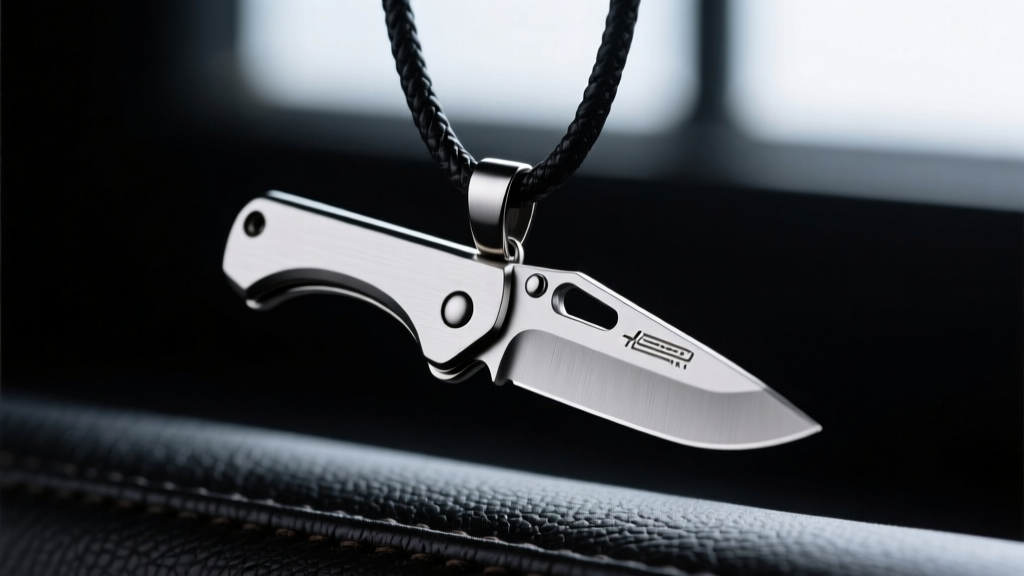
The Evolution of Tactical Jewelry in 2026
Tactical jewelry has firmly crossed over from niche subcultures into mainstream avant-garde streetwear. At the forefront of this movement is the push knife necklace, a striking pendant characterized by its distinct T-handle and forward-facing blade silhouette. Originally inspired by the push dagger—a close-quarters tool designed to be gripped in the fist—this pendant translates aggressive, utilitarian geometry into a bold fashion statement.
However, wearing heavy, sharp, or complex metallic geometry against the sternum requires more than just throwing it on a string. It demands an understanding of metallurgy, chain tensile strength, and impact safety. This step-by-step guide will teach you how to select, style, and safely maintain a push knife pendant for everyday wear.
Step 1: Selecting the Right Metal and Material Grade
The foundation of any high-quality tactical pendant is its metallurgy. Because a push knife necklace rests directly against the skin and is exposed to sweat, friction, and environmental moisture, choosing the correct metal grade is critical to prevent corrosion and skin irritation.
| Material Grade | Weight Profile | Corrosion Resistance | Maintenance Required | Estimated Price Range |
|---|---|---|---|---|
| Ti-6Al-4V (Grade 5 Titanium) | Ultra-Lightweight | Exceptional (Hypoallergenic) | None (Wash with soap) | $85 - $160 |
| 316L Surgical Stainless | Medium-Heavy | High (Resists tarnish) | Low (Occasional polish) | $35 - $75 |
| 1095 Carbon Steel | Heavy | Poor (Prone to rust) | High (Requires oiling) | $40 - $90 |
| Pattern-Welded Damascus | Heavy | Moderate (Depends on core) | Medium (Keep dry, oil) | $120 - $250+ |
For daily wear, Grade 5 Titanium (Ti-6Al-4V) is the undisputed champion. It offers nearly twice the strength of 316L stainless steel at roughly 45% less weight, preventing the pendant from pulling uncomfortably on the back of your neck. If you prefer the dark, gritty aesthetic of carbon steel or Damascus, you must commit to a strict maintenance routine to prevent iron oxide (rust) from staining your skin and clothing. For a deeper dive into alloy compositions, refer to the Rio Grande Metals Guide.
Step 2: Engineering the Chain and Hardware
A common failure mode in heavy tactical pendants is chain snap or bail deformation. A solid steel or titanium push knife pendant typically weighs between 18 and 35 grams. A standard 1.5mm fashion chain will eventually warp and break under this dynamic load.
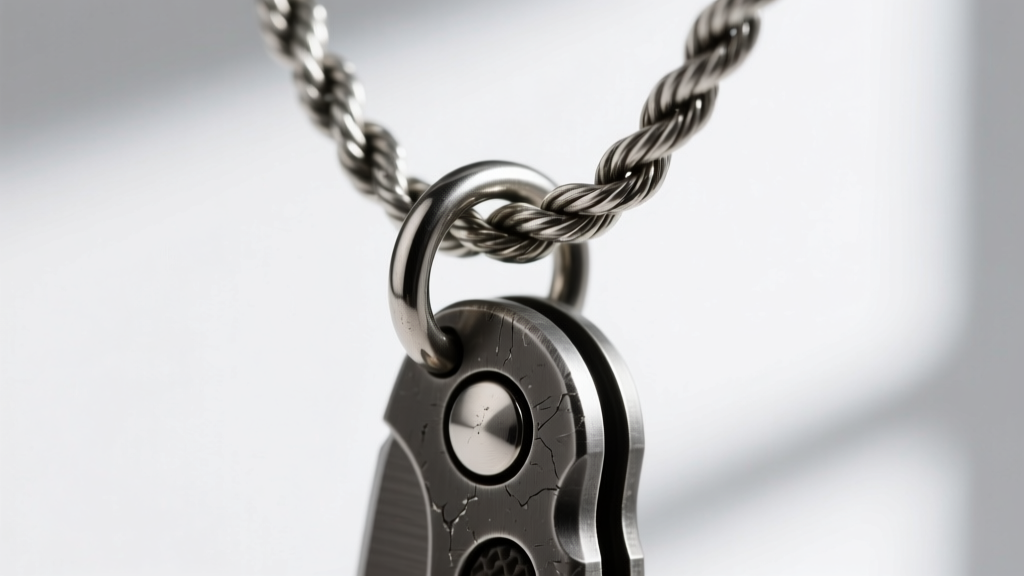
Chain Selection Framework
- Thickness: Opt for a chain between 2.5mm and 4.0mm. A 3mm oxidized sterling silver rope chain or a matte black PVD-coated stainless steel box chain provides the necessary tensile strength and visual weight to match the pendant.
- Clasp Hardware: Avoid standard spring-ring clasps. They are the weakest point of the assembly. Upgrade to a 5mm lobster clasp or, preferably, a custom machined titanium S-clasp or shackle clasp.
- Jump Ring Gauge: The jump ring connecting the pendant to the chain must be at least 16-gauge (1.29mm wire thickness) with an inner diameter of 4mm to 5mm. Anything thinner (like 18-gauge or 20-gauge) will slowly pull apart from the friction of the T-handle bail.
Step 3: Styling for Necklines and Layering
The push knife silhouette is inherently aggressive and visually dense. Styling it requires balancing its heavy geometric lines with your wardrobe.
Matching the Neckline
The T-handle of the push knife creates a strong horizontal line, while the blade creates a sharp vertical drop. This geometry pairs best with V-neck or open-collar shirts, which mirror and frame the pendant's shape. If you are wearing a crew neck or a hoodie, opt for a shorter chain length (18 to 20 inches) so the pendant rests entirely above the fabric line, rather than getting tangled in the collar.
The Tactical Layering Technique
In 2026, the single-pendant look is often augmented by asymmetric layering. To layer a push knife necklace effectively:
- The Base Layer: Start with a 24-inch or 26-inch matte black ball chain (dog tag chain) featuring a 3mm bead diameter. This provides a subtle, utilitarian backdrop.
- The Focal Point: Wear your push knife pendant on a 20-inch or 22-inch rope chain. The 2-to-4-inch difference in length ensures the T-handle rests cleanly on your sternum without tangling with the base layer.
- Texture Contrast: If the push knife is polished titanium, use an oxidized or matte-finished chain for the base layer to create depth.
"Tactical jewelry isn't just about wearing weapons; it's about adopting an architectural, brutalist aesthetic. The push knife pendant acts as a structural anchor point for the rest of your outfit's hardware." — Contemporary Menswear Hardware Guidelines
Step 4: Safety Protocols and Edge Blunting
When wearing any bladed silhouette as jewelry, safety must be your primary concern. The "sternum strike" is a known hazard in tactical jewelry: if you are bumped, fall, or are involved in a minor collision, a sharp pendant can cause severe lacerations to the chest.
Functional vs. Decorative Edges
Some micro push knife pendants are sold with functional, razor-sharp edges. Do not wear a functional edge against your body. If you own a functional piece, you must blunt the edge before wearing it as a necklace.
- The 0.5mm Rule: Use a fine diamond sharpening stone or a Dremel tool with a felt polishing wheel to round the cutting edge to a minimum radius of 0.5mm. This removes the ability to cut skin while retaining the visual illusion of a sharp edge from a distance.
- Tip Rounding: The apex of the blade should also be slightly radiused. A needle-sharp point can easily puncture the skin if the pendant swings upward during physical activity.
For a comprehensive understanding of steel edge geometry and how different grinds behave, the Blade HQ Steel and Edge Chart is an excellent resource for understanding how your specific pendant's steel will hold up to blunting and polishing.
Step 5: Maintenance and Cleaning Routines
Proper maintenance ensures your push knife necklace remains a striking accessory rather than a degraded piece of scrap metal.
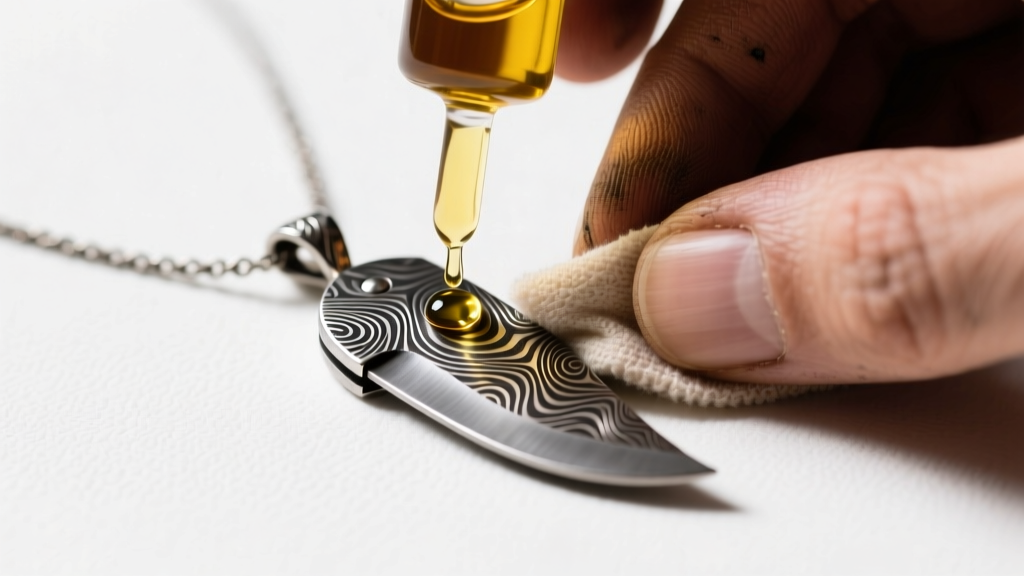
Material-Specific Cleaning
For Titanium and 316L Stainless Steel: These metals are virtually maintenance-free. Once a month, soak the pendant and chain in a bowl of warm water with a few drops of mild dish soap. Use a soft-bristled toothbrush to clear out the crevices around the T-handle and the bail. Rinse and dry with a microfiber cloth. You can also use an ultrasonic jewelry cleaner for 3 minutes for a factory-level shine.
For 1095 Carbon Steel and Damascus: Carbon steel will oxidize rapidly when exposed to the salts and acids in human sweat. 1. Never wear carbon steel pendants during exercise or in high-humidity environments. 2. After wearing, wipe the pendant down with a dry cloth. 3. Once a week, apply a micro-thin layer of food-safe mineral oil or specialized knife oil (like Tuf-Glide) to the blade and handle using a cotton swab. This displaces moisture and prevents the dark, pitted rust that ruins Damascus patterns.
Final Thoughts on Tactical Styling
A push knife necklace is a commitment to a bold, uncompromising aesthetic. By prioritizing Grade 5 titanium or well-maintained Damascus, upgrading your chain hardware to 16-gauge jump rings, and strictly adhering to edge-blunting safety protocols, you can wear this striking piece with confidence. Whether layered over a vintage band tee or anchoring a high-end streetwear ensemble, the push knife pendant remains one of the most commanding silhouettes in modern jewelry design.


