Patrick Mahomes Black Diamond Necklace: Care & Cleaning Guide
Learn how to properly clean and maintain your Patrick Mahomes black diamond necklace with expert tips on porous stones, gold chains, and safe storage.

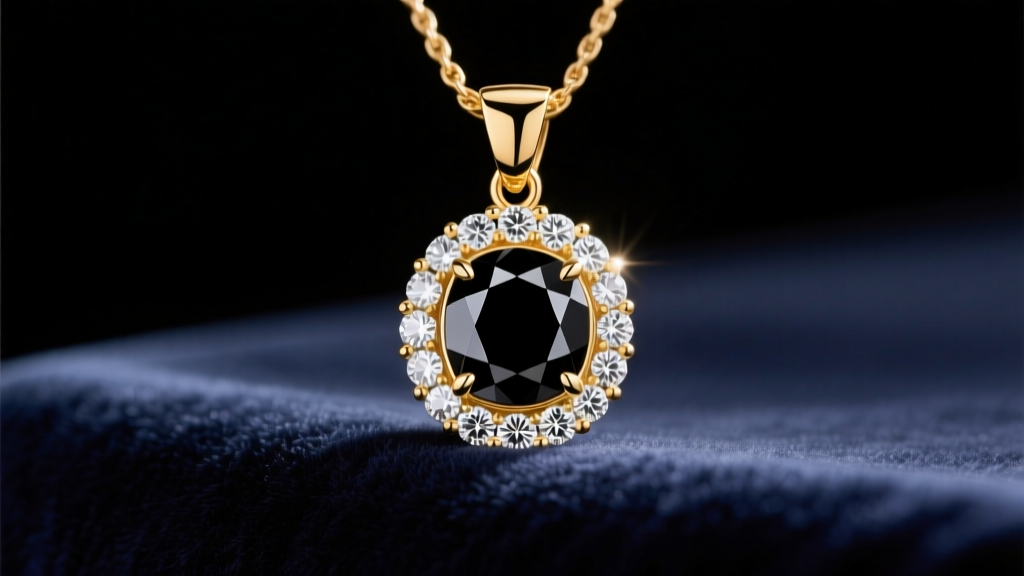
The Allure of the Patrick Mahomes Black Diamond Necklace
When discussing iconic sports jewelry in 2026, few pieces capture the cultural zeitgeist quite like the custom Patrick Mahomes black diamond necklace. Known for his bold, high-contrast aesthetic, the Kansas City Chiefs quarterback frequently commissions bespoke pieces that blend traditional luxury with modern, masculine edge. These necklaces often feature heavy 14k or 18k gold Cuban links, intricate white diamond pave work, and striking black diamond centerpieces—sometimes shaped into his iconic number 15 or arrowhead motifs.
However, owning a piece of this caliber requires a fundamental shift in how you approach jewelry maintenance. Black diamonds are not simply white diamonds painted black; they possess entirely different gemological properties that make standard cleaning methods not just ineffective, but actively destructive. If you own a black diamond pendant or are considering investing in one, understanding the specific care protocols is essential to preserving its value and brilliance.
Understanding Black Diamonds: Why Standard Cleaning Fails
To properly care for a black diamond, you must first understand its internal structure. According to the Gemological Institute of America (GIA), natural black diamonds (known as carbonado) are polycrystalline aggregates composed of diamond, graphite, and amorphous carbon. This unique composition gives them their opaque black color but also makes them highly porous compared to single-crystal white diamonds.
Furthermore, many black diamonds on the commercial market are treated. Gray or heavily included white diamonds are subjected to high-temperature irradiation or heat treatments to achieve a uniform black color. Crucially, these treated stones are often fracture-filled with lead-glass or silica-based resins to improve their structural integrity and surface luster.
This porosity and fracture-filling create a massive vulnerability. If you place a fracture-filled black diamond into an ultrasonic cleaner, the high-frequency acoustic cavitation can literally shake the filler out of the stone, leaving it cloudy, brittle, and fractured. Similarly, steam cleaners can cause thermal shock or melt the glass fillings. Therefore, the aggressive cleaning methods used for standard white diamond tennis chains must be strictly avoided when cleaning your black diamond pendant.
Step-by-Step Cleaning Protocol for Black Diamond Pendants
Cleaning a black diamond requires a gentle, low-impact approach that lifts surface oils without penetrating the stone's microscopic pores or compromising the gold setting. Follow this exact protocol every 3 to 4 weeks, depending on how often you wear the piece.
1. Prepare the Cleaning Solution
Never use tap water. Tap water contains chlorine, fluorine, and dissolved minerals like calcium carbonate that can leave a dull, chalky film on the surface of a black diamond. Instead, use distilled water. Mix 1 part mild, phosphate-free dish soap (such as original Dawn) with 10 parts lukewarm distilled water in a small glass bowl. Ensure the water is lukewarm (around 85°F to 95°F)—hot water can expand the metal setting and loosen the prongs holding your accent diamonds.
2. The Brief Soak
Submerge the black diamond pendant in the solution for exactly 3 to 5 minutes. Do not exceed this time limit. The goal is to soften the sebum (skin oils) and environmental dust clinging to the gold bezel or prongs, not to saturate the carbonado stone.
3. Gentle Agitation
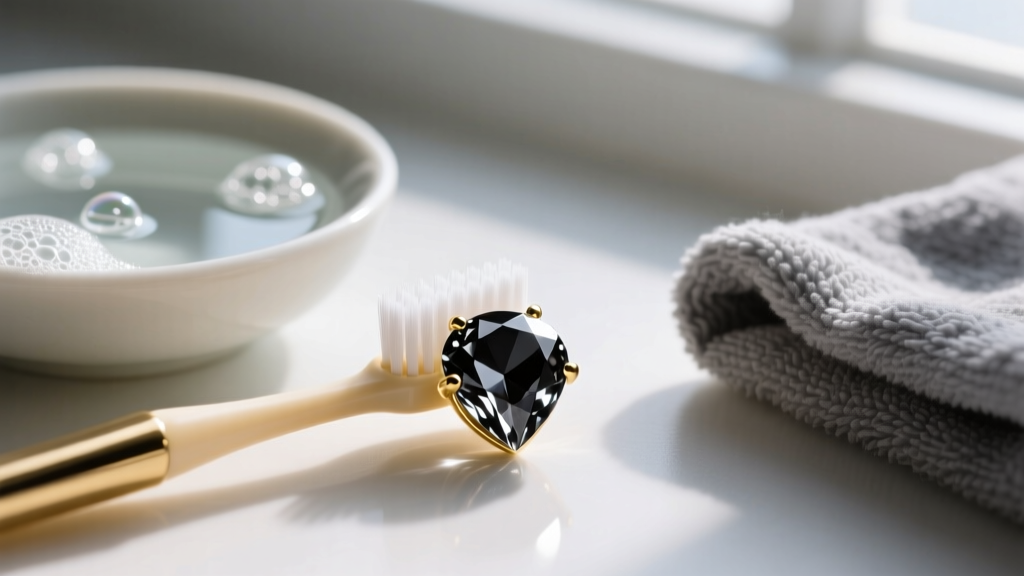
Use an extra-soft baby toothbrush with a bristle stiffness of less than 0.1mm. Standard adult toothbrushes, even those labeled 'soft,' contain abrasive silica particles and stiff nylon bristles that can microscratch the polished surface of the gold setting and dull the luster of the black diamond. Gently brush the back of the pendant (the pavilion) where skin oils accumulate, using light, circular motions. If dirt is trapped in the crevices of the setting, use a wooden toothpick to gently dislodge it—never use metal needles or safety pins, which will permanently scratch the gold.
4. The Distilled Rinse and Dry
Rinse the pendant thoroughly under a slow stream of lukewarm distilled water. Immediately pat it dry with a clean, lint-free microfiber cloth. Do not air dry, as water spots will form on the gold. Use a hairdryer on the 'cool' setting to blow out any remaining moisture from beneath the diamond setting.
Maintaining the Chain: Cuban Links vs. Tennis Settings
A Patrick Mahomes-style necklace is rarely just a pendant; it is usually suspended from a heavy, high-karat gold chain. The care for the chain depends on its style. If you are wearing a solid gold Cuban link chain, the primary concern is removing tarnish and skin oils from the interlocking links. The wooden toothpick method mentioned above is highly effective for scraping compacted lotion and dead skin cells out of the tight link crevices.
If your chain is a diamond tennis chain featuring white diamonds, you have more flexibility. White diamonds are non-porous single crystals, meaning they can withstand slightly more rigorous brushing. However, because the black diamond pendant is attached, you must treat the entire assembly as a fragile unit. Never pull or stretch a tennis chain while scrubbing, as the delicate micro-pave prongs can bend, leading to lost accent stones.
What to Avoid: The Ultimate 'Do Not Use' List
Many well-meaning owners destroy high-end athlete jewelry by relying on outdated home remedies or harsh commercial products. Below is a definitive guide on what to keep away from your black diamond necklace.
| Cleaning Agent / Method | Effect on Black Diamond | Effect on 18k Gold Setting | Verdict |
|---|---|---|---|
| Ultrasonic Cleaners | Shatters fracture fillings; traps dirt deep inside carbonado pores. | Loosens micro-pave prongs through high-frequency vibration. | Strictly Avoid |
| Steam Cleaners | Causes thermal shock; melts or clouds glass/silica fillings. | Safe for solid gold, but risks bending delicate prongs. | Strictly Avoid |
| Chlorine / Bleach | Minimal direct effect on the stone. | Reacts with copper/zinc alloys, causing stress corrosion cracking. | Strictly Avoid |
| Toothpaste | Abrasive particles scratch the stone's polished surface. | Leaves permanent micro-scratches on high-polish gold. | Strictly Avoid |
| Mild Soap & Distilled Water | Safely lifts surface oils without penetrating pores. | Completely safe for all karats of gold. | Highly Recommended |
The Federal Trade Commission (FTC) notes that gold jewelry is an alloy. 18k gold is 75% pure gold and 25% alloy metals like copper and silver. Chlorine (found in swimming pools and household cleaners) aggressively attacks these alloy metals, leading to a phenomenon called 'stress corrosion cracking,' which can cause your pendant's bail or chain links to snap unexpectedly.
Professional Maintenance and Storage Strategies
Even with meticulous at-home care, a high-value piece like a custom black diamond necklace requires professional oversight. Every 12 to 18 months, take the piece to a certified gemologist or master jeweler. They will use a jeweler's loupe to inspect the prongs holding your white diamond accents and check the structural integrity of the pendant's bail. If your chain or setting is white gold, it will require rhodium plating every 1-2 years to maintain its bright white luster, a process that must be done before the black diamond is exposed to the electroplating chemicals.
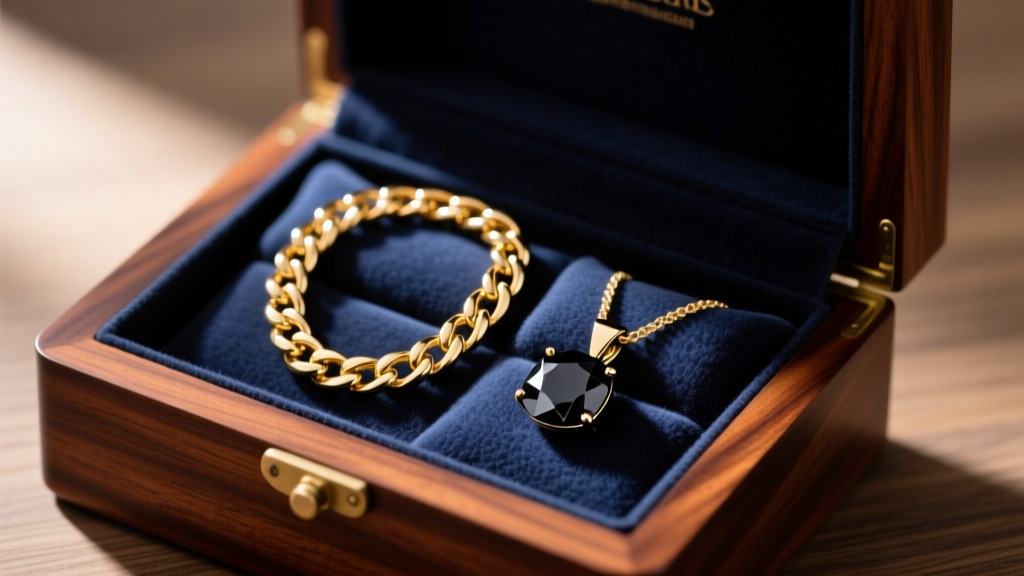
Proper Storage Protocols
How you store the necklace is just as critical as how you clean it. Black diamonds, while hard, can still chip if struck against other diamonds. Furthermore, heavy gold chains can easily tangle and scratch the polished surfaces of your pendants.
- Isolate the Piece: Never store your black diamond necklace in a communal jewelry box where it can rub against white diamonds or sapphire rings. Diamonds will scratch gold and other gems.
- Use Anti-Tarnish Flannel: Store the necklace in a treated anti-tarnish flannel pouch (such as Pacific Silvercloth). These fabrics are impregnated with microscopic silver particles that absorb sulfur and hydrogen sulfide gases from the air, preventing the copper alloys in your gold chain from tarnishing.
- Hang or Lay Flat: If using a jewelry box, hang the chain on a dedicated velvet hook to prevent the links from kinking. If laying it flat, ensure the chain is fully extended and the pendant is resting on a soft, untextured surface.
Conclusion
The Patrick Mahomes black diamond necklace represents a pinnacle of modern sports jewelry, blending aggressive aesthetics with high-end gemology. However, the very traits that make black diamonds so visually striking—their polycrystalline structure and potential treatments—make them uniquely vulnerable to improper care. By abandoning harsh ultrasonic machines and chemical cleaners in favor of gentle, distilled-water-based protocols, you ensure that your custom piece remains as bold, brilliant, and iconic as the quarterback who inspired it. For more detailed insights on gemstone-specific maintenance, resources like JewelryWise offer excellent foundational guidelines to supplement your care routine.


