Why Is Your Necklace Turning Green? Metal Alloys & Skin Chemistry
Learn why your necklace turning green happens. We compare copper, brass, and silver alloys, explain skin chemistry, and share expert prevention tips.

The Chemistry Behind a Necklace Turning Green
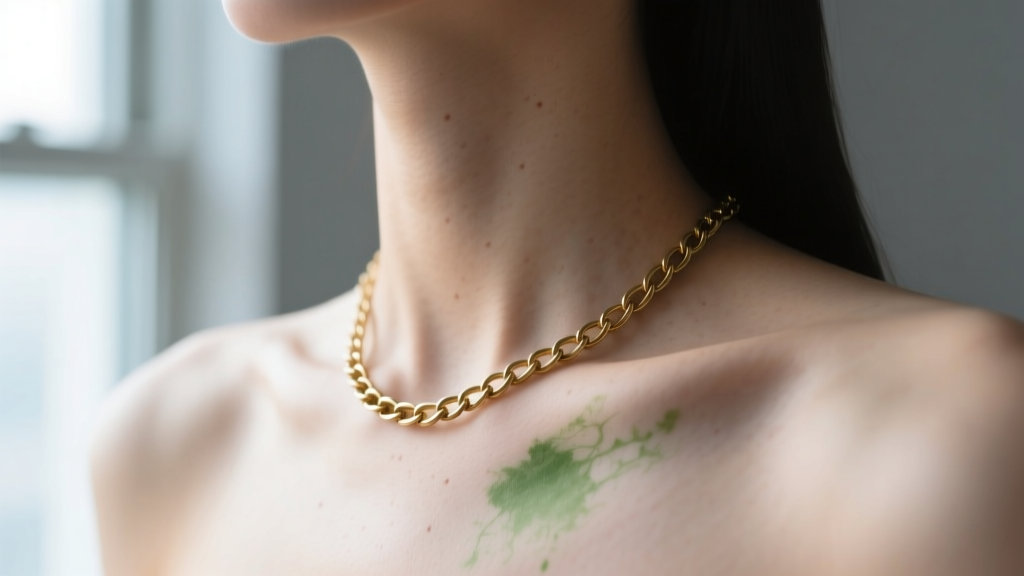
Few jewelry experiences are as frustrating as removing your favorite pendant only to discover a vivid green ring stained across your collarbone. When a necklace turning green becomes a daily reality, it is rarely a sign of a toxic defect or a severe allergy. Instead, it is a predictable chemical reaction known as chelation and oxidation. Understanding this process requires a deep dive into metallurgy, specifically how base metals interact with the unique microclimate of human skin.
The primary culprit behind green skin is copper. When copper is exposed to oxygen, moisture, and the chlorides or lactic acids present in human sweat, it undergoes a chemical transformation. The reaction produces copper chloride (CuCl2) and copper carbonate, both of which manifest as a distinct green powdery residue. This residue is then transferred directly onto the epidermis, creating the illusion that the metal itself is bleeding color. According to the Gemological Institute of America (GIA), this reaction is entirely surface-level and poses no systemic health risk, though it is highly undesirable for aesthetic reasons.
Material Breakdown: Which Alloys Oxidize Fastest?
Not all jewelry metals are created equal. The likelihood of your jewelry oxidizing depends entirely on its elemental composition and the thickness of its protective outer layers. Here is how the most common necklace materials perform under daily wear conditions.
Copper and Brass: The Primary Offenders
Pure copper is rarely used in structural jewelry due to its malleability, but it is the foundational element in brass and bronze. Standard cartridge brass (Alloy C26000) consists of 70% copper and 30% zinc. Because the copper content is so high, brass necklaces will almost universally turn the skin green within hours of contact with acidic sweat. Bronze (typically 88% copper and 12% tin) behaves similarly, though the tin slightly slows the oxidation rate.
Sterling Silver: The 7.5% Copper Problem
Many consumers are shocked when their sterling silver leaves a green mark. By definition, sterling silver is an alloy containing 92.5% pure silver and 7.5% secondary metals—almost always copper. While the silver itself is highly stable, the 7.5% copper content is enough to cause green staining on individuals with highly acidic skin pH. Furthermore, silver reacts with sulfur in the environment to form silver sulfide (black tarnish), meaning a neglected sterling silver chain can leave a murky green-black smudge on the skin.
Gold Plated vs. Gold Vermeil
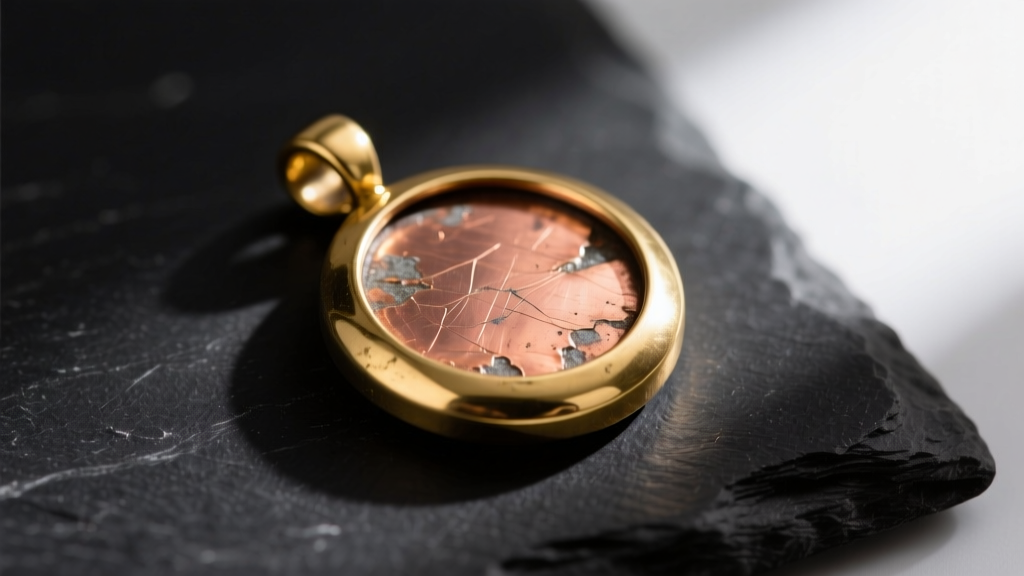
Gold itself is completely inert and will never turn your skin green. However, gold-plated jewelry features a microscopic layer of gold (often less than 0.5 microns thick) electroplated over a brass or copper base. Once this thin layer wears away from friction against the neck, the raw brass is exposed to sweat, triggering rapid oxidation. Gold vermeil, by contrast, requires a base of sterling silver and a gold thickness of at least 2.5 microns. While vermeil is vastly superior to standard plating, the sterling silver base still contains that 7.5% copper, meaning green stains can still occur once the gold layer eventually breaches.
Comparative Data: Oxidation Rates & Lifespan
To make informed purchasing decisions, it is crucial to understand how different metal grades hold up against daily skin contact. The table below outlines the expected performance of common necklace materials.
| Metal / Alloy | Composition | Oxidation Risk | Skin Reaction |
|---|---|---|---|
| Pure Copper | 99.9% Cu | Extreme | Heavy Green |
| Brass (C260) | 70% Cu, 30% Zn | High | Green / Blue-Green |
| Sterling Silver | 92.5% Ag, 7.5% Cu | Moderate | Light Green / Black |
| Gold Vermeil | Silver base, 2.5µm Au | Low to Moderate | None (until worn) |
| Solid 14k Gold | 58.5% Au, Ag/Cu/Zn | Very Low | None |
| Titanium (Gr 23) | Ti-6Al-4V ELI | None | None |
The Role of Skin Chemistry and Environment
Why does a brass necklace turn one person's skin green in an hour, while another person can wear the exact same chain for weeks without issue? The answer lies in individual skin chemistry and environmental exposure.
- Skin pH Levels: The natural pH of human skin ranges from 4.7 to 5.75. Individuals with a more acidic skin profile (closer to 4.7) will break down copper alloys significantly faster. Diet, hydration, and stress can all temporarily lower skin pH, increasing acidity.
- Sebum and Lotions: The natural oils (sebum) produced by the sebaceous glands on your chest and neck trap metal ions. Furthermore, body lotions containing zinc oxide, sulfur, or alpha-hydroxy acids (AHAs) act as catalysts, accelerating the corrosion of the metal surface.
- Environmental Sulfur: Urban environments with higher levels of airborne sulfur dioxide, or coastal areas with high salt content, will cause silver and copper alloys to tarnish and oxidize at an expedited rate, even when the jewelry is just sitting on a vanity.
Expert Prevention & Maintenance Framework
If you already own a piece of jewelry that you love, but it suffers from oxidation, you do not necessarily have to throw it away. Jewelers and metallurgists utilize specific barrier methods to halt the chelation process entirely.
The Clear Nail Polish Myth vs. Jeweler's Lacquer
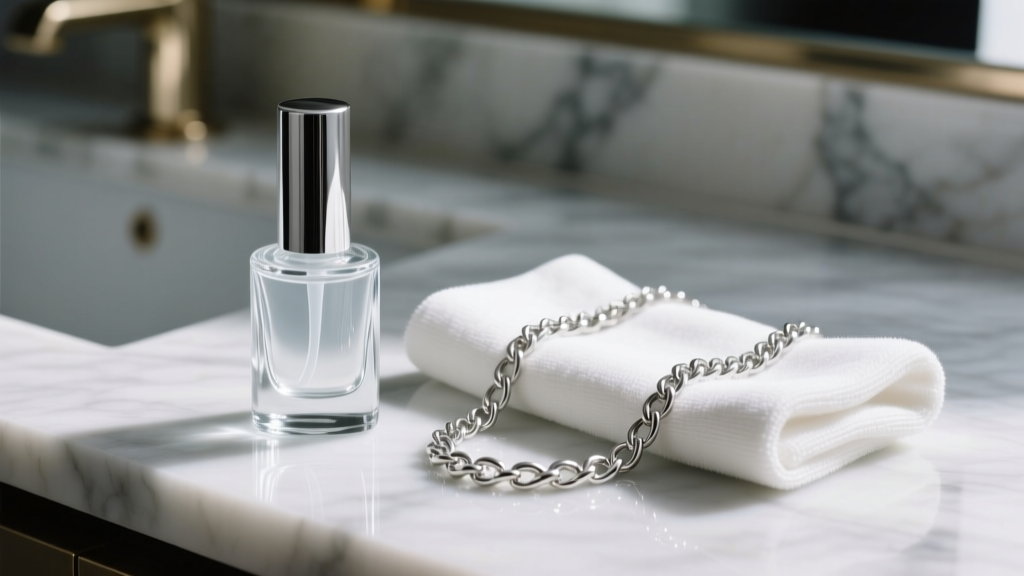
A common internet hack suggests painting the back of a pendant with clear nail polish. While this provides a temporary physical barrier, standard nitrocellulose nail polish yellows, chips, and degrades rapidly when exposed to skin oils and UV light. Instead, professionals use copolymer-based protective coatings like ProtectaClear or Everbrite. These specialized jeweler's lacquers are self-leveling, completely invisible, and formulated to withstand the acidic environment of human skin without peeling.
Rhodium Plating
For sterling silver and white gold pieces, rhodium plating is the industry standard for preventing both tarnish and green skin. Rhodium is a platinum-group metal with a Vickers Hardness (HV) of roughly 800, making it incredibly scratch-resistant. A standard rhodium flash of 0.75 to 1.0 microns creates an impenetrable, brilliantly white barrier that completely seals the copper content inside the sterling silver away from your skin.
Hypoallergenic Alternatives That Never Turn Green
If you want to eliminate the risk of oxidation entirely, you must invest in metals that are inherently inert. When shopping for permanent jewelry or daily-wear pendants, look for these specific material grades:
- Implant-Grade Titanium (ASTM F136 / Grade 23): Unlike commercial pure titanium, Grade 23 (Ti-6Al-4V ELI) contains no nickel or reactive base metals. It is the exact alloy used in medical implants and will never oxidize, tarnish, or turn your skin green, regardless of your sweat chemistry.
- Niobium: A highly reactive element that forms a stable, inert oxide layer the moment it is exposed to air. This layer prevents any further corrosion, making niobium an excellent, lightweight choice for sensitive skin.
- Solid 18k and 24k Gold: While 14k gold contains enough copper and zinc to occasionally cause reactions in highly acidic individuals, 18k gold (75% pure gold) and 24k gold (99.9% pure) are virtually immune to causing green stains. 24k is too soft for durable chains, making 18k the ultimate sweet spot for luxury, non-reactive daily wear.
'A green stain is not a sign of cheapness or toxicity; it is simply a chemical conversation between copper and your unique biology. By understanding the alloy composition, you can curate a collection that remains as pristine as the day you bought it.' — Master Jeweler & Metallurgist
Ultimately, preventing your necklace turning green comes down to material literacy. By avoiding high-copper brass in favor of thick vermeil, rhodium-plated sterling, or inert titanium, you can enjoy your jewelry without the unsightly aftermath.


