Complete Care and Cleaning Guide for an Eeyore Necklace
Discover expert cleaning and maintenance tips for your Eeyore necklace. Learn how to protect enamel, prevent silver tarnish, and preserve plating.

Understanding the Anatomy of Your Eeyore Necklace
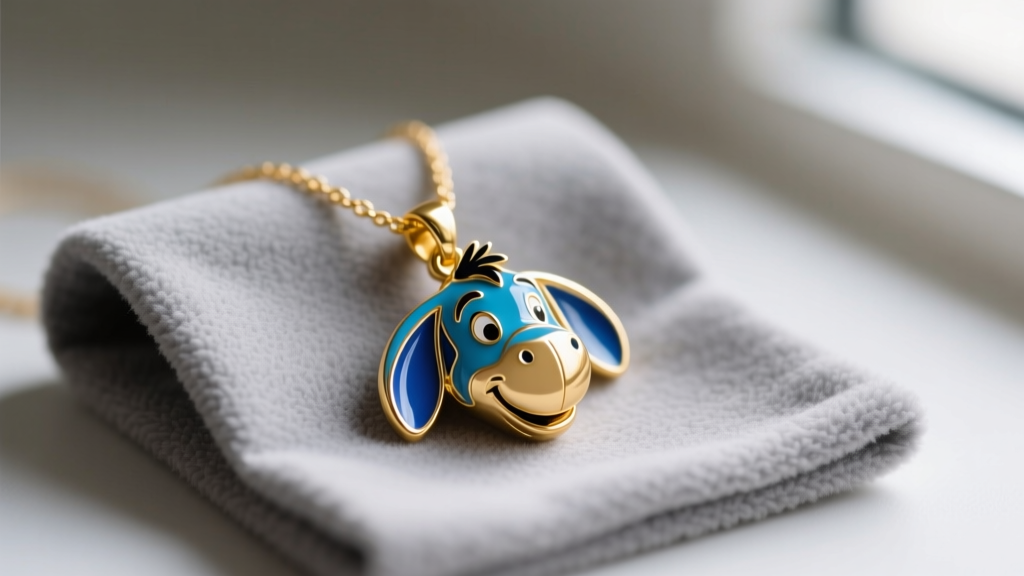
When it comes to character-inspired jewelry, an Eeyore necklace is a timeless staple that blends whimsical charm with everyday wearability. However, maintaining the pristine condition of this specific pendant requires a nuanced understanding of its material anatomy. Most high-quality Eeyore necklaces produced in recent years feature a base of .925 sterling silver or brass, heavily plated with 14k gold vermeil or rhodium. The iconic blue and gray tones of the character are typically achieved through either vitreous (kiln-fired) enamel or cold epoxy resin. Furthermore, the recessed areas of the silver are often treated with liver of sulfur to create an oxidized, antiqued finish that highlights the intricate engraving of Eeyore's mane and facial expressions.
Because your necklace is a composite of disparate materials—each with its own Mohs hardness scale rating and chemical sensitivities—a one-size-fits-all approach to jewelry cleaning will inevitably lead to damage. According to the Gemological Institute of America (GIA), treating enameled and plated jewelry with standard silver dips or abrasive polishes is one of the most common causes of irreversible surface degradation. To keep your pendant looking its best in 2026 and beyond, you must adopt a targeted, multi-step maintenance protocol.
The Dangers of Standard Ultrasonic and Steam Cleaners
Many collectors make the fatal mistake of tossing their pendants into ultrasonic cleaners, assuming that the high-frequency vibrations will safely dislodge dirt from the pendant's crevices. Ultrasonic cleaners operate by creating microscopic cavitation bubbles in a liquid solution, which implode and generate intense localized shockwaves. While this is excellent for removing grime from a plain diamond solitaire, it is catastrophic for an Eeyore necklace.
If your pendant features cold epoxy enamel, the shockwaves can cause micro-fractures in the resin, leading to peeling and delamination from the metal backing. If the piece utilizes vitreous enamel (which is essentially fused glass), the vibrations can shatter the glass entirely. Similarly, steam cleaners expose the jewelry to sudden, extreme temperature fluctuations. Because metal and enamel expand and contract at different rates, steam can cause the enamel to pop out of its metal bezel settings. Always rely on manual, gentle cleaning methods for character pendants.
The Proper Wet-Cleaning Protocol
Step 1: The Soak
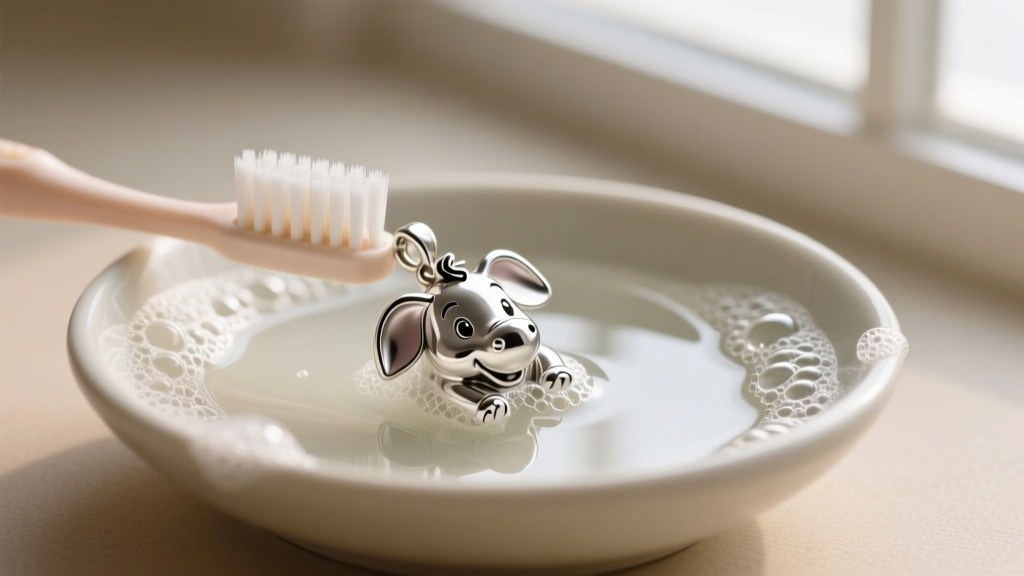
Begin by preparing a lukewarm bath—ideally around 85°F (29°C)—using distilled water and a single drop of mild, phosphate-free dish soap. Avoid hot water, as it can soften cold enamel resins over time. Submerge the Eeyore pendant and its chain for no more than three to five minutes. This brief soak is sufficient to loosen body oils, lotions, and environmental dust without compromising the structural integrity of the plating or the enamel adhesion.
Step 2: The Agitation
Remove the necklace from the bath and use an extra-soft baby toothbrush to gently agitate the surface. Do not use a standard adult toothbrush, as the stiffer nylon bristles can leave microscopic scratch patterns on the gold vermeil or rhodium plating. Focus the bristles on the intricate crevices around Eeyore's ears and the small bow detail, using light, circular motions.
Step 3: The Rinse and Dry
Rinse the necklace thoroughly under a gentle stream of lukewarm distilled water to remove all soap residue. Tap water contains chlorine and trace minerals that can leave stubborn water spots or accelerate tarnishing. To dry, pat the piece gently with a lint-free microfiber cloth. Finally, use a hairdryer on the 'cool' setting to blow air into the deepest crevices, ensuring no hidden moisture remains to cause localized oxidation.
Preserving Oxidized and Antiqued Finishes
Eeyore's naturally melancholic aesthetic is perfectly complemented by darkened, oxidized silver details. Jewelers achieve this look by intentionally applying sulfur compounds to the sterling silver, creating a layer of black silver sulfide in the recessed areas. You must never use liquid silver dips (such as Tarn-X) or abrasive silver polishing pastes on an oxidized Eeyore necklace. These chemical strippers will dissolve the intentional patina, leaving the pendant looking flat, bright white, and stripped of its three-dimensional depth.
Instead, use a dry, untreated microfiber polishing cloth to gently buff only the raised, high-polish areas of the metal. If the oxidation begins to fade naturally over years of wear, you can have a professional jeweler re-apply a liver of sulfur treatment to restore the original contrast.
Material-Specific Maintenance Chart
To help you navigate the specific needs of your necklace's components, refer to the following maintenance matrix recommended by the Jewelers of America:
| Material Component | Safe Cleaning Agent | Strictly Avoid | Maintenance Frequency |
|---|---|---|---|
| Cold Epoxy Enamel | Mild dish soap, lukewarm water | Ultrasonic cleaners, alcohol, acetone | Monthly |
| 14k Gold Vermeil Plating | Phosphate-free soap, microfiber cloth | Silver dips, toothpaste, hard bristles | Bi-weekly |
| Oxidized Sterling Silver | Dry untreated polishing cloth | Liquid tarnish removers, steam | As needed |
| Micro-Pave Crystal Accents | Soft brush, distilled water rinse | Heavy oils, ultrasonic cavitation | Monthly |
Chain Care and Clasp Mechanics
The chain and clasp of your Eeyore necklace require their own specific attention. Most of these pendants are suspended on a 16-to-18-inch cable or rolo chain, typically 1.2mm in thickness, secured by a 5mm or 6mm lobster clasp. The lobster clasp contains a tiny internal steel spring and a microscopic pivot pin. Over time, cosmetic lotions, perfume oils, and dead skin cells can gum up this spring mechanism, causing the clasp to stick or fail to close completely.
To maintain the clasp, use a cotton swab dipped in a tiny amount of isopropyl alcohol to clean the exterior crevices of the lever. If the lever feels stiff, apply a microscopic drop of lightweight mineral oil to the pivot pin using a sewing needle, then work the lever back and forth to distribute the lubricant. Wipe away any excess oil immediately to prevent it from attracting dust.
Advanced Storage Solutions for 2026
How you store your Eeyore necklace when it is not being worn is just as critical as how you clean it. Sterling silver tarnishes when it reacts with hydrogen sulfide in the ambient air. To combat this, abandon traditional cardboard jewelry boxes; cardboard contains sulfur compounds and acidic adhesives that actually accelerate the tarnishing process.
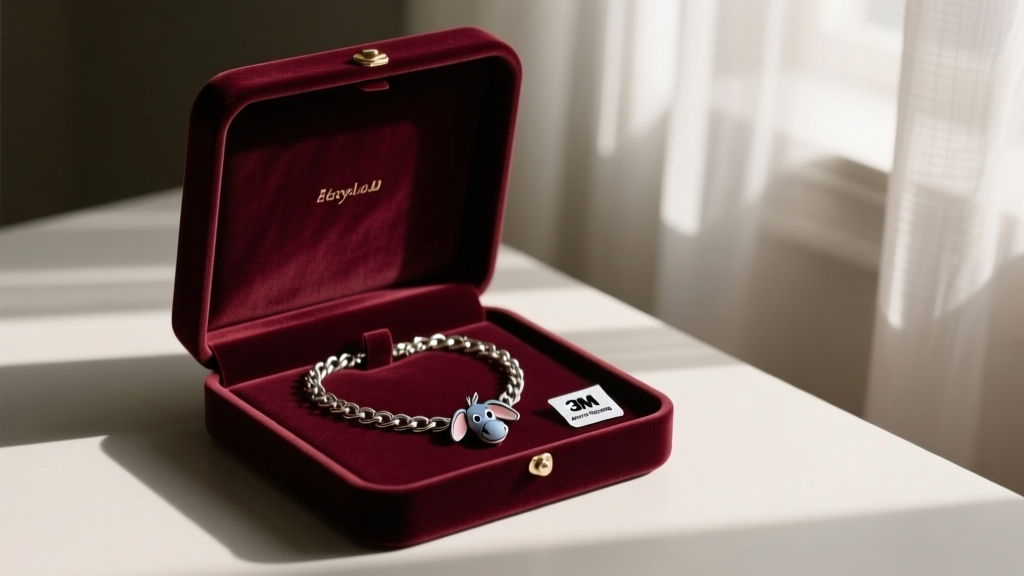
Instead, store your necklace in an airtight polyethylene zip-lock bag alongside a 3M anti-tarnish strip. These strips utilize Intercept Technology, a reactive copper-polymer matrix that permanently neutralizes corrosive gases in the enclosed micro-environment. For added protection against humidity, include a small, color-indicating silica gel packet in the bag. Always store the necklace laid flat or hung vertically to prevent the delicate 1.2mm chain from knotting, which can cause stress fractures at the solder points of the individual links.
Common Mistakes to Avoid
- Using Toothpaste: Toothpaste contains hydrated silica, an abrasive that will permanently scratch gold vermeil and dull the glossy finish of the enamel.
- Wearing in Pools: Chlorine in swimming pools reacts violently with the copper alloys in sterling silver, causing structural weakening and severe, irreversible discoloration.
- Applying Perfume Directly: Always put your necklace on after applying perfumes, hairsprays, and lotions. The high alcohol content in fragrances can degrade cold enamel resins and strip gold plating over time.
Final Thoughts
An Eeyore necklace is more than just a piece of pop-culture memorabilia; it is a composite work of jewelry art that requires informed, deliberate care. By abandoning harsh chemical dips and ultrasonic machines in favor of gentle, targeted cleaning protocols, you ensure that the vibrant enamels, intricate oxidized details, and delicate gold plating remain intact for decades. Treat your pendant with the respect its craftsmanship deserves, and it will continue to be a charming, pristine addition to your daily rotation.