How to Style, Layer, and Care for a Clam Shell Necklace
Learn how to style, layer, and maintain your clam shell necklace. Discover expert knotting techniques, silk thread grades, and neckline pairings.
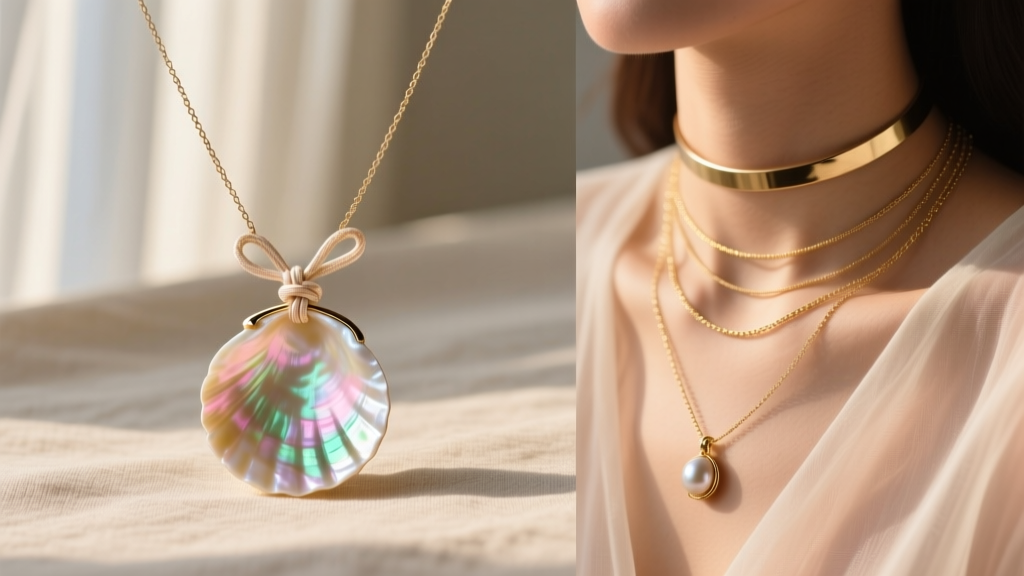
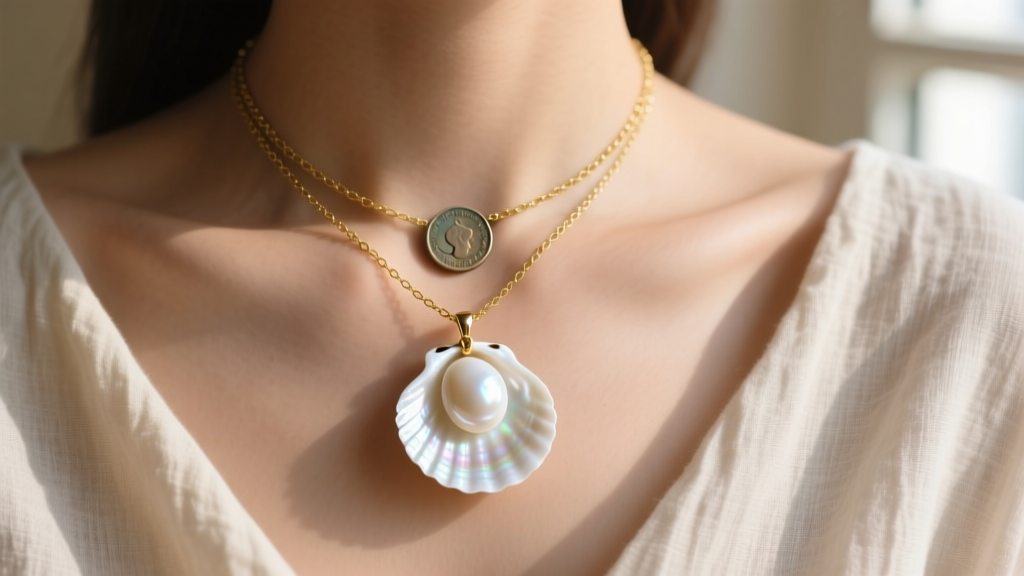
The clam shell necklace has transcended its seasonal bohemian roots to become a permanent fixture in the quiet luxury and organic texture movements of 2026. Whether you are wearing a single, high-polish Pinctada maxima pendant or a multi-strand choker of carved shell beads, these organic gems require specific styling strategies and rigorous care protocols. Unlike faceted stones, shells are porous, chemically sensitive, and structurally unique. This comprehensive guide will walk you through the exact steps to layer, restring, and preserve your clam shell jewelry.
The Anatomy of a High-Quality Clam Shell Necklace
Before styling, it is crucial to understand what you are wearing. Genuine high-end shell jewelry is typically carved from the thick, iridescent nacreous layers of saltwater oysters or large freshwater mussels. According to the Gemological Institute of America (GIA), organic gems like shell and pearl are primarily composed of calcium carbonate, which registers at a mere 2.5 to 3.0 on the Mohs hardness scale. This means your clam shell necklace is highly susceptible to scratching, acid erosion, and structural degradation if improperly handled.
Identifying Shell Grades
- South Sea White Shell: Harvested from the Pinctada maxima oyster, offering a brilliant, pearlescent white finish with subtle pink or silver overtones. Ideal for minimalist pendants.
- Tahitian Black-Lip Shell: Sourced from Pinctada margaritifera, featuring dark, moody gradients of peacock green, aubergine, and charcoal. Perfect for evening wear and mixed-metal layering.
- Freshwater Mussel Shell: Often dyed or bleached, generally thicker but less naturally iridescent. Commonly used for carved cameos or chunky bead strands.
Step-by-Step Guide: Layering Your Clam Shell Necklace
Layering organic textures with refined metals creates the balanced, curated aesthetic dominating current jewelry trends. Follow this three-step framework to build a cohesive stack that prevents physical damage to the shell.
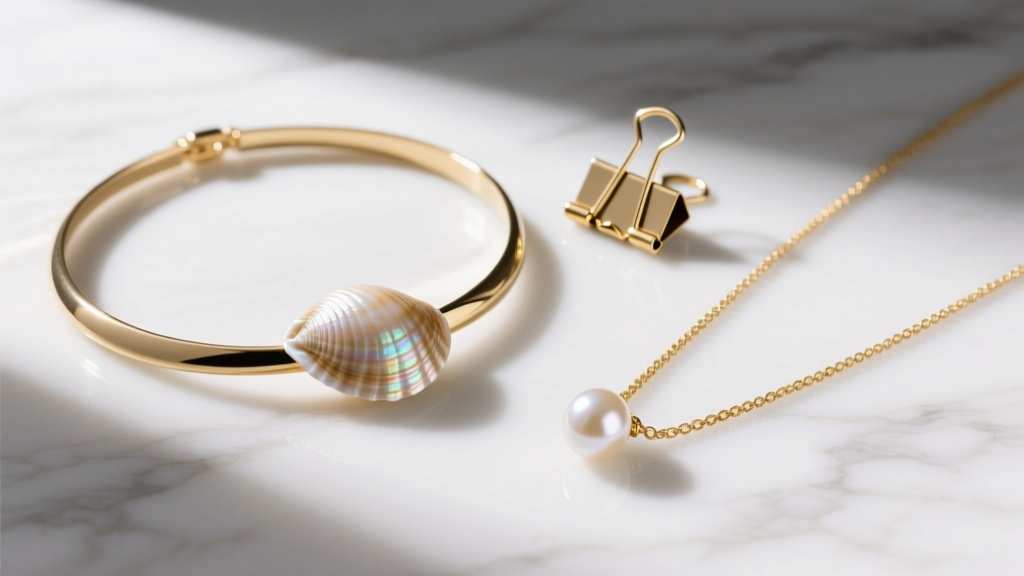
Step 1: Establish the Base Length and Weight
Start with your clam shell necklace as the foundational piece. If it is a 16-inch choker featuring a single, heavy carved shell pendant, it should sit directly on the collarbone. Ensure the bail (the loop connecting the shell to the chain) is lined with a protective metal sleeve; bare wire rubbing against the soft calcium carbonate drill hole will eventually saw through the shell over time.
Step 2: Introduce Metallic Contrast
For the second layer, select an 18-inch or 20-inch chain in a contrasting metal. A 14k gold vermeil paperclip chain or a oxidized sterling silver rope chain provides the necessary visual weight to anchor the delicate, translucent nature of the shell. Keep the second chain relatively lightweight (under 3mm in width) so it does not physically strike and chip the shell pendant during movement.
Step 3: Anchor with a Third Texture
Complete the stack at 24 inches with a complementary organic material, such as a single freshwater pearl pendant or a smooth lapis lazuli coin. This draws the eye vertically and frames the clam shell necklace as the undisputed focal point of the décolletage.
How to Restring and Knot a Clam Shell Necklace
One of the most common failure modes for shell bead necklaces is strand breakage. The edges of drilled shell beads are microscopically sharp and act like tiny knives against standard nylon or steel beading wire. To prevent catastrophic snapping, a genuine clam shell bead necklace must be strung on 100% silk thread with a knot placed between every single bead. Resources like Fire Mountain Gems emphasize that silk provides the necessary flexibility and softness to protect organic beads.
Tools Required for Professional Restringing
- Size F or G 100% silk beading thread (approx. 0.35mm - 0.40mm diameter)
- Twisted wire beading needle
- Beading awl or knotting tool
- Organic, solvent-free jeweler's cement
The Step-by-Step Knotting Process
- Prepare the Thread: Cut a length of silk thread roughly three times the desired finished length of the necklace. Thread the twisted wire needle and fold the silk in half, creating a double-strand loop.
- String and Position: Slide your first clam shell bead onto the thread. Push it down to the clasp loop.
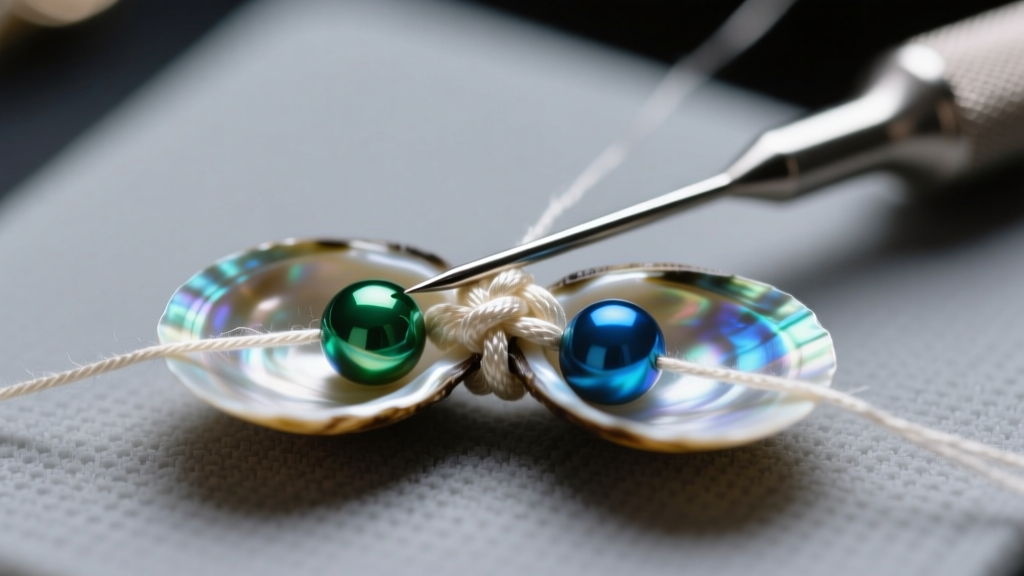
- Form the Overhand Knot: Cross the right thread over the left to form a simple loop. Before pulling it tight, use the tip of your beading awl to slide the knot down until it rests flush against the edge of the shell bead.
- Tighten and Seal: Pull the silk taut using the awl to ensure the knot is microscopic and tight. Apply a microscopic drop of jeweler's cement to the knot to prevent unraveling.
- Repeat: Continue this process, ensuring no gap exists between the knot and the shell. This prevents shell-on-shell abrasion, which will dull the nacreous finish over time.
Clam Shell Necklace Care and Maintenance Protocol
Because calcium carbonate is highly reactive to acids, your daily habits can permanently etch or dissolve the surface of your clam shell necklace. Sweat (which contains lactic acid), perfumes, and household cleaners are the primary enemies of organic jewelry.
| Care Category | Recommended Action | Strictly Avoid |
|---|---|---|
| Cleaning | Wipe gently with a damp, lint-free microfiber cloth after every wear. | Ultrasonic cleaners, steamers, or soaking in water. |
| Chemical Exposure | Put your necklace on after applying cosmetics and fragrances. | Contact with chlorine, vinegar, citrus juices, and hairspray. |
| Storage | Store flat in a breathable cotton pouch away from direct sunlight. | Storing in airtight plastic bags (causes dehydration and cracking). |
| Physical Wear | Wear over soft fabrics like silk, linen, or fine cotton. | Wearing over rough wool or heavy zippers that can scratch the nacre. |
Neckline Pairing Framework
The visual impact of a clam shell necklace is heavily dictated by the garment it rests upon. To maximize the iridescence of the shell, contrast is key.
Styling Rule of Thumb: Never pair a white clam shell pendant with a stark white t-shirt. The lack of contrast washes out the subtle pink and silver overtones of the nacre. Instead, opt for deep charcoal, navy, or warm terracotta fabrics to make the organic gem visually pop.
For V-necklines, a single 18-inch clam shell pendant perfectly mirrors the geometric angle of the collar, elongating the neck. For boat necks or crew necks, a multi-strand 16-inch shell choker provides a structured, high-fashion boundary that frames the face without competing with the garment's hem. By understanding the material science and styling geometry of your jewelry, you ensure your clam shell necklace remains a pristine, eye-catching heirloom for decades to come.