How Do You Keep Necklaces From Tangling? Pro Storage & Travel Hacks
Discover how do you keep necklaces from tangling with expert storage, travel, and material-specific care tips to protect your fine and fashion jewelry.

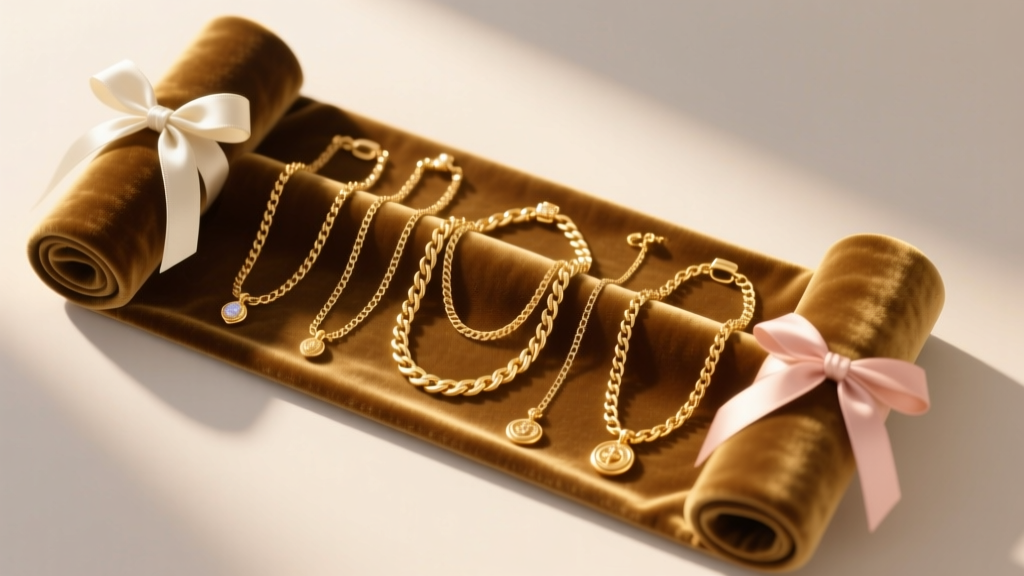
There are few things more frustrating in a jewelry lover's morning routine than reaching for a favorite pendant, only to pull out a tightly wound bird's nest of metal. If you have ever found yourself asking, how do you keep necklaces from tangling in the first place, you are not alone. The answer lies at the intersection of material science, chain geometry, and strategic storage.
While tossing your jewelry into a communal dish might seem harmless, the physics of chain weaves dictate that certain necklaces are practically magnets for knots. In this comprehensive guide, we break down the mechanics of chain tangling, provide material-specific care instructions, and share professional-grade storage hacks to keep your collection pristine, whether you are at home or packing for a trip in 2026.
The Science of Chain Tangles: Why Certain Weaves Knot Faster
To understand how to prevent tangles, you must first understand why they happen. Tangling is driven by friction, electrostatic attraction, and the structural geometry of the chain links. Chains with high fluidity and flat profiles easily fold in on themselves, creating complex knots that tighten under their own weight.
According to research in knot theory and material physics, the threshold for a spontaneous knot increases dramatically when a chain's length exceeds its bending stiffness. Fine chains (under 1.2mm in gauge) lack the rigidity to resist folding, making them prime candidates for severe tangling.
| Chain Weave | Structure Profile | Tangling Risk | Kinking Risk |
|---|---|---|---|
| Cable / Curb | Round, interlocking uniform links | Low | Very Low |
| Herringbone | Flat, fluid, interlocking short links | High | Extreme |
| Snake | Smooth, round, tightly joined bands | Medium | High |
| Rope | Twisted, spiral link pattern | Medium | Low |
| Box | Square, rigid geometric links | Very Low | Medium |
As the table illustrates, if you own a delicate 0.8mm herringbone or snake chain, your storage protocol must be far more rigorous than someone who exclusively wears heavy 3.0mm Cuban link chains.
At-Home Storage Solutions That Actually Work
When figuring out how do you keep necklaces from tangling in your bedroom or closet, the goal is to isolate each piece and restrict its range of motion. Here are the most effective, expert-approved methods for daily storage.
The Golden Rule: Always Fasten the Clasp
The most common cause of severe knotting is an open chain. When a lobster claw or spring ring clasp is left unfastened, the sharp edges and open loops act like microscopic hooks, catching on adjacent links or other jewelry. By simply closing the clasp—and ideally, securing it through the end ring—you create a continuous, closed loop that is mathematically less prone to forming complex slipknots.
The Straw Trick for Micro-Chains
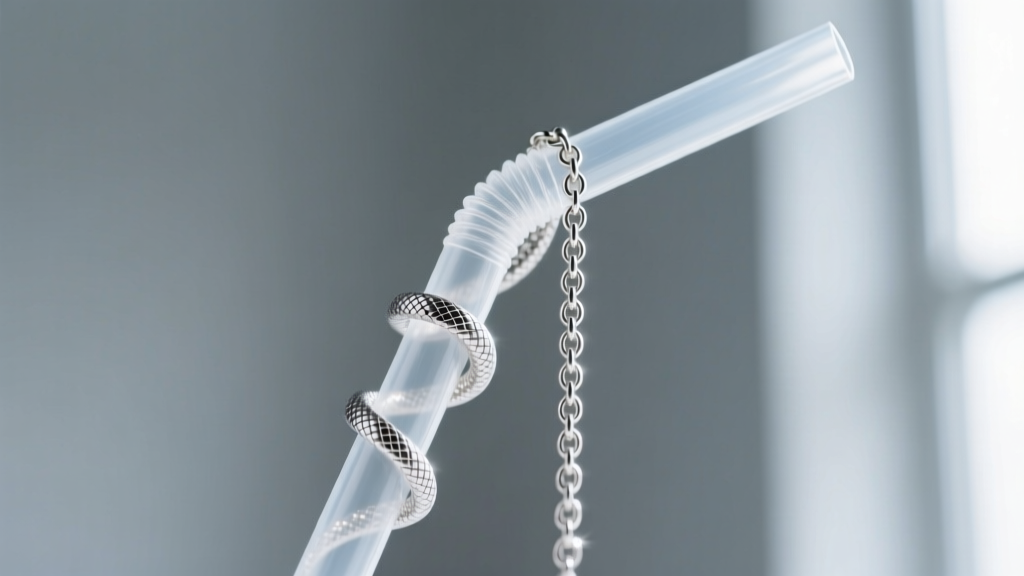
For ultra-fine chains (14k or 18k gold under 1.0mm), the straw method is a lifesaver. Unclasp the necklace, thread one end through a standard plastic or silicone drinking straw, and re-clasp it on the other side. The rigid cylinder of the straw prevents the chain from bending past its knotting threshold.
Velvet Roll-Ups vs. Compartmentalized Boxes
While traditional compartmentalized jewelry boxes work well for rigid pieces, they often fail for long, layered necklaces (20 to 24 inches). Velvet or suede roll-up organizers with individual snap-button ties are vastly superior. The soft nap of the velvet increases surface friction just enough to hold the chain in place, while the individual fabric ties prevent lateral movement during drawer opening and closing.
Pro Tip: Never store sterling silver necklaces in open-air velvet rolls without an anti-tarnish strip. The friction that keeps them from tangling will also accelerate micro-scratches and expose the silver to sulfur in the air, leading to rapid oxidation.
Travel Hacks: How Do You Keep Necklaces From Tangling on the Go?
Travel introduces vibration, shifting gravity, and cramped spaces—the perfect storm for jewelry knots. If you are wondering how do you keep necklaces from tangling in a suitcase, abandon hard-shell travel cases with shallow elastic bands; they rarely accommodate layered pendant necklaces.
The Cling Wrap Method
This is a favorite among professional jewelry stylists on set. Lay a sheet of plastic cling wrap flat on a table. Place your clasped necklaces parallel to each other, leaving an inch of space between them. Fold the bottom edge of the cling wrap over the bottom halves of the chains, then roll the entire sheet up like a jelly roll. The static cling and physical barrier of the plastic completely immobilize the chains, making it impossible for them to cross over one another in your carry-on.
Utilizing Pill Organizers for Pendants
If you are traveling with multiple detachable pendants or short chokers (14-16 inches), a weekly pill organizer is an ingenious, low-cost hack. The individual, snap-shut compartments are lined with smooth plastic that won't scratch high-polish metals, and the confined space physically prevents the chain from gathering enough momentum to knot.
Material-Specific Care: When Untangling Causes Damage
Not all metals react to tension and friction equally. When addressing tangles, you must consider the Vickers hardness (HV) of your specific metal alloy.
- 24k Gold and High-Purity Silver: These are exceptionally soft metals. A tight knot in a 24k gold chain can permanently stretch or snap the links if pulled with bare fingers. Always use a lubricant (detailed below) before attempting to untangle.
- 14k and 18k Gold / Platinum: These alloys possess higher tensile strength. While they resist snapping, aggressive pulling can warp the geometric alignment of box or herringbone weaves, causing permanent kinks that catch on clothing.
- Oxidized and Patina Finishes: If your sterling silver features deliberate blackened oxidation in the crevices of a rope chain, avoid aggressive rubbing or using liquid lubricants to untangle it, as this will strip the antique finish.
For authoritative guidelines on handling precious metal alloys and avoiding structural damage during cleaning and maintenance, always refer to the Gemological Institute of America (GIA) Jewelry Care standards.
Step-by-Step Guide to Safely Untangle a Severe Knot
Despite your best efforts, tangles happen. When they do, never pull the ends of the chain—this tightens the slipknot. Instead, follow this jeweler-approved protocol to reduce the friction coefficient and safely extract the knot.
- Lay it Flat: Place the tangled necklace on a hard, dark, non-porous surface like a slate coaster or a glass table. The dark background provides visual contrast to see the micro-links.
- Apply a Dry Lubricant: Dust the knot generously with talc-free baby powder, cornstarch, or jeweler's rouge. This dry lubricant penetrates the microscopic gaps between the links, eliminating metal-on-metal friction.
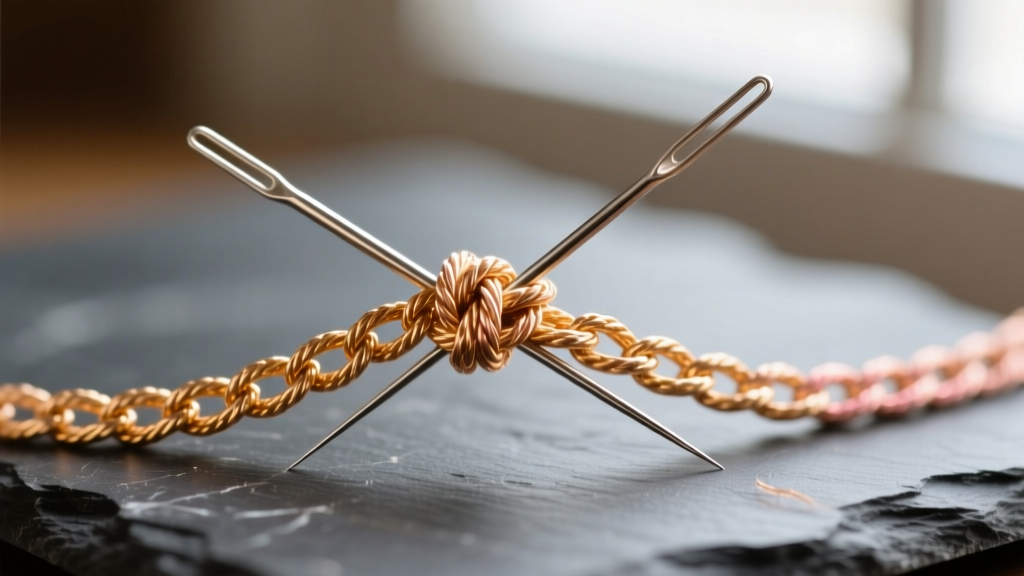
- Use Precision Tools: Do not use your fingernails. Instead, use two fine sewing needles (gauge 9 or 10) or specialized jeweler's prying tools. Gently insert the needle tips into the center of the knot and wiggle them in opposite directions to loosen the core tension.
- Work from the Outside In: Once the center is slightly loose, use the needles to push the outer loops inward toward the center, rather than pulling the chain ends outward.
Warning regarding liquid lubricants: While a drop of mineral oil or baby oil can loosen a stubborn knot, it is highly discouraged if your necklace features porous gemstones like pearls, turquoise, opals, or emeralds. Oil can seep into the stone's inclusions and permanently alter its color or structural integrity. For more on gemstone-specific vulnerabilities, consult the Jewelers of America Care Guide.
Conclusion
Mastering how do you keep necklaces from tangling requires a shift in how you view your jewelry: not just as accessories, but as intricate mechanical structures that require specific environmental controls. By matching your storage method to the chain's weave geometry, utilizing rigid barriers for travel, and employing dry lubricants for emergency detangling, you can extend the lifespan of your favorite pieces and ensure they are always ready to wear, knot-free.


