How to Keep Necklaces From Tangling When Traveling: Expert Guide
Learn how to keep necklaces from tangling when traveling with expert packing hacks, material-specific storage tips, and DIY detangling methods.

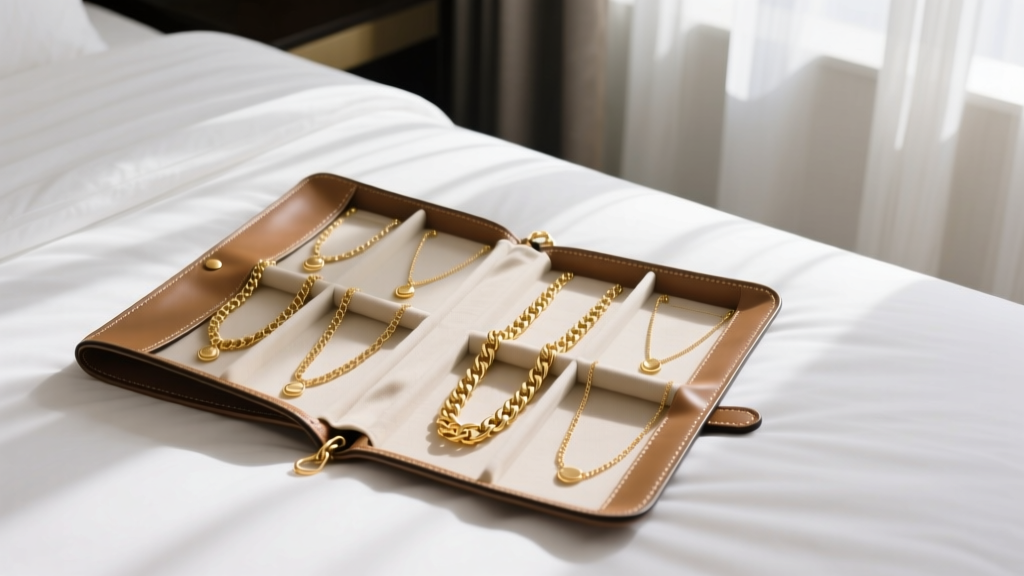
There are few things more frustrating to a jewelry lover than arriving at your destination, opening your travel pouch, and discovering a hopelessly knotted bird's nest of gold and silver chains. As travel becomes more dynamic in 2026, with weekend getaways and multi-city tours requiring efficient packing, mastering how to keep necklaces from tangling when traveling is an essential skill. The dreaded 'spaghetti effect' isn't just an annoyance; it can lead to permanent kinks, weakened links, and broken clasps.
In this comprehensive guide, we break down the physics of why chains tangle, explore material-specific storage protocols, and reveal the jeweler-approved hacks that guarantee your necklaces remain pristine from takeoff to touchdown.
The Physics of the 'Spaghetti Effect'
To prevent tangling, you must first understand why it happens. In 2007, physicists Dorian Raymer and Douglas Smith published a study on 'spontaneous knotting' that perfectly explains the plight of the traveling necklace. Their research proved that when a flexible string is confined in a small space and subjected to agitation (like a suitcase rolling through an airport), it will inevitably form complex knots within seconds.
The likelihood of knotting increases dramatically based on three factors:
- Chain Length: Chains between 18 and 24 inches are the most prone to spontaneous knotting.
- Agitation: The turbulence of transit provides the kinetic energy required for links to weave through one another.
- Friction and Weave: High-friction textures and highly fluid weaves catch and loop with alarming ease.
Chain Weave Vulnerabilities
Not all necklaces are created equal when it comes to travel. Understanding your chain's architecture is the first step in packing it safely:
- Herringbone and Snake Chains: These fluid, flat weaves are notoriously fragile. They don't just tangle; they kink. Once a herringbone chain kinks, the structural integrity of the links is permanently compromised.
- Rope Chains (0.9mm - 1.5mm): The twisted grooves of a fine rope chain act like tiny hooks, easily catching on their own links or other jewelry.
- Box and Cable Chains: These are the most travel-friendly. Their rigid, geometric links resist weaving through one another, though their clasps can still snag on pendants.
Pre-Packing Preparation: Clean and Secure
Before employing any storage method, proper preparation is non-negotiable. According to the Gemological Institute of America (GIA), storing jewelry with residual body oils, lotions, or perfumes accelerates tarnishing and attracts dust, which acts as an abrasive inside the chain links.
- Wipe Down: Use a clean, lint-free microfiber cloth to gently wipe the chain and pendant. For sterling silver, use a dedicated polishing cloth infused with anti-tarnish agents.
- Fasten the Clasp: Never pack an open chain. Fasten the clasp securely. If you are traveling with a necklace that has a faulty or loose spring-ring clasp, thread the clasp through the end jump ring before closing it to create a double-lock effect, or use a clear silicone earring back to secure the closure.
- Remove Pendants (If Possible): Heavy pendants act as pendulums during transit, swinging and forcing the chain to twist. If the pendant is detachable, remove it and pack it separately in a soft pouch.
Proven Storage Methods for Travel
Ditch the flimsy velvet drawstring bags that often come with jewelry purchases. They offer zero structural support. Instead, use these expert-approved immobilization techniques.
The Jeweler's Secret: Press 'n Seal Wrap
Master jewelers and high-end estate appraisers rarely use Ziploc bags for transport, as the air inside allows the jewelry to move. Instead, they use Glad Press 'n Seal.
The Method: Lay a sheet of Press 'n Seal flat on a table. Place your fastened necklace on the plastic, leaving a two-inch border. Press the plastic firmly around the chain to eliminate all air pockets, effectively 'laminating' the necklace. Fold the plastic over and seal the edges. This completely immobilizes the chain, making spontaneous knotting physically impossible.
The Straw Trick for Delicate Chains
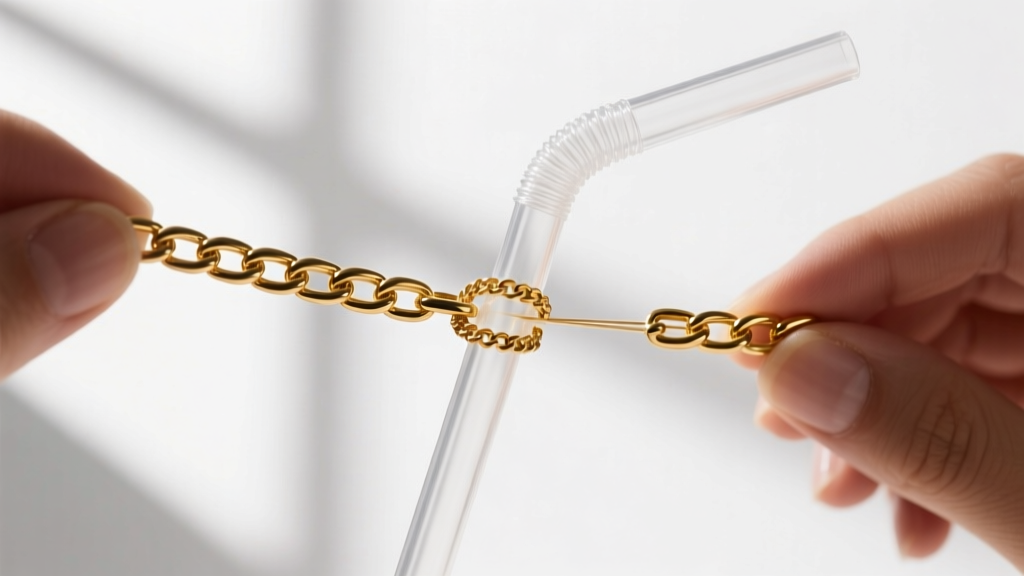
For standard cable or box chains, the plastic straw method is a classic, highly effective travel hack. Unclasp the necklace, thread one end of the chain through a standard drinking straw, and re-clasp it on the outside. The rigid plastic prevents the chain from bending sharply or looping back on itself. Note: Do not use this method for thick herringbone or omega chains, as forcing them through a straw will cause permanent damage.
Investing in a Hard-Shell Jewelry Case
If you travel frequently, a dedicated hard-shell jewelry case is worth the investment. Look for cases featuring snap-fastening interior flaps and individual, gusseted zippered pouches. Brands like Wolf and Tumi offer cases with anti-tarnish LusterLoc™ linings that protect silver pieces from the high humidity of tropical destinations.
Material-Specific Travel Considerations
How you pack is only half the battle; what you are packing dictates the environment it needs. Different metals and gemstones react differently to the micro-climates inside your luggage.
| Material | Travel Vulnerability | Expert Packing Protocol |
|---|---|---|
| Sterling Silver | Highly susceptible to rapid tarnishing from humidity and sulfur in the air. | Pack in an airtight zip-lock bag with a 3M anti-tarnish tab or a piece of Pacific Silvercloth. |
| Pearls & Opals | Require ambient moisture. Airtight plastic will dry them out, causing cracking or crazing. | Store in a soft, breathable silk pouch. Never pack alongside hard diamonds that can scratch their soft nacre. |
| 14k/18k Gold | Relatively stable, but prongs on diamond pendants can snag on other chains. | Use the Press 'n Seal method or individual felt slots in a jewelry roll to isolate prongs. |
| Platinum | Extremely durable and tarnish-resistant, but heavy chains can crush lighter jewelry. | Pack separately in a hard-shell compartment to prevent it from acting as a blunt weight. |
How to Safely Detangle Knotted Chains on the Go
Despite your best efforts, a knot may still occur. When it does, never pull the chain taut. Pulling tightens the knot and weakens the metal links, leading to micro-fractures. Instead, follow this professional detangling protocol recommended by Connoisseurs Jewelry Care:
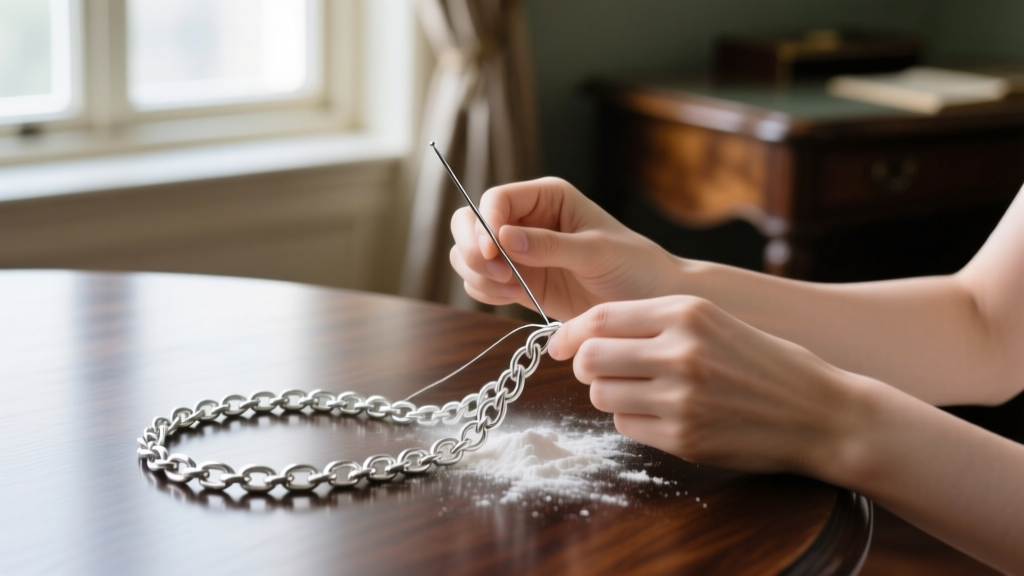
The Golden Rule of Detangling: Friction is your enemy. You must lubricate the knot before attempting to loosen it.
Step-by-Step Detangling Guide
- Find a Flat, Well-Lit Surface: Do not attempt to detangle a chain while holding it in the air. Lay it flat on a dark towel or a piece of paper to provide contrast.
- Apply Lubricant: Sprinkle a generous amount of baby powder, cornstarch, or a drop of baby oil directly onto the knot. This drastically reduces the friction between the metal links.
- Use Precision Tools: Do not use your fingers; they are too blunt and will only push the links tighter. Take two fine sewing needles, safety pins, or straight pins.
- Work from the Outside In: Insert the tips of the needles into the outermost loops of the knot. Gently wiggle the needles to create slack. Once a loop loosens, carefully pull the chain end through.
- Clean the Chain: Once detangled, wash the necklace with a few drops of mild dish soap and warm water to remove the baby powder or oil, then pat dry with a microfiber cloth.
Expert Tips for Long-Term Jewelry Travel
For those embarking on extended trips or relocations, consider the TSA and security implications of traveling with high-value necklaces. Always pack fine jewelry in your carry-on luggage, never in checked bags. If you must pass through security, request a private screening to avoid leaving your pieces in the unsecured, high-traffic plastic bins where they are easily snagged by other travelers' belongings or forgotten in the rush.
By understanding the mechanics of your chains, utilizing immobilization techniques like Press 'n Seal, and respecting material-specific needs, you can ensure that your necklaces remain as flawless and elegant as the day you bought them—no matter where your travels take you.


