A Beginner's Guide to the Michael the Archangel Necklace
Discover how to choose the perfect Michael the Archangel necklace. Learn about metals, chain styles, and symbolism in this beginner-friendly guide.

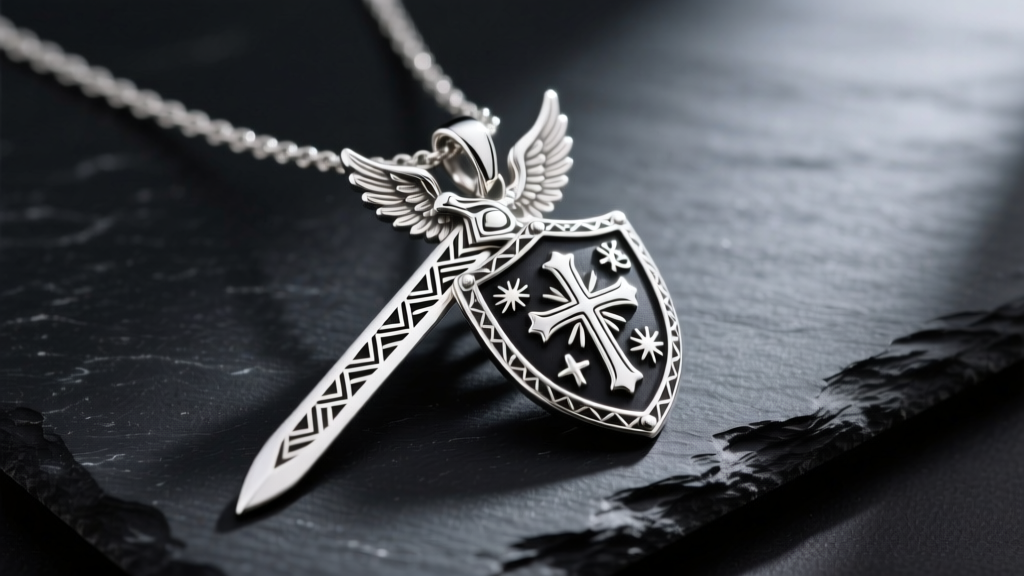
Whether you are buying a piece of devotional jewelry for yourself or searching for a meaningful gift for a loved one in the military, law enforcement, or a frequent traveler, a michael the archangel necklace is one of the most powerful and recognizable symbols of protection. But with thousands of options on the market ranging from $15 to $5,000, how do you separate high-quality craftsmanship from cheap, mass-produced trinkets?
In this beginner-friendly explainer, we will break down everything you need to know about choosing, sizing, and caring for a St. Michael medallion. We will cover specific metal grades, chain mechanics, and the structural failure points that most buyers overlook.
The Meaning Behind the Medallion
Before diving into metallurgy and chain weaves, it is essential to understand the gravity of the piece you are wearing. The imagery on a St. Michael pendant almost universally depicts the archangel stepping on a dragon or demon, wielding a sword or spear. This represents the ultimate triumph of good over evil. The Latin phrase often inscribed around the border, "Quis ut Deus?" translates to "Who is like God?"
"Saint Michael the Archangel, defend us in battle. Be our protection against the wickedness and snares of the devil..."
— The Prayer to St. Michael, traditionally worn or carried by those seeking spiritual armor.
Historically, St. Michael is recognized as the patron saint of warriors, first responders, and the sick. According to Encyclopedia Britannica, Michael's role as the commander of the heavenly host has made his image a staple on the armor and necks of soldiers dating back to the early Middle Ages. Today, wearing this necklace serves as both a public declaration of faith and a personal talisman for courage.
Decoding Metal Choices for Everyday Wear
The metal you choose dictates the necklace's longevity, maintenance requirements, and price point. Here is a deep dive into the three most common materials used for these pendants.
316L Surgical Stainless Steel
If you are on a budget or work in a physically demanding job where jewelry takes a beating, 316L stainless steel is your best option. Unlike standard 304 stainless steel, the 316L alloy contains molybdenum, which drastically increases its resistance to chlorides (like sweat and seawater). It will not tarnish, rust, or turn your skin green. Expect to pay between $25 and $60 for a solid, well-machined steel medallion.
925 Sterling Silver
Sterling silver is the traditional choice for devotional jewelry. It offers a brilliant, precious-metal luster that steel cannot replicate. However, silver reacts with sulfur in the air and on human skin, leading to tarnish. When buying, always look for the ".925" hallmark stamp, which guarantees the piece is 92.5% pure silver and 7.5% copper for structural strength. Authenticity is crucial, and you can verify precious metal standards through resources like the Assay Office London. Price range: $70 to $200.
14k Solid Gold (Yellow or White)
For a lifetime heirloom piece, 14k solid gold offers the perfect balance of rich color and everyday durability. Pure 24k gold is too soft for a detailed pendant that might get snagged or bumped, so it is alloyed with metals like zinc and copper to create 14k (58.3% pure gold). Avoid "gold-plated" or "gold-filled" brass if you want a piece that will survive decades of daily wear, as the plating will eventually wear off, exposing the base metal. Price range: $450 to $1,500+.
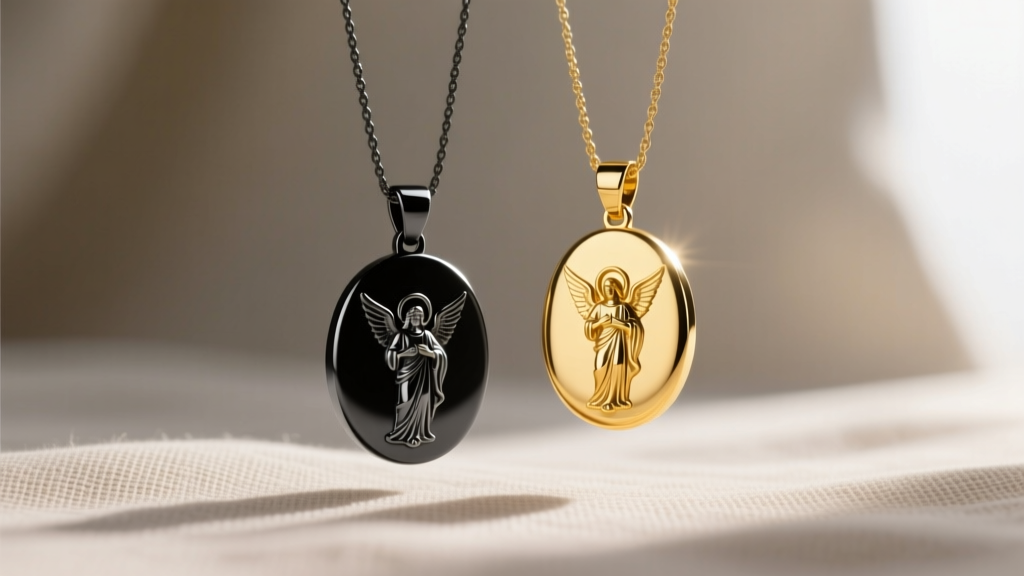
Matching the Chain to the Pendant
A common beginner mistake is pairing a heavy, solid-cast St. Michael medal with a weak, delicate chain. The pendant and chain must be balanced both visually and structurally.
- Rope Chains: The undisputed champion for heavy medallions. The twisted, woven links distribute weight evenly and are incredibly difficult to snap. They also hide dirt and skin oils well.
- Figaro Chains: Featuring a pattern of three short links followed by one long link, Figaro chains offer a classic, masculine aesthetic that pairs beautifully with round or oval St. Michael medals.
- Box Chains: While visually appealing and smooth, standard box chains are prone to kinking and can easily snap under the dynamic stress of a heavy pendant bouncing against the chest.
Sizing and Proportions: Getting the Fit Right
Proportion is the secret to jewelry that looks custom-made rather than hastily assembled. A pendant that is too small will get lost on a thick chain, while a massive medal on a thin chain will constantly flip over and strain the links.
| Pendant Diameter | Pendant Weight (Approx.) | Ideal Chain Width | Recommended Chain Length |
|---|---|---|---|
| 15mm - 20mm (Dime-sized) | 3g - 6g | 1.5mm - 2.5mm | 18" (Collarbone) or 20" (Chest) |
| 25mm - 30mm (Quarter-sized) | 8g - 14g | 3.0mm - 4.5mm | 20" (Chest) or 22" (Lower Chest) |
| 35mm - 45mm (Large/Statement) | 18g - 30g+ | 5.0mm - 7.0mm | 24" (Sternum) or 30" (Over-shirt) |
Common Buying Mistakes to Avoid
When shopping for a michael the archangel necklace, beware of these structural and material red flags:
1. The Open Jump Ring Failure
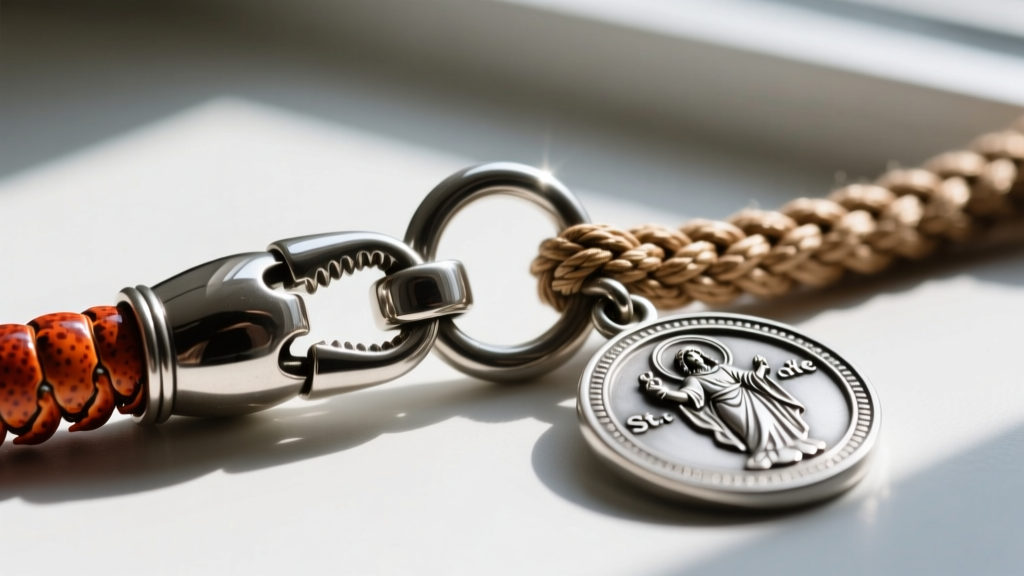
The jump ring is the small circular loop that connects the pendant to the chain. On cheap necklaces, this is an "open" ring with a tiny slit where the metal ends meet. A heavy St. Michael medal will pull this slit apart over time, resulting in a lost pendant. Always look for a soldered jump ring (where the slit is welded shut) or an integrated bail.
2. Hollow-Backed Medallions
To save on the cost of precious metals, some manufacturers hollow out the back of the pendant. While this lowers the price, hollow-back medals are highly susceptible to denting if you bump into a doorframe or drop them. They also trap water and soap in the shower, leading to skin irritation. Always opt for a solid-cast or flat-backed die-struck medal.
3. Oxidized Details in High-Friction Areas
Many silver pendants use "oxidization" (intentional blackening) to make the intricate details of the angel's wings and sword pop. If the pendant is highly domed and rubs constantly against your chest or shirt, this black detailing will wear off in a matter of months. Look for flat-faced medals or deep-set engravings where the oxidized areas are protected by raised borders.
Caring for Your Devotional Jewelry
Proper maintenance ensures your necklace remains a lifelong companion. For sterling silver, keep a treated jeweler's polishing cloth in your nightstand and give the piece a quick wipe once a week to remove sulfur buildup. Never use liquid silver dips on oxidized St. Michael medals, as the harsh chemicals will strip the intentional black detailing from the crevices, leaving the piece looking flat and washed out.
For stainless steel and solid gold, a simple soak in warm water with a few drops of mild dish soap, followed by a gentle scrub with a baby-soft toothbrush, will remove accumulated skin oils and lotion. Rinse thoroughly and pat dry with a microfiber cloth. By understanding the mechanics of chain weight, metal purity, and structural integrity, you can confidently select a michael the archangel necklace that honors its profound symbolism while standing up to the rigors of daily life.


