Navajo Coral Necklace Trends: Styling Heritage Jewelry in 2026
Discover 2026 styling trends for the authentic Navajo coral necklace. Learn to identify silverwork, grade coral, and layer heritage pieces.

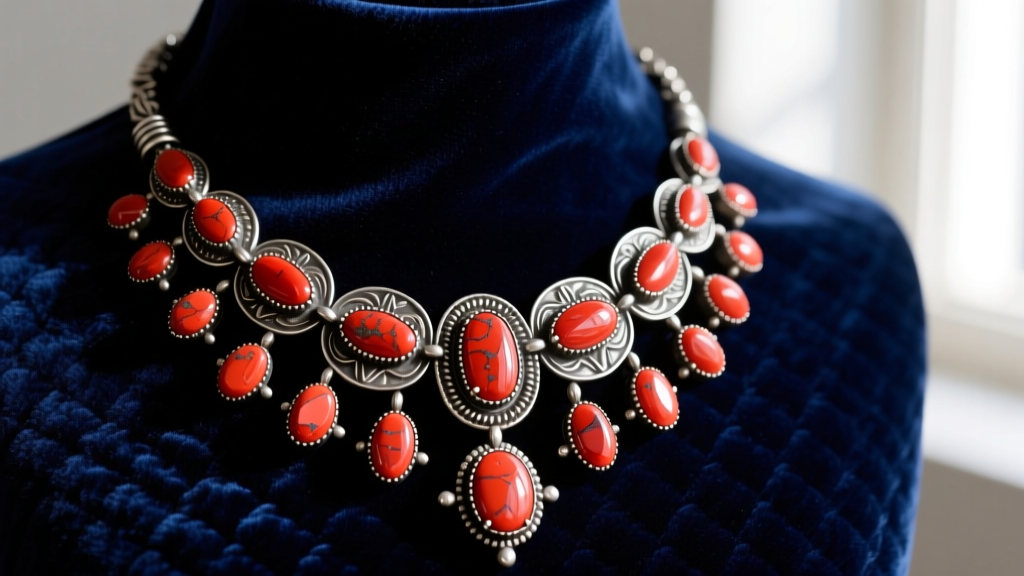
The 2026 Trend Shift: From Souvenir to Sartorial Anchor
The Navajo coral necklace has transcended its mid-century tourist-trade origins to become a cornerstone of contemporary high-fashion and heritage styling. In 2026, the jewelry market is experiencing a profound shift toward 'investment heritage'—pieces that carry historical weight, artisanal mastery, and organic material rarity. Rather than treating Southwestern jewelry as seasonal festival wear, modern collectors and style curators are integrating these masterworks into structured, minimalist wardrobes, allowing the intricate silverwork and vibrant organic gemstones to serve as the focal point of an outfit.
This resurgence is driven by a growing consumer demand for transparency, ethical sourcing, and slow fashion. A genuine Navajo coral necklace is not merely an accessory; it is a wearable archive of Diné (Navajo) silversmithing traditions, showcasing techniques passed down through generations. Understanding how to authenticate, grade, and style these pieces is essential for the modern collector who wishes to appreciate the art form while avoiding the pitfalls of mass-produced imitations.
Material Anatomy: Grading the 'Red Gold'
Coral is an organic gemstone, formed by marine polyps over decades. According to the Gemological Institute of America (GIA), the value of coral in Native American jewelry is dictated by its species, color saturation, and structural integrity. Historically, Navajo silversmiths utilized Mediterranean red coral (Corallium rubrum) acquired through European trade routes, prized for its deep, uniform oxblood hue and lack of internal pitting.
When evaluating a Navajo coral necklace, you must distinguish between three primary material categories:
- Natural Gem-Grade Coral: Untreated, highly polished cabochons with a glass-like luster and deep red saturation. This is the rarest and most expensive tier, often found in vintage masterworks or contemporary high-end commissions.
- Stabilized Coral: Lower-grade, porous branch coral that has been infused with a clear epoxy resin to harden it and enhance its color. While stabilization is an accepted practice in Southwestern jewelry to prevent cracking, it must be disclosed, and the piece should command a lower price point than natural coral.
- Reconstituted or Dyed Alternatives: Bamboo coral (naturally white or grey) that has been heavily dyed red and compressed. Often sold as 'block coral,' this material lacks the organic matrix of true precious coral and is considered a commercial-grade substitute.
Authenticity is paramount. Under the Indian Arts and Crafts Act, it is illegal to market jewelry as 'Navajo' or 'Native American' unless it is entirely crafted by a member of a federally recognized tribe. Always look for the artist's hallmark, typically stamped on the back of the Naja (the central crescent pendant) or the clasp.
Silverwork Signatures: Tufa, Stamp, and Repoussé
The silver setting is just as critical as the coral. Vintage pieces (pre-1960s) were often forged from coin silver (.900 purity), which was melted down from US silver dollars. Coin silver has a slightly warmer, softer tone and develops a rich, dark patina over time. Modern pieces are predominantly crafted from .925 sterling silver, which offers greater tensile strength for intricate stone setting.
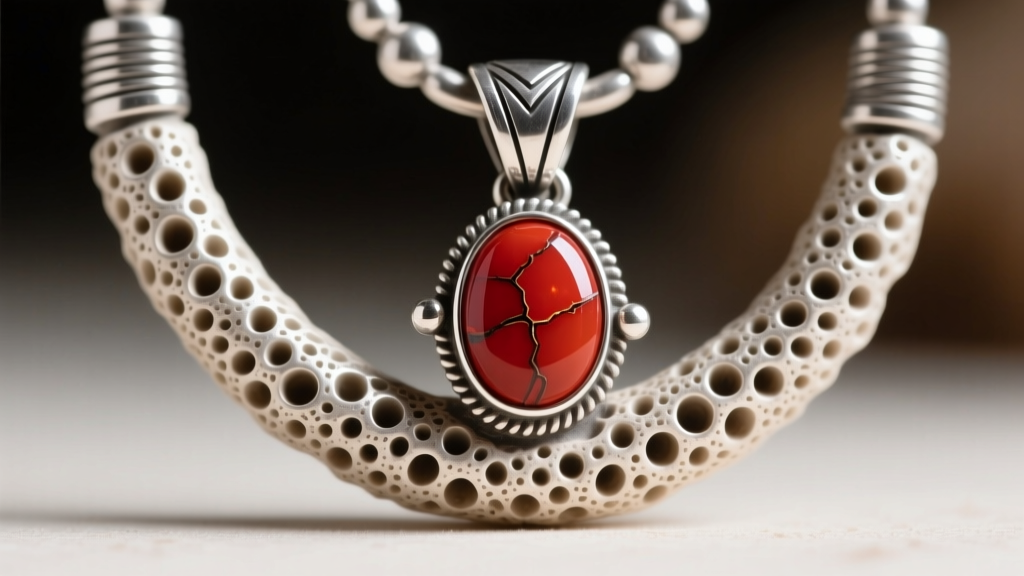
Master silversmiths employ distinct techniques that elevate a Navajo coral necklace from simple adornment to sculptural art:
- Tufa Casting: A labor-intensive process where the artist carves a design into a block of porous volcanic tuff stone. Molten silver is poured into the mold, resulting in a distinct, pitted texture that is highly prized by collectors.
- Stamp Work: Using custom-forged steel dies, the artist hammers intricate geometric patterns into the silver shank. The precision and depth of the stamping are key indicators of a master craftsman.
- Repoussé: A technique where the silver is hammered from the reverse side to create a raised, three-dimensional relief pattern on the front, often used to frame large coral cabochons.
Collector's Grading Matrix
| Tier | Silver Purity & Technique | Coral Grade | Price Range (USD) | Best Application |
|---|---|---|---|---|
| Entry / Commercial | .925 Sterling, Cast & Stamped | Dyed Bamboo / Block | $150 - $450 | Casual daily wear, layering |
| Mid-Tier / Artisan | .925 Sterling, Heavy Stamp Work | Stabilized Branch Coral | $500 - $1,800 | Statement styling, smart casual |
| Master / Museum | Coin Silver or Tufa-Cast .925 | Natural Mediterranean Oxblood | $2,500 - $15,000+ | Investment, formal heritage wear |
Styling the Naja and Squash Blossom: A Modern Framework
The most iconic iteration of the Navajo coral necklace is the Squash Blossom, featuring the central Naja pendant flanked by silver beads and blossom motifs. In 2026, the styling paradigm has shifted away from wearing these heavy pieces over bulky winter knits. Instead, the focus is on negative space and contrast.

The Neckline Matrix
- The Deep V-Neck: The ideal canvas for a Naja pendant. The V-shape naturally draws the eye down to the crescent, elongating the neck. Pair a mid-weight coin silver Naja with a structured silk or linen V-neck blouse for a juxtaposition of rugged heritage and refined elegance.
- The Crew Neck / Turtleneck: Best suited for longer, multi-strand coral and silver heishi necklaces. The high collar provides a solid backdrop that allows the vibrant red coral to pop without competing with skin tones.
- The Scoop Neck: Perfect for layering. Combine a delicate coral inlay pendant on a 16-inch chain with a heavier, plain silver squash blossom necklace on a 24-inch chain. This creates a cascading visual effect that feels curated rather than cluttered.
"True style is not about wearing a costume; it is about anchoring a contemporary silhouette with a piece that possesses a soul and a history." — Contemporary Southwestern Style Editorial, 2025
When layering, adhere to the 'Rule of Metals.' If your Navajo coral necklace features heavily oxidized, vintage coin silver, avoid mixing it with bright, polished white gold or platinum. Instead, complement it with matte turquoise pieces or plain, brushed sterling silver chains to maintain a cohesive, earthy palette.
Preservation Protocols for Organic Gemstones
Coral is remarkably soft, rating only a 3.5 to 4 on the Mohs hardness scale, and its organic nature makes it highly susceptible to chemical damage. Consulting the preservation archives at the Smithsonian National Museum of the American Indian, it is clear that improper cleaning is the leading cause of degradation in heritage Native American jewelry.
Critical Care Directives:
- Never Use Ultrasonic Cleaners: The high-frequency vibrations can shatter the internal matrix of natural coral and strip the epoxy from stabilized stones.
- Avoid Commercial Silver Dips: Liquid tarnish removers contain harsh acids that will permanently bleach and pit the surface of red coral. Always use a dry, untreated silver polishing cloth for the metal, carefully working around the stone bezels.
- Moisture and Heat Control: Coral can dehydrate and crack in excessively dry environments, yet trapped moisture can cause the silver backing to corrode against the stone. Store your necklace flat in a breathable anti-tarnish cotton pouch, away from direct sunlight and extreme temperature fluctuations.
By understanding the material science, the artisanal techniques, and the modern styling frameworks, you elevate the Navajo coral necklace from a mere purchase to a lifelong sartorial partnership. Whether you are acquiring a vintage masterwork or a contemporary artisan piece, the red gold of the Southwest remains an unparalleled anchor in the modern jewelry wardrobe.


