Why Is Kendrick Wearing an A Necklace? Custom Pendant Guide
Discover why custom letter pendants dominate hip-hop fashion. Learn how to design, size, and maintain your own statement necklace with our expert guide.

The Cultural Resonance of the Initial Pendant
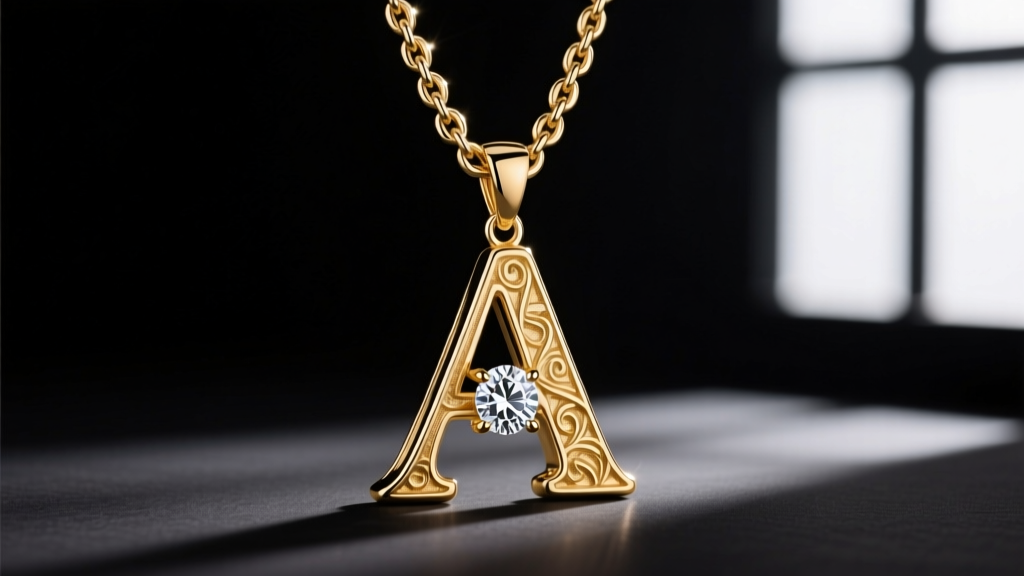
When fans search 'why is kendrick wearing an a necklace,' they are tapping into a rich, decades-long tradition of hip-hop and high-fashion jewelry where initial pendants serve as wearable armor and personal branding. In 2026, the custom letter necklace has evolved far beyond the thin, stamped gold charms of the early 2000s. Today, statement pendants are architectural feats of metallurgy and gem-setting, often weighing upwards of 80 grams and featuring intricate micro-pavé diamond work. Whether you are decoding celebrity style or looking to commission your own bespoke initial chain, understanding the mechanics of heavy custom pendants is critical to avoiding catastrophic hardware failure and ensuring your piece lasts a lifetime.
This step-by-step guide will walk you through the exact specifications, material grades, and engineering principles required to design, commission, and maintain a high-end letter pendant.
Step 1: Selecting the Base Alloy and Purity
The foundation of any heavy pendant is its base metal. While platinum is incredibly dense and durable, it is often too heavy for oversized letter pendants and prohibitively expensive for the volume of metal required. Therefore, gold alloys remain the industry standard. However, not all gold is created equal.
14k vs. 18k Gold: The Durability Matrix
- 14k Gold (58.3% Pure Gold): The optimal choice for heavy, daily-wear chains. The higher concentration of alloying metals (like copper, zinc, and silver) increases the tensile strength and scratch resistance. For a pendant weighing over 50 grams, 14k gold provides the structural rigidity needed to prevent the bail from warping under the chain's swinging momentum.
- 18k Gold (75% Pure Gold): Offers a richer, deeper yellow hue and is hypoallergenic, but it is significantly softer. If you choose 18k for a large letter pendant, the jeweler must use CAD/CAM milling or high-pressure casting to eliminate porosity (trapped gas bubbles) that can cause micro-fractures at the stress points.
Expert Warning: Never accept gold-plated brass or vermeil for a heavy statement piece. The Federal Trade Commission strictly regulates metal marking, and base metals will quickly oxidize, turning your skin green and causing the plating to flake off within months of heavy wear.
Step 2: Engineering the Bail and Chain Interface
The most common point of failure in custom necklaces is the bail—the loop that connects the pendant to the chain. If the bail is improperly sized, the chain will pinch, causing severe gold-on-gold friction that will eventually saw through the metal.
Calculating the Correct Bail Inner Diameter
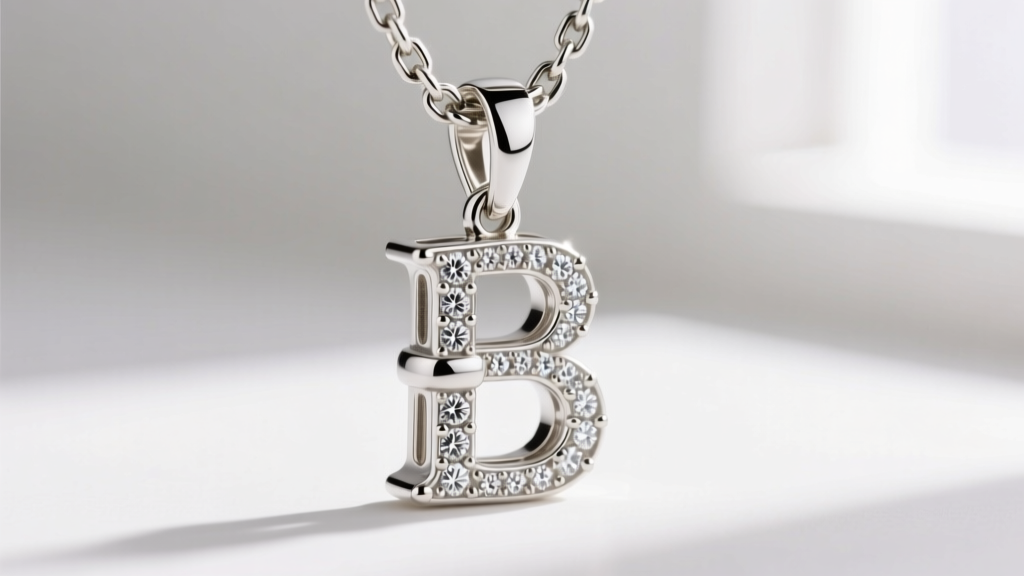
A general rule of thumb in jewelry engineering is that the bail's inner diameter must be at least 20% larger than the width of the chain. Furthermore, the type of chain dictates the bail shape. A flat Cuban link requires a wide, rectangular bail, whereas a rounded Franco chain requires a traditional oval bail to allow the links to articulate freely without binding.
For heavy pendants, a standard cast bail is insufficient. You must request a soldered, hinged bail or a reinforced tube bail with a minimum wall thickness of 1.5mm. This ensures the pendant hangs flush against the chest and distributes the kinetic energy evenly across the chain links.
Step 3: Stone Setting Techniques for Flat Surfaces
Letter pendants present a unique challenge for stone setters: the surface area is entirely flat, and the edges are prone to snagging on clothing. According to industry insights from JCK Online, the choice of setting dramatically impacts both the brilliance and the longevity of the piece.
Comparing Setting Styles
- Micro-Pavé: Uses stones under 0.01 carats held by microscopic beads of gold. This provides maximum surface coverage and a 'liquid diamond' effect, but requires careful maintenance as the tiny prongs can wear down.
- Bezel Setting: A rim of gold surrounds each stone. While it sacrifices about 15% of the stone's light return compared to prong settings, it is virtually snag-proof and highly recommended for the sharp outer edges of letter pendants.
- Channel Setting: Ideal for the straight vertical and horizontal strokes of letters like 'A', 'H', or 'T'. Stones are set between two walls of metal, offering excellent protection for the girdles of the diamonds.
When selecting stones, VVS1 or VVS2 clarity moissanite has become a dominant force in 2026 hip-hop jewelry, offering identical optical properties to natural diamonds at a fraction of the cost, allowing for larger, more impactful letters. For natural stones, always insist on a grading report from the Gemological Institute of America (GIA).
Hardware Sizing and Weight Distribution Chart
Matching your chain to your pendant is not just an aesthetic choice; it is a matter of structural physics. Use the table below to ensure your hardware is correctly proportioned.
| Pendant Weight | Minimum Chain Width | Required Bail Inner Diameter | Recommended Clasp Type |
|---|---|---|---|
| 15g - 30g | 4mm - 6mm | 7mm - 8mm | Lobster Claw (15mm) |
| 31g - 60g | 8mm - 10mm | 12mm - 14mm | Box Clasp with Single Figure-8 Safety |
| 61g - 100g+ | 12mm - 18mm | 16mm - 22mm | Box Clasp with Dual Figure-8 Safeties |
Note: Using a standard spring-ring clasp on a chain supporting a 50-gram pendant will result in clasp failure within weeks due to the tensile load on the internal spring mechanism.
Step 4: Preventing Catastrophic Hardware Failure
Heavy chains act as pendulums. Every time you move, the pendant swings, generating kinetic energy that transfers directly to the bail and the clasp. To mitigate this, high-end jewelers employ a technique called counter-weighting. By adding a small, dense gold bead or gemstone cluster to the back of the chain (directly opposite the pendant), the chain is anchored to the back of the neck, preventing the pendant from flipping upside down and reducing the swinging arc by up to 40%.
Identifying Porosity and Micro-Fractures
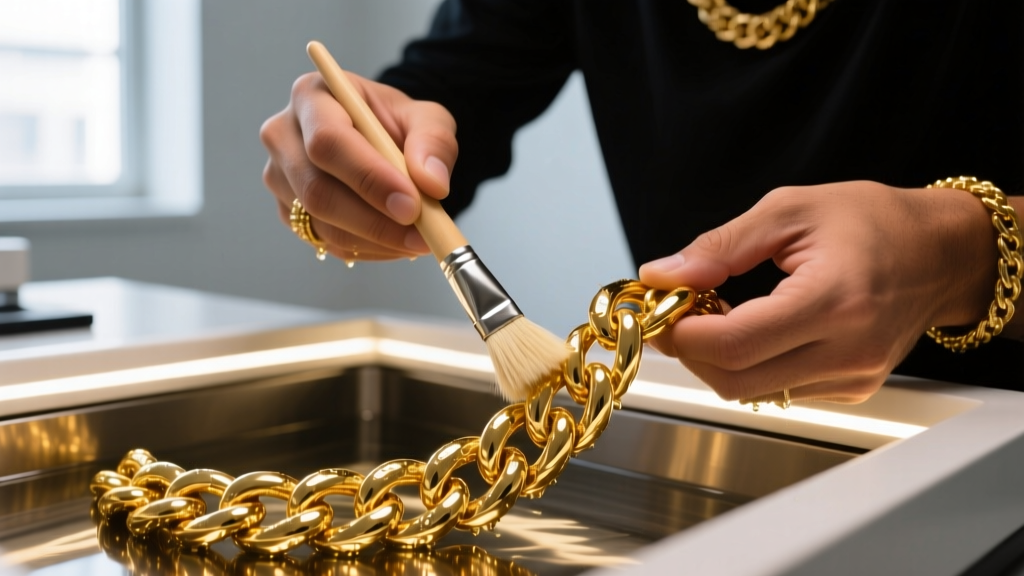
If your pendant was cast using traditional lost-wax methods without a vacuum or centrifuge, it may suffer from porosity. Inspect the bail joint with a 10x jeweler's loupe. If you see tiny, pinhole-sized pits in the gold, the structural integrity is compromised. Take it to a bench jeweler immediately to have the joint laser-welded or re-cast before the pendant snaps off the chain.
Long-Term Maintenance Protocols
Maintaining a fully iced-out letter pendant requires a strict cleaning and storage regimen. The oils from your skin, combined with lotions and environmental dust, will quickly pack into the micro-pavé settings, dulling the brilliance of the stones and trapping moisture against the gold.
- Weekly Ultrasonic Cleaning: Use a professional-grade ultrasonic cleaner with a mild, ammonia-free jewelry solution. Warning: Never use ultrasonic cleaners on pendants featuring fracture-filled diamonds, emeralds, or opals, as the high-frequency vibrations will shatter the stones.
- Soft Brush Detailing: After the ultrasonic bath, use a baby-soft toothbrush to gently dislodge debris from the gallery (the underside of the pendant where the diamond pavilions are exposed).
- Proper Storage: Never throw a heavy pendant into a drawer. The thick chain links will act like a file against the softer gold of the pendant face. Always hang the necklace on a velvet-lined jewelry stand or lay it perfectly flat in a dedicated, fabric-lined box.
By understanding the metallurgy, engineering, and maintenance required for heavy custom jewelry, you can confidently commission a piece that not only makes a bold cultural statement but stands up to the rigors of daily wear. Whether you are rocking a subtle 14k initial or a massive, fully iced-out letter, the quality of the hardware will always dictate the legacy of the piece.