Kendrick Lamar Letter A Necklace Authentication Guide
Learn how to authenticate a Kendrick Lamar Letter A necklace, troubleshoot prong snags, and verify diamond grades in custom pendants.

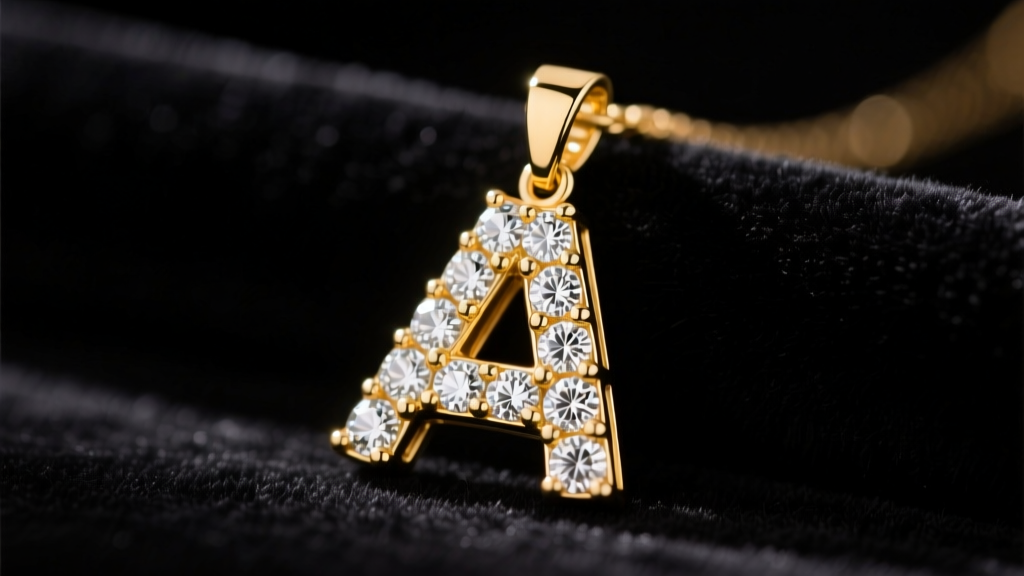
The Rise of the Custom 'A' Pendant and the Replica Problem
Kendrick Lamar's influence on hip-hop culture extends far beyond music; his jewelry choices have consistently set trends in the custom high-end market. The iconic Kendrick Lamar Letter A necklace—often interpreted by collectors as a nod to his artistic evolution, album motifs, or personal branding—has become one of the most sought-after custom pendant designs of the decade. However, as we navigate the jewelry landscape in 2026, the secondary market is flooded with unauthorized replicas, lab-grown substitutes passed off as natural, and structurally compromised pieces that fail within months of wear.
Whether you are looking to authenticate a vintage piece, troubleshoot a custom commission that is losing stones, or understand the exact material grades required for a pendant of this caliber, this guide provides actionable, expert-level solutions. We will break down the specific structural vulnerabilities of the letter 'A' geometry and how to verify the gemological integrity of your investment.
Troubleshooting Authenticity: Diamond vs. Simulant
The most common issue buyers face when acquiring a Kendrick Lamar Letter A necklace from unofficial channels is material misrepresentation. By 2026, lab-grown diamonds and high-grade moissanite have become virtually indistinguishable to the naked eye and can easily fool standard thermal diamond testers. According to the Gemological Institute of America (GIA), verifying the origin and authenticity of melee diamonds (the small stones typically used in fully paved pendants) requires advanced spectroscopic analysis or specialized screening devices like the GIA iD100.
When inspecting a fully diamond-encrusted 'A' pendant, look for the following authenticity markers:
- Laser Inscriptions: High-end custom jewelers will often laser-inscribe the gallery (the side profile) of the pendant with a serial number or hallmark. Use a 10x jeweler's loupe to check the inner edges.
- UV Fluorescence: Natural diamond parcels often exhibit varying degrees of blue fluorescence under UV light. If every single stone in a 300-stone pendant glows with the exact same intensity and color, you are likely looking at a synthetic simulant or a perfectly matched lab-grown parcel.
- Gold Hallmarks: Authentic pieces from top-tier hip-hop jewelers are cast in solid 14k or 18k gold. Look for stamps like '14K', '18K', or '750' hidden on the back of the bail or the bottom edge of the 'A'. Fakes often use '14K HGE' (Heavy Gold Electroplate) or lack stamps entirely.
| Material | Mohs Hardness | Refractive Index | Estimated Cost (5ct TW Pendant) |
|---|---|---|---|
| Cubic Zirconia (CZ) | 8.0 - 8.5 | 2.15 - 2.18 | $150 - $300 |
| Moissanite | 9.25 | 2.65 - 2.69 | $800 - $1,500 |
| Lab-Grown Diamond | 10 | 2.42 | $2,500 - $4,500 |
| Natural Diamond (VS1) | 10 | 2.42 | $18,000 - $35,000+ |
Structural Failures: Snagged Prongs and Lost Stones
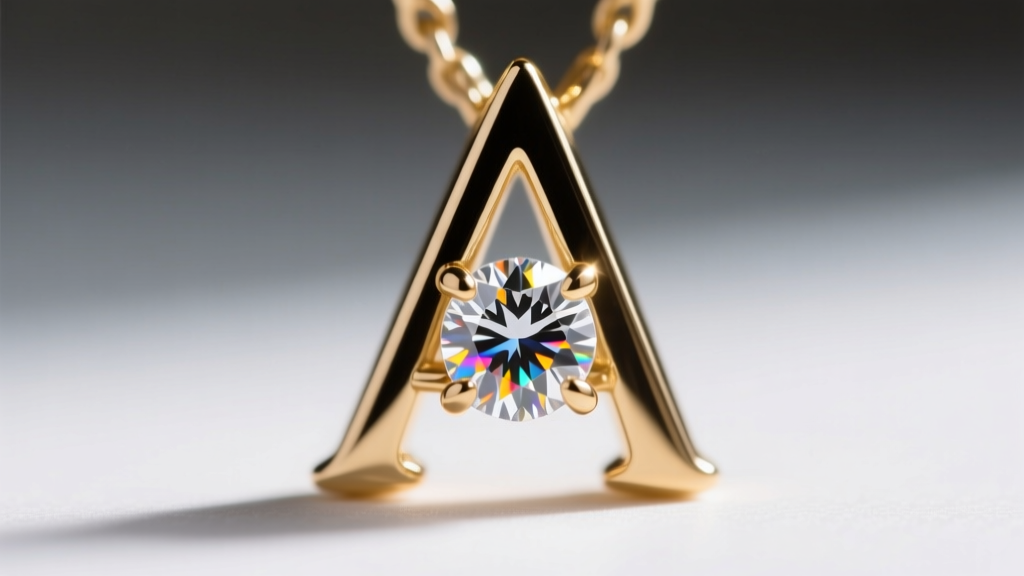
The geometry of the letter 'A' presents a unique nightmare for jewelers. Unlike circular or square pendants, the 'A' features a sharp apex at the top and an inner triangular cutout. These acute angles are prime targets for structural failure. If your Kendrick Lamar Letter A necklace is losing stones, the issue almost always stems from improper prong selection.
The Apex Snag and V-Prong Necessity
The top point of the 'A' pendant frequently catches on clothing, particularly heavy fabrics like hoodies or denim jackets. When a standard round prong is used on a sharp corner, the metal is too thin to grip the stone securely. Over time, the prong lifts, and the diamond falls out. The mandatory troubleshooting fix is the V-prong setting. A V-prong wraps around the sharp corner of the diamond or the gold framework, providing a thicker wall of metal that resists snagging and impacts. If you are commissioning a custom piece or repairing an existing one, insist on V-prongs for any angle under 45 degrees.
Inner Cutout Stone Loss
The negative space inside the 'A' requires stones to be set along an inward-facing curve. Standard prongs here can scratch the wearer's skin or catch on the chain. Expert jewelers solve this by using a bezel or half-bezel setting for the inner perimeter stones, or by employing a micro-pave technique with extremely low-profile beads. If your pendant's inner stones are constantly falling out, a master jeweler can re-tip the prongs using a laser welder, which prevents heat damage to the surrounding stones.
Bail and Chain Friction: Preventing Breakage
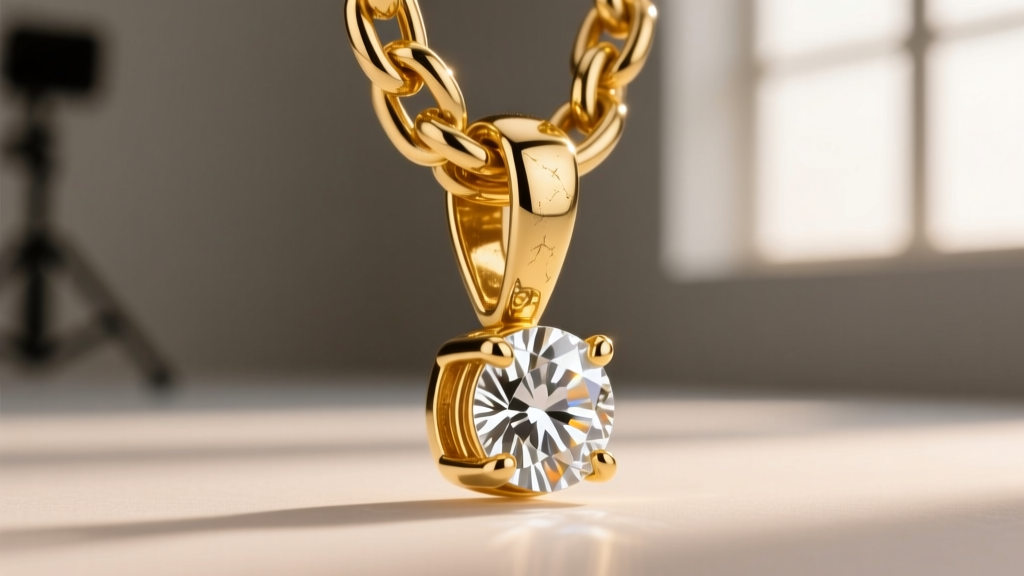
A solid 14k gold 'A' pendant of Kendrick's typical proportions (roughly 2 to 2.5 inches tall) weighs between 28 and 45 grams before diamonds are even set. Once fully paved, the total weight can easily exceed 60 grams. Hanging this much mass on a standard chain is a recipe for disaster.
The bail—the loop that connects the pendant to the chain—bears the brunt of the kinetic energy as the pendant swings. Troubleshooting bail wear requires addressing both the bail itself and the chain pairing:
- Upgrade the Bail: Standard hollow bails will warp and snap. Your pendant must be fitted with a solid, diamond-cut bail or a reinforced European bail with a steel or platinum inner sleeve to resist friction wear.
- Chain Width and Clasp: A 60-gram pendant requires a chain with enough tensile strength to support it. An 8mm to 12mm solid Cuban link or Figaro chain is mandatory. Furthermore, standard lobster clasps will snap under the dynamic weight. Upgrade to a box clasp with a safety latch or a heavy-duty macaron clasp.
- Friction Grooves: Inspect the inside of the bail every six months. If you see a deep groove carved into the gold by the chain, take it to a jeweler immediately to have the bail re-tipped or replaced before it snaps.
Gold Purity and Tarnish Troubleshooting
Another frequent issue reported by collectors of hype jewelry is unexpected tarnishing or skin discoloration. While pure gold does not tarnish, the alloys used in 14k and 18k gold can react to environmental factors. If your Kendrick Lamar Letter A necklace is leaving green or black marks on your skin, or if the gold itself appears dull and oxidized, you are likely dealing with one of three problems:
- Copper Oxidation: 14k yellow and rose gold contain higher copper content. When exposed to sweat, chlorine, or acidic skin pH, the copper can oxidize. Regular polishing with a specialized gold cloth will remove surface oxidation.
- Plating Wear: If the piece is actually vermeil or gold-plated brass (a common trait in unauthorized replicas), the base metal will eventually bleed through. There is no troubleshooting for this other than complete re-plating or replacing the piece with solid gold.
- Chemical Exposure: Frequent exposure to colognes, perfumes, and cleaning chemicals will degrade the polish of the gold and cloud the diamonds. Always apply fragrances before putting on your jewelry.
Maintenance Checklist for Heavy Hype Pendants
Proper maintenance of a high-value hip-hop pendant goes beyond simple wiping. According to GIA diamond grading standards, the buildup of oils, lotions, and environmental grime not only dulls the refractive brilliance of the stones but can also hide early signs of prong degradation.
Expert Warning: Never use an ultrasonic cleaner on a fully paved custom pendant without first having a jeweler check the prongs. The high-frequency vibrations can easily shake loose a stone that is already sitting in a compromised or lifted prong.
Instead, clean your Kendrick Lamar Letter A necklace at home using a soft-bristled baby toothbrush, warm water, and a few drops of mild, ammonia-free dish soap. Gently brush the back of the settings (the gallery) where skin oils accumulate, rinse thoroughly, and dry with a lint-free microfiber cloth. For deep cleaning and structural integrity checks, schedule a bi-annual visit to a certified bench jeweler who specializes in hip-hop and custom diamond jewelry.
By understanding the specific structural and gemological vulnerabilities of the 'A' pendant design, you can protect your investment, ensure its longevity, and wear your piece with the confidence that it is both authentic and structurally sound.


