Kesha Got Jesus On My Necklace: 2026 Budget & Value Guide
Assess the true value of the Kesha-inspired Jesus pendant trend. We break down materials, chain gauges, and budget tiers for 2026.

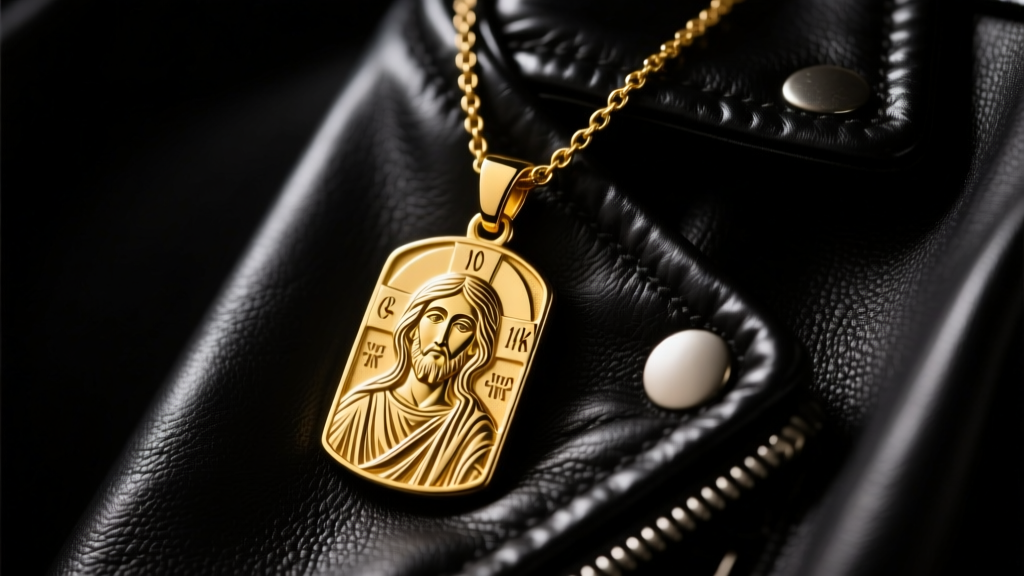
When Kesha proudly declared she had Jesus on her necklace, she wasn't just dropping a memorable lyric—she was cementing a specific subculture of spiritual grunge and eclectic glamour that continues to dominate jewelry trends in 2026. The 'Jesus pendant' has transcended its purely religious origins to become a staple of edgy, layered streetwear and high-fashion styling. However, as the demand for these iconic pendants has surged, the market has been flooded with everything from $20 brass knockoffs to $5,000 diamond-encrusted heirlooms. For the discerning buyer, separating genuine material value from mere trend-chasing is critical.
In this comprehensive budget and value assessment, we decode the metallurgy, chain mechanics, and pricing tiers of the Kesha-inspired Jesus necklace. Whether you are looking for a temporary festival piece or a lifelong solid-gold investment, understanding the intrinsic value of your jewelry ensures you never overpay for an illusion.
Decoding the Spiritual Grunge Aesthetic
The quintessential 'Kesha Jesus' aesthetic relies on juxtaposition. It is the pairing of sacred iconography with rebellious styling—think a delicate, ornate savior pendant resting against a distressed vintage tee, or a chunky, oxidized silver piece layered over black leather. The design of the pendant itself usually falls into two categories: the highly detailed, Renaissance-style relief carving, or the minimalist, geometric silhouette. From a value perspective, the level of detail in the casting or hand-engraving significantly impacts the craftsmanship premium you will pay above the raw melt value of the metal.
Material Breakdown & Value Assessment
The foundation of any necklace's value lies in its base metal and plating. According to the Federal Trade Commission Jewelry Guides, strict definitions govern what can legally be sold as gold vermeil versus standard gold plate. Understanding these distinctions is your first line of defense against inflated pricing.
| Material Grade | Base Metal | Plating / Purity | 2026 Avg. Price Range | Primary Failure Mode |
|---|---|---|---|---|
| Fashion Brass | Brass/Copper Alloy | Flash Plated (<0.1 microns) | $25 - $60 | Oxidation, skin discoloration (greening) |
| Sterling Silver | 925 Silver | Solid / Rhodium Dipped | $120 - $350 | Tarnishing, scratching, bending if gauge is thin |
| Gold Vermeil | 925 Silver | 14k/18k Gold (Min 2.5 microns) | $150 - $400 | Plating wear on high-friction edges over 2-3 years |
| Solid 10k/14k Gold | Gold Alloy | 41.7% - 58.3% Pure Gold | $600 - $1,800+ | Chain snapping if hollow; pendant itself is virtually indestructible |
| Pave / Diamond | 14k/18k Gold | VS Clarity / G-H Color Diamonds | $2,500 - $8,000+ | Stone loss if prong/bead settings are poorly crafted |
As noted by the Gemological Institute of America (GIA), 14k gold remains the sweet spot for everyday pendants. It offers the warm, rich hue associated with classic religious jewelry while possessing the tensile strength required to hold intricate details without bending. Avoid brass alloys if you have acidic sweat, as the copper content will rapidly oxidize and leave a copper carbonate residue on your skin.
Chain Selection: Gauge, Length, and Hardware Value
A common mistake buyers make is investing heavily in a solid gold Jesus pendant and pairing it with a weak, hollow chain. The pendulum effect of a pendant swinging against your chest places immense lateral torque on the chain links and the clasp hardware.
- The 1.2mm - 1.5mm Cable Chain: Suitable only for micro-pendants (under 3 grams). If you hang a 10g Kesha-style vintage pendant on a 1.2mm chain, the links will stretch and snap within months.
- The 2.5mm - 3.5mm Solid Rope or Cuban Link: The ideal workhorse for medium-to-heavy pendants. Ensure the chain is 'solid' and not 'hollow.' Hollow chains dent easily and cannot be repaired by a jeweler if they snap.
- Hardware and Clasps: Never accept a spring-ring clasp for a heavy pendant. Spring rings have weak internal springs that fail under weight. Insist on a lobster clasp or a custom box clasp with a figure-eight safety latch.
The Bail and Soldering: Hidden Value Indicators
The bail is the loop that connects the pendant to the chain. In budget-tier jewelry, the bail is often a simple, unsoldered jump ring. Over time, the friction of the chain sliding back and forth will cause the unsoldered gap to widen, eventually leading to the loss of your pendant. High-value, premium pendants feature a cast-in-place bail or a V-bail that is laser-soldered shut. When assessing the value of a piece in the $300+ range, inspect the bail under a jeweler's loupe. If you see a seam that isn't fused, negotiate the price down or request that the jeweler solder it before purchase.
Budget Tiers: Where to Save and Where to Invest
The $50–$150 Tier (Fashion & Plated)
At this price point, you are paying for the design, not the material longevity. These pieces are typically cast in brass and flash-plated with gold or silver. Value Verdict: Excellent for seasonal styling, music festivals, or testing the 'spiritual grunge' aesthetic before committing to fine jewelry. Do not expect these to survive daily showering or heavy sweating.
The $200–$600 Tier (Solid Silver & Heavy Vermeil)
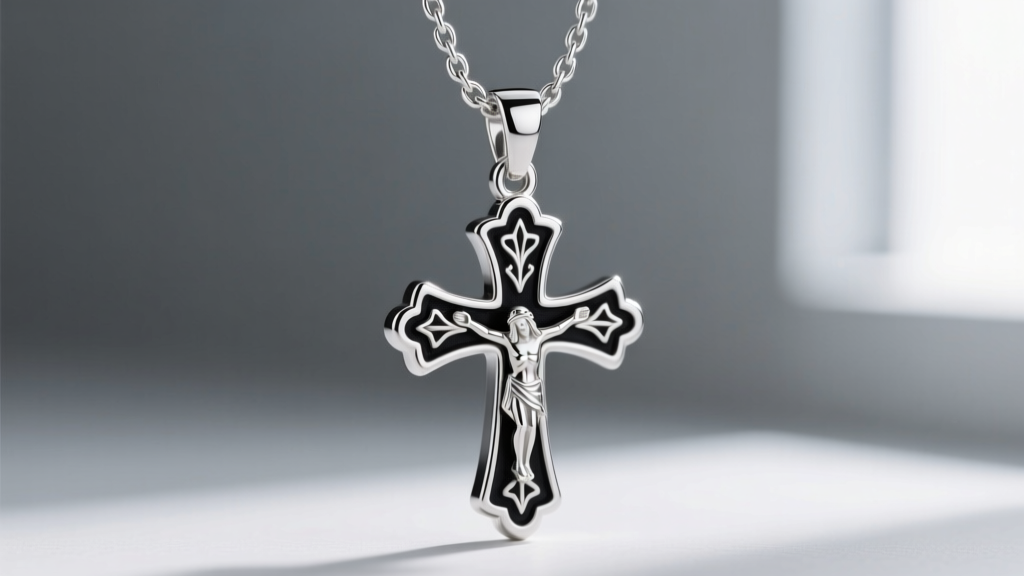
This is the entry point for genuine intrinsic value. A 925 sterling silver Jesus pendant with intentional black rhodium oxidation (to highlight the intricate facial details and halo) offers incredible visual depth and lasts a lifetime with basic polishing. Alternatively, a heavy 14k gold vermeil piece (minimum 2.5 microns of gold over silver) provides the look of solid gold at a fraction of the cost. Value Verdict: The highest ROI for everyday wearers who want authenticity without the four-figure price tag.
The $800+ Tier (Solid Gold & Heirloom)
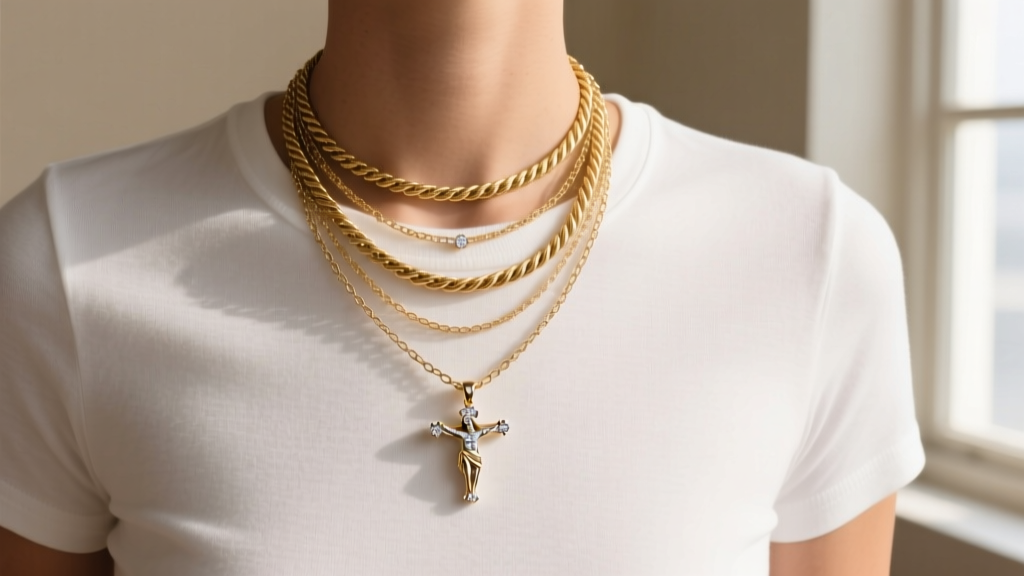
Solid 14k or 18k gold pendants are investments. Their value is tied to the daily spot price of gold, plus the artisan's craftsmanship premium. In 2026, with gold prices remaining historically high, buying solid gold is a hedge against inflation. Look for pieces that feature hand-engraved halos or sandblasted backgrounds, which elevate the piece from a mass-produced casting to a work of art. Value Verdict: Mandatory for those seeking a generational heirloom or a piece that can be worn 24/7 without fear of water, sweat, or chemical degradation.
Authenticity and Sourcing: Avoiding Counterfeit Value Traps
As the Kesha-inspired religious pendant trend has grown, so has the market for counterfeit 'solid gold' pieces. Always look for the hallmark stamp. A genuine 14k piece will be stamped '14K', '14KT', or '585'. However, stamps can be faked. The most reliable at-home test for gold is the magnet test—gold is non-magnetic. If your Jesus pendant is attracted to a neodymium magnet, it is a steel or iron core with a microscopic gold wash, rendering its intrinsic melt value effectively zero. For high-ticket purchases over $1,000, always demand an XRF (X-ray Fluorescence) scan from the retailer to verify the exact elemental composition of the alloy.
Ultimately, the 'Jesus on my necklace' trend is about personal meaning and bold self-expression. By understanding the metallurgy, hardware mechanics, and true market value of these pendants, you can curate a piece that honors both your aesthetic vision and your financial boundaries.


