What Does the Key Necklace Mean? Symbolism & Modern Trends
Discover what the key necklace means across cultures. Explore historical symbolism, modern styling trends, and how to choose the perfect metal grade.

The Historical Roots of Key Pendant Symbolism
Jewelry has long served as a wearable language, and few motifs speak as loudly as the key. When collectors and stylists ask, 'what does the key necklace mean?', the answer requires looking back centuries. In ancient Rome, keys were not merely functional tools; they were potent status symbols. Wealthy citizens wore key rings and pendants to signify their authority over vast estates and the valuables locked within them. According to the Victoria and Albert Museum's jewelry archives, the transition of the key from a utilitarian object to a romantic and spiritual talisman accelerated during the Victorian era. Sentimental jewelry flourished, and keys became synonymous with unlocking the heart, guarding secrets, and commemorating life’s pivotal transitions.
By the early 20th century, the key pendant had cemented its place in the lexicon of fine jewelry. It evolved from heavy, iron-wrought estate keys into delicate, diamond-encrusted masterpieces. Today, the motif bridges the gap between vintage nostalgia and contemporary minimalism, making it one of the most versatile pendants in a modern jewelry wardrobe.
Decoding the Motifs: What Specific Key Shapes Mean
The meaning of a key necklace shifts dramatically depending on its architectural design. Understanding these nuances is critical when selecting a piece for personal wear or as a symbolic gift.
The Skeleton Key
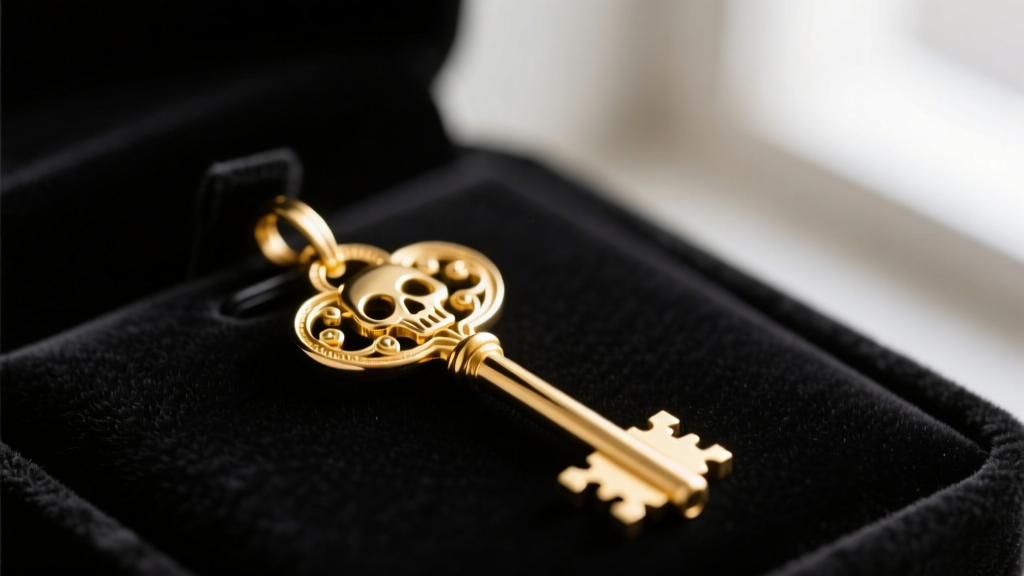
The skeleton key—characterized by its ornate bow (the top loop) and simple, cylindrical bit—is the ultimate symbol of unlocked potential and new beginnings. Because skeleton keys were historically designed to bypass the internal wards of multiple locks, they represent adaptability, freedom, and the ability to overcome obstacles. In modern styling, a 14k or 18k solid gold skeleton key pendant pairs exceptionally well with oxidized silver chains for a moody, antique aesthetic.
The Heart and Key Combo
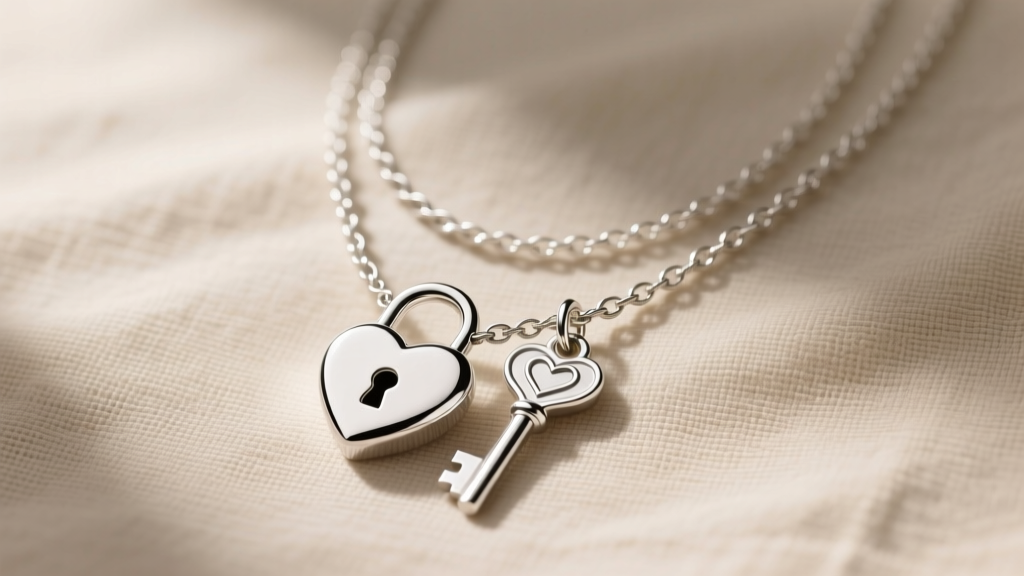
Perhaps the most commercially recognized variation, the heart lock paired with a miniature key, is a direct descendant of Victorian romance. It translates literally to 'the key to my heart.' While mass-market jewelers have saturated this space with base-metal alloys, luxury houses elevate the concept by integrating pavé diamonds and precision-set gemstones into the heart's casing.
The Cross Key
When the bow of the key is shaped into a cross, the meaning pivots toward faith, spiritual awakening, and divine guidance. This variation is often gifted during religious milestones such as confirmations or baptisms. From a design perspective, cross keys require a thicker chain gauge (typically 1.2mm to 1.5mm) to support the visual weight of the intersecting geometric lines at the top of the pendant.
Material Grades & Pricing Tiers for Key Pendants
The longevity and skin-safety of your key necklace depend entirely on its metallurgy. Cheap gold-plated brass will tarnish within months, leaving a green residue on the décolletage. As a domain expert, I always advise investing in specific, verifiable metal grades. The Gemological Institute of America (GIA) provides rigorous standards for gold purity, which directly impacts both the color and durability of the pendant.
| Material | Grade / Specification | Average Price Range | Durability & Best Use |
|---|---|---|---|
| Sterling Silver | 925 (92.5% pure silver) | $45 - $150 | High durability; requires occasional polishing to prevent oxidation. |
| Gold Vermeil | 2.5+ microns of 14k/18k gold over 925 silver | $120 - $300 | Excellent for daily wear; the thick gold layer prevents rapid tarnishing. |
| 14k Solid Gold | 58.5% pure gold alloyed with copper/zinc | $350 - $900 | Industry standard for fine jewelry; highly resistant to scratching and water damage. |
| 18k Solid Gold | 75% pure gold | $800 - $2,500+ | Rich, buttery yellow hue; softer than 14k, best for intricate, low-impact designs. |
| Platinum | 950 (95% pure platinum) | $1,200 - $4,000+ | Hypoallergenic, incredibly dense; develops a desirable patina over time. |
2026 Trend Analysis: How the Key Necklace is Evolving
While the Tiffany & Co. heritage collections popularized the diamond-studded key pendant in the late 2000s and 2010s, the styling landscape has shifted dramatically. The current aesthetic rejects overly literal, hyper-embellished designs in favor of conceptual and modular interpretations.
Modular and Transformable Keys
The leading trend in high-end pendant design is modularity. We are seeing key pendants that unscrew at the shaft to reveal hidden compartments for solid perfumes, essential oils, or memorial ashes. Others feature a detachable bow, allowing the wearer to convert the piece from a long, dramatic sautoir necklace into a choker-length pendant. This functional approach to fine jewelry appeals to a consumer base that demands versatility from their luxury investments.
Asymmetrical Layering and Mixed Metals
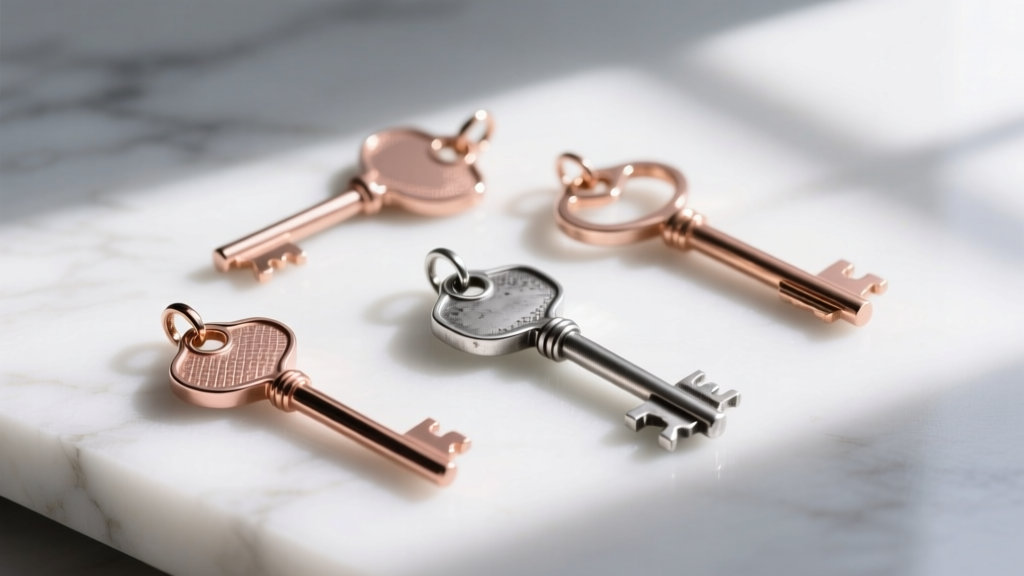
The era of wearing a single, perfectly centered key pendant is fading. The modern approach involves asymmetrical layering. Stylists are pairing a 16-inch oxidized silver skeleton key with an 18-inch 14k yellow gold rolo chain, intentionally mixing metal colors and chain textures. This curated 'undone' look requires precise attention to chain gauges; keeping the chains between 0.9mm and 1.2mm ensures they tangle less and drape elegantly without overwhelming the collarbone.
Chain Pairings: Matching the Right Chain to Your Key
A key pendant is only as good as the chain that supports it. The wrong chain can cause the pendant to flip constantly or wear down the bail (the loop connecting the pendant to the chain). Here is a definitive guide to pairing chains with key motifs:
- Cable Chains (0.9mm - 1.1mm): The traditional choice for skeleton keys. The uniform, oval links complement the vintage aesthetic without competing for attention. Always ensure the links are soldered to prevent stretching.
- Box Chains (1.0mm - 1.5mm): Ideal for modern, geometric, or diamond-set keys. The flat, square links reflect light beautifully and offer superior structural integrity, making them perfect for heavier 18k gold or platinum pendants.
- Rope Chains (1.2mm - 1.8mm): Best reserved for larger, statement-making cross keys or heart-lock combinations. The twisted links provide a luxurious, textured backdrop, but they can catch on the bail if the pendant loop is too small.
Furthermore, never underestimate the clasp. For any key pendant valued over $200, insist on a lobster claw clasp rather than a spring ring. Lobster clasps offer a secure, mechanical lock that prevents the loss of your sentimental piece during daily wear.
Final Thoughts on Gifting and Personal Meaning
Ultimately, the key necklace transcends fleeting fashion cycles because of its deeply personal resonance. Whether it signifies the unlocking of a new career chapter, the safeguarding of a romantic bond, or the honoring of spiritual faith, the motif carries an inherent weight that simpler geometric pendants lack. By prioritizing solid metal grades, understanding the historical context of the specific key shape, and employing modern layering techniques, you can transform this classic symbol into a fiercely contemporary staple of your jewelry wardrobe.


