Taylor Swift Necklace Lightning Bolt: 2026 Value Guide
Is the Taylor Swift necklace lightning bolt trend worth the markup? We break down materials, pricing, and where to find the best value in 2026.

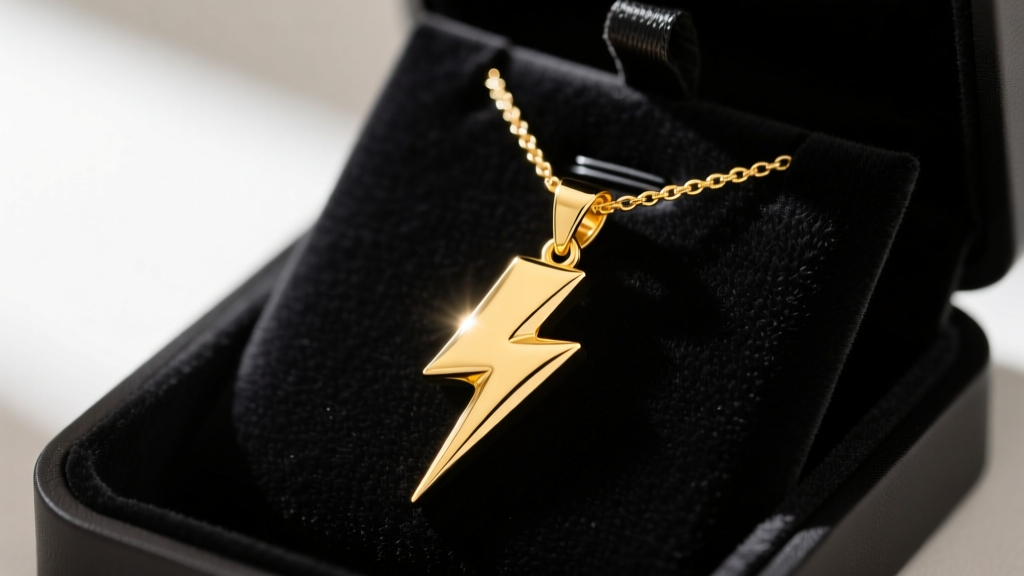
The "Swiftie Tax" vs. Fine Jewelry: What Are You Actually Paying For?
When fans search for the iconic taylor swift necklace lightning bolt, they are often met with a chaotic marketplace ranging from $12 dropshipped alloys to $800 solid gold artisan pieces. Originally popularized during the monumental 1989 era, the lightning bolt pendant has transcended its status as mere tour merchandise to become a permanent fixture in pop-culture-inspired fine jewelry. However, as we navigate the jewelry market in 2026, buyers must carefully distinguish between the "Swiftie Tax"—the premium charged for official, mass-produced fandom merchandise—and the intrinsic metallurgical value of independent fine jewelry.
Official merchandise often prioritizes low manufacturing costs and high profit margins, utilizing base metals with thin flash plating. Conversely, independent jewelers and specialized pop-culture fine artisans focus on material longevity, precise hallmarking, and structural integrity. This comprehensive value assessment will break down exactly what you should expect to pay, which materials justify their price tags, and how to avoid overpriced knockoffs that will inevitably tarnish and fail.
Material Breakdown: Which Lightning Bolt Holds Its Value?
The single most critical factor in determining the value of a lightning bolt pendant is its core metal and surface treatment. The sharp angles and points of a lightning bolt design are particularly susceptible to wear, friction, and impact damage, making material choice paramount.
1. Zinc Alloy and Brass (The Budget Tier)
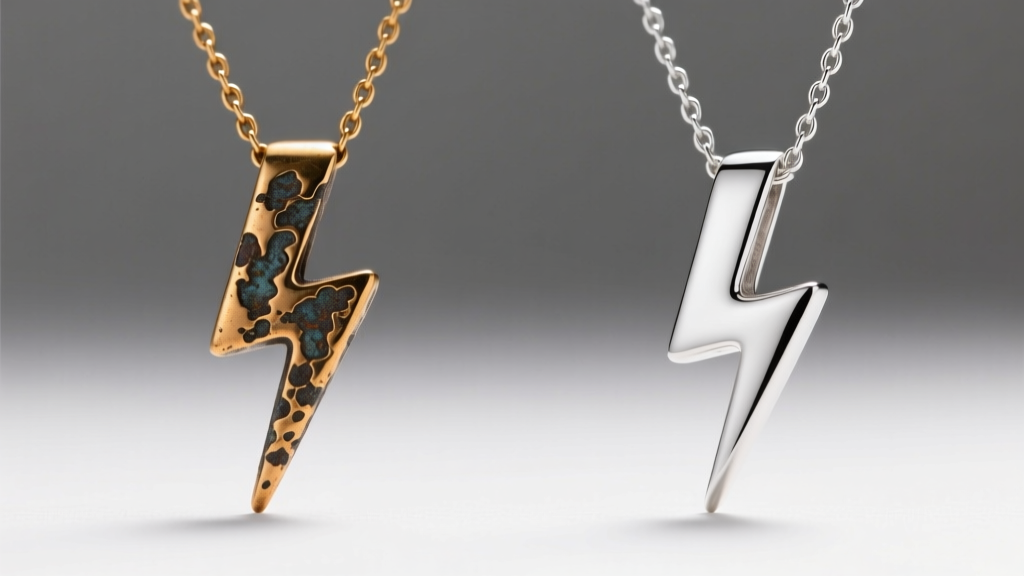
Priced between $15 and $35, these pendants are ubiquitous on fast-fashion sites and official merch stores. They are typically cast from zinc alloy or brass and coated in a microscopic layer of gold via electroplating. Failure Mode: Brass contains copper, which reacts with the acidity in human sweat to produce copper chloride, resulting in the dreaded "green skin" effect. Furthermore, cheap alloys frequently contain nickel, a common contact allergen that causes severe dermatitis. The plating on these pieces is usually under 0.2 microns thick and will wear off at the high-friction points of the bolt within three to six months of daily wear.
2. Gold Vermeil (The Mid-Tier Sweet Spot)
Priced between $85 and $160, gold vermeil offers a substantial upgrade. According to the Federal Trade Commission Jewelry Guides, a piece can only be legally marketed as "vermeil" if it consists of a sterling silver (925) base coated with a minimum of 2.5 microns of gold (usually 14k or 18k). This thickness provides a durable barrier that, with proper care, can last for years. The sterling silver base eliminates the risk of copper-induced skin discoloration and is generally hypoallergenic.
3. Solid 14k and 18k Gold (The Heirloom Tier)
Ranging from $350 to $850+, solid gold pendants are priced based on their gram weight and the current spot price of gold, plus a craftsmanship premium. A standard 38mm lightning bolt pendant weighs between 2.5 and 4.5 grams. Solid 14k gold (58.5% pure gold) is highly recommended for this specific shape; the alloying metals (like copper and silver) provide the tensile strength necessary to prevent the sharp tips of the bolt from bending or snapping during daily wear, a common failure mode in softer 22k or 24k gold.
| Material Grade | Average Price | Plating Thickness | Expected Lifespan | Resale / Intrinsic Value |
|---|---|---|---|---|
| Zinc Alloy / Brass | $15 - $35 | < 0.2 microns (Flash) | 3 - 6 Months | $0 |
| Sterling Silver (925) | $60 - $95 | N/A (Solid Silver) | Lifetime (with polishing) | Melt value only |
| Gold Vermeil | $85 - $160 | 2.5+ microns | 2 - 5 Years | Low (Silver melt) |
| Solid 14k Gold | $350 - $550 | N/A (Solid Gold) | Lifetime / Heirloom | High (Gold spot price) |
| Solid 18k Gold | $500 - $850+ | N/A (Solid Gold) | Lifetime / Heirloom | High (Gold spot price) |
Proportions and Chain Pairing: Nailing the 1989 Aesthetic
A common mistake buyers make when investing in a high-quality lightning bolt pendant is pairing it with an inadequate chain. The visual weight and structural demands of the pendant require specific chain gauges to maintain the authentic vintage pop aesthetic while ensuring physical security.
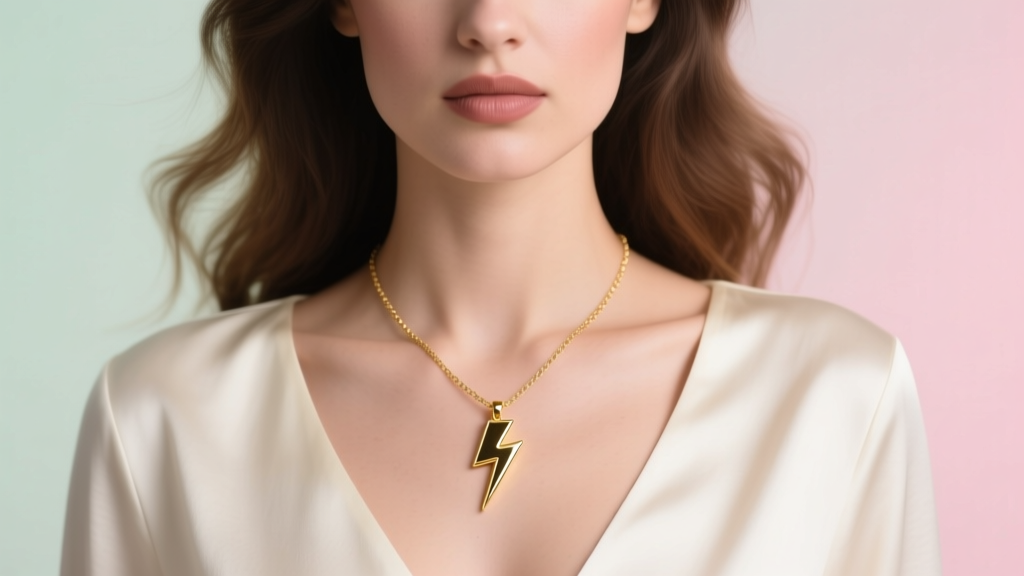
The Ideal Pendant Dimensions: To accurately replicate the iconic proportions, the pendant should measure approximately 38mm (1.5 inches) in height and 15mm (0.6 inches) at its widest point. Pendants smaller than 25mm lose the bold, statement-making impact of the original design, while those exceeding 45mm tend to look costume-like and heavy.
Chain Selection and Gauge: The optimal pairing is an 18-inch cable chain. The 18-inch length ensures the pendant rests precisely on the lower collarbone, mimicking the styling seen during the original era tours. Crucially, the chain wire gauge should be between 1.2mm and 1.5mm. Chains thinner than 1.0mm (such as delicate 0.8mm thread chains) are highly prone to kinking and will eventually snap under the pendulum-like tension of a 3-gram pendant. Always ensure the chain is finished with a sturdy lobster claw clasp rather than a spring ring clasp, which is notorious for failing at the solder joint.
Official Merch vs. Independent Artisans: A Cost-Benefit Analysis
Where you purchase your taylor swift necklace lightning bolt dramatically impacts its long-term value. Official tour merchandise and licensed pop-culture stores typically utilize mass-production techniques like die-casting and flash plating. While these pieces hold immense sentimental value and often come with licensed branding tags, their metallurgical value is virtually zero. You are paying entirely for the intellectual property license and the branding.
Conversely, independent jewelers and specialized Etsy artisans offer unbranded but metallurgically superior alternatives. By bypassing the licensing fees, these artisans allocate the entirety of your budget toward material quality. A $120 budget spent on an independent jeweler will secure a heavy 3-micron vermeil piece with a hallmark-stamped 925 base, whereas the same $120 at an official merch stand will only yield a brass pendant with a thin gold wash and a branded velvet pouch. For buyers prioritizing longevity, skin safety, and actual precious metal content, independent artisans offer a vastly superior return on investment.
Red Flags: How to Spot Overpriced Fandom Knockoffs
The secondary market and social media storefronts are flooded with misleading listings. To protect your budget, arm yourself with these authentication and quality-check frameworks:
- The "Gold Dipped" Deception: If a listing uses the terms "gold dipped," "gold washed," or "gold layered" without specifying a micron count, walk away. These terms indicate flash plating (usually under 0.5 microns) that will degrade rapidly. According to international Assay Office hallmarking standards, precise thickness and base metal must be verifiable for a piece to be considered fine jewelry.
- Missing Hallmarks: Any piece claiming to be sterling silver or solid gold must bear a hallmark (e.g., "925", "14K", "585"). If the lightning bolt pendant lacks a stamp on the back or the jump ring, it is almost certainly a base metal disguised by polish.
- Magnetic Testing: Gold and silver are non-magnetic. If a seller claims a pendant is solid gold but it exhibits even a slight magnetic pull, the core is likely steel or iron, which will eventually rust from the inside out, destroying the piece.
- Sharp Edge Hazards: Poorly cast budget pendants often leave the sharp "points" of the lightning bolt rough or unfinished. This not only snags on delicate knitwear but can also scratch the wearer's skin. High-value pieces will feature hand-filed, slightly softened bevels on the sharpest angles while retaining the visual illusion of a razor-sharp point.
Final Verdict: The Best Budget Allocation for 2026
If your budget is strictly under $40, purchase an official merchandise piece for the sentimental value and the unboxing experience, but treat it as a temporary accessory. Rotate it with other necklaces to prolong the plating, and remove it before showering or exercising to delay the inevitable copper oxidation.
For the optimal intersection of budget and lasting value, the $90 to $150 range is the sweet spot. Allocating your funds toward a heavy gold vermeil lightning bolt pendant from a reputable independent jeweler, paired with a 1.2mm 18-inch sterling silver cable chain, provides the exact aesthetic of the 1989 era with the durability required for daily wear. This approach ensures your jewelry box retains its value, your skin remains irritation-free, and your tribute to pop music history is crafted to endure.


