2026 Trends: Top Small Gold Necklace Designs & Layering
Discover 2026 trends in small gold necklace designs. Learn micro-layering techniques, chain gauges, and how to style delicate pendants for any neckline.

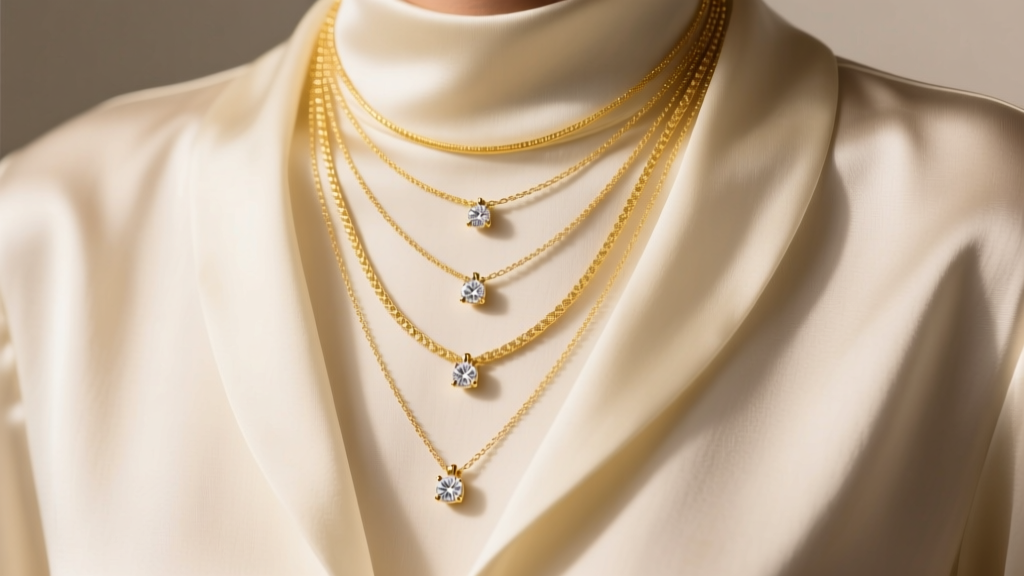
The 2026 Shift: Why Small Gold Necklace Designs Are Dominating
The jewelry landscape of 2026 has decisively pivoted from the heavy, oversized link chains of the early 2020s toward an era of hyper-refined minimalism. Small gold necklace designs are no longer just understated alternatives to statement pieces; they are the focal point of modern curation. This shift, often categorized under the evolution of 'quiet luxury,' demands a meticulous understanding of scale, proportion, and metallurgy. When working with motifs that measure merely 4mm to 8mm, every millimeter of chain gauge and every fraction of a karat impacts the drape, durability, and visual weight of the piece. According to industry analysts at JCK Online, the consumer demand for micro-pendants and delicate chains has surged by over 34% this year, driven by a desire for permanent, everyday wearability that transitions seamlessly from boardroom to evening wear.
Anatomy of a Micro-Pendant: Gauges, Karats, and Proportions
To truly master small gold necklace designs, one must look beyond the aesthetic and understand the structural engineering of delicate jewelry. The relationship between chain gauge and pendant weight is a strict mathematical ratio. A common failure mode in mass-produced micro necklaces is pairing a 6mm solid gold pendant with a fragile 0.7mm cable chain. The kinetic energy generated by daily movement causes the chain to stretch, warp, or snap at the solder points. For 2026's top-tier designs, jewelers are utilizing laser welding rather than traditional torch soldering for links under 1.0mm, ensuring structural integrity without melting the micro-joints. Furthermore, the choice of gold alloy is paramount. As detailed by the Gemological Institute of America (GIA), 14k gold (58.5% pure gold) offers superior tensile strength compared to 18k gold (75% pure gold). For chains thinner than 1.2mm, 14k is the mandatory standard to prevent the clasp and links from deforming under the tension of even a lightweight 2-gram pendant.
| Chain Style | Gauge (mm) | Max Pendant Weight | Ideal Bail Size | Best Use Case |
|---|---|---|---|---|
| Cable | 0.8 - 1.0 | 1.5 grams | 2x3mm | Ultra-minimalist solo wear |
| Box | 1.0 - 1.2 | 3.0 grams | 3x4mm | Geometric micro-pendants |
| Snake | 1.2 - 1.5 | 4.5 grams | 4x5mm | Fluid drape, teardrop motifs |
| Bead (Ball) | 1.0 - 1.5 | 2.0 grams | 3x3mm | Dog-tag or engraved disc layering |
Hardware and Clasp Mechanics for Micro-Chains
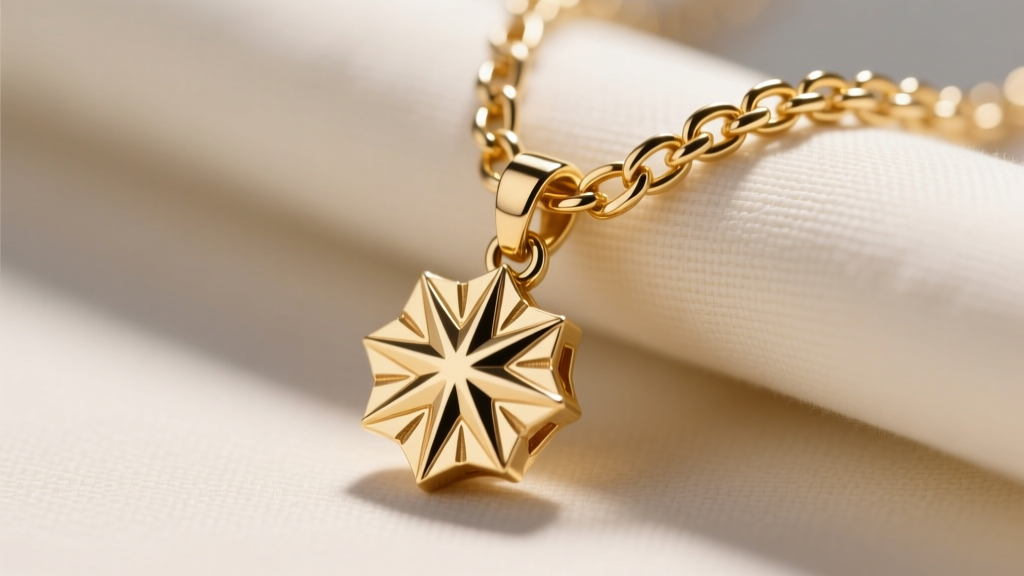
An often-overlooked aspect of small gold necklace designs is the hardware. A standard 5mm lobster clasp is frequently too heavy and visually disruptive for a 0.8mm cable chain, causing the necklace to constantly flip and rest with the clasp at the front of the collarbone. In 2026, premium jewelers are adopting 4mm spring ring clasps or custom-machined micro-box clasps that integrate seamlessly into the chain's profile. Furthermore, the jump ring connecting the pendant to the chain must be soldered shut or feature a secure latch mechanism; open jump rings on micro-chains are a primary failure point, easily pulled apart by the snagging of delicate knitwear or hair. When evaluating a piece, always inspect the bail—the loop that holds the pendant. A well-engineered bail for a 1.0mm chain should measure no more than 2.5mm in outer diameter, ensuring the pendant glides smoothly without catching on the microscopic links of the chain.
The Mathematics of Micro-Layering
The art of layering small gold necklace designs in 2026 relies on the 'Two-Inch Drop Rule' to prevent pendant tangling and visual clutter. When stacking three delicate chains, the lengths must be staggered by exactly two inches—typically 14 inches (choker/collarbone), 16 inches (standard/upper chest), and 18 inches (plunge/sternum). However, length is only half the equation; visual weight distribution is equally critical. If your 14-inch chain features a 5mm bezel-set diamond, your 16-inch chain should feature a textured gold disc or an openwork motif of similar visual mass but different geometry, while the 18-inch chain anchors the stack with a slightly larger 7mm pear-shaped stone. Avoid clustering identical shapes, which creates a monotonous 'uniform' effect. Instead, mix a brilliant-cut round stone with a matte-finished gold bar to create depth and textural contrast.

Neckline Pairing Framework for Delicate Gold
Crew Necks and High Collars
When styling small gold necklace designs with crew necks, turtlenecks, or high-collared blouses, the goal is to break up the solid block of fabric without overwhelming the neckline. A single 15-inch snake chain with a 6mm east-west set emerald or sapphire sits perfectly just below the collarbone, drawing the eye horizontally and softening the rigid lines of a high collar. Avoid chains longer than 16 inches for high necklines, as the pendant will dangle awkwardly in the 'dead zone' of the upper chest, losing its impact.
V-Necks and Plunging Lines
Conversely, V-necks and plunging silhouettes require vertical elongation. Here, an 18-inch or 20-inch delicate box chain terminating in a directional pendant—such as a 8mm north-south set marquise diamond or a slender gold dagger—mimics and enhances the garment's natural geometry. The pendant should terminate precisely one inch above the apex of the V-neck to maintain a cohesive visual flow.
Investment vs. Fast Fashion: Pricing and Material Grades
Navigating the market for small gold necklace designs requires a sharp eye for material grading and pricing structures. In 2026, a high-quality, solid 14k gold micro-pendant necklace (featuring a 1.0mm chain and a 4mm genuine gemstone) typically retails between $250 and $450, depending on the stone's origin and cut. Conversely, gold vermeil pieces (sterling silver plated with 2.5 microns of gold) range from $45 to $90. While vermeil is acceptable for occasional-wear statement pieces, it is highly discouraged for micro-chains. The friction between the tiny links of a 0.9mm chain accelerates the wear of the gold plating, often exposing the silver core within months of daily use. For pieces intended for permanent, 24/7 wear—including showering and sleeping—solid 14k or 18k gold is a non-negotiable investment.
Curating Your Permanent Capsule
Ultimately, the enduring appeal of small gold necklace designs lies in their versatility and intimate scale. They are not meant to shout across a room, but rather to reward close observation. By prioritizing structural integrity through proper gauge selection, mastering the mathematics of the two-inch layering drop, and matching the pendant's geometry to your wardrobe's necklines, you can curate a capsule collection that remains effortlessly relevant. As trends continue to favor refined subtlety over ostentatious display, these micro-masterpieces will remain the cornerstone of modern jewelry styling.


