Xmas Tree Necklace Guide: Enamel, Metals & Settings 2026
Discover the technical details behind fine xmas tree necklaces. Compare enamel types, metal grades, chain gauges, and pricing tiers in our 2026 guide.

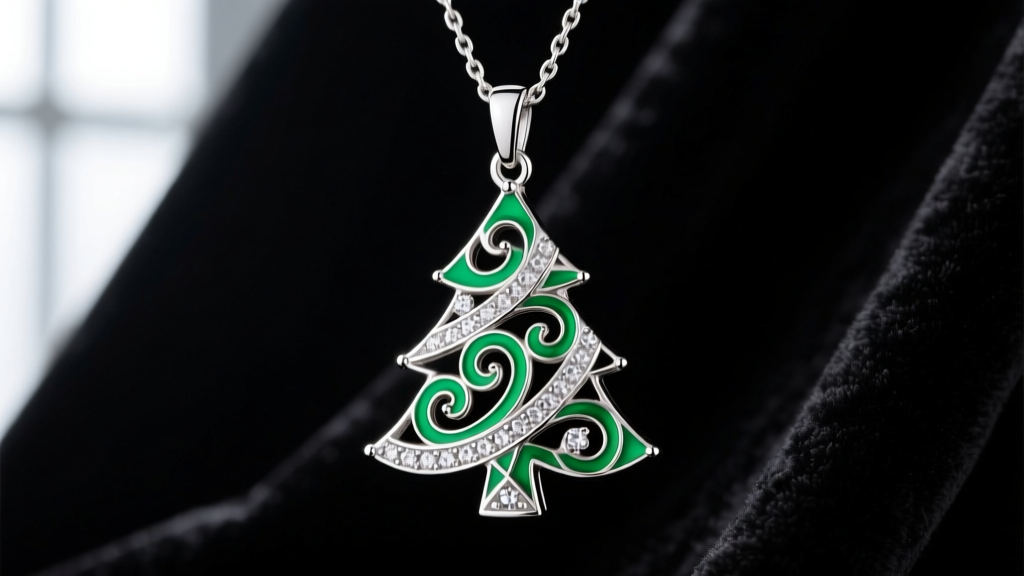
The evolution of the xmas tree necklace from a mid-century costume novelty to a highly sought-after piece of fine and demi-fine jewelry represents a fascinating intersection of horological enameling techniques and modern gemstone setting. As we navigate the 2026 holiday and heirloom market, collectors and jewelers alike are demanding rigorous material standards. No longer satisfied with stamped brass and cold-painted resins, today’s discerning buyers seek out vitreous enamel, precise gold vermeil thicknesses, and ethically sourced melee accents. This technical deep dive deconstructs the anatomy, metallurgy, and engineering of the modern xmas tree necklace, providing a definitive framework for evaluation and purchase.
Base Metal Alloys and Plating Standards
The structural integrity of any pendant begins with its base alloy. For fine and demi-fine xmas tree necklaces, 925 sterling silver (92.5% silver, 7.5% copper) remains the industry standard due to its optimal balance of malleability for intricate casting and durability for daily wear. However, the copper content makes it susceptible to oxidation, necessitating surface treatments.
Rhodium Flashing and Gold Vermeil
To prevent tarnish and provide a brilliant white-metal finish, high-end silver trees are plated with rhodium. A premium xmas tree necklace will feature a rhodium thickness of 0.75 to 1.0 microns. Anything less will wear through at the high-friction bail loop within a single season. For gold-toned pieces, the Federal Trade Commission (FTC) Jewelry Guides strictly dictate that the term "vermeil" can only be used if the sterling silver base is plated with at least 2.5 microns of 10k, 14k, or 18k gold. Many mass-market brands attempt to pass off 0.5-micron gold-plated brass as vermeil; always verify the micron thickness and base metal before investing in premium tiers.
The Science of Enamel: Vitreous vs. Cold
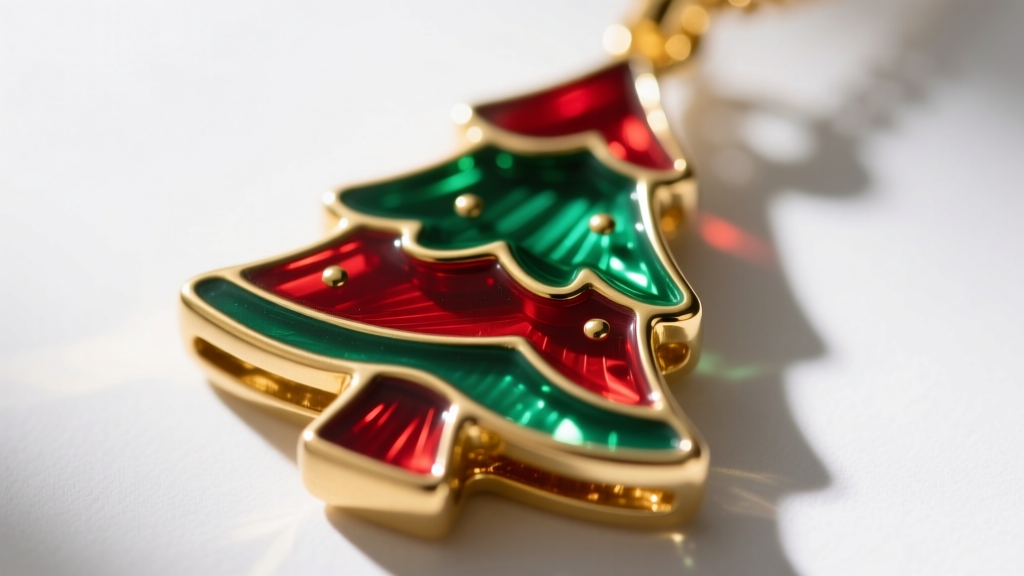
The vibrant foliage of a premium xmas tree necklace is almost exclusively achieved through enameling. Understanding the thermal and chemical differences between enamel types is critical for assessing longevity and value.
- Vitreous Enamel (Hot Enamel): Composed of finely ground glass (silica, soda ash, and metal oxides for color), vitreous enamel is fired in a kiln at temperatures between 1400°F and 1600°F (760°C - 870°C). It fuses permanently to the metal base, resulting in a Mohs hardness of 5.5 to 6.5. It is highly resistant to UV fading and chemical degradation.
- Guilloché Technique: A hallmark of luxury xmas tree pendants, guilloché involves applying translucent vitreous enamel over a metal base that has been engine-turned with precise, geometric patterns. The light refracts through the glass, creating a mesmerizing, three-dimensional depth that flat coloring cannot replicate.
- Champlevé: This technique requires the artisan to carve or cast troughs into the metal base, leaving the original surface of the xmas tree design raised. The recessed cells are then filled with enamel and fired, creating a stunning stained-glass effect often seen in artisan-crafted holiday pendants.
- Cold Enamel (Epoxy Resin): Found in costume and lower-tier demi-fine jewelry, cold enamel is a two-part epoxy resin cured at room temperature. While it allows for a broader, brighter color palette and is less prone to shattering upon impact, it has a Mohs hardness of only 2.0 to 3.0. It is highly susceptible to scratching, yellowing from UV exposure, and delamination from the metal base over time.
Gemstone Accents: Melee Sizing and Setting Styles
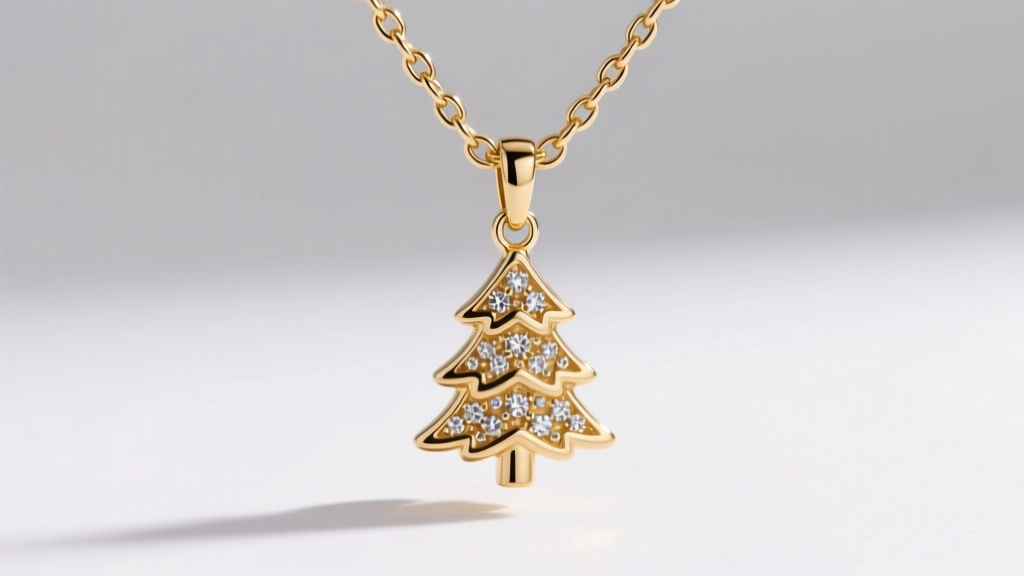
Modern fine xmas tree necklaces frequently incorporate gemstone accents to represent ornaments or a glowing star topper. The Gemological Institute of America (GIA) notes that melee diamonds and colored gemstones used in pavé settings typically range from 0.001 to 0.02 carats (approximately 1.0mm to 1.7mm in diameter).
For the "star" topper, jewelers often utilize a single bezel-set lab-grown diamond or moissanite ranging from 0.05 to 0.10 carats. Bezel settings are vastly superior to prong settings for pendant toppers, as they protect the girdle of the stone from catching on knitwear—a common failure mode for holiday jewelry. For the "ornaments," Tsavorite garnet (a vibrant, untreated green) and natural red spinel are the premier choices for high-end pieces, offering exceptional refractive indices without the ethical and supply chain concerns associated with some traditional holiday gemstones.
Chain Selection and Clasp Engineering
A heavy enamel and gemstone pendant requires a chain engineered to support its specific gram weight without compromising the drape. The bail (the loop connecting the pendant to the chain) on a standard xmas tree necklace usually accommodates chains up to 1.2mm in width. Below is a technical comparison of optimal chain pairings based on pendant weight.
| Chain Style | Optimal Gauge (mm) | Max Pendant Weight | Structural Notes |
|---|---|---|---|
| Box Chain | 0.8mm - 1.0mm | 5 - 8 grams | Square links distribute weight evenly; highly resistant to kinking. Ideal for flat, enameled tree pendants. |
| Cable Chain | 0.9mm - 1.2mm | 4 - 6 grams | Classic oval links. Must feature soldered links to prevent pulling apart under the dynamic load of a swinging pendant. |
| Rope Chain | 1.0mm - 1.5mm | 10+ grams | Twisted links offer high tensile strength and light reflection. Best suited for heavy, 3D cast gold tree pendants. |
Clasp Mechanics: The spring ring clasp, while common on budget chains, lacks the internal spring tension required to securely hold heavier pendants and is difficult to operate with one hand. A premium xmas tree necklace should be equipped with a cast lobster claw clasp (minimum 10mm length) attached via a soldered, rather than split, jump ring to eliminate the risk of the chain unspooling.
Market Pricing and Valuation Framework
Understanding the material composition allows buyers to accurately assess the pricing tiers of the 2026 market. Use this framework to ensure you are paying for metallurgy and craftsmanship, not just brand markup.
"When evaluating vintage or contemporary holiday pendants, the presence of engine-turned guilloché beneath translucent enamel immediately elevates the piece from mass-market accessory to horological art, often doubling its baseline intrinsic value." — Master Enamelist, Jewelers of America Symposium 2025.
- Tier 1: Costume & Novelty ($25 - $75): Stamped brass or pewter bases, cold epoxy enamel, cubic zirconia accents, unsoldered cable chains with spring ring clasps. High risk of skin irritation (nickel exposure) and rapid enamel yellowing.
- Tier 2: Demi-Fine ($150 - $450): 925 sterling silver base with 2.5-micron gold vermeil or rhodium plating. Hot vitreous enamel (champlevé or cloisonné), lab-grown diamond melee (0.01ct), soldered 0.8mm box chains, and lobster clasps.
- Tier 3: Fine & Heirloom ($800 - $2,500+): Solid 14k or 18k gold construction. Master-level guilloché or plique-à-jour (backless) enameling. Natural tsavorite and precision-cut diamond accents in micro-pavé or bezel settings. Often produced in limited, numbered annual editions by heritage houses.
Archival Care and Enamel Restoration
The most common catastrophic failure of a vitreous enamel xmas tree necklace is thermal shock. Because the metal base and the glass enamel expand and contract at different rates, exposing the pendant to sudden temperature changes (such as wearing it into a hot sauna or dropping it into hot water) can cause the enamel to craze or pop out of its metal cells entirely.
Furthermore, never place an enameled pendant in an ultrasonic cleaner. The high-frequency acoustic cavitation that safely removes dirt from diamond pavé will shatter vitreous enamel and delaminate cold epoxy resins. For routine maintenance, use a soft-bristled baby toothbrush, lukewarm distilled water, and a pH-neutral dish soap. Dry immediately with a microfiber cloth to prevent water spotting on the rhodium or gold surfaces. By adhering to these strict metallurgical and care standards, a fine xmas tree necklace will retain its structural integrity and brilliant coloration for generations, transcending its seasonal origins to become a true wearable heirloom.


