The Key Necklace Meaning: Symbolism & 2026 Style Trends
Discover the key necklace meaning, from historical symbolism to 2026 styling trends. Learn how to choose metals, chain lengths, and layering techniques.

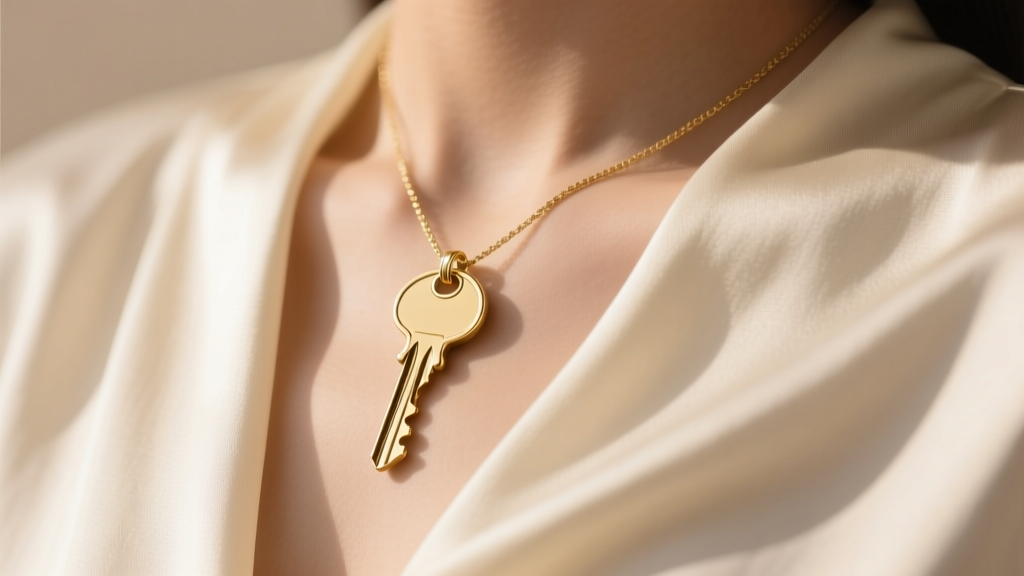
The allure of the key pendant transcends fleeting seasonal fads. As we navigate the style landscape of 2026, the key necklace meaning has evolved from a purely romantic Victorian trope into a sophisticated emblem of personal autonomy, transition, and curated self-expression. Whether you are gifting a piece to mark a new chapter or selecting one to anchor your everyday jewelry rotation, understanding the intersection of historical symbolism and modern metallurgical trends is essential.
In this comprehensive analysis, we decode the anatomy of key pendants, evaluate the structural integrity of popular chain pairings, and provide a definitive market pricing guide for the modern collector.
The Historical & Emotional Core of Key Necklace Meaning
To understand the modern iteration of this motif, we must look to its origins. Historically, keys were not merely functional tools; they were powerful status symbols. According to the Victoria and Albert Museum's jewelry archives, ornate chatelaine keys in the 18th and 19th centuries denoted the wearer's authority over a household's valuables and secrets.
In Victorian romanticism, the key necklace meaning shifted toward matters of the heart. A key pendant gifted to a lover symbolized the "key to one's heart," often featuring intricate enamel work and hidden compartments. Fast forward to 2026, and the symbolism has been reclaimed as an internalized narrative. Today, wearing a key pendant is widely interpreted as a talisman for unlocking personal potential, navigating life transitions, or safeguarding one's own boundaries. The modern wearer chooses the key not to give access to others, but to remind themselves of the doors they have the power to open.
Material Analysis: What 2026’s Top Metals Mean for Durability
The visual weight and longevity of your necklace depend entirely on the metal grade. The Gemological Institute of America (GIA) notes that the alloy composition in gold dramatically affects both the color and the scratch resistance of daily-wear pendants. When selecting a key pendant, you are generally choosing between four primary material categories.
| Metal Type | Purity / Grade | Durability & Tarnish | 2026 Price Range | Best Use Case |
|---|---|---|---|---|
| 14k Solid Gold | 58.5% Gold | High; highly scratch-resistant | $180 - $450 | Everyday wear, showering, longevity |
| 18k Solid Gold | 75% Gold | Medium; warmer hue, softer | $350 - $800+ | Heirloom pieces, special occasions |
| 925 Sterling Silver | 92.5% Silver | Medium; requires polishing | $45 - $120 | Budget-conscious, vintage aesthetics |
| Recycled Brass | Copper/Zinc Alloy | Low; develops a natural patina | $30 - $75 | Sustainable fashion, antique looks |
Note: If opting for 925 sterling silver, seek out pieces with a rhodium plating of at least 0.5 microns. The crevices in the "teeth" of a key pendant are highly susceptible to sulfur-induced tarnishing, and rhodium acts as a vital barrier.
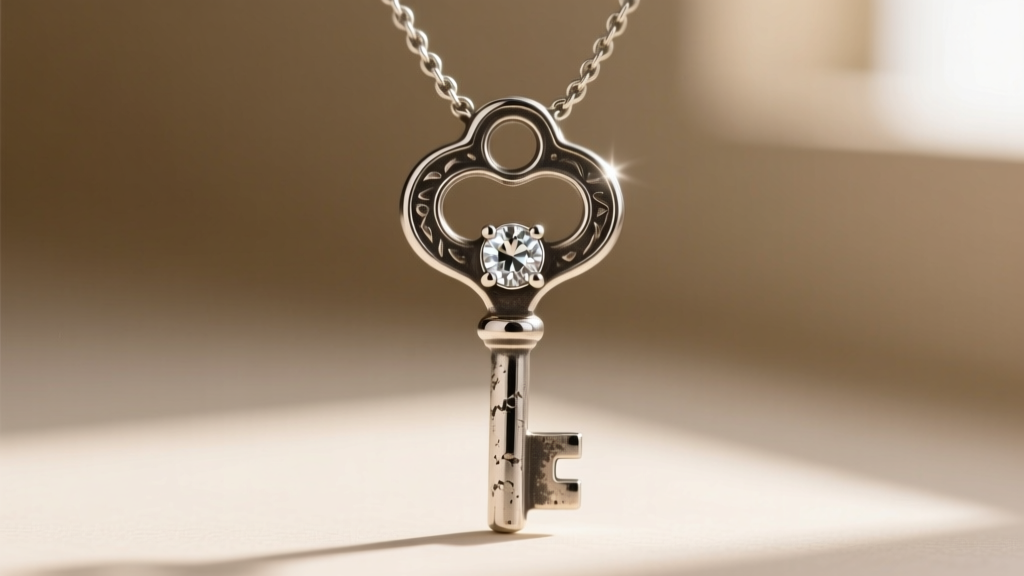
Chain Mechanics: Matching the Pendant to the Hardware
A common failure point in jewelry styling is ignoring the structural relationship between the pendant's bail (the loop that connects the pendant to the chain) and the chain itself. A beautifully cast 18k gold key pendant will look clumsy and hang incorrectly if paired with the wrong hardware.
The Bail-to-Chain Ratio
Most standard key pendants feature a bail with an inner diameter of 3.0mm to 4.5mm. If you attempt to thread a 2.5mm Figaro chain or a 3.0mm Cuban link through this bail, the metal will grind against the interior, causing premature wear and preventing the pendant from laying flat against the sternum. For a seamless drape, opt for a 1.0mm to 1.5mm box chain or a 1.2mm cable chain. These provide enough tensile strength to hold a 4-gram pendant while slipping effortlessly through the bail.
Troubleshooting the "Backward Flip"
Have you ever worn a key necklace only to find the pendant constantly flipping backward, exposing the flat, unpolished rear? This is a physics issue, not a design flaw. It occurs when the chain is too stiff or too thick, preventing the bail from rotating freely. The fix: Switch to a highly flexible 1.0mm rope chain or ensure your jump ring (the small loop connecting the pendant to the bail) is made of 20-gauge wire rather than a rigid 18-gauge, allowing for multidirectional movement.
Clasp Engineering
For key pendants weighing under 3 grams, a standard 5mm spring ring clasp is sufficient. However, if you are layering a heavier, gemstone-encrusted skeleton key that exceeds 6 grams, you must upgrade to a 7mm or 9mm lobster claw clasp to prevent the clasp from migrating to the front of your neck due to uneven weight distribution.
Market Positioning: Pricing Tiers and Authenticity
The 2026 jewelry market is saturated with key motifs, making it crucial to understand what you are actually paying for. The Federal Trade Commission Jewelry Guides strictly regulate metal stamping, meaning a "14k" stamp guarantees the alloy content, but it does not dictate the craftsmanship of the casting.
- The Artisan / Indie Tier ($40 - $120): Brands utilizing sand-cast recycled brass or sterling silver. These pieces often feature intentional oxidation to highlight the intricate "bit" (the teeth) of the key. Expect slight porosity in the metal, which adds to the rustic charm but requires gentle cleaning with a polishing cloth rather than harsh chemical dips.
- The Contemporary Fine Tier ($250 - $600): Brands like Mejuri or Catbird dominate this space, offering 14k solid gold keys with minimalist, geometric silhouettes. The focus here is on high-polish finishes and micro-prong pavé diamond accents (typically 0.05 to 0.10 total carat weight).
- The Heritage Luxury Tier ($1,200+): Houses like Tiffany & Co. and David Yurman. You are paying for brand heritage, patented link designs, and exceptional quality control regarding the structural integrity of the jump rings and clasp welding.
The 2026 Layering Framework for Key Pendants
Styling a key necklace in 2026 is less about wearing it in isolation and more about integrating it into a curated "neck mess." However, layering requires strict adherence to proportional spacing to avoid a tangled, chaotic look.
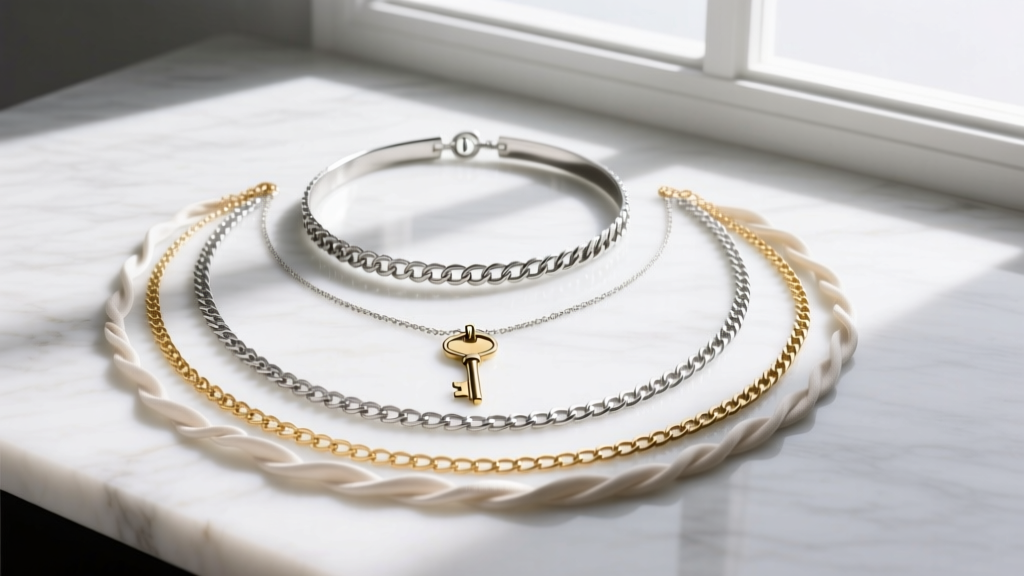
The Rule of Three and Length Spacing
The most visually pleasing layering technique involves a three-piece configuration with a minimum 2-inch variance between each chain length.
- The Anchor (14" - 16"): A simple, 1.5mm herringbone or snake chain that sits snugly on the collarbone. This provides a metallic base without competing for attention.
- The Focal Point (18"): Your key pendant. An 18-inch length ensures the key rests precisely on the sternum, acting as the visual centerpiece.
- The Elongator (20" - 24"): A lariat necklace or a long, 2.0mm paperclip chain that draws the eye downward, elongating the neckline and framing the key pendant.
"The key pendant should never be the longest piece in your layered stack. It functions as an anchor of meaning, and placing it at the mid-point of your layering framework allows the surrounding chains to act as a visual frame." — Editorial Desk, Jewel Style Radar
Final Verdict: Wearing Your Intentions
The key necklace meaning remains one of the most deeply personal narratives in jewelry design. Whether you view it as a symbol of newfound independence, a guardian of secrets, or simply an appreciation for architectural motifs, the execution matters. By prioritizing correct bail-to-chain ratios, selecting appropriate metal grades for your lifestyle, and utilizing structured layering techniques, you ensure that your key pendant is not just a fleeting accessory, but a lasting, structurally sound emblem of your personal journey.


