Kim Kardashian Cross Necklace: Value & Budget Dupes
Assess the true value of the iconic Kim Kardashian cross necklace. Discover pricing breakdowns, material grades, and the best budget-friendly dupes.

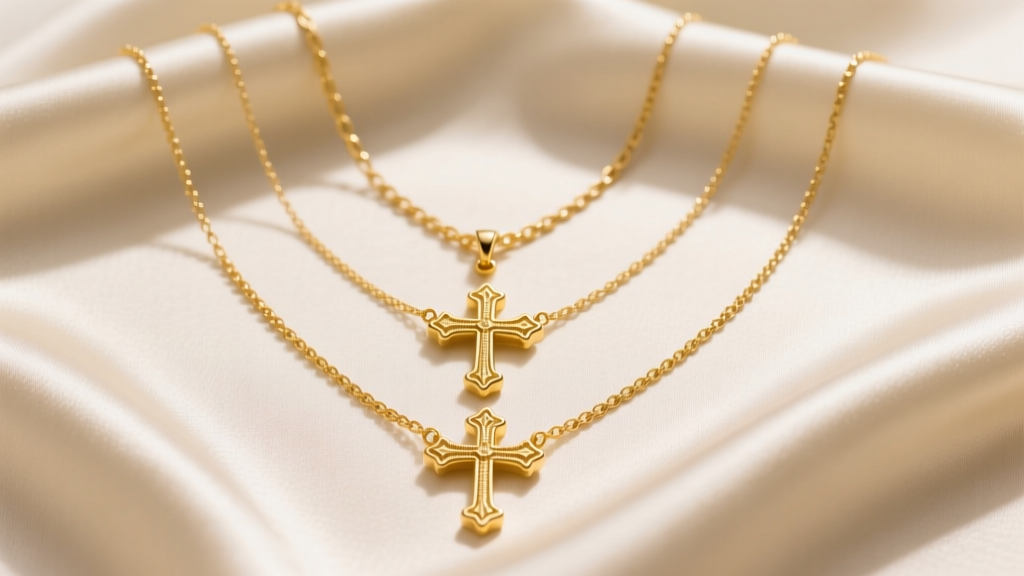
The kim kardashian cross necklace aesthetic has dominated celebrity jewelry trends for years, evolving from chunky, oversized statement pieces to the highly curated, delicate layered stacks we see today. Whether she is wearing a vintage Chanel pearl cross or a modern, pavé-set diamond cross pendant on a fine cable chain, Kardashian’s styling choices inevitably trigger a massive surge in consumer demand. But when you strip away the celebrity cachet and the designer brand markup, what is the actual intrinsic value of these pieces? More importantly, how can you replicate the exact look without spending five figures?
In this comprehensive budget and value assessment, we break down the anatomy of the iconic cross pendant, evaluate the material grades typically used in high-end versions, and provide a structured matrix of the best budget-friendly alternatives available in 2026.
The Anatomy of the Kim Kardashian Cross Necklace
To accurately assess value or find a proper dupe, we first need to define the exact specifications of the necklaces in question. Kardashian’s stylists rarely choose crosses at random; the proportions are meticulously calculated for layering and camera readiness.
- Pendant Dimensions: The most frequently worn diamond crosses measure between 12mm and 18mm in height, with a width of roughly 8mm to 12mm. This micro-to-small scale is crucial for stacking.
- The Bail: A standard 3mm to 4mm hidden or tapered bail is used, allowing the pendant to slide seamlessly without disrupting the chain's drape.
- Chain Specifications: The chains are typically 1.0mm to 1.5mm cable or rope chains, measuring 16 inches in length (often with a 2-inch extender). This specific gauge provides enough tensile strength to hold a 2-gram pendant without looking bulky.
Fine Jewelry vs. Fashion: A Value Assessment
When you purchase a designer diamond cross necklace from a luxury house or a high-end celebrity jeweler (like Jacob & Co. or Lorraine Schwartz), you are paying for three distinct elements: intrinsic material value, brand premium, and retail overhead.
Let’s look at the math for a typical high-end 1.00 Carat Total Weight (CTW) diamond cross in 18k gold. The intrinsic gold value (assuming a 3-gram chain and 2-gram pendant) sits around $350 based on early 2026 spot prices. The melee diamonds (usually SI1-SI2 clarity, G-H color) have an intrinsic wholesale value of roughly $600 to $900. Therefore, the raw material cost is approximately $1,250. Yet, these pieces routinely retail for $6,500 to $12,000. The remaining 80% of the price tag is pure brand markup. For buyers focused on the aesthetic rather than the heritage of a specific jewelry house, this represents a massive depreciation risk the moment you leave the boutique.
Material Breakdown: What You’re Actually Paying For
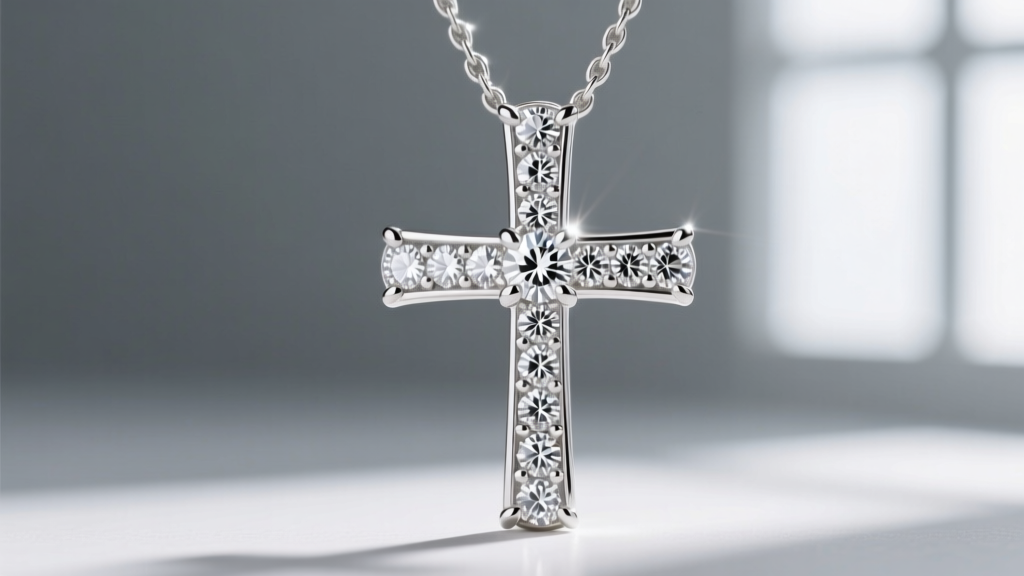
Diamond Quality & Pavé Settings
The sparkle of a designer cross comes from the precision of the pavé setting. According to the Gemological Institute of America (GIA), melee diamonds (those under 0.15 carats) are rarely graded with full dossiers, meaning consumers must rely on the jeweler's visual sorting. High-end brands use G-H color and VS-SI clarity melee, ensuring a bright, white sparkle. Budget brands often use I-J color and I1-I2 clarity, which can look cloudy or brownish in direct sunlight. When seeking a dupe, always verify that the supplier guarantees at least G-H color equivalents, even if using lab-grown stones or high-grade moissanite.
Chain Gauges & Clasp Hardware
A common failure point in budget jewelry is the hardware. Luxury brands use solid 14k or 18k gold lobster clasps with reinforced jump rings. Many budget dupes cut costs by using hollow spring-ring clasps and thin, unsoldered jump rings that pull apart under the weight of a layered stack. Always inspect the clasp mechanism; a solid lobster clasp is non-negotiable for a piece you intend to wear daily.
The Lab-Grown Disruption of 2026
The most significant shift in the jewelry market over the last few years is the stabilization and price drop of lab-grown melee diamonds. As noted by the American Gem Society, lab-grown diamonds share the exact same chemical and optical properties as mined diamonds. In 2026, a 1.00 CTW lab-grown diamond cross pendant in solid 14k gold can be produced for a fraction of the cost of its mined counterpart, effectively killing the "mid-tier" market for natural melee jewelry. This makes the "Accessible Fine" tier the absolute best value proposition for consumers.
The Dupe Matrix: Budget Alternatives Ranked
Below is a structured comparison of the different market tiers for replicating the kim kardashian cross necklace look, ranked by overall value and longevity.
| Tier | Metal Composition | Stone Type | Chain Spec | Est. Price Range | Longevity & Verdict |
|---|---|---|---|---|---|
| Designer (Baseline) | 18k Solid Gold | Natural Mined Diamonds (1.00 CTW) | 1.5mm Cable, Lobster | $6,500 - $12,000 | Heirloom quality, but massive retail markup and poor resale value. |
| Accessible Fine (Best Value) | 14k Solid Gold | Lab-Grown Diamonds (1.00 CTW) | 1.2mm Cable, Lobster | $800 - $1,500 | Identical optical performance to designer. Best investment for daily wear. |
| Demi-Fine (Best Budget) | 14k Gold Vermeil (Sterling Base) | Moissanite or High-Grade CZ | 1.2mm Box Chain, Spring | $150 - $350 | Great for trends. Vermeil will eventually wear off after 1-2 years of daily use. |
| Fast Fashion (Avoid) | Gold-Plated Brass | Acrylic or Low-Grade Glass | 0.8mm Flash-Plated Chain | $25 - $60 | Poor longevity. Brass base will oxidize and turn skin green within weeks. |
How to Style the Layered Cross Look on a Budget
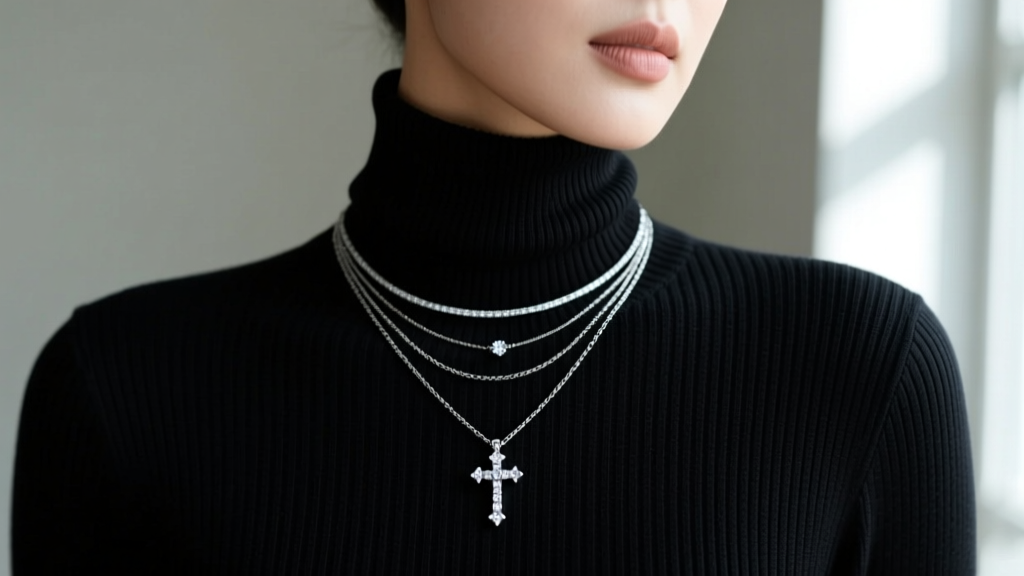
Buying the pendant is only half the battle; the signature Kardashian aesthetic relies entirely on the layering mechanics. To achieve this look without spending a fortune, follow this exact stacking formula:
- The Anchor (14 inches): Start with a simple 14-inch solid 14k gold chain (like a 1.5mm rope or a 2.0mm paperclip chain). This sits high on the collarbone and frames the face.
- The Focal Point (16 inches): This is where your cross pendant lives. A 16-inch chain ensures the cross rests right in the center of the chest, avoiding tangling with the anchor chain.
- The Terminator (18 to 20 inches): Finish with a heavier, textured chain (like a 3.0mm Figaro or Cuban link) to add visual weight and contrast to the delicate cross.
Pro-Tip: To prevent your budget vermeil or gold-plated chains from tangling and wearing down prematurely, use a magnetic necklace spacer clasp at the back of the neck. This keeps the chains perfectly parallel and reduces friction-induced plating loss.
Final Verdict: Is the Designer Markup Worth It?
If your goal is to capture the exact visual impact of the kim kardashian cross necklace, the designer markup is entirely unjustifiable from a pure value perspective. The human eye cannot distinguish between a G-H color natural melee diamond and a high-quality lab-grown diamond once it is set in a micro-pavé setting. By pivoting to the "Accessible Fine" tier—opting for solid 14k gold and lab-grown diamonds—you secure a piece that is chemically identical, optically indistinguishable, and built to last a lifetime, all while keeping 80% of your budget intact. Skip the brand tax, invest in solid gold hardware, and let the styling do the talking.


