Candy Cane Necklace Buying Guide: What to Look For
Discover what to look for when buying a candy cane necklace. Compare enamel types, metal grades, and gemstone options to find the perfect holiday piece.

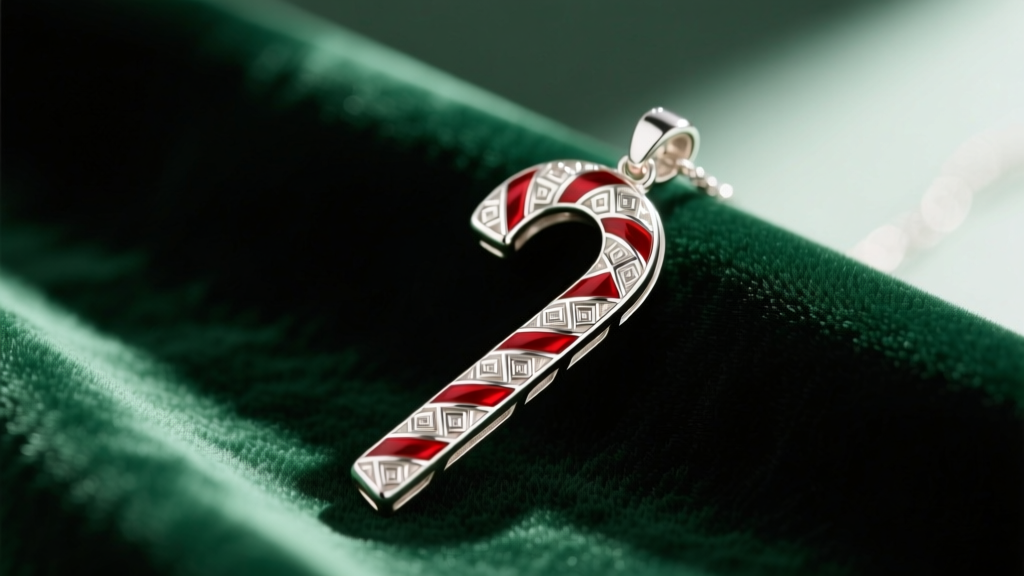
The Anatomy of a Quality Candy Cane Pendant
The holiday season brings a surge in festive jewelry, but not all seasonal pieces are created equal. A candy cane necklace can be a whimsical fast-fashion accessory or a stunning heirloom-quality pendant, depending entirely on its construction. When shopping for this iconic winter motif, the difference between a piece that tarnishes after one December and one that lasts a lifetime comes down to enamel techniques, metal purity, and gemstone security. This comprehensive buying guide breaks down the exact specifications you need to evaluate before making your purchase.
Enamel Techniques: Fired vs. Cold
The red and white stripes of a candy cane pendant are most commonly achieved through enamel work. However, the term "enamel" is frequently misused in the jewelry industry. Understanding the application method is critical for assessing durability.
Vitreous (Fired) Enamel
True vitreous enamel is made from finely ground glass fused to metal at temperatures exceeding 1,400°F. Techniques like guilloché (enamel applied over engine-turned, engraved metal to create optical depth) and champlevé (enamel packed into carved recesses) are hallmarks of fine jewelry. Fired enamel is highly resistant to scratching, will not yellow over time, and maintains a brilliant, glass-like luster. If a product description does not explicitly state "fired" or "vitreous" enamel, assume it is cold enamel.
The Cold Enamel Trap
Cold enamel is not enamel at all; it is a two-part epoxy resin. While it allows for vibrant colors and is much cheaper to produce, it is highly susceptible to chipping, scratching, and UV degradation. Over a few years, cold enamel white stripes will inevitably yellow, and the red stripes will lose their opacity. For a candy cane necklace intended as a lasting gift or an annual tradition, avoid cold enamel entirely.
Metal Standards and Plating Thickness
The structural integrity of the pendant and its chain relies heavily on the base metal and any protective plating. Because candy cane designs require high contrast, sterling silver and white gold are the most popular base metals, often requiring rhodium plating to prevent tarnishing and enhance the white stripes.
- Sterling Silver (925): The industry standard for demi-fine jewelry. Ensure the piece is stamped "925". To prevent the silver from oxidizing and turning the white enamel sections gray, look for rhodium plating. A high-quality rhodium flash should be between 0.75 and 1.0 microns thick. Anything thinner will wear off within months of friction against the skin.
- Gold Vermeil: If you prefer a yellow or rose gold candy cane necklace, verify that it is true vermeil. By FTC standards, vermeil must be a sterling silver base plated with at least 10k gold that is a minimum of 2.5 microns thick. Standard "gold plated" jewelry uses a brass or copper base with a microscopic 0.5-micron flash that will quickly pit and tarnish.
- Solid Gold (14k or 18k): Reserved for fine jewelry tiers. Solid gold requires no plating and can be polished indefinitely, making it the only choice for multi-generational heirlooms.
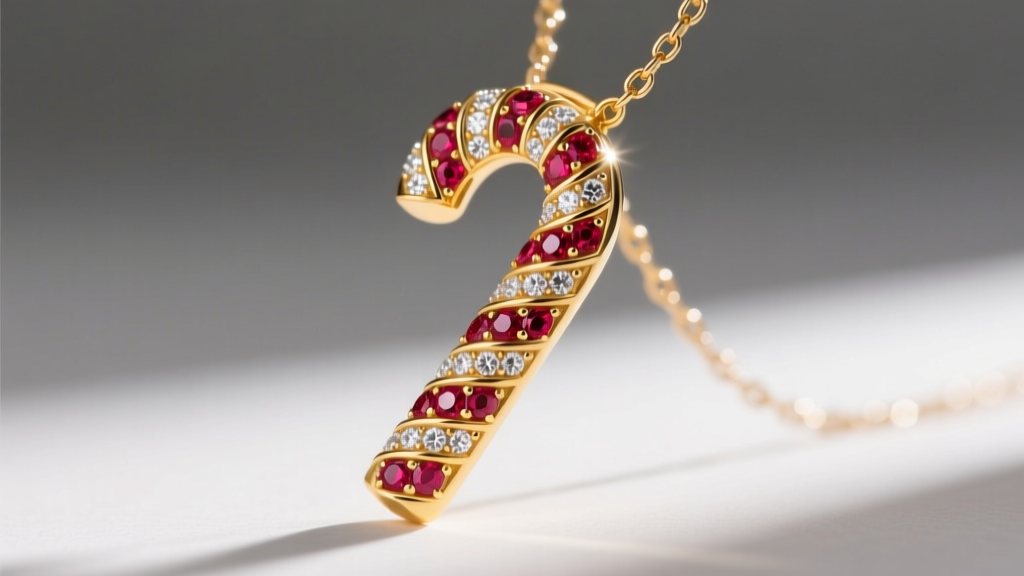
Gemstone Inlays: Natural vs. Lab-Created
High-end candy cane necklaces often replace enamel stripes with channel-set or pave gemstones. The red stripes are typically represented by rubies, while the white stripes utilize diamonds or white sapphires. According to the Gemological Institute of America (GIA), natural ruby is a 9 on the Mohs hardness scale, making it exceptionally durable for everyday pendant wear.
When evaluating gemstone versions, pay close attention to the setting. Bezel settings or channel settings are vastly superior to delicate micro-prongs for candy cane shapes, as the curved hook of the cane is prone to catching on knit winter sweaters, which can easily bend a microscopic prong and dislodge a stone. If the price point is under $300, the "rubies" are almost certainly lab-created or composite stones, and the "diamonds" are likely cubic zirconia (Mohs 8-8.5). While CZ is a perfectly acceptable alternative for demi-fine pieces, it will eventually scratch and cloud from exposure to winter lotions and perfumes, requiring replacement every few years.
Chain Pairing and Clasp Security
A heavy enamel or solid gold candy cane pendant requires a chain that can support its weight without kinking. Avoid delicate snake chains, which are notorious for kinking permanently when bent under the weight of a pendant. Instead, opt for:
- Box Chains: Excellent structural integrity, smooth against the skin, and modern in appearance.
- Cable or Rolo Chains: Classic, easy to repair, and provide a traditional holiday aesthetic.
Furthermore, inspect the clasp. A standard spring-ring clasp is insufficient for pendants weighing over 5 grams. Always look for a lobster clasp with a soldered jump ring to ensure the necklace does not slip off during holiday festivities.
Pricing Tiers and Value Expectations
Understanding the market tiers will help you identify overpriced fashion jewelry and underpriced red flags. Use this framework to set your budget expectations:
| Tier | Price Range | Primary Materials | Best For |
|---|---|---|---|
| Fashion | $20 - $60 | Brass Alloy, Cold Enamel, CZ, Gold Flash | Occasional holiday parties, fast trends |
| Demi-Fine | $80 - $250 | 925 Silver, Vermeil, Fired Enamel, Lab Gems | Annual holiday traditions, durable daily wear |
| Fine | $500 - $3,000+ | 14k/18k Solid Gold, Natural Rubies, Diamonds | Heirloom gifting, luxury investment |
Maintenance and Storage for Holiday Jewelry
Proper care is essential to preserve the contrasting stripes of your pendant. According to Jewelers of America, ultrasonic cleaners are strictly prohibited for enameled jewelry, as the high-frequency vibrations can cause microscopic fractures in the glass, leading to catastrophic chipping. Similarly, ultrasonic waves can shatter fracture-filled rubies often found in lower-tier fine jewelry.
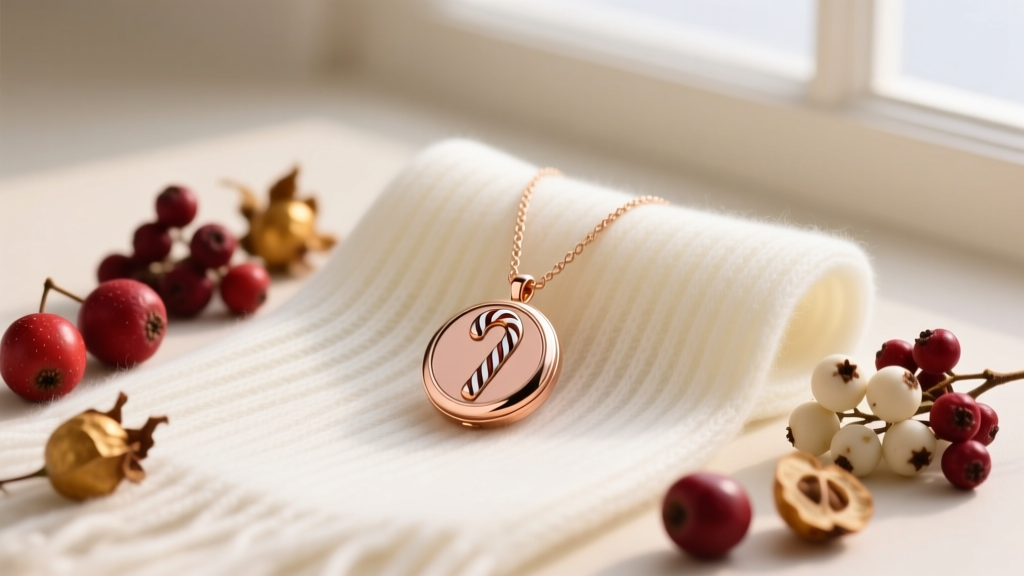
To clean your candy cane necklace, use a few drops of mild, phosphate-free dish soap in lukewarm water. Gently agitate with a baby-hair brush, rinse thoroughly, and pat dry with a lint-free microfiber cloth. When storing the piece between December seasons, keep it in an airtight anti-tarnish ziplock bag with a silica gel packet to control humidity, and lay it flat to prevent the chain from tangling around the delicate cane hook.


